

What Is an AED and How Does It Work?
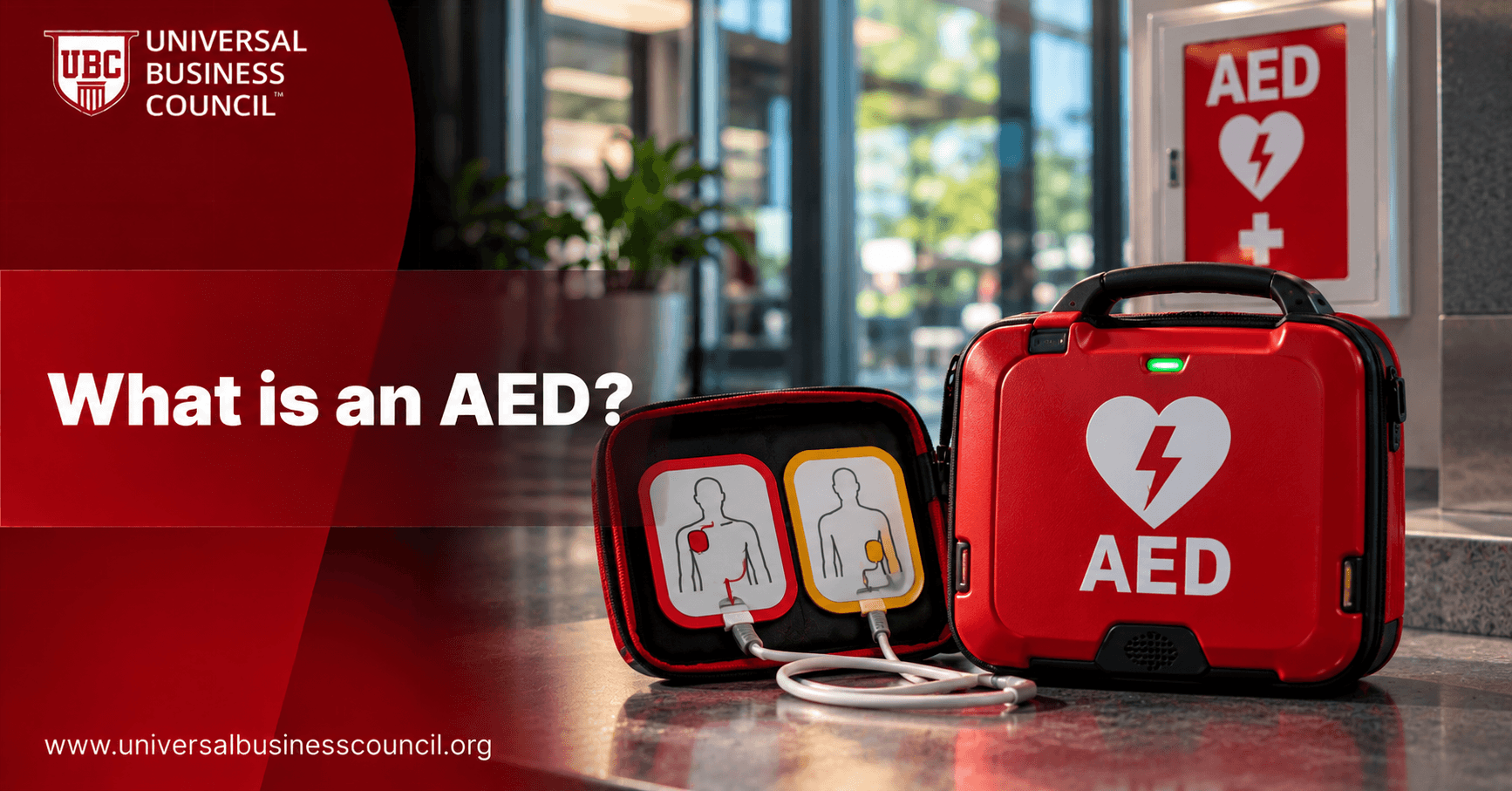
An AED is built to be used by someone who has never touched one. The device talks you through each step, checks the heart on its own and only delivers a shock when the person's heart rhythm needs it. That design is why AEDs now hang on walls in airports, gyms, schools, offices and shopping centers.
This guide explains what an AED is, how an automated external defibrillator works, how to use one and how to keep one ready for an emergency. If you're thinking about a role in healthcare, where AED and CPR skills are routine, you can explore the Certified Nursing Assistant (CNA) certification from Universal Business Council as a starting point. The sections below cover the basics first and then the practical details.

What is an AED?
AED stands for automated external defibrillator. It is a portable, battery-powered device that can analyze a person's heart rhythm and deliver an electric shock, called defibrillation, to help restore a normal rhythm. "External" means the pads go on the outside of the chest, and "automated" means the device decides whether a shock is needed.
AEDs are meant for sudden cardiac arrest, when the heart stops pumping blood effectively. The most common cause is an abnormal rhythm such as ventricular fibrillation, in which the heart quivers instead of beating. A shock can reset that rhythm, but only if it is delivered quickly.
How does an AED work?
Inside the device is a computer, a battery and a capacitor that stores energy. Two adhesive pads connect to the AED by a cable. Once the pads are on the chest, they act as sensors and read the heart's electrical activity.
The analysis
The AED checks the rhythm and compares it with patterns that need a shock. If it finds one, it charges and tells everyone to stand clear. If the rhythm isn't shockable, it will say so and prompt you to continue CPR. This is why a bystander cannot shock someone by accident: the machine will not deliver a shock unless the rhythm calls for it.
The shock
When a shock is advised, the AED sends a brief electrical current through the chest to the heart. This stops the chaotic activity for a moment and gives the heart's natural pacemaker a chance to restart a normal beat. It does not restart a heart that has no electrical activity at all, which is one reason CPR and fast medical care still matter.
How to use an AED step by step
Models differ slightly, but they all follow the same basic sequence, and voice prompts guide you:
Call 911, or have someone call, and start CPR if the person is unresponsive and not breathing normally.
Turn on the AED. Some turn on when you open the lid.
Expose the chest. Dry it if it's wet and remove any medication patches. Shave a small area only if hair stops the pads from sticking, and only if a razor is in the kit.
Attach the pads as shown in the diagram, usually one on the upper right chest and one on the lower left side.
Let the AED analyze the rhythm, and make sure no one is touching the person.
If a shock is advised, clear everyone, then press the shock button if the device doesn't deliver it automatically.
Resume CPR right away, starting with compressions, and follow further prompts until responders arrive.
Using an AED on children and infants
Many AEDs come with pediatric pads or a setting for children under about 8 years old. If pediatric pads aren't available, adult pads can be used. For small children, the pads may need to go on the chest and back so they don't touch each other. Follow the device's diagram.
Safety tips when using an AED
Don't use an AED in standing water, but a wet chest should be dried first
Keep the pads away from implanted devices such as pacemakers, usually a visible lump under the skin, by placing them a short distance away
Don't touch the person during analysis or a shock
Remove medication patches and wipe away any residue before applying pads
Keep going with CPR between analyses until responders take over
Where AEDs should be placed and how to maintain them
AEDs work best when they are close to where people are, easy to see and reachable within a couple of minutes. Common spots are lobbies, cafeterias, gyms, school halls and near elevators. Mark them with clear signs and make sure staff know where they are.
Maintenance is simple but easy to forget. Most devices have a status indicator that shows whether the self-test passed. Check it regularly, along with the battery and pad expiration dates, and replace consumables on time. Keep spare pads nearby, and keep a record of every check. Employers and facility managers often rely on verified staff certifications, and services like HireValid can help confirm that people assigned as emergency responders hold current training.
AED training and awareness
You don't need training to use an AED, but training builds confidence and speed. Most CPR courses include AED practice on manikins, and workplace programs often run short refreshers. Designate and train a few people on every shift, and run a drill now and then so the steps stay fresh.
Facility teams can also manage AED inventories digitally with reminders for battery and pad expiration dates, and short tech certifications can help administrators build and maintain those systems. Organizations that teach AED classes can reach more learners with a clear online presence, which is something a Digital Marketing Course addresses. The technology is also changing: connected AEDs that report their status, smartphone apps that alert nearby volunteers and AI-assisted dispatch are emerging, and Deep Tech Certifications can help you understand the tools behind them.
Conclusion
An AED is a portable device that checks the heart's rhythm and delivers a shock only when one is needed. It guides rescuers with voice prompts, works alongside CPR and gives someone in cardiac arrest a much better chance of survival when used quickly. The basic steps are to call 911, turn on the device, attach the pads, let it analyze and follow its instructions.
Know where the nearest AED is at home, work and in places you visit often. Keep devices maintained, train your team and practice the steps. The FAQs below answer common questions about AEDs.
Frequently asked questions
What does AED stand for?
Automated external defibrillator.
What does an AED do?
It analyzes the heart's rhythm and delivers a shock if the rhythm needs one.
Can I hurt someone by using an AED?
No. The device only shocks a rhythm that needs it.
Do I need training to use an AED?
No, but training builds speed and confidence. The device gives voice prompts.
When should I use an AED?
When someone is unresponsive and not breathing normally, as soon as the device is available.
Should I do CPR and use an AED together?
Yes. Start CPR and add the AED as soon as it arrives.
Where do the pads go?
Typically upper right chest and lower left side, as shown on the pads.
Can an AED restart a stopped heart?
It can reset certain abnormal rhythms, but it cannot restart a heart with no electrical activity.
What is a shockable rhythm?
An abnormal rhythm such as ventricular fibrillation that a shock may correct.
Can I use an AED on a child?
Yes. Use pediatric pads if available, and adult pads if not.
Can I use an AED on someone with a pacemaker?
Yes, but place the pads a short distance from the implanted device.
Is it safe to use an AED in the rain?
Move the person away from standing water if possible and dry the chest before applying pads.
Do I need to remove clothing?
Yes. Pads must touch bare skin.
What if the AED says no shock advised?
Continue CPR and follow the prompts until responders arrive.
How often should an AED be checked?
Check the status indicator regularly and follow the manufacturer's schedule for batteries and pads.
How long do AED batteries and pads last?
They have expiration dates, often a few years, so check the labels.
Where should AEDs be placed?
In visible, accessible spots close to where people gather, with clear signs.
Are AEDs required in workplaces?
Requirements vary by location and industry, so check local rules.
Can anyone buy an AED?
In many places yes, though rules vary, and a prescription may be needed in some areas.
How do I learn to use one?
Take a CPR and AED course from a recognized provider such as the American Heart Association or the American Red Cross.
Related Articles
View All
Health
First Aid Kit Essentials for Home and Work
Discover the essential items every first aid kit should contain for home and workplace emergencies. Learn about basic medical supplies, wound care essentials, emergency tools, and how to keep your first aid kit organized, accessible, and ready when needed.
Health
Where Do Nursing Assistants Work?
Discover the different workplaces where nursing assistants can build their careers. Explore opportunities in hospitals, long-term care facilities, rehabilitation centers, assisted living communities, and home healthcare, along with the responsibilities involved in each setting.
Health
Fitness Instructor Certification Requirements
Learn about fitness instructor certification requirements, including the qualifications, training, and credentials needed to pursue a career in fitness instruction. Explore certification options, CPR and first aid training, practical experience, and key factors to consider when choosing a recognized certification program.
Trending Articles
The Role of Blockchain in Ethical AI Development
How blockchain technology is being used to promote transparency and accountability in artificial intelligence systems.
AWS Career Roadmap
A step-by-step guide to building a successful career in Amazon Web Services cloud computing.
Top 5 DeFi Platforms
Explore the leading decentralized finance platforms and what makes each one unique in the evolving DeFi landscape.