

How HR Professionals Can Use Data to Identify Skills Gaps in the Workforce
Skills gaps in the workforce are easier to miss than most HR dashboards suggest. A team can hit this quarter's targets and still be underprepared for a new CRM rollout, a shift to AI-assisted workflows, or stricter compliance rules. The useful question is not, who needs training? It is this: which skills do we have, which skills will the business need, and where is the evidence?
Data gives you a cleaner answer. Not a perfect one. But better than annual manager opinion and a spreadsheet of course completions. A sound workforce skills gap analysis pulls together HRIS data, skills assessments, performance metrics, learning records, employee input, and external labor market data into a structured skills inventory. Then you compare current capability against the skills required for today's roles and tomorrow's work.

As workforce planning becomes more skills-driven, the role of an HR Professional increasingly includes identifying capability gaps, supporting talent development, and aligning workforce skills with long-term business strategy.
Start with business-critical skills, not a training catalog
The first mistake is starting inside the learning management system. Course data is useful, but it does not define what the business needs. Start with strategy.
Ask leaders three direct questions:
Which capabilities will decide whether we hit the next 12 to 24 months of business goals?
Which roles are already hard to hire for, replace, or scale?
Which changes are coming from technology, regulation, customer behavior, or operating model shifts?
For many organizations, the answers now include data literacy, AI tool use, cybersecurity awareness, digital sales operations, process improvement, project management, and people leadership. In regulated sectors, compliance and risk skills can matter just as much as technical ones.
The argument from firms like McKinsey is simple and practical: you need a clear view of your skills inventory and gaps to make better workforce decisions. If you cannot name the skills that matter, you cannot decide whether to build, buy, borrow, or automate them.
Build a skills inventory from multiple data sources
A skills inventory is the backbone of data-driven HR analytics. It should show which employees have which skills, at what proficiency level, and with what evidence behind the rating.
Do not rely on one source. Self-assessments overstate confidence. Manager ratings can reflect recency bias. Learning completions only prove that someone finished a module, not that they can do the job. Combine the signals.
HRIS and job architecture data
Your HR information system provides the base layer: job family, role, level, location, tenure, reporting line, qualifications, and employment status. This data helps you map skills to roles and spot where gaps would cause the most business risk.
Clean this first. If one sales operations role has six title variations, your skills analysis will be messy before it starts. Standardize job families and role definitions before building dashboards.
Performance and talent data
Performance ratings, OKRs, KPI achievement, 360 feedback, promotion history, succession plans, and manager notes can all signal skill strength or weakness. A customer success team with strong retention but weak expansion revenue may not have a general performance problem. It may have a consultative selling skills gap.
Use performance data carefully. Low performance does not always mean low skill. Workload, unclear goals, poor tooling, and weak management can produce the same symptoms. Pair the numbers with qualitative checks.
Skills assessments and work simulations
Structured assessments add evidence. These can include coding tests, case simulations, language assessments, product knowledge checks, role plays, writing samples, or competency-based evaluations.
A simple four-point proficiency scale often works better than a complex ten-point model:
1 - Awareness: understands basic concepts
2 - Working knowledge: can apply the skill with support
3 - Proficient: can perform independently
4 - Expert: can coach others and solve novel problems
Keep the scale plain. Managers will use it more consistently, and employees will understand what development actually means.
Learning and development data
LMS data shows enrollments, completions, scores, learning paths, and time spent. It can reveal whether employees are building skills or merely collecting certificates of completion.
Here is a detail that catches first-time analysts: many SCORM-based courses pass only complete or incomplete into the LMS, not a meaningful assessment score. If you treat completion as proficiency, your skills matrix will look healthier than the workforce really is.
Look for stalls. If 70 percent of a function starts an analytics pathway but few finish the applied assessment, the barrier may be time, manager support, course design, or fear of being judged. The data tells you where to ask better questions.
Employee surveys and self-assessments
Employees often know where they are underprepared before the formal metrics catch up. Use self-assessments, career interest surveys, and development plans to capture perceived strengths, gaps, and aspirations.
Then validate. A self-rating should not automatically become the official proficiency level. Match it against manager review, assessment results, project work, and performance outcomes.
External labor market data
External labor market data helps you decide whether to develop a skill internally or recruit for it. Job posting trends, salary benchmarks, regional talent supply, and competitor hiring patterns all matter.
If a skill is scarce and expensive in the market, internal reskilling may be the better long-term route. If the skill is needed immediately and takes years to develop, hiring or contracting may be more realistic. This is where workforce planning becomes a business conversation, not an HR report.
AI-based skills inference
AI-based skills inference can scan employee profiles, project histories, resumes, learning records, and internal work data to predict likely skills and adjacent capabilities. Research from MIT Sloan has shown how this approach can support internal mobility and personalized learning by surfacing skills people may have but have not formally recorded.
Use it carefully. Employees should know what data is being analyzed and how decisions are made. SHRM's work on data-driven performance management points to the same need for fairness, transparency, and context when analytics influence talent decisions.
Turn the inventory into a skills gap analysis
Once you have the data, compare current proficiency with required proficiency. This is the core of a workforce skills gap analysis.
Define required skills by role. For each critical role, list required skills and target proficiency levels.
Score current capability. Use assessment data, validated manager ratings, performance signals, and employee input.
Calculate the gap. Required proficiency minus current proficiency gives a simple gap score.
Weight by business impact. A small gap in a critical role may matter more than a large gap in a low-risk area.
Group gaps by team, region, function, or job family. This helps leaders act at the right level.
A basic formula works:
Skills gap score = required proficiency - current proficiency
Add business criticality if you need to prioritize:
Priority score = skills gap score x business criticality rating
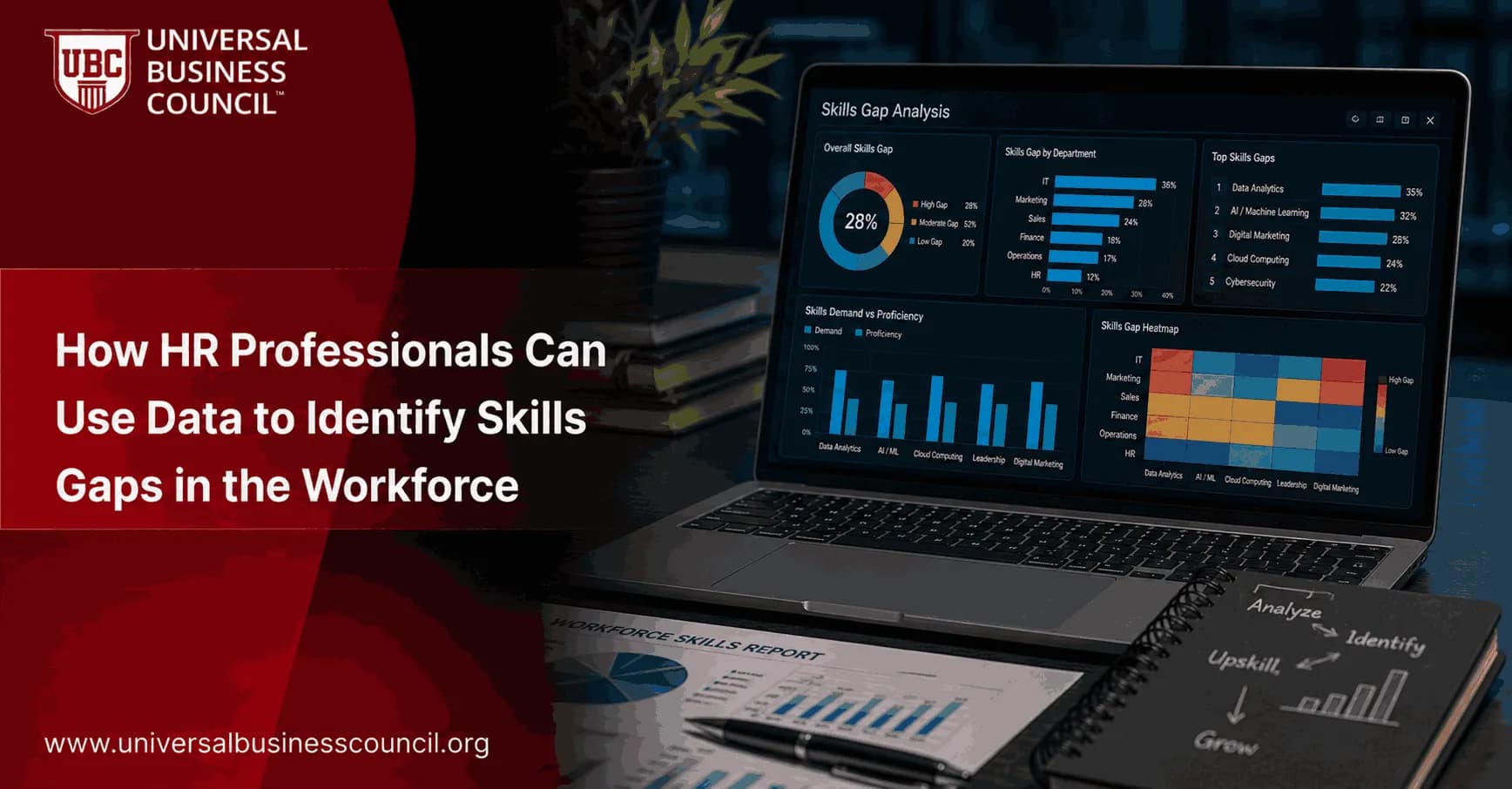
Display the results in a skills matrix, heatmap, or dashboard. Heatmaps are especially useful because executives can read risk at a glance. Red means urgent. Amber means watch and plan. Green means current supply is enough.
Applying structured workforce data in this way is a key capability of an HR Analytics Expert, enabling organizations to prioritize talent investments and make evidence-based workforce decisions.
Prioritize action: train, move, hire, or redesign
Identifying gaps is only half the job. The value comes from targeted action.
Upskill: build higher proficiency in the employee's current role.
Reskill: prepare employees for a different role or workstream.
Internal mobility: move employees with adjacent skills into shortage areas.
Hiring: bring in skills that are urgent or too slow to build internally.
Role redesign: change the work if the required skill mix no longer makes sense.
Be blunt with prioritization. Not every gap deserves a program. If a skill is rarely used, easy to outsource, or tied to a declining process, do not spend months building a curriculum around it. Focus on skills linked to revenue, risk, customer experience, productivity, compliance, or strategic change.
Track whether interventions actually close the gap
Training activity is not the same as capability improvement. Track outcomes after the intervention.
Useful measures include:
Change in assessment scores
Movement from one proficiency level to the next
Internal fill rate for critical roles
Time to productivity after reskilling
Promotion or lateral move rates
Performance against role-specific KPIs
Manager validation after 60 or 90 days
If a data analytics program produces high completion rates but no improvement in dashboard adoption, forecasting accuracy, or decision speed, the program did not close the gap. It produced activity. That difference matters.
Common mistakes HR teams should avoid
Treating skills data as static
Skills change quickly. Review your skills inventory at least quarterly for critical roles. For AI, data, cybersecurity, and digital operations, annual reviews are too slow.
Using job titles as a proxy for skills
Two people with the same title may do very different work. Modern workforce planning should use skills as the unit of analysis, with job titles as context.
Ignoring data quality
Bad job architecture, outdated employee profiles, inconsistent manager ratings, and incomplete learning records will distort the analysis. Clean the inputs before trusting the output.
Letting AI make unexplained recommendations
AI can help infer skills and detect patterns, but you must be able to explain decisions. If employees cannot challenge or correct their skills profile, trust drops fast.
As organizations increasingly rely on AI-powered talent platforms and digital workforce tools, a Tech Certification can help professionals strengthen their understanding of the technologies supporting modern skills analytics and workforce planning.
Make skills gap analysis part of workforce planning
The strongest HR teams do not run skills gap analysis as a one-time project before budget season. They build it into strategic workforce planning, succession planning, talent reviews, and learning investment decisions.
Start small if the organization is not ready for enterprise-wide skills analytics. Pick one critical job family. Define five to eight skills that matter. Build a clean skills matrix. Validate it with managers and employees. Compare current proficiency against future requirements. Then choose one intervention and measure it properly.
Your next step: select a business-critical function, create a role-based skills inventory, and review the findings with the accountable leader within 30 days. To build the underlying capability in a structured way, explore the Universal Business Council HR and management certification courses.
Professionals preparing for the future of workforce strategy may also benefit from a Deeptech Certification to build a broader understanding of AI, automation, and emerging technologies that are transforming skills management and organizational capability planning.
FAQs
1. What Is a Skills Gap in the Workforce?
A skills gap is the difference between the skills employees currently possess and the skills an organization needs to achieve its business goals. Identifying these gaps helps HR plan hiring, training, and workforce development more effectively.
2. Why Is Identifying Skills Gaps Important for HR?
Understanding skills gaps enables HR professionals to improve workforce planning, prepare for future business needs, reduce talent shortages, and ensure employees have the capabilities required to support organizational growth.
3. How Can HR Use Data to Identify Skills Gaps?
HR can analyze employee skills, performance reviews, training records, certifications, job requirements, and business objectives to determine where additional skills or development are needed.
4. What Types of Data Are Used for Skills Gap Analysis?
Common data sources include employee assessments, performance evaluations, learning management systems (LMS), HRIS platforms, certifications, productivity metrics, and manager feedback.
5. What Is Skills Gap Analysis in Human Resources?
Skills gap analysis is the process of comparing employees' current skills with the competencies required for existing or future roles to identify development and hiring priorities.
6. How Does HR Analytics Improve Skills Gap Analysis?
HR analytics transforms workforce data into actionable insights by highlighting skill shortages, tracking employee capabilities, and identifying areas where targeted training or recruitment is needed.
7. How Can Performance Reviews Help Identify Skills Gaps?
Performance reviews provide valuable information about employee strengths, weaknesses, goal achievement, and development needs, helping HR identify areas where additional skills are required.
8. Can Artificial Intelligence Help Identify Skills Gaps?
Yes. AI can analyze large volumes of workforce data, map employee skills to job requirements, identify emerging competency gaps, and recommend personalized learning or hiring strategies.
9. How Do Skills Assessments Support Workforce Planning?
Skills assessments measure employee knowledge and competencies, allowing HR to identify development opportunities and ensure the workforce is prepared for changing business demands.
10. What HR Metrics Are Useful for Skills Gap Analysis?
Important metrics include training completion rates, certification levels, employee performance scores, internal promotion rates, productivity, retention, and learning effectiveness.
11. How Can HR Use Data to Improve Employee Training?
By analyzing workforce data, HR can design targeted learning programs, prioritize high-demand skills, measure training outcomes, and ensure development efforts align with business objectives.
12. How Does Skills Gap Analysis Support Recruitment?
Skills gap analysis helps recruiters identify roles that require external hiring, define job requirements more accurately, and focus recruitment efforts on critical business needs.
13. What Role Does Workforce Planning Play in Closing Skills Gaps?
Workforce planning helps organizations anticipate future skill requirements, prepare succession plans, allocate training resources, and ensure the business has the right talent at the right time.
14. Which Tools Help HR Identify Skills Gaps?
Common tools include Workday, SAP SuccessFactors, Oracle HCM, BambooHR, Microsoft Power BI, Tableau, LinkedIn Talent Insights, learning management systems (LMS), and AI-powered HR analytics platforms.
15. How Can HR Build a Skills Matrix?
A skills matrix maps employees' competencies against job requirements, making it easier to identify strengths, development needs, succession opportunities, and workforce capability gaps across teams.
16. What Challenges Do Organizations Face During Skills Gap Analysis?
Challenges include outdated employee data, inconsistent skills assessments, rapidly changing business needs, limited analytics capabilities, employee resistance, and integrating data across multiple HR systems.
17. How Can HR Encourage Continuous Skill Development?
Organizations can promote continuous learning through personalized training plans, mentoring, online courses, certifications, career development opportunities, and regular skills assessments.
18. How Can Businesses Measure the Success of Skills Gap Initiatives?
Success can be measured through improved employee performance, higher training completion rates, increased internal promotions, reduced hiring costs, stronger productivity, and better workforce readiness.
19. What Common Mistakes Should HR Teams Avoid When Identifying Skills Gaps?
Avoid relying on outdated workforce data, assessing technical skills alone, ignoring future business needs, failing to involve managers, and neglecting to measure the effectiveness of training programs. Data-driven decisions should always be reviewed alongside real-world business context.
20. How Will Data Analytics Shape Skills Gap Management in the Future?
HR analytics will increasingly use AI, predictive analytics, and real-time workforce insights to identify emerging skill shortages, recommend personalized learning paths, and support strategic workforce planning. Organizations that effectively use data to close skills gaps will be better prepared to adapt to changing technologies, business demands, and future talent requirements.
Related Articles
View All
Hr
How HR Professionals Can Use People Analytics for Workforce Planning
Learn how HR professionals can use people analytics for workforce planning, from headcount forecasts and skills gaps to retention, DEI, and ethical AI.

Hr
From HR Generalist to HR Analytics Expert: Career Path, Skills, and Certifications
A practical guide for moving from HR generalist to HR analytics expert, including skills, tools, career stages, use cases, and certification planning.

Hr
Common HR Analytics Mistakes and How Professionals Can Avoid Them
Learn the most common HR analytics mistakes, from poor data quality to AI bias, and how professionals can build ethical, decision-ready people analytics.
Trending Articles
The Role of Blockchain in Ethical AI Development
How blockchain technology is being used to promote transparency and accountability in artificial intelligence systems.
AWS Career Roadmap
A step-by-step guide to building a successful career in Amazon Web Services cloud computing.
Top 5 DeFi Platforms
Explore the leading decentralized finance platforms and what makes each one unique in the evolving DeFi landscape.