

HR Analytics for Performance Management: Turning Data into Better Decisions
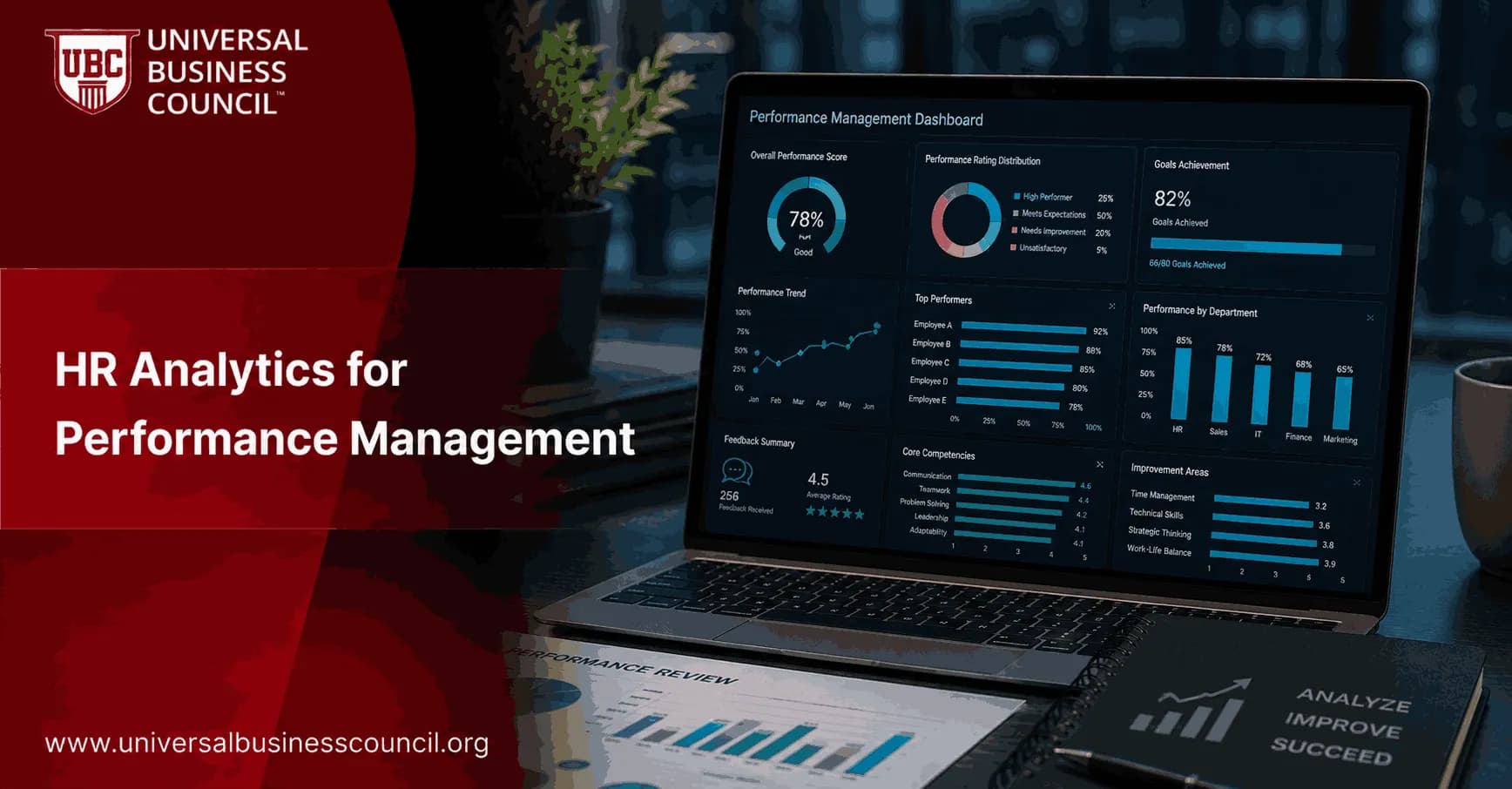
HR analytics for performance management helps you replace guesswork with evidence when you set goals, coach employees, plan development, and make reward decisions. The aim is not to turn people into spreadsheet rows. It is to give managers better signals, earlier, so they can act before performance problems get expensive or a high performer decides to leave.
The shift is already visible. Annual reviews are giving way to continuous check-ins, goal tracking, feedback data, learning records, engagement scores, and manager notes held in one performance view. Done well, this gives HR and business leaders a clearer line of sight from individual work to business outcomes.

As performance management becomes more data-driven, the role of an HR Professional increasingly involves helping managers make fair, evidence-based decisions that support employee development and business performance.
Why HR Analytics Is Changing Performance Management
Traditional performance management often runs on memory, recency bias, and the confidence of whoever is in the room. You know the pattern. Someone who delivered strongly in February gets a weaker review because a difficult project in November is fresh in the manager's mind. Or a quiet high performer is overlooked because their work is less visible.
HR analytics reduces that risk by pulling together data across the performance cycle. Common sources include:
Goal attainment and OKR progress
Quality measures such as error rates or rework
Productivity indicators by role, team, or project
Feedback from managers, peers, and customers
Learning participation and certification completion
Engagement, pulse survey, and retention risk signals
Internal mobility, promotion, and succession data
This matters because performance is rarely one number. A salesperson may beat revenue targets while quietly damaging customer retention. A software engineer may ship fewer tickets because they spend their time reviewing code and stopping defects before release. A good analytics model makes those trade-offs visible.
From Annual Reviews to Continuous, Data-Supported Conversations
Performance management is moving away from the once-a-year review because work changes too fast. Goals set in January can be stale by April. Teams reorganize. Products shift. Markets move.
Continuous performance management uses frequent check-ins and live goal data to keep expectations current. The lesson from organizations that stick with it is practical: the system improves when managers use it consistently, not when HR launches it once and hopes people comply. Goal completion climbs over time, but only because the habit holds, not because the tool is clever.
What Managers Should Track Monthly
You do not need fifty metrics. That usually makes performance harder to manage, not easier. Start with a small set that fits the role:
Goal progress: Are key objectives on track, blocked, or no longer relevant?
Output: What work was completed, and at what pace?
Quality: What was the error rate, customer impact, or rework burden?
Collaboration: Did the employee help the team move faster or create avoidable friction?
Development: What skills were built, practiced, and applied?
A common mistake is to measure what is easy rather than what matters. Counting Slack messages or meetings attended is weak evidence. It rewards noise. Better indicators connect to outcomes: cycle time, customer satisfaction, project delivery, defect rates, or documented coaching progress.
Predictive HR Analytics: Useful, But Not Magic
Predictive HR analytics uses historical HR, payroll, performance, learning, and engagement data to estimate future outcomes. It can flag performance risk, disengagement, or possible turnover among high performers.
Take a strong performer whose goal progress drops, absenteeism rises, and engagement score falls. That does not prove they are disengaged. It tells the manager to ask better questions sooner.
To be blunt, predictive analytics is overhyped when leaders treat it as a decision engine. It is far more useful as a prompt for human review. Correlation is not causation. A drop in collaboration activity could mean burnout, a heavy client assignment, a private health issue, or just fewer cross-functional meetings that month.
Where Predictive Models Help Most
Retention of high performers: Combine performance scores, engagement trends, career movement, and manager feedback to spot people who may need a growth opportunity.
Early performance support: Catch declining goal progress or quality signals before a formal improvement plan is on the table.
Workforce planning: Compare team workload, skills, and output to decide where to add capacity or redesign roles.
Learning impact: Track whether training, coaching, or certification is followed by better productivity, quality, or promotion outcomes.
This is where HR analytics turns strategic. It moves HR from reporting what happened last quarter to helping leaders decide what to do next week.
Building a Performance Analytics Framework That Works
Start with the work, not the dashboard. A dashboard without a clear performance model becomes decoration.
1. Define Role-Specific Expectations
Performance metrics must reflect the role. A customer support analyst, a finance controller, a product manager, and a regional sales leader should not be judged through the same lens. Define what good looks like before you collect a single data point.
Use questions such as:
What outcomes does this role directly influence?
Which outcomes are shared with the team?
What quality standards matter most?
Which behaviors support long-term performance?
What development path is realistic for the next 6 to 12 months?
2. Connect Goals to Business Outcomes
OKRs and KPIs are only useful when they tie to business priorities. If a marketing team is measured on lead volume while leadership cares about pipeline quality, the metric pushes the wrong behavior. If a call center is measured only on average handle time, agents rush customers and satisfaction drops.
The same applies to HR. Track voluntary turnover among high performers, internal mobility rates, time-to-productivity for new hires, manager feedback quality, and learning application. These beat generic headcount reports every time.
3. Combine Numbers With Structured Feedback
Quantitative data tells you what changed. Qualitative feedback usually tells you why.
Ask managers to record short, structured notes after each check-in. Keep it simple:
What was agreed?
What evidence supports the assessment?
What blocker needs attention?
What support will the manager provide?
This matters during calibration. In a real calibration session, the person with the clearest evidence usually shapes the decision. A manager who says an employee is excellent but brings no examples loses ground fast against a manager who shows up with goal data, peer feedback, quality outcomes, and two specific project examples.
Applying this combination of workforce data, structured feedback, and business context is a defining capability of an HR Analytics Expert, enabling organizations to make more consistent and objective performance decisions.
Ethics, Fairness, and Governance
Performance data affects pay, promotion, development, and sometimes termination. That makes governance non-negotiable.
Be clear with employees about what data is collected, how it is used, and who can see it. Avoid secret scoring systems. They damage trust quickly, and once it is gone you rarely get it back.
Good governance includes:
Testing analytics models for bias across gender, age, race, disability, location, and other relevant groups
Using multiple indicators rather than a single score
Giving employees a chance to discuss or challenge their performance data
Separating coaching signals from disciplinary triggers where possible
Documenting how analytics informs decisions without replacing manager accountability
AI adds another layer. AI-driven recommendations can suggest coaching, learning, or role changes, but you must be able to explain the basis for those suggestions. If analytics influences pay or promotion, transparency is not optional.
Skills HR and Managers Need Now
HR analytics for performance management is not only a technology project. It is a capability project.
HR professionals need data literacy, basic statistics, dashboard interpretation, and the ability to turn data into a clear story. Line managers need to read trends, ask sharp questions, and avoid overreacting to one bad week.
Useful skills include:
Reading performance dashboards in tools such as Workday, SAP SuccessFactors, Oracle HCM, or Microsoft Power BI
Interpreting OKR progress and KPI trends
Understanding bias in ratings and calibration
Connecting learning data to performance outcomes
Giving evidence-based feedback without sounding mechanical
For professionals building capability here, the Universal Business Council certification catalog works well as an internal learning pathway. Look for programmes in human resources, business analytics, management, leadership, and ethical AI use, especially if your role sits between HR, operations, and technology.
As HR increasingly adopts AI-powered platforms, analytics tools, and digital workflows, a Tech Certification can help professionals strengthen their understanding of the technologies supporting modern performance management.
How to Start: A Practical 30-Day Plan
If you are starting from annual reviews and scattered spreadsheets, do not try to build a predictive model first. Start smaller.
Audit current performance data: List where goals, ratings, feedback, learning records, and engagement scores live.
Choose 3 to 5 core metrics: Pick role-relevant indicators that managers can actually explain.
Standardize check-ins: Use a simple monthly template for goals, blockers, feedback, and development actions.
Review one team dashboard: Look for patterns, not individual blame. Ask what support or resource changes are needed.
Train managers: Teach them how to read the data, question it, and discuss it with employees.
After 90 days, compare goal progress, feedback completion, learning participation, and manager follow-through. If the process is working, conversations get more specific. Less opinion. More evidence.
The Next Step for HR Professionals
HR analytics for performance management is becoming a core professional skill because leaders now expect talent decisions to be data-backed, fair, and tied to business results. The best practitioners will not be the ones with the most complicated dashboards. They will be the ones who can connect clean data, sound judgment, ethical practice, and practical coaching.
Your next step is simple. Choose one performance process in your organization, such as goal setting, check-ins, calibration, or development planning, and identify the data that would make those decisions fairer and faster. Then build your capability through a relevant Universal Business Council programme in HR, analytics, or management so you can turn performance data into better decisions with confidence.
Professionals preparing for the future of workforce management may also benefit from a Deeptech Certification to build a broader understanding of AI, automation, and emerging technologies that are reshaping performance management and people analytics.
FAQs
1. What Is HR Analytics for Performance Management?
HR analytics for performance management is the use of employee data, workforce metrics, and analytics tools to measure performance, identify trends, improve productivity, and support fair, data-driven performance decisions across an organization.
2. Why Is HR Analytics Important for Performance Management?
HR analytics helps organizations move beyond subjective evaluations by using measurable data to assess employee performance, identify improvement opportunities, and align individual goals with business objectives.
3. How Does HR Analytics Improve Employee Performance?
By analyzing performance reviews, productivity metrics, feedback, and development data, HR can identify strengths, skill gaps, and coaching opportunities that help employees perform at their best.
4. What Data Is Used in Performance Management Analytics?
Common data includes performance ratings, goal completion, productivity metrics, attendance, employee feedback, training records, engagement scores, promotions, and manager evaluations.
5. What Are the Most Important HR Metrics for Performance Management?
Key metrics include goal achievement rate, employee productivity, performance ratings, training completion, employee engagement, absenteeism, internal promotions, retention rate, and manager effectiveness.
6. How Can HR Analytics Help Managers Make Better Decisions?
Managers can use workforce insights to monitor employee progress, identify performance trends, provide targeted coaching, recognize high performers, and make more objective performance evaluations.
7. How Does HR Analytics Support Goal Setting?
Analytics helps organizations set measurable goals by tracking employee progress, comparing performance against benchmarks, and ensuring individual objectives align with overall business priorities.
8. Can HR Analytics Identify High-Potential Employees?
Yes. HR analytics can evaluate performance history, leadership potential, learning progress, and business impact to identify employees who are ready for greater responsibilities and future leadership roles.
9. How Does HR Analytics Help Identify Skill Gaps?
By comparing employee capabilities with job requirements and future business needs, HR analytics highlights areas where additional training or upskilling is needed.
10. What Role Does Artificial Intelligence Play in Performance Management?
AI helps analyze workforce data, detect performance patterns, predict future trends, automate reporting, and generate insights that support faster and more informed HR decisions.
11. How Can HR Analytics Improve Employee Development?
Analytics identifies learning needs, measures training effectiveness, tracks career progression, and helps create personalized development plans that support employee growth.
12. How Does Predictive Analytics Support Performance Management?
Predictive analytics forecasts future performance trends, identifies employees who may require additional support, and helps HR proactively address productivity or retention challenges.
13. What Tools Are Commonly Used for HR Performance Analytics?
Popular tools include Microsoft Power BI, Tableau, Excel, Workday, SAP SuccessFactors, Oracle HCM, BambooHR, UKG Pro, and other HR analytics and performance management platforms.
14. How Can HR Dashboards Improve Performance Management?
HR dashboards provide real-time visibility into workforce performance, making it easier to monitor KPIs, compare teams, track progress, and communicate insights with managers and executives.
15. How Does HR Analytics Reduce Bias in Performance Reviews?
Using objective performance data alongside manager feedback helps create more consistent evaluations, reduces personal bias, and supports fairer promotion, compensation, and development decisions.
16. What Challenges Do Organizations Face When Using HR Analytics for Performance Management?
Challenges include inconsistent performance data, outdated review processes, poor data quality, privacy concerns, manager adoption, and integrating multiple HR systems into a unified analytics platform.
17. How Can Organizations Build a Data-Driven Performance Management Strategy?
Businesses should define performance KPIs, collect reliable workforce data, use analytics tools, train managers, review performance regularly, and align employee goals with organizational objectives.
18. How Can HR Measure the Success of Performance Management Programs?
Success can be measured through improved productivity, higher employee engagement, better goal completion rates, increased retention, stronger leadership development, and overall business performance.
19. What Common Mistakes Should HR Teams Avoid When Using Performance Analytics?
Avoid relying only on annual reviews, focusing on a single metric, ignoring employee feedback, using poor-quality data, and overlooking business context. Analytics should support continuous performance improvement, not just evaluation.
20. How Will HR Analytics Shape the Future of Performance Management?
HR analytics will continue to transform performance management through AI-powered insights, predictive analytics, continuous feedback, and real-time dashboards. Organizations that combine workforce data with effective coaching and leadership will make better decisions, improve employee performance, and build a more agile, high-performing workforce.
Related Articles
View All
Hr
How HR Analytics Supports Strategic Talent Management and Succession Planning
Learn how HR analytics strengthens strategic talent management, improves succession planning, reduces leadership risk, and supports fairer workforce decisions.

Hr
From HR Generalist to HR Analytics Expert: Career Path, Skills, and Certifications
A practical guide for moving from HR generalist to HR analytics expert, including skills, tools, career stages, use cases, and certification planning.

Hr
Common HR Analytics Mistakes and How Professionals Can Avoid Them
Learn the most common HR analytics mistakes, from poor data quality to AI bias, and how professionals can build ethical, decision-ready people analytics.
Trending Articles
The Role of Blockchain in Ethical AI Development
How blockchain technology is being used to promote transparency and accountability in artificial intelligence systems.
AWS Career Roadmap
A step-by-step guide to building a successful career in Amazon Web Services cloud computing.
Top 5 DeFi Platforms
Explore the leading decentralized finance platforms and what makes each one unique in the evolving DeFi landscape.