

Measuring Training ROI: How HR Analytics Proves L&D Impact
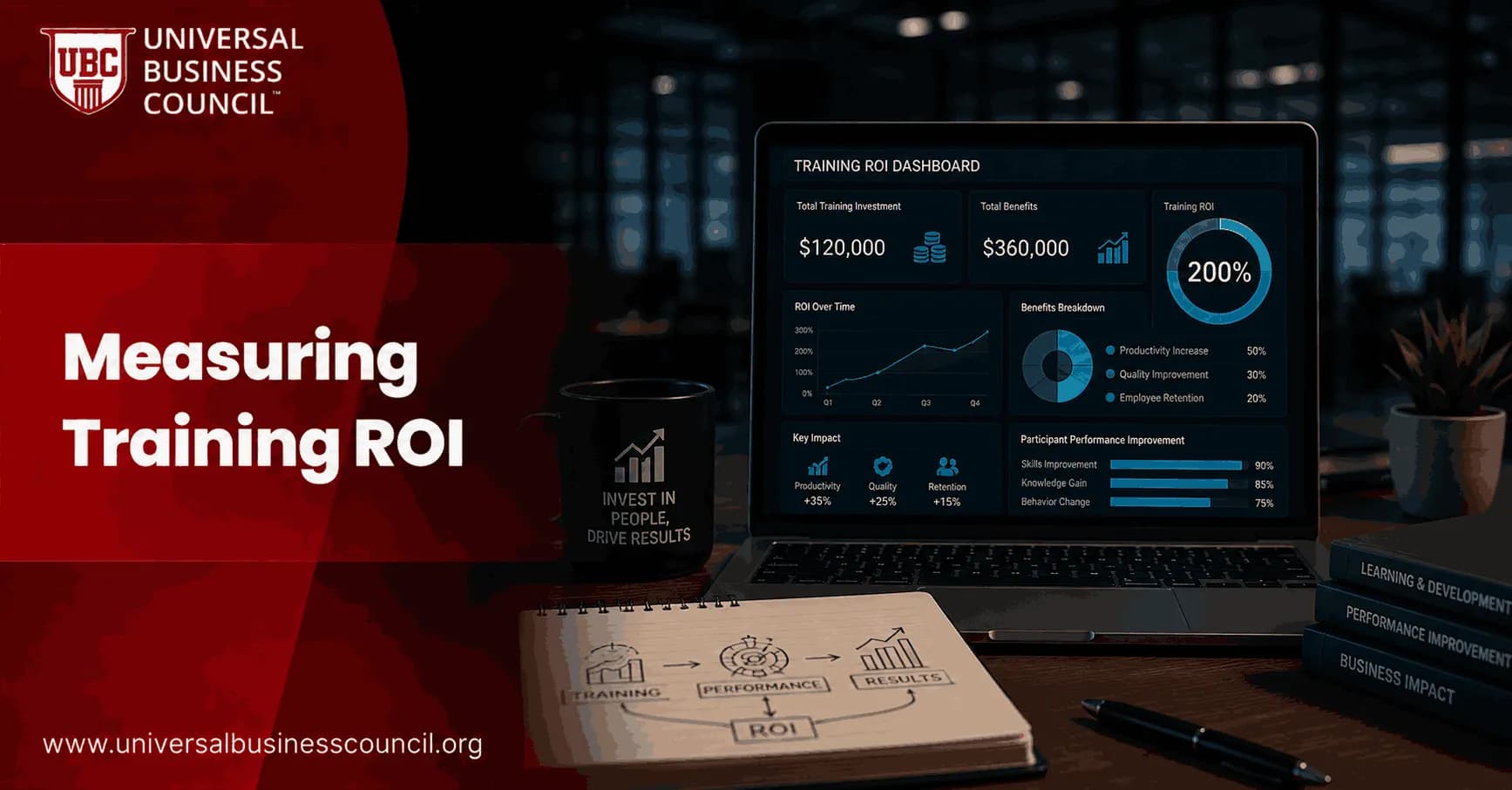
Training ROI is no longer a quarterly slide showing completion rates and happy-sheet scores. If you want leadership to keep funding learning and development, you need to show what changed after training: performance, retention, quality, sales, risk, or time to productivity. HR analytics gives you the evidence trail.
The useful shift is simple. Stop asking, Did people attend? Start asking, What business result moved, by how much, and what part of that movement can reasonably be linked to learning?

What Training ROI Actually Measures
Training ROI is the financial return an organization earns from a learning program compared with the cost of delivering it. The standard formula used in the Phillips ROI Methodology is:
Training ROI (%) = (Net Program Benefits / Training Costs) x 100
Net program benefits are the monetized gains after costs are removed. These may include increased productivity, higher sales, fewer errors, lower turnover, faster onboarding, reduced overtime, or fewer compliance incidents.
Be careful here. A common mistake is using gross benefits in the formula. If a program generated $300,000 in estimated value and cost $100,000, the net benefit is $200,000. ROI is 200 percent, not 300 percent. That calculation error quietly damages confidence in L&D reporting.
Why HR Analytics Changed the ROI Conversation
Traditional L&D reporting often stops at activity metrics:
Enrollments
Attendance
Completion rates
Quiz scores
Learner satisfaction
These measures are useful for administration. They do not prove business impact.
HR analytics connects learning data with workforce and business data. You can then compare training participation with performance ratings, retention, absenteeism, internal mobility, sales outcomes, customer metrics, and quality scores.
The Kirkpatrick Model still earns its place because it separates reaction, learning, behavior, and results. The Phillips ROI Methodology extends that logic by adding financial ROI and isolating the effects of training where possible. Modern HR analytics does not replace these models. It makes them practical at scale.
For an HR Professional, the ability to measure how learning influences business performance is becoming an essential skill, helping organizations make more informed decisions about workforce development and training investments.
The Data You Need Before You Calculate ROI
You cannot calculate credible training ROI from the LMS alone. You need a joined view of learning, HR, and business performance.
Learning data
Enrollment and completion
Assessment scores
Time spent in modules
Certification achievement
Learning pathway progress
Post-training feedback
HR data
Role, department, location, and tenure
Manager and team structure
Performance ratings
Promotion history
Voluntary turnover
Absence patterns
Business data
Sales conversion rate and average deal size
Customer satisfaction or Net Promoter Score
Error rates and rework costs
Production volume
Service resolution time
Incident and audit findings
In practice, this usually means connecting your LMS or learning experience platform with an HRIS, performance management system, and business tools such as Salesforce, HubSpot, Microsoft Power BI, Tableau, or Google Analytics 4 where relevant.
A Practical Process for Measuring Training ROI
1. Start with a business problem, not a course
Training ROI fails when the program is built before the outcome is defined. Start with a measurable business issue.
Examples:
New account executives take nine months to reach quota.
Customer service teams have a high repeat-contact rate.
First-time managers are losing high performers within 12 months.
Manufacturing teams have avoidable quality defects.
Then decide what success looks like. If you cannot name the KPI, do not launch the program yet.
2. Set a baseline
Capture the pre-training number. This might be current sales conversion, error rate, average handling time, voluntary turnover, or time to proficiency.
Use at least three months of baseline data if the metric fluctuates. For seasonal businesses, compare with the same period in the prior year. A single week of data is rarely enough.
3. Use comparison groups where possible
The strongest training ROI analysis compares trained employees with a similar group that did not receive the training, or with a group trained later through a staggered rollout.
This matters because performance can improve for many reasons: new pricing, better tools, a changed incentive plan, or a stronger manager. A comparison group helps you avoid giving training credit for everything.
4. Measure behavior change
Executives care about results, but behavior is the bridge. If a negotiation program does not change discovery calls, proposal quality, or discounting behavior, you should not expect margin improvement.
Use manager observations, call reviews, CRM field completion, quality audits, or 30-60-90 day follow-ups. Short surveys can help, but do not rely on self-reported confidence as your main evidence. People often feel ready before their work improves.
5. Monetize the outcome
Translate performance changes into money. Keep assumptions visible.
For a retention program, your benefit may be avoided replacement cost. For onboarding, it may be faster productivity. For quality training, it may be reduced scrap, rework, refunds, or audit remediation.
A simple spreadsheet line might look like this:
Financial benefit = reduction in errors x cost per error
For turnover:
Financial benefit = avoided exits x average replacement cost
Do not hide assumptions in formulas. Put cost per hire, average margin, salary assumptions, and attribution percentages in separate cells. Finance teams will ask.
6. Calculate ROI, payback, and benefit-cost ratio
ROI is powerful, but it is not the only useful number. Add:
Payback period: how long it takes for benefits to cover costs.
Benefit-cost ratio: total benefits divided by total costs.
Confidence level: how certain you are about attribution.
To be blunt, a modest ROI with clean assumptions beats a huge ROI built on guesswork.
Training ROI Metrics That Leaders Actually Track
The right metrics depend on the program. Match the learning objective to the business result.
Sales training
Win rate
Average deal size
Pipeline velocity
Discount rate
Quota attainment
Sales cycle length
Leadership development
Voluntary turnover among direct reports
Employee engagement scores
Internal promotion rates
Succession readiness
Absenteeism
Manager effectiveness scores
Onboarding
Time to productivity
New-hire retention
First 90-day performance
Error rates
Manager satisfaction with readiness
Compliance and risk training
Incident frequency
Audit findings
Policy violations
Remediation cost
Repeat errors
For HR, L&D, and people analytics professionals building these capabilities, this is a strong place to connect learning plans with relevant Universal Business Council certification pathways in human resource management, business analytics, leadership, and management education. Those learning routes help teams build the measurement discipline that ROI work demands.
Building this level of measurement capability is a defining characteristic of an HR Analytics Expert, who combines workforce data, business metrics, and analytical insight to evaluate the real impact of learning and development initiatives.
Where Training ROI Analysis Often Goes Wrong
The biggest problem is not the math. It is weak design.
No business owner: L&D owns the course, but no operational leader owns the metric.
No baseline: nobody captured performance before training.
No isolation method: every improvement is credited to the program.
Too many metrics: the dashboard is full, but no one knows which number matters.
Short measurement window: behavior change is measured too soon.
Privacy ignored: employee data is combined without clear governance.
Do not measure everything. Pick two or three metrics that tie directly to the business case. If you are evaluating manager training, turnover, engagement, and internal mobility may be enough. If you are evaluating sales enablement, start with win rate, deal size, and cycle length.
Data Privacy and Fairness Cannot Be an Afterthought
HR analytics uses sensitive employee data. Treat it carefully.
Under privacy regimes such as the EU General Data Protection Regulation, principles like data minimization, purpose limitation, and access control matter. Even outside regulated environments, employees should know how learning and HR data will be used.
Set rules before analysis begins:
Use aggregated reporting where possible.
Limit access to identifiable employee data.
Explain the purpose of the analysis.
Check models for bias across groups.
Do not use learning analytics as a punishment tool.
The purpose is better development and better business decisions, not surveillance.
The Future of HR Analytics in Learning and Development
The next stage is skills-based measurement. Organizations are moving from tracking course completion to tracking capability growth. That changes the ROI question.
Instead of asking whether employees completed a data literacy course, you ask whether the organization now has enough people who can build dashboards, interpret workforce trends, or reduce reporting errors. Skills taxonomies, internal talent marketplaces, and performance data will sit closer together.
Predictive analytics will also become more common. HR teams will estimate which learning paths are most likely to reduce attrition, improve promotion readiness, or shorten time to productivity. Useful, yes. Perfect, no. Human review still matters, especially when analytics affects someone's career opportunities.
As AI, analytics platforms, and digital learning technologies continue to evolve, a Tech Certification can help professionals strengthen their understanding of the tools and technologies driving modern workforce development and performance measurement.
How to Get Started This Quarter
Pick one important program. Not ten. Choose a course linked to a visible business metric, such as onboarding speed, sales productivity, quality, or manager effectiveness.
Write one business outcome in plain language.
Define the baseline and target KPI.
Identify the data sources you need.
Create a comparison group if feasible.
Track behavior change after training.
Convert the outcome into financial value.
Share ROI with assumptions clearly stated.
If you are building this capability for your organization, pair HR analytics practice with formal study in human resource management, business analytics, and leadership through the relevant Universal Business Council certification routes. Start with one defensible ROI analysis. Then make it part of how every major learning investment is designed.
Professionals preparing for the future of learning and workforce analytics may also benefit from a Deeptech Certification to build a broader understanding of AI, automation, and emerging technologies that are transforming employee development, skills measurement, and organizational performance.
FAQs
1. What Is Training ROI in Human Resources?
Training ROI (Return on Investment) measures the value an organization gains from employee learning and development programs compared to the time, money, and resources invested. It helps HR determine whether training delivers measurable business results.
2. Why Is Measuring Training ROI Important?
Measuring training ROI helps organizations understand whether learning programs improve employee performance, productivity, engagement, and business outcomes. It also supports better budgeting and future training investments.
3. How Does HR Analytics Help Measure Training ROI?
HR analytics collects and analyzes workforce data before and after training to measure improvements in employee performance, productivity, retention, skills development, and business performance.
4. What Metrics Should HR Track to Measure Training ROI?
Key metrics include training completion rate, employee performance, productivity, promotion rate, retention, engagement, certification completion, skill improvement, and revenue or cost savings where applicable.
5. How Is Training ROI Calculated?
Training ROI is commonly calculated using the formula: ROI (%) = ((Training Benefits − Training Costs) ÷ Training Costs) × 100. This helps organizations evaluate the financial impact of learning initiatives.
6. How Can HR Measure Employee Performance After Training?
HR can compare performance reviews, productivity metrics, goal completion, quality of work, customer feedback, and manager evaluations before and after training programs.
7. Can HR Analytics Measure Skill Improvement?
Yes. HR analytics tracks assessment scores, certifications, learning progress, competency evaluations, and job performance to determine whether employees have successfully developed new skills.
8. How Does Training Impact Employee Retention?
Employees who receive meaningful development opportunities are often more engaged and satisfied, which can improve retention rates and reduce employee turnover over time.
9. What Role Does AI Play in Measuring Training Effectiveness?
AI analyzes learning data, predicts training outcomes, identifies knowledge gaps, recommends personalized learning paths, and generates insights that help optimize future training programs.
10. How Can HR Analytics Improve Learning and Development (L&D)?
HR analytics helps identify skill gaps, prioritize training needs, personalize learning experiences, evaluate program effectiveness, and align development initiatives with business objectives.
11. What Is Learning Analytics?
Learning analytics is the process of collecting and analyzing training data to understand learner behavior, measure program effectiveness, and improve employee learning outcomes.
12. Which Tools Help Measure Training ROI?
Popular tools include Learning Management Systems (LMS), Microsoft Power BI, Tableau, Workday, SAP SuccessFactors, Cornerstone OnDemand, Oracle HCM, and other HR analytics platforms.
13. How Can HR Link Training to Business Performance?
HR can compare workforce metrics before and after training, including productivity, sales performance, customer satisfaction, quality improvements, retention, and operational efficiency.
14. How Often Should Organizations Measure Training ROI?
Training effectiveness should be measured immediately after learning, several months later to evaluate knowledge retention, and periodically to assess long-term business impact.
15. What Challenges Do Organizations Face When Measuring Training ROI?
Common challenges include limited data, difficulty linking training to business outcomes, inconsistent evaluation methods, poor learner feedback, and lack of long-term performance tracking.
16. How Can HR Improve the Accuracy of Training ROI Measurements?
Organizations should establish clear learning objectives, define measurable KPIs, collect baseline data, monitor post-training performance, and combine quantitative metrics with employee feedback.
17. How Does Predictive Analytics Improve Learning and Development?
Predictive analytics identifies future skill requirements, forecasts training needs, recommends personalized development plans, and helps organizations prepare for changing workforce demands.
18. How Can Businesses Build a Data-Driven Learning Strategy?
Organizations should align training with business goals, monitor learning metrics, use analytics dashboards, evaluate outcomes regularly, and continuously refine learning programs based on workforce data.
19. What Common Mistakes Should HR Teams Avoid When Measuring Training ROI?
Avoid measuring only course completion, ignoring business outcomes, relying solely on participant satisfaction surveys, failing to establish baseline metrics, and neglecting long-term performance evaluation. Effective ROI measurement combines learning data with measurable business results.
20. How Does HR Analytics Demonstrate the Value of Learning and Development?
HR analytics proves the impact of learning and development by connecting training investments to measurable improvements in employee performance, productivity, engagement, retention, and business outcomes. Organizations that use data to evaluate training programs can make smarter investment decisions, continuously improve learning strategies, and demonstrate the strategic value of L&D to business leaders.
Related Articles
View All
Hr
From HR Generalist to HR Analytics Expert: Career Path, Skills, and Certifications
A practical guide for moving from HR generalist to HR analytics expert, including skills, tools, career stages, use cases, and certification planning.

Hr
How HR Analytics Supports Strategic Talent Management and Succession Planning
Learn how HR analytics strengthens strategic talent management, improves succession planning, reduces leadership risk, and supports fairer workforce decisions.

Hr
Common HR Analytics Mistakes and How Professionals Can Avoid Them
Learn the most common HR analytics mistakes, from poor data quality to AI bias, and how professionals can build ethical, decision-ready people analytics.
Trending Articles
The Role of Blockchain in Ethical AI Development
How blockchain technology is being used to promote transparency and accountability in artificial intelligence systems.
AWS Career Roadmap
A step-by-step guide to building a successful career in Amazon Web Services cloud computing.
Top 5 DeFi Platforms
Explore the leading decentralized finance platforms and what makes each one unique in the evolving DeFi landscape.