

HR Analytics Expertise Is Becoming a Core HR Competency
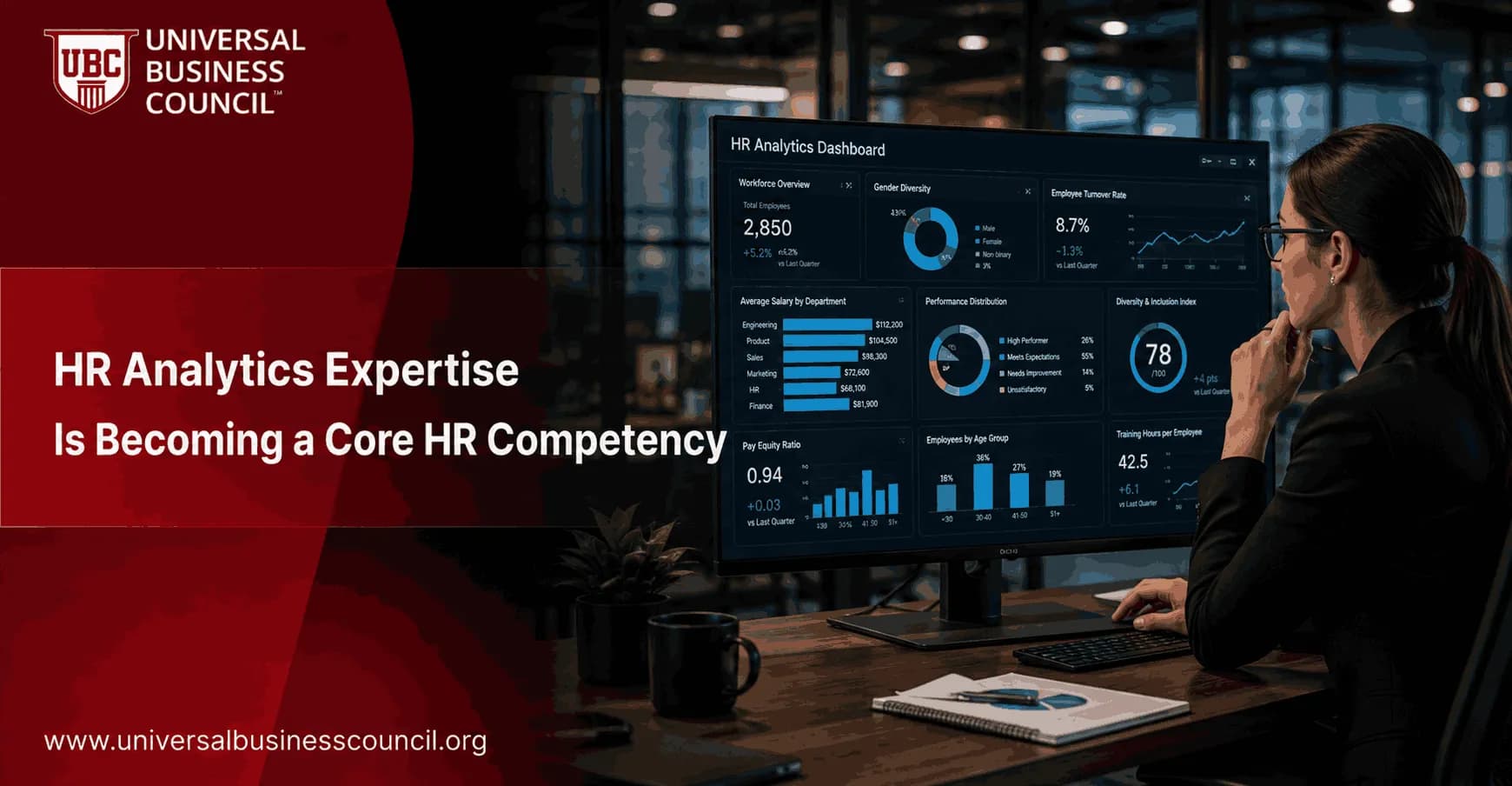
HR analytics expertise is no longer a specialist skill tucked inside a reporting team. It is becoming a core HR competency because boards, CEOs, and business-unit leaders now expect people decisions to be tied to evidence, risk, cost, and business outcomes. Gut feel still has a place. It should not be the only place.
The shift is practical, not theoretical. HR teams are being asked to predict attrition, explain productivity gaps, measure employee experience, assess skills risk, and guide AI use in hiring and workforce planning. That changes the job. You are not just administering processes. You are reading signals and advising leaders on what to do next.

Why HR Analytics Expertise Now Matters
For years, HR reporting meant headcount, turnover, time-to-fill, and training completion. Useful, yes. Strategic, not always. Modern people analytics connects those measures to operational and financial questions:
Which roles create the highest risk if turnover rises?
Where are hiring delays affecting revenue or customer delivery?
Which teams show early signs of burnout?
What skills will the organization lack in 12 to 24 months?
Do engagement scores predict retention, performance, or customer outcomes?
That is why HR analytics expertise is becoming central to HR leadership. SHRM has argued that HR must move from reactive reporting toward AI-supported prediction and influence. Gartner research has found that the future of work sits near the top of HR leaders' priority lists, with rising investment behind it. Those investments need evidence to justify them.
For today's HR Professional, the ability to interpret workforce data and translate it into business recommendations is becoming just as important as expertise in employee relations, talent management, and organizational development.
To be blunt, executives do not need another dashboard with 40 tiles. They need a clear recommendation: keep hiring, pause hiring, retrain, redesign roles, change managers, or fix compensation pressure before the exit interviews pile up.
From Reporting to Predictive Workforce Decisions
The old HR question was, What happened last quarter? The new one is, What is likely to happen next, and what should we do about it?
Predictive workforce analytics is now used to forecast turnover, model skills gaps, identify burnout risk, and support scenario planning. Machine learning tools can find patterns across HRIS, performance, engagement, learning, and recruiting data that a person would not easily spot in a spreadsheet.
But tools do not remove the need for judgment. They raise the bar for it.
The Human Skill Behind the Model
You need to know whether the data is clean, whether the model is biased, and whether the recommendation makes sense in context. A model might flag a high-performing employee as a retention risk because commute distance, pay position, a recent manager change, and low survey participation all line up with past resignations. That is useful. It is not a command.
A common mistake I see in HR analytics reviews is treating an overall turnover rate as the story. It rarely is. An 18% annual turnover rate may sound manageable until you see that one critical engineering job family is running at 31%, vacancy aging is above 45 days, and new hires in that group are leaving before month nine. That is the moment analytics becomes a workforce risk conversation, not an HR metric review.
AI Is Making Data Literacy Non-Negotiable
AI is already embedded in hiring platforms, talent marketplaces, learning systems, workforce planning tools, and employee listening platforms. Skills-gap analysis and career pathway mapping are among the most common use cases. Predictive and prescriptive analytics increasingly inform where workforce investment may produce the strongest return. Many organizations have shifted from annual surveys toward real-time pulse listening and external benchmarking.
This changes what HR professionals need to understand. You do not have to become a data scientist. You do need enough analytics literacy to ask better questions:
What data trained this model?
Which variables are excluded, and why?
Could this recommendation disadvantage a protected group?
How often is the model validated?
What action will a manager actually take from this insight?
Ethical AI is not a side issue in HR. It is central. People data includes sensitive signals about performance, health, location, behavior, compensation, identity, and sentiment. If employees believe analytics is being used to watch them rather than support them, trust falls quickly. Once lost, it is hard to recover.
The Core Use Cases Driving People Analytics
Retention and Attrition Forecasting
Retention analytics helps HR move before resignation letters arrive. Instead of waiting for exit interviews, you can examine manager changes, pay position, career stagnation, internal mobility, workload indicators, engagement trends, and absence patterns.
The trade-off: do not reduce people to flight-risk scores. Use the signal to improve work design, career paths, pay fairness, and manager support.
Employee Experience and Real-Time Listening
Annual engagement surveys are too slow for many organizations. Pulse surveys, sentiment analysis, and continuous listening can show whether a change in leadership, workload, return-to-office policy, or restructuring is affecting morale.
Short surveys work best. In practice, once a pulse survey creeps past 10 to 12 questions, participation drops and the comments get thinner. Ask fewer questions. Act faster.
Skills Mapping and Workforce Planning
Skills analytics is one of the most important areas in the future of HR. Organizations need to know what skills they have, what skills they need, and where the gaps could derail strategy.
This matters most for AI adoption, digital transformation, cybersecurity, sales capability, and operations redesign. Skills data can support internal mobility, targeted learning, succession planning, and build-versus-buy workforce decisions.
DEI Analytics and Fairness Monitoring
DEI analytics helps HR assess representation, hiring funnels, promotion rates, pay equity, inclusion sentiment, and retention patterns. Done well, it turns broad commitments into measurable management work.
Done badly, it becomes a compliance chart no one trusts. The better approach is to connect DEI metrics to specific decision points: sourcing, screening, interview panels, calibration meetings, promotion criteria, and manager accountability.
Culture and Influence Mapping
SHRM has described a healthcare example where organizational network analysis helped identify nurses who influenced safety practices across disciplines. That type of analysis can reveal informal leaders, collaboration bottlenecks, and culture carriers who do not always show up on an organization chart.
HR needs enough analytics expertise to read this carefully. Influence mapping can improve safety and collaboration, but it has to be governed with transparency and respect for privacy.
Developing these capabilities is a defining characteristic of an HR Analytics Expert, who combines workforce data, business context, and analytical thinking to help leaders make informed people decisions while balancing performance, fairness, and organizational goals.
What HR Professionals Need to Learn
If you want to build HR analytics expertise, start with the skills that change how you make decisions. Do not begin with the fanciest AI tool. Begin with the questions leaders actually care about.
Metric design: Know how to define turnover, regretted attrition, quality of hire, internal mobility, engagement, absenteeism, productivity, and time-to-productivity.
Business linkage: Connect people metrics to revenue, margin, customer satisfaction, project delivery, risk, and cost.
Data storytelling: Turn analysis into a clear narrative with a decision, a trade-off, and a recommended action.
Basic statistics: Understand correlation, causation, sample size, segmentation, confidence, and bias.
Tool fluency: Get comfortable with Excel, Google Sheets, Power BI, Tableau, HRIS reporting, survey tools, and systems such as Workday, SAP SuccessFactors, or Oracle HCM where relevant.
AI governance: Learn how to question model outputs, monitor fairness, protect privacy, and set boundaries for people data.
You can use this as an internal learning path. If you are building toward HR leadership, pair analytics capability with management, leadership, and business strategy training. Review the Universal Business Council certification catalog for HR, management, and business analytics programmes that match your role and career stage.
A Tech Certification can further strengthen these capabilities by helping HR professionals understand emerging technologies, AI-enabled platforms, automation, and digital tools that increasingly shape modern workforce management and decision-making.
Where HR Analytics Is Headed Next
The next phase of HR will be more predictive, more automated, and more self-service. Routine data extraction will keep shrinking as platforms give HR business partners and leaders direct access to dashboards, forecasts, and natural-language queries.
That does not make HR less important. It changes the value of the role.
The HR professionals who stand out will be the ones who can frame the problem, challenge the data, explain the insight, and guide the decision. They will know when a predictive model is useful and when it is overreaching. They will also know when the best answer is not another metric, but a hard conversation with a manager whose team keeps losing people.
Here is the position worth taking: HR analytics expertise should be treated as a core competency for HR business partners, talent acquisition leaders, learning leaders, compensation teams, and HR executives. It should not be left only to a people analytics specialist. Specialists matter, but the wider HR function needs enough skill to use analytics responsibly in daily decisions.
Your Next Step
Pick one workforce problem this month: early turnover, low internal mobility, hiring bottlenecks, engagement decline, or skills risk. Define the metric, segment the data, ask what business outcome it affects, and prepare one recommendation for leadership. Then build the skill formally through HR, management, or analytics training aligned with your career path. That is how HR analytics expertise becomes real capability, not just a line on a job description.
Professionals preparing for the future of work may also benefit from a Deeptech Certification to build a broader understanding of AI, automation, and other advanced technologies that are transforming HR strategy, workforce planning, and organizational performance.
FAQs
1. What Is HR Analytics Expertise?
HR analytics expertise is the ability to collect, analyze, interpret, and communicate workforce data to improve hiring, employee engagement, retention, performance management, and strategic business decision-making.
2. Why Is HR Analytics Becoming a Core HR Competency?
Modern HR has evolved from an administrative function to a strategic business partner. HR analytics enables professionals to make evidence-based decisions, measure outcomes, and demonstrate the business impact of HR initiatives.
3. Why Should Every HR Professional Learn HR Analytics?
HR analytics helps professionals understand workforce trends, improve recruitment, reduce employee turnover, optimize workforce planning, and support organizational goals using reliable data instead of assumptions.
4. What Skills Are Required to Become Proficient in HR Analytics?
Key skills include data analysis, Excel, HR metrics, workforce planning, data visualization, business communication, statistical thinking, predictive analytics, and familiarity with HR technology platforms.
5. How Does HR Analytics Improve HR Decision-Making?
HR analytics provides measurable insights into employee performance, engagement, recruitment, and retention, allowing HR leaders to make informed decisions that align with business objectives.
6. What Role Does Data Play in Modern Human Resources?
Data helps HR professionals evaluate workforce performance, identify talent trends, forecast hiring needs, measure employee engagement, and improve the effectiveness of HR programs.
7. How Does HR Analytics Support Strategic Workforce Planning?
By analyzing workforce trends, predicting future staffing needs, identifying skills gaps, and monitoring employee movement, HR analytics helps organizations build stronger long-term workforce strategies.
8. Why Is Predictive Analytics Important in HR?
Predictive analytics enables HR teams to anticipate employee turnover, forecast hiring demand, identify leadership potential, and address workforce challenges before they become larger business issues.
9. How Does Artificial Intelligence Enhance HR Analytics?
AI automates data processing, detects workforce patterns, predicts employee behavior, generates insights, and reduces the time required to analyze large volumes of HR data.
10. What HR Metrics Should Every HR Professional Understand?
Essential metrics include employee turnover, retention rate, time-to-hire, cost-per-hire, absenteeism, employee engagement, productivity, internal mobility, learning effectiveness, and diversity metrics.
11. How Can HR Analytics Improve Recruitment?
HR analytics evaluates recruitment channels, measures hiring performance, predicts candidate success, reduces hiring costs, and helps recruiters make more objective hiring decisions.
12. How Does HR Analytics Improve Employee Retention?
By identifying factors that influence employee satisfaction and turnover, HR analytics enables organizations to implement targeted retention strategies and improve the overall employee experience.
13. What Tools Should HR Professionals Learn for HR Analytics?
Popular tools include Microsoft Excel, Power BI, Tableau, Google Looker Studio, Workday, SAP SuccessFactors, Oracle HCM, BambooHR, Visier, and other HR analytics platforms.
14. How Does HR Analytics Support Performance Management?
Analytics helps organizations monitor employee performance, measure goal achievement, identify development opportunities, reduce evaluation bias, and improve coaching and performance review processes.
15. How Can HR Professionals Develop HR Analytics Expertise?
Professionals can build expertise by learning HR metrics, practicing with workforce datasets, mastering analytics tools, earning certifications, and applying analytics to real HR challenges and projects.
16. What Challenges Do HR Professionals Face When Learning Analytics?
Common challenges include limited technical knowledge, poor data quality, fragmented HR systems, interpreting workforce data, ensuring privacy compliance, and translating insights into business actions.
17. How Can Organizations Build a Data-Driven HR Culture?
Organizations should invest in HR technology, improve data quality, train HR teams, encourage evidence-based decision-making, and integrate analytics into everyday HR processes.
18. How Can Businesses Measure the Impact of HR Analytics?
Success can be measured through improved hiring efficiency, lower turnover, increased employee engagement, better workforce planning, stronger productivity, and measurable business outcomes linked to HR initiatives.
19. What Common Mistakes Should HR Professionals Avoid When Using Analytics?
Avoid relying on incomplete or outdated data, focusing only on reports without actionable insights, ignoring employee privacy, and assuming analytics replaces human judgment. Effective HR professionals use analytics to support decisions, not make decisions in isolation.
20. Why Will HR Analytics Expertise Be Essential for the Future of HR?
As organizations increasingly adopt AI, automation, and data-driven workforce strategies, HR analytics is becoming a foundational skill rather than a specialized capability. HR professionals who can interpret workforce data, communicate business insights, and support strategic decision-making will be better positioned for leadership roles and long-term career growth.
Related Articles
View All
Hr
From HR Generalist to HR Analytics Expert: Career Path, Skills, and Certifications
A practical guide for moving from HR generalist to HR analytics expert, including skills, tools, career stages, use cases, and certification planning.

Hr
How HR Analytics Supports Strategic Talent Management and Succession Planning
Learn how HR analytics strengthens strategic talent management, improves succession planning, reduces leadership risk, and supports fairer workforce decisions.

Hr
Common HR Analytics Mistakes and How Professionals Can Avoid Them
Learn the most common HR analytics mistakes, from poor data quality to AI bias, and how professionals can build ethical, decision-ready people analytics.
Trending Articles
The Role of Blockchain in Ethical AI Development
How blockchain technology is being used to promote transparency and accountability in artificial intelligence systems.
AWS Career Roadmap
A step-by-step guide to building a successful career in Amazon Web Services cloud computing.
Top 5 DeFi Platforms
Explore the leading decentralized finance platforms and what makes each one unique in the evolving DeFi landscape.