

How HR Analytics Supports Strategic Talent Management and Succession Planning
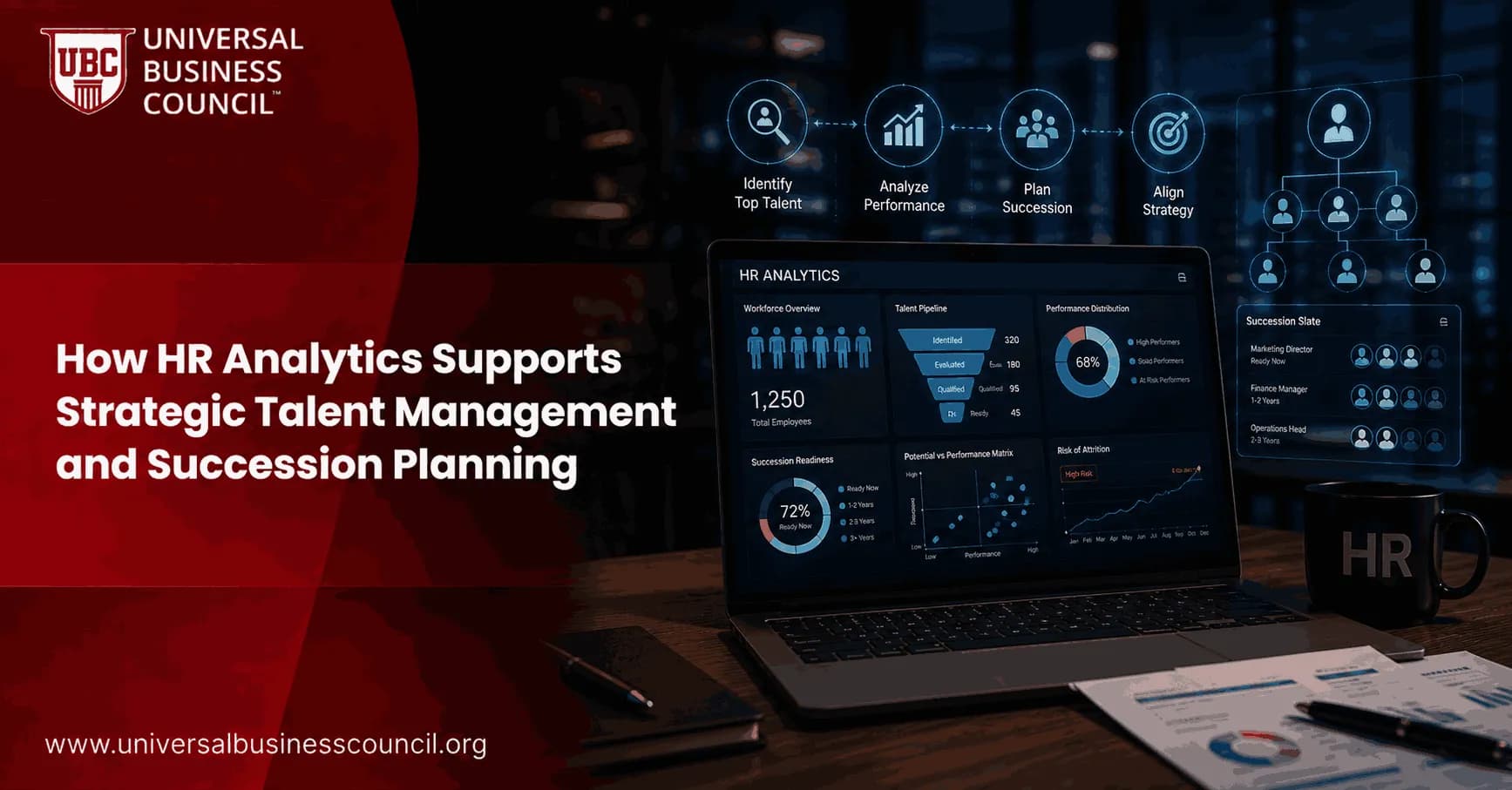
HR analytics turns workforce data into practical evidence for hiring, development, retention, and succession planning. Done well, it shows you which roles are at risk, which employees are ready for bigger responsibility, and where your leadership pipeline is thinner than the board assumes.
This matters because too many succession plans still live in static spreadsheets. Recent research suggests that a majority of HR leaders describe their succession strategy as outdated, and only a minority of organizations build diversity considerations into the process. That gap is exactly where people analytics earns its place at the strategy table.

What HR Analytics Changes in Talent Decisions
Traditional HR reporting tells you what happened last quarter: headcount, turnover, open roles, training completion, engagement scores. Useful, but limited.
HR analytics connects those measures to business decisions. It asks better questions:
Which roles would disrupt revenue, operations, or customer delivery if vacant for 90 days?
Which teams lose high performers after the same promotion point?
Which sourcing channels produce hires who stay and perform after 12 months?
Which leadership competencies are missing from your next layer of managers?
Which successors are genuinely ready now, and which are only familiar names in a calibration meeting?
The shift is from activity tracking to decision support. You are not collecting data to admire a dashboard. You are using it to make sharper calls about people, risk, and investment.
For an HR Professional, the ability to interpret workforce data and translate it into practical talent decisions is becoming a core skill for supporting organizational growth and long-term business success.
The Data That Matters Most for Strategic Talent Management
You do not need every field in the HR system. Start with the variables that change decisions. In most organizations, these include:
Workforce structure: headcount, role family, location, tenure, grade, employment type, and critical role status.
Talent acquisition: source of hire, time to fill, cost per hire, offer acceptance rate, assessment scores, and quality of hire.
Performance and potential: ratings, goal outcomes, promotion history, 9-box placement, manager feedback, and peer input where appropriate.
Learning and skills: completed training, certifications, skills assessments, internal gigs, mentoring, and leadership program participation.
Engagement and retention: engagement scores, regretted attrition, internal mobility, absence trends, manager changes, and exit themes.
Succession readiness: readiness level, target role, development gaps, mobility constraints, diversity indicators, and bench strength coverage.
A warning from practice: performance ratings alone are a weak succession signal. They often reward success in the current role, not readiness for the next one. The strongest individual contributor on a technical team may not want people management at all, and forcing that path is how companies lose excellent specialists.
How HR Analytics Supports Strategic Talent Management
Better workforce planning and scenario analysis
Workforce planning becomes strategic when HR connects people data to business plans. If the company plans to enter a new market, automate a process, or expand customer support, you need to know what skills, roles, and managers will be required before the hiring panic starts.
Analytics can model scenarios such as:
Expected headcount demand under a growth plan.
Likely attrition in critical job families.
Cost differences between hiring, reskilling, outsourcing, or internal mobility.
Leadership coverage if two senior managers leave within the same year.
Executives track revenue, margin, productivity, and risk. HR earns credibility when talent plans are expressed in the same language: vacancy risk, time to productivity, retention cost, bench strength, and capability gaps.
Stronger talent acquisition and selection
Talent analytics helps recruitment teams move past volume metrics. Time to fill matters, but a fast hire who quits in six months is not a win.
Track source quality, not just source quantity. Compare hiring channels by first-year performance, retention, ramp time, and hiring manager satisfaction. Marketing teams already study conversion funnels in tools like Google Analytics 4, HubSpot, and Salesforce. Recruitment can do the same inside an applicant tracking system: application to screen, screen to interview, interview to offer, offer to acceptance.
AI-supported screening tools can help process large applicant pools, but they need oversight. If historical hiring data carries bias, the model will repeat it. Use structured interviews, job-related assessments, and regular adverse impact checks. To be blunt, automation is not fairness by default.
Clearer identification of high-potential employees
High potential should not mean 'well liked by senior leaders.' HR analytics can combine performance outcomes, learning agility, career movement, skills depth, and feedback patterns to build a more balanced picture.
Still, keep humans in the loop. A 9-box grid is useful for calibration, but it gets dangerous when treated as permanent truth. The common mistake is rating inflation: every department wants its people in the top-right box. Force evidence into the discussion. Ask managers to cite results, behavior, readiness, and risk. Then test their claims against the data.
More targeted learning and development
Learning data is often stuck at the activity level: who completed which course. Strategic talent management asks a harder question. Did the learning change performance, mobility, or readiness?
Connect leadership programs to outcomes such as promotion rates, retention of participants, manager effectiveness scores, internal fill rates, and readiness movement. If a program does not improve capability or succession coverage, redesign it. Completion certificates look tidy, but they do not fill a general manager role.
This is also a natural place to build formal capability. Professionals strengthening their skills in analytics, HR, management, or leadership can review relevant programs in the Universal Business Council certification catalog and connect that learning with their workforce strategy goals.
Earlier detection of engagement and retention risk
Succession planning collapses when key successors leave quietly. HR analytics can flag retention risk by combining signals such as declining engagement, low internal mobility, pay compression, manager turnover, missed promotions, and absence trends.
Do not use these indicators to carelessly label people as flight risks. Use them to improve the employee experience. For example, if high performers on a product team leave after two years because there is no senior specialist path, the answer may be a better career architecture, not another pulse survey.
How HR Analytics Improves Succession Planning
Succession planning is where HR analytics becomes very visible. A good succession dashboard should answer four questions fast:
Which roles are critical? Not every senior title carries the same risk. Prioritize roles tied to revenue, safety, regulatory exposure, customer continuity, or scarce expertise.
Who could step in? Map potential successors by readiness: ready now, ready in 1 to 2 years, or ready in 3 to 5 years.
What gaps must be closed? Identify missing skills, experience, mobility, stakeholder exposure, or leadership behaviors.
Where is the risk? Show roles with no successor, single-successor dependency, low diversity in the pipeline, or successors with retention concerns.
Real-time analytics keeps the plan from going stale. When an employee changes role, completes a development assignment, receives a new performance review, or indicates mobility constraints, the succession view should update. That beats revisiting the plan once a year after budget season.
Applying workforce data in this way is a defining capability of an HR Analytics Expert, helping organizations strengthen succession planning, reduce talent risk, and make more informed leadership decisions.
Move from replacement lists to capability pipelines
Old succession planning asks, 'Who replaces Sarah if she leaves?' Modern succession planning asks, 'What capabilities will the business need in three years, and where are we building them?'
That distinction matters. A company preparing for AI-enabled operations may need leaders who understand data governance, vendor risk, process redesign, and change management. The person who runs today's function may not be the right successor for tomorrow's operating model.
Use diversity analytics carefully
Analytics can reveal whether succession pools are too narrow. Look at representation by gender, ethnicity where legally and ethically appropriate, age band, disability status where voluntarily disclosed, geography, and career background. The point is not quotas in a spreadsheet. The point is visibility.
If diverse employees enter development programs but do not move into critical roles, examine sponsorship, manager nomination patterns, assignment access, and promotion criteria. Bias often hides in informal opportunity flow.
Governance, Privacy, and Ethics Cannot Be an Afterthought
HR analytics uses sensitive employee data. Treat it with care.
Set clear rules for data access, purpose, retention, and model review. HR, legal, IT, data teams, and business leaders should agree on what data can be used and why. Employees should understand how analytics supports workforce decisions, especially decisions that affect careers.
For AI and predictive models, test for bias and explainability. If a model recommends leadership candidates, you need to know which variables drove that recommendation. A black-box score should never decide who gets promoted, developed, or excluded from opportunity.
What the Future Looks Like
HR analytics is moving toward predictive and prescriptive use. Predictive analytics estimates what may happen, such as likely turnover in a critical role family. Prescriptive analytics suggests actions, such as targeted retention plans, succession moves, or reskilling investments.
Expect more integrated talent platforms that connect recruitment, performance, learning, engagement, workforce planning, and succession data. Expect more self-service dashboards for business leaders too. That is useful, but only if leaders are trained to read the numbers. A dashboard without judgment creates confident mistakes.
As AI-powered talent platforms and workforce analytics continue to evolve, a Tech Certification can help professionals strengthen their understanding of the technologies, digital tools, and governance practices shaping modern HR.
How to Start Without Overbuilding
If you are building HR analytics for strategic talent management and succession planning, start small and make it decision-led.
Select 10 to 20 critical roles. Do not begin with the whole organization.
Define readiness criteria. Use evidence: performance, skills, experience, mobility, and leadership behaviors.
Build a simple bench strength view. Show ready-now successors, near-term successors, and gaps.
Connect development actions. Assign stretch work, mentoring, learning, or rotations to each gap.
Review quarterly. Succession plans age quickly. Keep them alive.
Your next step: choose one business unit, map its critical roles, and build a succession risk dashboard with no more than five core measures. If you want to strengthen the skills behind that work, review Universal Business Council's certification catalog for related HR, analytics, leadership, and management learning paths.
Professionals preparing for the future of strategic workforce planning may also benefit from a Deeptech Certification to build a broader understanding of AI, automation, and emerging technologies that are transforming talent management, succession planning, and organizational leadership.
FAQs
1. What Is HR Analytics in Talent Management?
HR analytics uses workforce data to improve talent management by helping organizations recruit, develop, retain, and promote employees based on measurable insights rather than assumptions. It supports smarter and more strategic people decisions.
2. Why Is HR Analytics Important for Strategic Talent Management?
HR analytics helps organizations identify top talent, forecast workforce needs, improve employee development, reduce turnover, and align talent strategies with long-term business goals.
3. What Is Succession Planning in Human Resources?
Succession planning is the process of identifying and developing employees who have the potential to fill critical leadership and business roles when vacancies occur.
4. How Does HR Analytics Improve Succession Planning?
HR analytics evaluates employee performance, leadership potential, skills, experience, and career progression to identify high-potential employees and prepare them for future leadership positions.
5. How Can HR Analytics Identify High-Potential Employees?
By analyzing performance reviews, learning progress, leadership competencies, engagement levels, promotions, and business impact, HR can identify employees with strong growth potential.
6. What Data Is Used in Talent Management Analytics?
Organizations analyze performance ratings, employee engagement, retention data, training records, skills assessments, promotions, career progression, productivity, and workforce demographics.
7. How Does HR Analytics Support Workforce Planning?
HR analytics forecasts future staffing needs, identifies skills shortages, monitors workforce trends, and helps organizations prepare for growth, retirements, and changing business demands.
8. How Can HR Analytics Improve Employee Development?
Analytics identifies skill gaps, recommends training opportunities, measures learning effectiveness, and supports personalized development plans that align employee growth with business objectives.
9. What Role Does Artificial Intelligence Play in Talent Management?
AI analyzes workforce data, predicts future talent needs, identifies leadership candidates, automates reporting, and provides recommendations that help HR make faster and more informed decisions.
10. What HR Metrics Are Important for Succession Planning?
Key metrics include employee performance, leadership readiness, retention rate, internal promotion rate, learning completion, engagement score, skills proficiency, and time-to-fill leadership positions.
11. How Can HR Analytics Improve Leadership Development?
HR teams can use analytics to identify future leaders, monitor leadership competencies, evaluate development progress, and create targeted coaching and mentoring programs.
12. How Does Predictive Analytics Support Succession Planning?
Predictive analytics forecasts leadership vacancies, retirement trends, turnover risks, and future workforce requirements, enabling organizations to prepare successors before critical positions become vacant.
13. How Can HR Analytics Reduce Leadership Gaps?
By continuously monitoring leadership readiness and succession pipelines, HR can identify development needs early and reduce the risk of critical roles remaining unfilled.
14. What Tools Help HR Manage Talent and Succession Planning?
Popular platforms include Workday, SAP SuccessFactors, Oracle HCM Cloud, Visier, Microsoft Power BI, Tableau, BambooHR, UKG Pro, and other HR analytics and talent management systems.
15. How Does HR Analytics Improve Internal Mobility?
Analytics identifies employees with transferable skills and growth potential, helping organizations fill open positions internally while supporting career development and employee retention.
16. What Challenges Do Organizations Face with Talent Analytics?
Common challenges include incomplete workforce data, fragmented HR systems, identifying future leadership potential, ensuring unbiased evaluations, and aligning talent strategies with business objectives.
17. How Can Organizations Build a Data-Driven Talent Management Strategy?
Businesses should define talent goals, collect reliable workforce data, monitor meaningful KPIs, invest in analytics tools, support continuous learning, and regularly review succession plans.
18. How Can HR Measure the Success of Talent Management Programs?
Success can be measured through higher internal promotion rates, stronger employee retention, leadership readiness, improved engagement, reduced recruitment costs, and faster succession planning.
19. What Common Mistakes Should HR Teams Avoid in Succession Planning?
Avoid focusing only on current performance, neglecting leadership development, relying on outdated workforce data, overlooking diverse talent pipelines, and failing to update succession plans regularly. Effective succession planning is an ongoing process, not a one-time exercise.
20. How Will HR Analytics Shape the Future of Talent Management and Succession Planning?
HR analytics will continue to transform talent management through AI-powered insights, predictive workforce planning, and continuous performance analysis. Organizations that use workforce data strategically will be better prepared to develop future leaders, strengthen succession pipelines, improve employee retention, and build a resilient workforce capable of supporting long-term business growth.
Related Articles
View All
Hr
HR Analytics for Performance Management: Turning Data into Better Decisions
Learn how HR analytics for performance management improves goal setting, feedback, development, rewards, and fairer workforce decisions.

Hr
HR Analytics in Recruitment: Building Data-Driven Talent Acquisition
Learn how HR analytics improves recruitment decisions, sourcing, candidate experience, quality of hire, workforce planning, and responsible AI use.

Hr
How HR Professionals Can Use People Analytics for Workforce Planning
Learn how HR professionals can use people analytics for workforce planning, from headcount forecasts and skills gaps to retention, DEI, and ethical AI.
Trending Articles
The Role of Blockchain in Ethical AI Development
How blockchain technology is being used to promote transparency and accountability in artificial intelligence systems.
AWS Career Roadmap
A step-by-step guide to building a successful career in Amazon Web Services cloud computing.
Top 5 DeFi Platforms
Explore the leading decentralized finance platforms and what makes each one unique in the evolving DeFi landscape.