

Common HR Analytics Mistakes and How Professionals Can Avoid Them
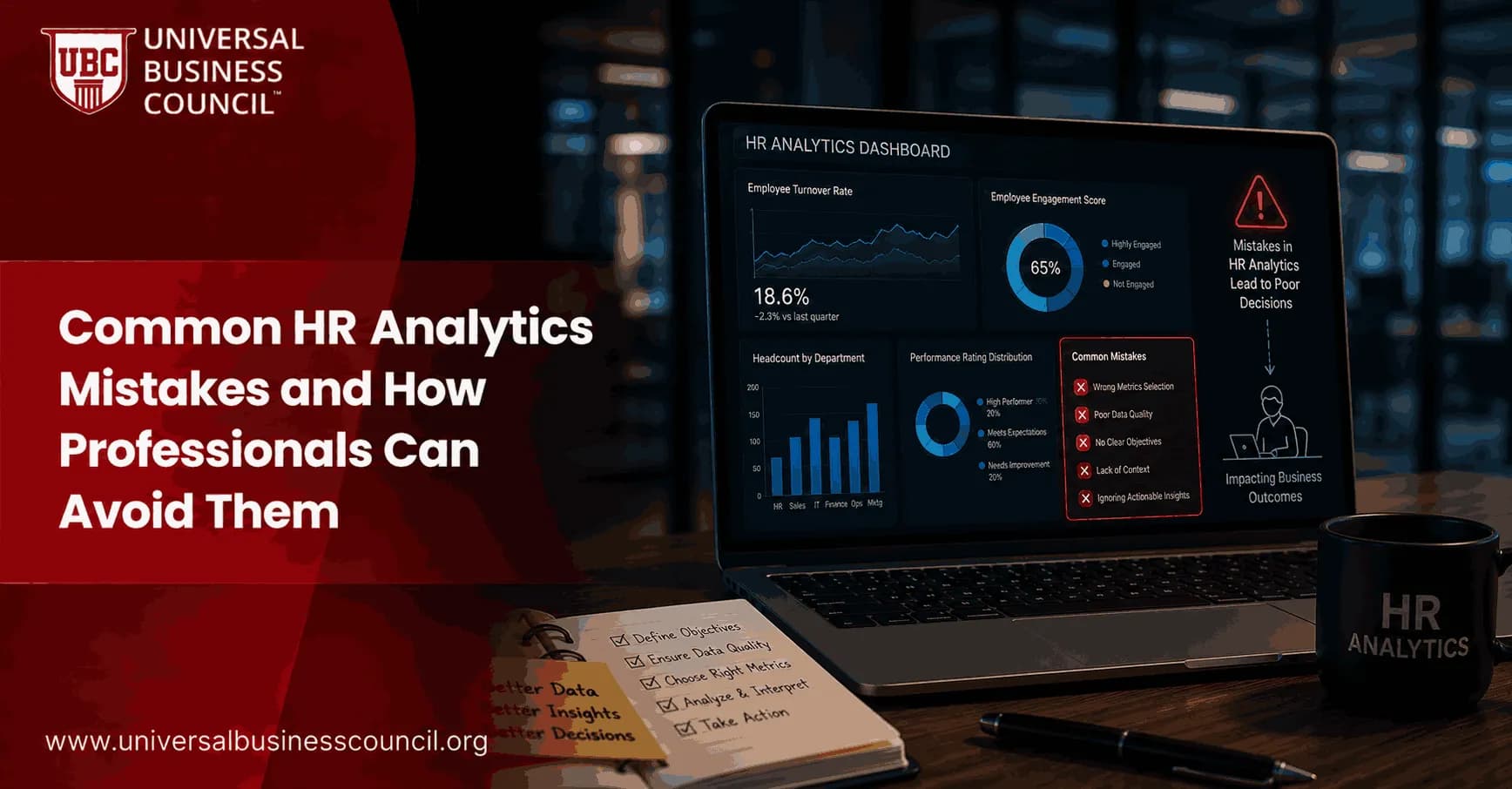
HR analytics mistakes usually start before anyone opens a dashboard. Bad employee records, vague questions, disconnected systems, and weak ethics controls can turn people data into confident nonsense. If you work in HR, operations, analytics, or management, your job is not just to produce charts. Your job is to help leaders make better workforce decisions without damaging trust.
That is harder than it sounds. HR data carries context that sales or inventory data often does not: manager behaviour, employee sentiment, pay history, health-related absence, performance judgments, and sometimes legally sensitive attributes. Treat it carelessly and the analysis can mislead executives, expose the organisation to risk, or make employees feel watched rather than supported.

Why HR Analytics Fails More Often Than It Should
HR analytics has moved well beyond headcount reports. Many organisations now use HRIS, payroll, recruiting, learning, case management, and timesheet data to forecast staffing needs, model attrition risk, and test workforce scenarios. Workplace researchers point to AI, hybrid work, and workforce redesign as major management priorities, all of which depend on better people analytics.
The problem is not ambition. Ambition helps. The problem is weak execution. Common failure points show up again and again in HR analytics projects: overambitious scope, poor business relevance, compliance gaps, bad data, and a failure to turn findings into action. Organisations need integrated people data, a shared talent language, and stronger analytics capability before they can expect reliable insight.
For an HR Professional, avoiding these common pitfalls is becoming an essential part of delivering reliable workforce insights that support better business decisions and strengthen employee trust.
Here are the mistakes that matter most, and what you can do instead.
1. Building Analysis on Poor Data Quality
This is the boring problem that ruins the expensive project.
HR data often contains inconsistent job titles, missing termination reasons, duplicate employee records, outdated manager assignments, and manual entry errors. In a typical dashboard audit, the first red flag is a resignation rate that changes depending on whether the analyst uses termination date, payroll end date, or HR case closure date. That is not a small technical issue. It changes the story leadership hears.
Inconsistent case tracking is a major barrier to useful employee relations analytics. If one HR business partner logs a bullying complaint as "conduct" and another logs a similar issue as "manager concern," trend analysis becomes unreliable.
How to avoid it
Define core fields: employee ID, role, manager, location, employment type, hire date, termination date, termination reason, and case category.
Use validation rules: stop free-text entries where categories should be standardised.
Audit monthly: check missing values, duplicate records, impossible dates, and outliers.
Assign ownership: HR, IT, payroll, and talent teams need named data owners, not vague shared responsibility.
Do not start predictive modelling until the basics are clean enough to defend.
2. Starting Without a Clear Business Question
"Let's analyse turnover" is not a business question. It is a topic.
A better question is: "Which roles in our customer support function have the highest regrettable attrition in the first 12 months, and what factors predict avoidable exits?" That question has a population, a time frame, a business outcome, and a possible decision attached to it.
HR analytics must start with a clear "why." Without that, teams drift into vanity metrics: dashboard views, total training hours, average engagement score, or overall time to hire. Some of these are useful. None are automatically strategic.
How to avoid it
Name the decision: what will change if the analysis is clear?
Set the success metric: attrition, time to productivity, quality of hire, absenteeism, internal mobility, pay equity, or promotion rate.
Agree on thresholds: decide what level of risk or improvement justifies action.
Start small: one business unit, one job family, one measurable outcome.
To be blunt, a focused analysis that changes one process is worth more than a 40-page report nobody owns.
3. Relying Only on Historical Dashboards
Static reporting tells you what happened. It does not tell you what is likely to happen next.
Historical dashboards are useful for monitoring headcount, turnover, absence, hiring funnel performance, and engagement trends. But if your HR analytics program stops there, leaders stay reactive. They find out about staffing risk after service levels have slipped or after high performers have already left.
Current workforce planning practice increasingly combines HR, payroll, and timesheet data to build forecasts and staffing scenarios. That means HR can test questions such as these. What happens to overtime cost if hiring is frozen for 90 days? Which locations face retirement risk in the next two years? How many people must be reskilled before a system implementation?
How to avoid it
Use trend analysis to detect direction, not just current status.
Segment by role, tenure, manager group, location, and skill where legally appropriate.
Test scenarios before policy changes, especially for hiring freezes or restructuring.
Review forecasts regularly and compare them with actual outcomes.
Predictive analysis does not need to be fancy at first. A clean cohort analysis can beat a poorly built AI model.
4. Keeping People Data in Silos
Recruiting data sits in an applicant tracking system. Performance data lives elsewhere. Learning records are stored in an LMS. Payroll has compensation and hours. Employee relations cases may be in another platform or, worse, spreadsheets.
When these systems do not connect, you cannot see the employee journey clearly. You may know that a department has high turnover, but not whether the pattern started with hiring source, onboarding gaps, manager changes, pay compression, workload, or unresolved employee relations issues.
How to avoid it
Create a shared talent taxonomy: use a common language for roles, skills, potential, and performance.
Map key entities: employee, role, skill, manager, requisition, learning activity, and case.
Integrate carefully: connect systems through governed data pipelines, not ad hoc spreadsheet exports.
Document definitions: "regrettable attrition" and "critical role" must mean the same thing across HR and finance.
This is where Universal Business Council learners can connect HR analytics with broader management training, especially courses covering strategy, operations, and data-informed decision making.
5. Confusing Correlation With Causation
This mistake is everywhere.
You may find that employees who complete a leadership course have higher promotion rates. That does not prove the course caused the promotions. Maybe high-potential employees were selected for the course in the first place. The same issue appears in engagement, performance, hybrid work, compensation, and retention analysis.
How to avoid it
Use comparison groups where possible.
Control for tenure, role level, location, and manager group.
Do not claim causation unless your design supports it.
Combine quantitative data with interviews, focus groups, and manager context.
Understand both the risks and rewards of analytics, especially when testing performance evaluation processes and workforce strategies. That matters because a bad causal claim can produce a bad policy.
6. Ignoring Legal, Compliance, and Ethics Until Late
HR analytics uses sensitive information. That means legal and compliance input cannot be an afterthought.
Risk increases when analytics projects involve protected characteristics, health-related absence, performance ratings, employee monitoring, AI screening, or attrition prediction. A model that appears accurate overall may still disadvantage a protected group. A dashboard that seems helpful to executives may expose more employee-level data than managers need.
How to avoid it
Bring legal, compliance, and data privacy teams in at project design.
Apply data minimisation. Use only the fields required for the decision.
Limit access by role and purpose.
Test models for bias and document the results.
Tell employees how their data is used where notice is required or expected.
Ethical HR analytics is not just about avoiding fines. It protects employee trust, which is harder to rebuild than a dashboard.
7. Treating Employees as Data Points, Not People
Numbers miss things.
A team may show high absence and low engagement. The spreadsheet might suggest manager training or attendance enforcement. But interviews may reveal a broken scheduling process, understaffing, unsafe workloads, or a new system that added two hours of admin work per shift.
Employee experience analytics is growing because leaders need more than transaction data. Surveys, pulse checks, employee relations themes, exit interviews, and focus groups all help explain the "why" behind the metric.
How to avoid it
Pair workforce metrics with employee listening data.
Review sentiment and case themes, not only scores.
Use DEI analytics to examine representation, advancement, pay equity, and promotion flow.
Ask whether a recommendation is practical for the people affected by it.
If the proposed action would look bad when explained to employees, revisit it.
8. Overtrusting Predictive Models and AI
AI can help HR teams detect patterns, summarise employee feedback, model workforce scenarios, and identify risk signals. It can also scale bias quickly.
Predictive models trained on biased historical data may repeat old promotion patterns or hiring preferences. Attrition risk models can create perverse behaviour too. If managers know someone is labelled a flight risk, they may exclude that employee from development opportunities, which makes the prediction more likely to come true.
How to avoid it
Back-test models against historical outcomes before use.
Pilot with a limited population before broad deployment.
Monitor drift, accuracy, and fairness over time.
Keep humans accountable for final employment decisions.
Retire models that no longer perform or cannot be explained.
Use predictive analytics as decision support. Do not let it become an automatic decision engine.
As AI and advanced analytics become more deeply embedded in HR technology, a Tech Certification can help professionals build a stronger understanding of the digital tools, governance principles, and emerging technologies supporting responsible workforce analytics.
9. Producing Insight Without an Action Plan
Many HR analytics reports are accurate, attractive, and useless.
The missing piece is operational ownership. If analysis shows high new-hire turnover in one job family, who changes the selection process? Who reviews onboarding? Who checks manager capability? What is the timeline? What metric will prove the intervention worked?
How to avoid it
Attach every insight to a decision owner.
Translate findings into process changes, not general recommendations.
Set review dates before the project closes.
Track whether the intervention improves the target metric.
A good HR analytics output should make the next management action obvious.
Skills Professionals Need to Avoid HR Analytics Mistakes
If you want to lead credible HR analytics work, build capability in four areas:
Data governance: definitions, ownership, quality controls, access rules, and audit routines.
Statistical thinking: segmentation, sampling, correlation, causation, model validation, and bias testing.
Business alignment: workforce planning, finance language, operating metrics, and strategy execution.
Ethical judgment: privacy, fairness, transparency, and responsible AI use.
For internal learning pathways, Universal Business Council articles and certification preparation resources in HR, business management, and strategic leadership are useful next links for readers who want structured development. Pair HR analytics study with management education, because the best analysis still depends on how leaders act on it.
Developing these capabilities is a key step toward becoming an HR Analytics Expert, combining workforce analytics, business understanding, and ethical decision-making to deliver insights that create measurable organizational value.
Next Step: Audit One HR Analytics Project This Week
Pick one current HR dashboard or analytics project. Ask five questions:
What business decision does this support?
Can we trust the underlying data?
Are the definitions consistent across systems?
Have legal, compliance, and ethics risks been reviewed?
Who owns the action after the insight is delivered?
If you cannot answer those questions clearly, fix that before adding another metric. That is how professionals avoid the most common HR analytics mistakes and build people analytics work that leaders, employees, and regulators can trust.
Professionals preparing for the future of HR may also benefit from a Deeptech Certification to build a broader understanding of AI, automation, and other advanced technologies that are reshaping workforce analytics, organizational strategy, and people management.
FAQs
1. What Are the Most Common HR Analytics Mistakes?
Common HR analytics mistakes include using poor-quality data, tracking too many metrics, ignoring business goals, relying only on historical data, and failing to turn insights into meaningful business actions.
2. Why Do HR Analytics Projects Fail?
Many HR analytics initiatives fail because of unclear objectives, inaccurate data, lack of executive support, poor technology adoption, and an inability to connect workforce metrics with business outcomes.
3. Why Is Data Quality Important in HR Analytics?
Accurate and consistent data is the foundation of reliable HR analytics. Incomplete or outdated information can lead to incorrect insights, poor decisions, and ineffective workforce strategies.
4. What Happens When HR Tracks Too Many Metrics?
Tracking excessive metrics can overwhelm decision-makers and distract from key business priorities. HR teams should focus on a small set of KPIs that directly support organizational goals.
5. How Can HR Align Analytics with Business Goals?
HR should define measurable objectives, identify relevant workforce metrics, and ensure analytics supports business priorities such as recruitment, retention, productivity, and employee development.
6. Why Is It a Mistake to Focus Only on Historical Data?
Historical data explains past performance but cannot predict future workforce needs. Combining historical analysis with predictive analytics helps organizations make proactive HR decisions.
7. How Can HR Avoid Misinterpreting Workforce Data?
HR professionals should validate data sources, compare multiple metrics, consider business context, and avoid making decisions based on a single data point or isolated trend.
8. Why Is Employee Privacy Important in HR Analytics?
HR analytics often involves sensitive employee information. Organizations should protect privacy through secure data management, access controls, compliance with regulations, and transparent data practices.
9. How Does Poor Data Integration Affect HR Analytics?
Disconnected HR systems can create inconsistent reporting and incomplete insights. Integrating HRIS, payroll, recruitment, and learning systems improves data accuracy and decision-making.
10. Why Should HR Avoid Relying Solely on Dashboards?
Dashboards present valuable information, but they do not explain why trends occur. HR professionals should analyze underlying causes and recommend actions based on the insights.
11. How Can Artificial Intelligence Improve HR Analytics?
AI helps automate reporting, detect workforce trends, forecast employee turnover, identify skill gaps, and generate predictive insights that improve HR decision-making and efficiency.
12. Why Is Executive Buy-In Essential for HR Analytics Success?
Leadership support ensures adequate resources, encourages data-driven decision-making, and increases the likelihood that workforce insights will influence strategic business decisions.
13. How Can HR Communicate Analytics More Effectively?
HR should present clear visualizations, focus on business outcomes, explain trends in simple language, and provide actionable recommendations instead of overwhelming stakeholders with raw data.
14. Why Is Continuous Monitoring Important in HR Analytics?
Workforce conditions change over time. Regularly reviewing HR metrics helps organizations identify emerging trends, evaluate initiatives, and adjust strategies before issues become significant.
15. What Skills Help HR Professionals Avoid Analytics Mistakes?
Important skills include data analysis, critical thinking, business communication, HR reporting, data visualization, statistical reasoning, and the ability to translate insights into business actions.
16. How Can Organizations Build Better HR Analytics Processes?
Businesses should standardize data collection, improve data quality, define KPIs, automate reporting, train HR teams, and review analytics regularly to support continuous improvement.
17. What Role Does Predictive Analytics Play in Avoiding HR Mistakes?
Predictive analytics helps HR anticipate turnover, hiring needs, and workforce challenges, enabling organizations to take preventive action instead of reacting after problems occur.
18. How Can Businesses Measure the Success of Their HR Analytics Strategy?
Organizations can measure success through improvements in hiring quality, employee retention, engagement, workforce productivity, recruitment efficiency, and overall business performance.
19. What Is the Biggest Mistake HR Professionals Make with Analytics?
One of the biggest mistakes is collecting and reporting workforce data without taking meaningful action. Analytics creates value only when insights lead to measurable improvements in HR strategies and business outcomes.
20. How Can HR Professionals Avoid Common HR Analytics Mistakes?
HR professionals can avoid common mistakes by setting clear objectives, maintaining high-quality data, focusing on meaningful KPIs, using modern analytics tools, protecting employee privacy, and combining data insights with human judgment. Organizations that follow these best practices are better positioned to make smarter workforce decisions, improve employee experiences, and maximize the strategic value of HR analytics.
Related Articles
View All
Hr
How HR Professionals Can Use People Analytics for Workforce Planning
Learn how HR professionals can use people analytics for workforce planning, from headcount forecasts and skills gaps to retention, DEI, and ethical AI.

Hr
From HR Generalist to HR Analytics Expert: Career Path, Skills, and Certifications
A practical guide for moving from HR generalist to HR analytics expert, including skills, tools, career stages, use cases, and certification planning.

Hr
How HR Analytics Supports Strategic Talent Management and Succession Planning
Learn how HR analytics strengthens strategic talent management, improves succession planning, reduces leadership risk, and supports fairer workforce decisions.
Trending Articles
The Role of Blockchain in Ethical AI Development
How blockchain technology is being used to promote transparency and accountability in artificial intelligence systems.
AWS Career Roadmap
A step-by-step guide to building a successful career in Amazon Web Services cloud computing.
Top 5 DeFi Platforms
Explore the leading decentralized finance platforms and what makes each one unique in the evolving DeFi landscape.