

Using HR Analytics for DEI to Improve Representation, Pay, and Inclusion
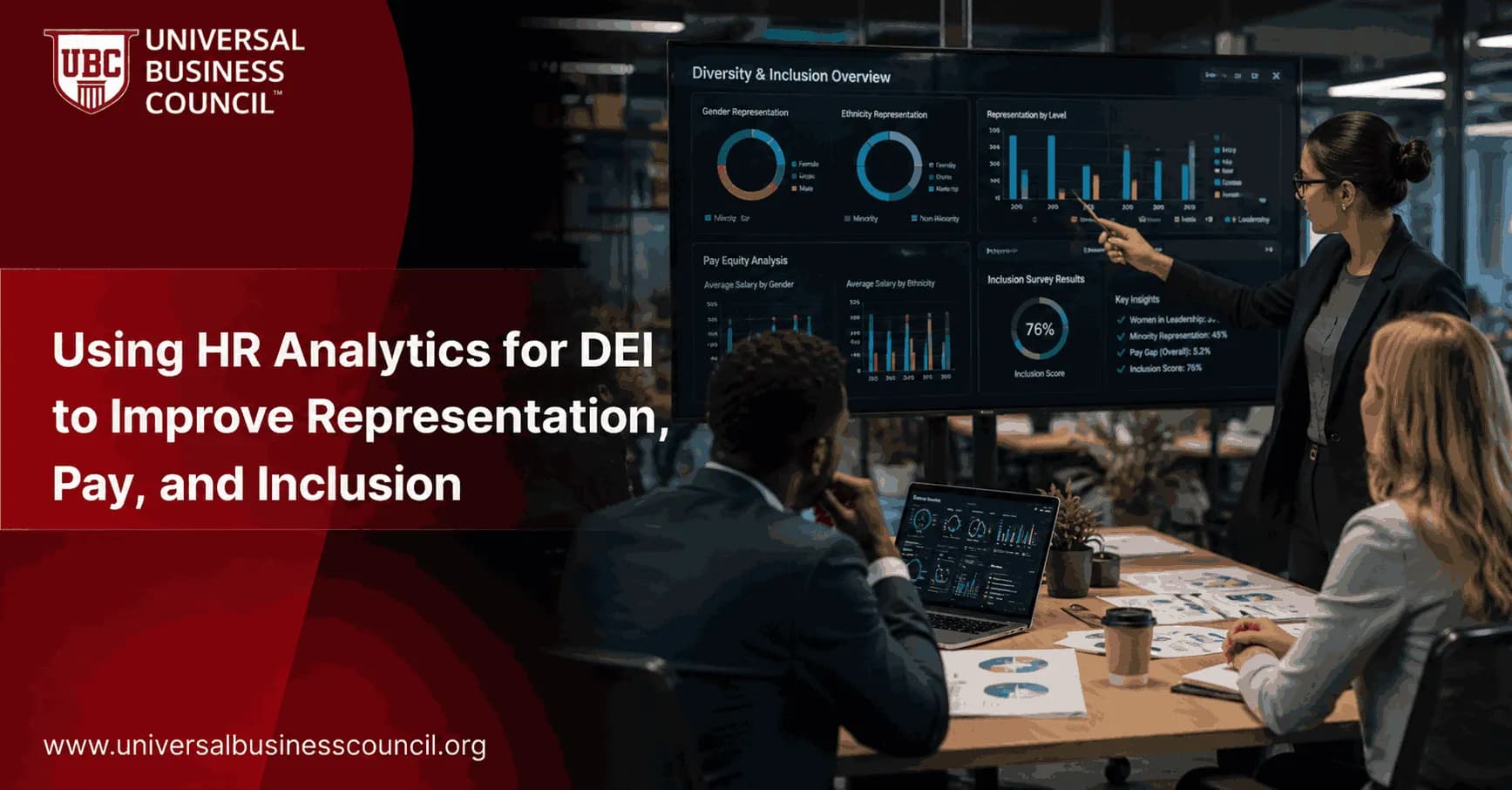
HR analytics for DEI works when it does more than count people. The real value comes from finding where representation, pay, promotion, retention, and daily employee experience break down, then fixing the process that caused the gap. A dashboard is not the outcome. Better hiring, fairer pay decisions, stronger internal mobility, and lower regretted attrition are the outcomes.
That distinction matters. Plenty of organizations have diversity reports. Far fewer have DEI analytics that leaders actually use before approving headcount plans, promotion slates, compensation budgets, or leadership development nominations. If you want measurable progress, build the analytics into those decisions.

What HR analytics for DEI should measure
Good DEI measurement is not a single score. It is a connected set of indicators that show whether people from different groups have comparable access to opportunity, reward, and belonging.
1. Representation across the workforce
Start with workforce composition by gender, race or ethnicity where legally permitted, age, disability, veteran status, location, job family, level, contract type, and tenure band. Do not stop at company-wide percentages. Aggregate figures hide the problem.
For an HR Professional, interpreting these workforce patterns is becoming an essential part of building fair, evidence-based talent strategies that support both employees and long-term business objectives.
A company can look balanced overall while having almost no women in engineering leadership, few ethnic minority employees in revenue roles, or limited disability representation in frontline management. Segment the data. Then look at trends over time.
2. Recruitment funnel equity
Recruitment analytics should track applications, screening pass rates, interview invitations, assessment outcomes, offers, and acceptances by demographic group. This is where HR analytics for DEI often finds the first hard evidence of process bias.
Look for stage-by-stage gaps. If underrepresented candidates apply in healthy numbers but disappear after resume screening, review the selection criteria. If interview pass rates vary sharply by panel, examine interviewer behavior and scoring consistency. If offer acceptance is low for one group, the cause may sit in compensation, location flexibility, benefits, or candidate experience.
3. Promotion, performance, and internal mobility
Promotion rates show whether employees can move. Time-to-promotion shows how long they wait. Performance rating distributions show whether evaluation systems produce unequal outcomes.
Track:
Promotion rates by group, level, and function
Average time in role before promotion
Access to stretch assignments and succession plans
Performance ratings by manager, business unit, and demographic segment
Participation in leadership development, mentoring, and sponsorship programmes
One practical warning: small samples mislead. If a team has six employees and one promotion, the percentage swings wildly. Use minimum group-size rules, often 5 or 10 employees, and combine the numbers with manager interviews and qualitative review.
4. Pay equity and rewards
Pay equity analysis should compare compensation after accounting for legitimate factors such as job level, role, geography, tenure, skills, and performance. Basic averages are useful for a first scan, but they are not enough.
Include salary, bonus, commission, equity grants, allowances, and other variable rewards. In many firms the biggest gap is not base pay. It sits in bonus opportunity, stock eligibility, or who gets placed into high-paying roles early.
Run regular pay audits, document pay decisions, tighten salary bands, and limit unstructured negotiation where it creates inconsistent outcomes. To be blunt, a pay philosophy that exists only in a slide deck will not protect you when managers make exceptions every quarter.
5. Inclusion, belonging, and employee experience
Diversity counts who is present. Inclusion asks what happens after they join.
Use engagement surveys, pulse checks, exit interviews, stay interviews, employee relations data, and open-text comments to measure belonging, fairness, respect, psychological safety, and trust in leadership. Natural language processing can help surface themes in large comment sets, but human review still matters, especially for sensitive topics such as harassment, exclusion, or retaliation.
The best inclusion questions are specific. "I feel included" is useful, but "I can disagree with my manager without negative consequences" often reveals more about the working environment.
How to build a DEI analytics operating model
HR analytics for DEI needs structure. Without it, teams produce attractive charts that change nothing.
Step 1: Define the decision you want to improve
Begin with a business decision, not a metric. For example:
Which sourcing channels should receive recruitment budget?
Who is included in the leadership succession slate?
Which pay gaps need adjustment in the next compensation cycle?
Which teams have inclusion risks that require manager intervention?
Which DEI programmes should continue, change, or stop?
This keeps the analysis practical. A dashboard without a decision owner usually becomes reporting theater.
Step 2: Connect data sources carefully
Most DEI insights come from joining data across systems. You may need applicant tracking data, HRIS records, learning management data, performance ratings, compensation files, engagement survey results, and exit interview themes.
Tools such as Workday, SAP SuccessFactors, Oracle HCM, Greenhouse, Lever, Qualtrics, Microsoft Power BI, Tableau, and Python or R can all support the work. The tool matters less than the data model. Use stable employee IDs, clear definitions, and documented transformations.
Common mistake: comparing departments that use different job level definitions. Fix the taxonomy first. Otherwise the model will look precise and still be wrong.
Step 3: Use intersectional analysis
DEI gaps rarely appear on one dimension only. Gender alone may hide differences by ethnicity, age, disability, location, or caregiving status. Intersectional analysis can show, for example, whether women overall are progressing but women from specific ethnic groups are not.
Handle this carefully. Intersectional cuts create small groups quickly, so apply privacy thresholds and avoid exposing identifiable employee data.
Step 4: Move from description to diagnosis
Descriptive analytics tells you what happened. Diagnostic analytics explains where and why. Prescriptive analytics recommends what to do next.
Example: if promotion rates are lower for one group, do not jump straight to training. Ask:
Are employees in that group receiving comparable performance ratings?
Are they nominated for high-visibility projects?
Do they have sponsors at senior levels?
Are managers applying promotion criteria consistently?
Does time-in-role differ by group?
Often the answer is not "run another awareness workshop." It may be clearer promotion criteria, structured talent reviews, manager calibration, or sponsorship for employees who are already performing strongly.
Governance, privacy, and trust
DEI data is sensitive. In many jurisdictions, demographic information counts as protected personal data. Under the EU General Data Protection Regulation, for instance, special categories such as racial or ethnic origin, health data, and trade union membership receive extra protection. Local law should guide collection, consent, storage, and reporting.
Strong governance includes:
Clear definitions for each demographic category
Transparency with employees about why data is collected and how it is used
Restricted access to identifiable records
Aggregation and suppression rules for small groups
Regular audit of algorithms used in hiring, promotion, or performance decisions
Legal and ethics review before publishing external reports
Trust is not a soft issue here. If employees believe DEI data could be used against them in layoffs or performance decisions, participation drops and the analysis weakens.
How DEI analytics links to business performance
DEI analytics is not only a compliance exercise. It supports workforce planning, risk management, retention, and leadership quality.
McKinsey's 2020 Diversity Wins report found that companies in the top quartile for gender diversity on executive teams were 25 percent more likely to have above-average profitability than companies in the fourth quartile. For ethnic and cultural diversity, the figure was 36 percent. Correlation is not causation, but the pattern fits what many HR leaders see: broader talent access and better inclusion can strengthen execution.
For boards and executives, useful DEI analytics connects to business measures they already track:
Voluntary attrition among critical roles
Cost-per-hire and time-to-fill
Internal fill rate for leadership roles
Regretted loss of high performers
Employee relations risk
Engagement and manager effectiveness
If your DEI dashboard cannot tell you which process to change next, it is not yet a management tool.
Using workforce data to connect diversity outcomes with organizational performance is a core capability of an HR Analytics Expert, helping leaders make informed decisions on hiring, promotion, retention, and workforce planning.
Common mistakes that weaken DEI analytics
Three mistakes show up again and again.
Measuring activity instead of impact
Training attendance, event participation, and employee resource group membership can be useful inputs. They are not proof of progress. Tie programmes to outcomes such as promotion rates, retention, inclusion scores, and representation in target roles.
Publishing dashboards without accountability
Leaders need clear ownership. If a business unit has a persistent promotion gap, someone must be responsible for investigating it and changing the process. Quarterly review beats an annual surprise.
Ignoring qualitative evidence
Numbers show patterns. Comments and interviews explain lived experience. Use both. A one-point survey gap may not sound dramatic until employee comments show repeated exclusion from client meetings or informal decision circles.
Future trends in HR analytics for DEI
Through 2025 and 2026, DEI analytics is likely to become more embedded in core HR processes. Expect stronger use of predictive models for attrition risk, pay gap detection, succession planning, and workforce scenario modeling.
AI will also play a larger role in analyzing open-text survey responses, job descriptions, interview notes, and exit interviews. Use caution. AI can detect patterns at scale, but it can also reproduce bias baked into historical data. Every automated insight needs review, documentation, and human judgment.
Another shift is already visible. Organizations are being pushed to prove impact. Employees, regulators, and investors are less impressed by glossy commitments. They want evidence of fairer outcomes.
As AI and digital HR platforms become more integrated into workforce decision-making, a Tech Certification can help professionals build a stronger understanding of the technologies, governance practices, and analytics tools supporting modern HR functions.
Building your capability
If you work in HR, analytics, compliance, or management, start with one decision area. Recruitment funnel equity is often a practical first project because the data is usually available and the process has clear stages. Pay equity is another high-value area, but it needs careful statistical and legal handling.
If you want to strengthen these skills, explore Universal Business Council certification programmes in human resources, management, business analytics, and leadership as internal learning pathways. The most useful skill mix is not purely technical. You need data literacy, employment law awareness, HR process knowledge, and the confidence to challenge weak assumptions.
Your next step: choose one DEI outcome, define the metric, find the decision owner, and review the last 12 months of data. If the analysis does not point to a process change, ask a sharper question.
Professionals preparing for the future of HR may also benefit from a Deeptech Certification to develop a broader understanding of AI, automation, and emerging technologies that are reshaping workforce analytics, DEI strategies, and organizational decision-making.
FAQs
1. What Is HR Analytics for Diversity, Equity, and Inclusion (DEI)?
HR analytics for DEI is the practice of using workforce data to measure diversity, promote equity, and improve inclusion across recruitment, compensation, career development, promotions, and employee engagement. It helps organizations make more informed and objective people decisions.
2. Why Is HR Analytics Important for DEI Initiatives?
HR analytics provides measurable insights into workforce diversity, pay equity, hiring trends, and employee experiences. This allows organizations to identify gaps, monitor progress, and build more inclusive workplace strategies.
3. How Can HR Analytics Improve Workplace Diversity?
HR teams can analyze recruitment, promotions, retention, and workforce demographics to identify underrepresented groups, remove barriers, and create more equitable hiring and advancement practices.
4. What Is Diversity Analytics in Human Resources?
Diversity analytics involves tracking workforce data related to gender, ethnicity, age, disability, veteran status, and other demographic characteristics to evaluate diversity across the employee lifecycle.
5. How Does HR Analytics Support Pay Equity?
HR analytics compares compensation across similar roles, experience levels, and performance to identify unexplained pay differences and support fair, data-driven compensation decisions.
6. What Is Pay Equity Analysis?
Pay equity analysis evaluates employee salaries to determine whether individuals performing comparable work receive fair and equitable compensation, while accounting for legitimate business factors.
7. How Can HR Analytics Improve Inclusive Hiring?
HR analytics measures candidate sourcing, interview outcomes, hiring rates, and recruitment funnels to identify potential bias and improve fairness throughout the hiring process.
8. What HR Metrics Should Organizations Track for DEI?
Key DEI metrics include workforce representation, hiring diversity, promotion rates, retention rates, pay equity, employee engagement, internal mobility, leadership diversity, and inclusion survey results.
9. How Does HR Analytics Measure Employee Inclusion?
Organizations use engagement surveys, employee feedback, participation rates, retention data, and belonging scores to understand how included and supported employees feel in the workplace.
10. Can Artificial Intelligence Support DEI Analytics?
AI can analyze workforce data, identify trends, automate reporting, and highlight areas for improvement. However, AI systems should be regularly monitored to reduce bias and ensure fair outcomes.
11. How Does HR Analytics Help Reduce Bias in Recruitment?
By evaluating recruitment data objectively, HR can identify patterns in candidate selection, interview performance, and hiring decisions that may indicate unintended bias.
12. How Can HR Analytics Improve Employee Retention Across Diverse Groups?
HR teams can compare retention rates, engagement levels, promotion opportunities, and career development across different employee groups to identify where additional support may be needed.
13. What Tools Are Commonly Used for DEI Analytics?
Popular tools include Microsoft Power BI, Tableau, Workday, SAP SuccessFactors, Oracle HCM, Visier, BambooHR, Qualtrics, and employee engagement platforms with DEI reporting capabilities.
14. How Does HR Analytics Support Leadership Diversity?
Analytics helps organizations monitor leadership representation, identify high-potential employees from diverse backgrounds, evaluate succession planning, and measure progress toward diversity goals.
15. How Can HR Use Analytics to Build More Inclusive Workplaces?
HR can combine workforce data, employee feedback, and business metrics to identify inclusion challenges, improve workplace policies, support equitable career development, and strengthen organizational culture.
16. What Challenges Do Organizations Face When Using HR Analytics for DEI?
Common challenges include incomplete workforce data, employee privacy concerns, inconsistent demographic reporting, integrating multiple HR systems, and ensuring data is interpreted fairly and responsibly.
17. How Can Businesses Build a Data-Driven DEI Strategy?
Organizations should establish measurable DEI goals, collect reliable workforce data, monitor key metrics, review progress regularly, involve leadership, and use analytics to guide continuous improvement.
18. How Can HR Measure the Success of DEI Programs?
Success can be measured through improved workforce representation, stronger employee engagement, better retention, increased leadership diversity, reduced pay gaps, higher promotion equity, and positive inclusion survey results.
19. What Common Mistakes Should HR Teams Avoid When Using DEI Analytics?
Avoid focusing only on hiring diversity, ignoring employee experiences, relying on incomplete data, failing to address identified issues, or treating metrics as the final goal. Analytics should guide meaningful actions that create lasting workplace improvements.
20. How Will HR Analytics Shape the Future of DEI?
HR analytics will continue to help organizations build more diverse, equitable, and inclusive workplaces through AI-powered insights, predictive workforce analysis, and continuous measurement. Companies that use DEI analytics responsibly can make better talent decisions, strengthen employee trust, improve representation, and create more inclusive environments that support long-term business success.
Related Articles
View All
Hr
Using Predictive Analytics to Reduce Employee Turnover and Improve Retention
Learn how predictive analytics helps HR identify attrition risk, target retention actions, reduce turnover costs, and improve workforce planning.

Hr
From HR Generalist to HR Analytics Expert: Career Path, Skills, and Certifications
A practical guide for moving from HR generalist to HR analytics expert, including skills, tools, career stages, use cases, and certification planning.

Hr
How HR Analytics Supports Strategic Talent Management and Succession Planning
Learn how HR analytics strengthens strategic talent management, improves succession planning, reduces leadership risk, and supports fairer workforce decisions.
Trending Articles
The Role of Blockchain in Ethical AI Development
How blockchain technology is being used to promote transparency and accountability in artificial intelligence systems.
AWS Career Roadmap
A step-by-step guide to building a successful career in Amazon Web Services cloud computing.
Top 5 DeFi Platforms
Explore the leading decentralized finance platforms and what makes each one unique in the evolving DeFi landscape.