

Using Predictive Analytics to Reduce Employee Turnover and Improve Retention
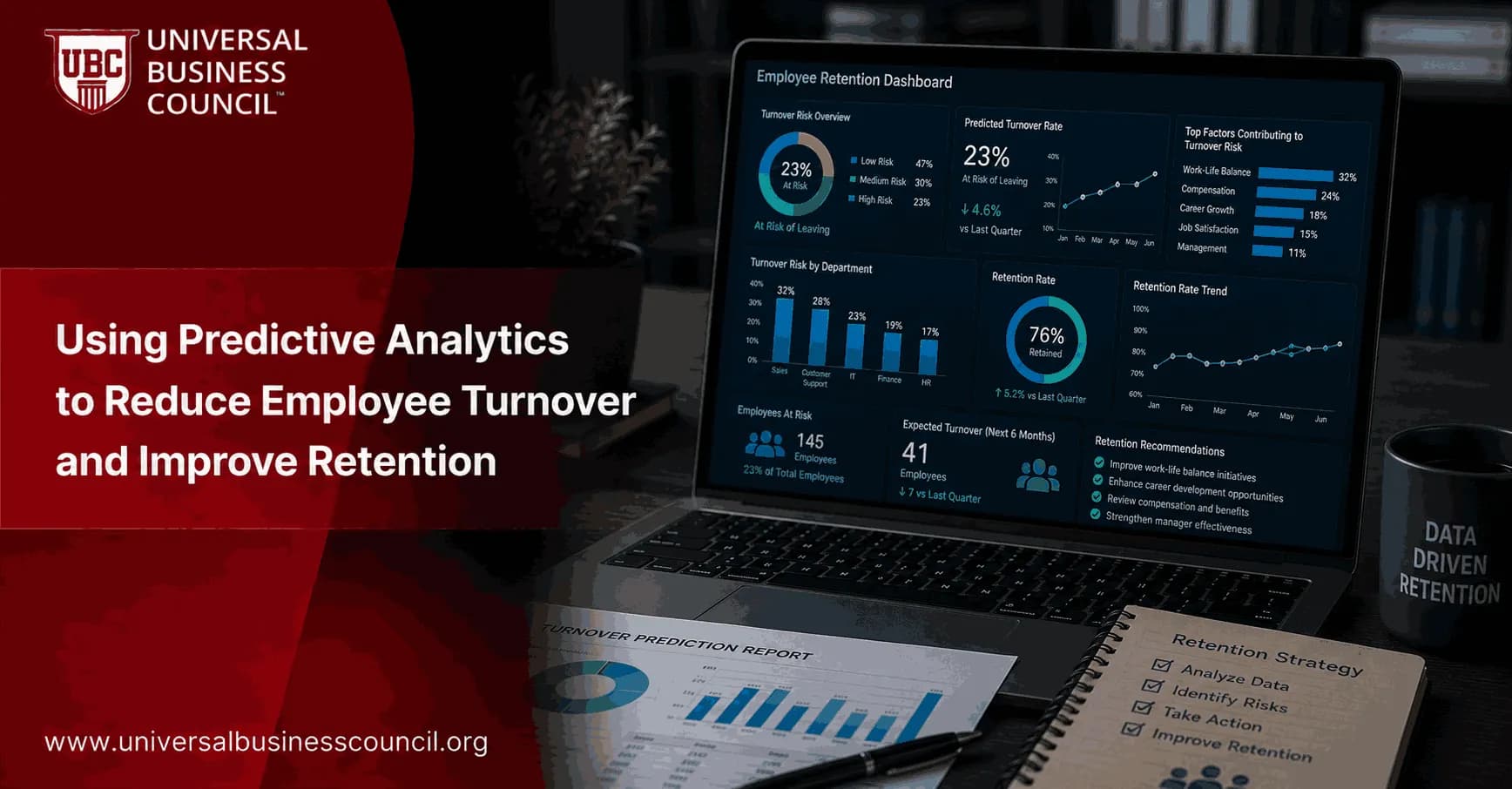
Predictive analytics to reduce employee turnover works best when HR stops treating attrition as a surprise and starts treating it as a measurable business risk. The idea is simple. Use workforce data to spot who is likely to leave, understand why, and act before the resignation lands in a manager's inbox.
Done well, predictive HR analytics helps you protect critical roles, cut avoidable hiring costs, and keep more of your best people without guessing. Done badly, it becomes a black box that wrecks trust. The difference comes down to governance, data quality, and whether leaders actually act on what the model tells them.

As workforce decisions become increasingly data-driven, the role of an HR Professional continues to evolve beyond traditional administration to include strategic workforce planning, talent retention, and evidence-based decision-making.
What predictive retention analytics actually means
Predictive retention analytics uses historical employee data, statistical modeling, and machine learning to estimate future outcomes such as resignation risk, internal mobility, absenteeism, and performance trends. Instead of asking Who left last quarter?, you ask Which groups are most at risk in the next 90 or 180 days, and what can we do about it?
Common data inputs include:
Tenure, role, department, location, and manager history
Performance ratings and promotion patterns
Compensation position against market or internal peers
Absenteeism, overtime, shift changes, and workload indicators
Engagement survey scores and sentiment comments
Learning activity, career pathing, and internal mobility data
Exit interview themes and regrettable turnover categories
Platforms such as Visier, Workday, SAP SuccessFactors, Oracle HCM, and Microsoft Viva increasingly connect these signals into dashboards for people analytics teams. The shift is clear. HR reporting is moving from descriptive charts to forward-looking workforce planning.
Why this matters for turnover and retention
Turnover is expensive, but recruitment spend is only part of the bill. You lose customer context, team trust, management time, technical knowledge, and momentum. SHRM has long argued the business case for using workforce data to make better hiring, development, and deployment decisions. The logic is straightforward: predictive analytics helps leaders see where attrition is financially most damaging, not just where it is loudest.
Adoption has climbed fast. A decade ago, only a small fraction of organizations used predictive analytics in HR at all. That gap has narrowed quickly as HR systems, engagement platforms, and workforce planning tools matured. Treat any single vendor stat with caution, though. Reported turnover reductions vary widely by industry, data maturity, and how seriously managers act on the insight.
To be blunt, exit interviews are too late. They are useful for spotting patterns, but they do nothing for the employee who already signed another offer.
How predictive analytics reduces employee turnover
1. It identifies attrition risk before it becomes visible
A good turnover prediction model does not just spit out a red, amber, green score. It shows the drivers behind the score. Risk may rise when a high performer has had no promotion movement for three years, sits below market pay, changes managers twice in six months, and reports low confidence in leadership.
That combination matters more than any single data point. A missed one-to-one is noise. Missed one-to-ones plus rising overtime plus a poor career-growth score can be a signal.
2. It targets interventions instead of spreading budget thinly
Retention budgets get wasted on broad perks that employees notice for a week and then forget. Predictive analytics helps you decide where to act. Retention models can show which benefits, rewards, or recognition practices correlate most strongly with staying, broken down by group.
Parents may value schedule predictability. Early-career employees may respond more to mentoring and progression. Senior engineers may care less about generic recognition and more about meaningful technical work, autonomy, and manager quality. Treating these groups the same is lazy HR.
3. It improves scheduling and workload decisions
Frontline turnover is often created in the rota, not in the annual engagement survey. Predictive analytics can combine customer volume, shift history, turnover patterns, and staffing levels to build schedules that reduce burnout.
Here is a practical detail. In shift-based teams, watch for repeated closing-to-opening patterns, last-minute schedule edits, and overtime that piles onto the same few people. A team can look fully staffed on paper while two reliable employees quietly absorb every weekend gap. That is how you burn out your best people.
4. It strengthens hiring quality
Predictive analytics can cut early turnover by improving selection and onboarding. If your data shows new hires from one source leave within six months at twice the rate of other channels, inspect the job preview, screening criteria, onboarding manager, and role expectations.
Do not use this to clone-hire. That is the wrong lesson. Use it to find the conditions that predict success, such as realistic job previews, skills match, manager readiness, and onboarding completion.
5. It links retention to career development
Engagement and development signals carry weight in retention analytics, and that matches what managers see every year. Strong employees leave when they cannot see a next step.
Promotion is not the only answer. Internal mobility, stretch assignments, mentoring, funded learning, and clearer skill paths all reduce attrition risk. Timing is the key. Offer the development path before the employee starts interviewing elsewhere.
The metrics leaders should track
If you want predictive analytics to reduce employee turnover, track more than overall attrition. Overall turnover is too blunt. Segment it.
Regrettable turnover: departures of high performers, critical roles, or hard-to-replace employees
Early turnover: employees leaving within 6 or 12 months of hire
Voluntary attrition by manager: a strong warning signal when compared fairly across team type
Internal mobility rate: movement into new roles before people leave the company
Engagement drivers: manager trust, workload, growth, recognition, and belonging
Time-to-productivity: how long replacements take to perform effectively
Cost of vacancy: lost output, overtime, customer delays, and management effort
Finance leaders care about cost per hire, vacancy duration, productivity loss, and revenue exposure. HR leaders focus on engagement and retention. Bring both views into the same dashboard.
Bringing these workforce and business metrics together is a core capability of an HR Analytics Expert, who uses data to identify trends, evaluate risks, and support better organizational decisions.
Building a responsible predictive retention model
Start with a clear question
Do not start with the algorithm. Start with the decision you need to improve. For example: Which high-performing employees in customer success are at risk of leaving in the next six months, and which interventions have worked before?
Clean the data before modeling
Bad HR data is everywhere. Job titles are inconsistent. Manager changes go unlogged. Exit reasons stay vague. Survey participation swings by team. Fix these issues first or your model will look precise while being wrong.
Use explainable features
HR cannot act on a mysterious score. Use variables managers can understand and discuss ethically, such as workload, career progression, engagement trends, pay position, and internal movement.
Check for bias
Predictive models can reproduce historical inequities. If past promotion practices disadvantaged a group, a model trained on that history may treat slower progression as normal. Test outcomes across gender, age, ethnicity where legally permitted, disability status where appropriate, and other protected or sensitive categories under local law.
Keep humans in the decision
Use predictive analytics as decision support, not an automatic trigger. A risk score should never punish, sideline, or label an employee. It should prompt better management: a career conversation, a workload review, a pay equity check, or a coaching plan.
Privacy and trust cannot be an afterthought
Employees are not data points. If your model uses engagement comments, collaboration metadata, attendance records, or performance data, you need clear rules. Comply with data protection laws such as GDPR where applicable, restrict access, set retention periods, and explain how employee data is used.
Transparency matters. You do not need to publish every model coefficient, but employees should know that workforce data feeds scheduling, development, retention, and planning decisions. If people believe analytics is surveillance, participation drops and the model gets weaker.
As predictive analytics increasingly relies on AI, cloud platforms, and digital HR systems, a Tech Certification can help professionals strengthen their understanding of the technologies supporting modern workforce analytics and decision-making.
When predictive analytics is the wrong tool
Predictive analytics is not magic. It is overhyped when organizations have tiny datasets, poor data hygiene, or no appetite to change management behavior. If you had only 20 resignations last year, a complex machine learning model will not help much. A structured review of exit reasons, manager patterns, pay gaps, and engagement comments will tell you more.
And do not lean on attrition risk to justify counteroffers as your main retention play. Counteroffers are expensive, and they teach employees that the fastest way to get attention is to threaten to leave. Fix the system earlier.
Where Universal Business Council learning fits
People working in HR, people analytics, business management, or workforce planning need both analytical skill and judgment. Predictive retention projects pull together statistics, HR strategy, ethics, leadership, and change management.
Universal Business Council certification and course pages in human resource management, business analytics, leadership, and organizational development map onto these skills directly. They are especially useful if you are preparing to lead a people analytics project or interpret workforce dashboards for executive decisions.
Professionals preparing for the future of people analytics may also benefit from a Deeptech Certification to build a broader understanding of AI, automation, and other advanced technologies that are transforming workforce planning and talent management.
Your next step
Pick one turnover problem before buying another tool. Start with a defined segment, such as first-year sales hires, frontline supervisors, software engineers, or high-performing managers. Build a simple attrition dashboard with tenure, manager, performance, pay position, engagement, workload, and exit reason data. Then test one intervention for 90 days.
To build the capability properly, pair HR analytics training with management education. Predictive analytics can tell you where risk is rising. Skilled leaders still have to change the employee experience that caused the risk in the first place.
FAQs
1. What Is Predictive Analytics in Human Resources?
Predictive analytics in HR uses historical workforce data, AI, and statistical models to forecast future employee trends, such as turnover risk, hiring needs, and retention challenges. It helps HR teams make proactive, data-driven decisions.
2. How Does Predictive Analytics Help Reduce Employee Turnover?
Predictive analytics identifies patterns linked to employee resignations, such as declining engagement, absenteeism, or performance changes. HR teams can use these insights to address issues before employees decide to leave.
3. Why Is Employee Retention Important for Organizations?
High employee retention reduces recruitment costs, preserves institutional knowledge, improves team productivity, and creates a more stable workforce. Retaining skilled employees also strengthens long-term business performance.
4. What Data Is Used in Predictive HR Analytics?
HR teams analyze employee demographics, performance reviews, attendance records, engagement surveys, compensation data, promotions, training history, and turnover trends to generate predictive insights.
5. How Can HR Identify Employees at Risk of Leaving?
Predictive models evaluate multiple workforce indicators, including job satisfaction, workload, career progression, absenteeism, and engagement scores, to estimate the likelihood of employee turnover.
6. What Are the Most Common Causes of Employee Turnover?
Common causes include limited career growth, inadequate compensation, poor management, lack of recognition, work-life imbalance, low engagement, and workplace culture issues. Analytics helps uncover which factors matter most.
7. How Does Predictive Analytics Improve Workforce Planning?
By forecasting future hiring needs and turnover rates, predictive analytics helps HR teams plan recruitment, succession strategies, and talent development more effectively while minimizing staffing shortages.
8. Can Predictive Analytics Improve Employee Engagement?
Yes. HR professionals can identify engagement trends, detect early warning signs of dissatisfaction, and implement targeted initiatives that improve employee morale and workplace satisfaction.
9. How Does AI Support Predictive HR Analytics?
AI processes large volumes of workforce data, identifies hidden patterns, predicts employee behavior, and generates insights faster than traditional analysis, helping HR make timely and informed decisions.
10. What HR Metrics Are Important for Predicting Employee Turnover?
Key metrics include employee turnover rate, retention rate, absenteeism, engagement scores, promotion frequency, performance ratings, training participation, and tenure.
11. How Can Predictive Analytics Support Employee Career Development?
Analytics identifies employees who are ready for promotions, leadership roles, or additional training, helping HR create personalized career development plans that improve retention.
12. How Does Predictive Analytics Help Managers Make Better Decisions?
Managers receive insights into team performance, engagement, workload, and turnover risks, allowing them to take proactive steps to support employees and improve team stability.
13. Can Small Businesses Benefit from Predictive HR Analytics?
Yes. Even small businesses can use predictive analytics to improve hiring decisions, monitor employee engagement, reduce turnover, and optimize workforce planning using affordable HR software.
14. What Tools Are Commonly Used for Predictive HR Analytics?
Popular tools include Microsoft Power BI, Tableau, SAP SuccessFactors, Workday, Oracle HCM, Visier, BambooHR, and AI-powered workforce analytics platforms.
15. How Does Predictive Analytics Improve Recruitment?
Predictive analytics helps HR identify successful candidate profiles, optimize recruitment channels, forecast hiring demand, and improve hiring quality while reducing time-to-hire.
16. What Challenges Do Organizations Face When Using Predictive Analytics?
Challenges include poor data quality, fragmented HR systems, employee privacy concerns, limited analytical expertise, model bias, and integrating predictive insights into daily HR decision-making.
17. How Can Organizations Build a Predictive HR Strategy?
Businesses should define workforce objectives, collect accurate HR data, monitor key performance metrics, adopt analytics tools, train HR teams, and regularly evaluate predictive model performance.
18. How Can HR Measure the Success of Predictive Analytics?
Success can be measured by improvements in employee retention, reduced turnover, better hiring outcomes, higher engagement scores, stronger workforce planning, and lower recruitment costs.
19. What Common Mistakes Should HR Teams Avoid When Using Predictive Analytics?
Avoid relying on incomplete data, ignoring employee privacy, treating predictions as guarantees, overlooking human judgment, and failing to act on insights. Predictive analytics should guide decisions, not replace thoughtful HR leadership.
20. How Will Predictive Analytics Shape the Future of Employee Retention?
Predictive analytics will play a central role in modern HR by helping organizations anticipate workforce challenges, personalize employee experiences, strengthen retention strategies, and make faster, evidence-based decisions. Companies that combine predictive insights with strong leadership and employee-focused policies will be better positioned to retain top talent and build a resilient workforce.
Related Articles
View All
Hr
Using HR Analytics for DEI to Improve Representation, Pay, and Inclusion
Learn how HR analytics for DEI improves representation, pay equity, promotion, retention, and inclusion through ethical workforce data practices.
Hr
How to Measure Employee Engagement with HR Analytics Tools
Learn how to measure employee engagement with HR analytics tools using surveys, eNPS, HRIS data, sentiment analysis, and predictive insights.

Hr
From HR Generalist to HR Analytics Expert: Career Path, Skills, and Certifications
A practical guide for moving from HR generalist to HR analytics expert, including skills, tools, career stages, use cases, and certification planning.
Trending Articles
The Role of Blockchain in Ethical AI Development
How blockchain technology is being used to promote transparency and accountability in artificial intelligence systems.
AWS Career Roadmap
A step-by-step guide to building a successful career in Amazon Web Services cloud computing.
Top 5 DeFi Platforms
Explore the leading decentralized finance platforms and what makes each one unique in the evolving DeFi landscape.