

Top HR Analytics Tools and Technologies for Workforce Decision-Making
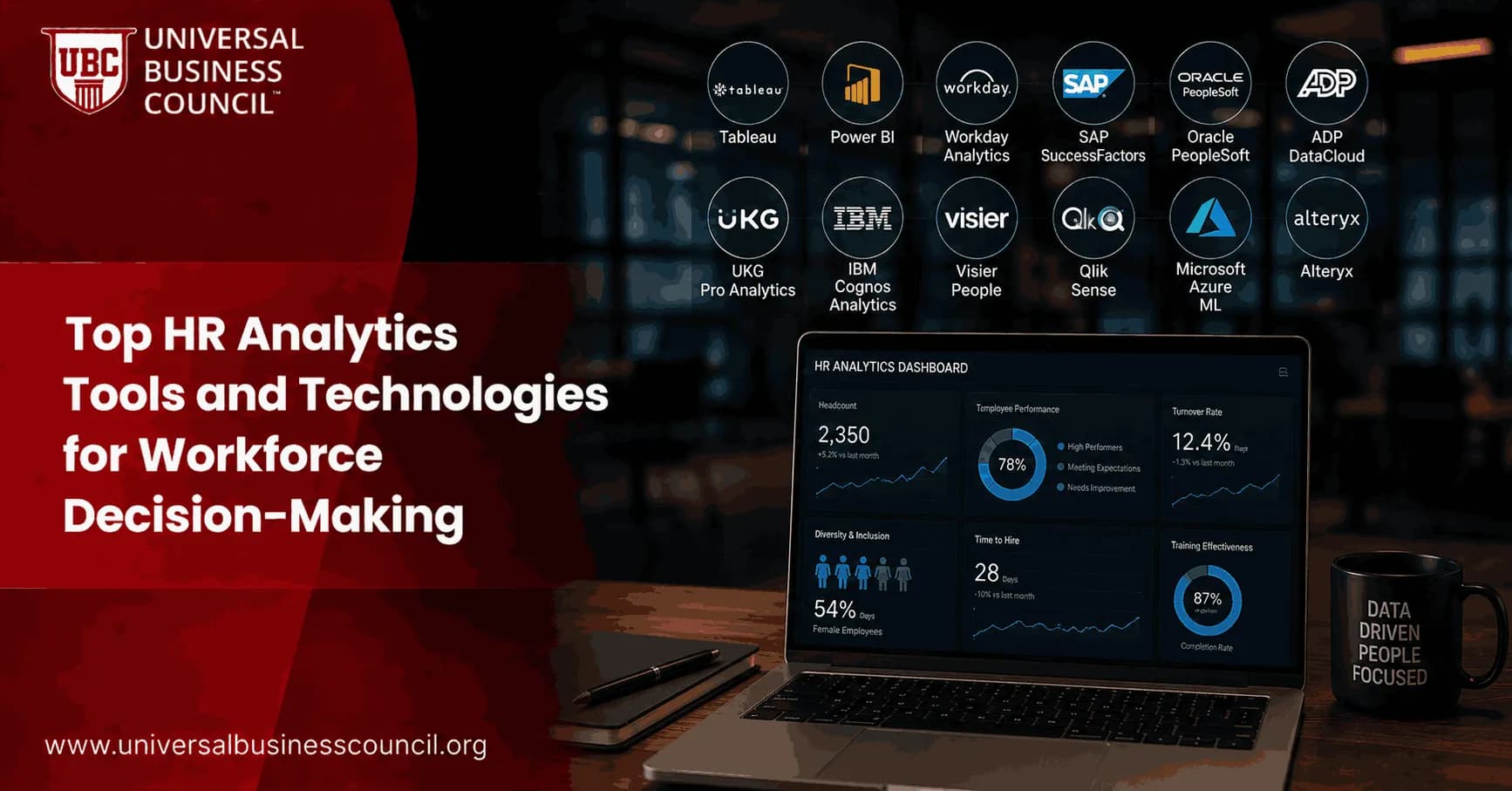
HR analytics tools now sit at the center of workforce decision-making because leaders need more than headcount reports. You need to know why people leave, where hiring slows down, which teams are overloaded, and how workforce cost connects to revenue, risk, and productivity.
The market reflects that pressure. Grand View Research estimates the global HR analytics market at about 4.7 billion USD in 2025, with projected growth to 12.5 billion USD by 2033. The reason is plain. Cloud HR systems, hybrid work, talent shortages, and AI have turned people data into a board-level issue.

What HR analytics tools actually do
HR analytics, also called people analytics or workforce analytics, uses employee, team, and process data to support better decisions. The best HR analytics software pulls information from your HRIS, payroll, applicant tracking systems, learning platforms, performance tools, engagement surveys, finance systems, and sometimes IT systems.
That matters because HR data in isolation can mislead you. A team with high overtime might look productive until finance data shows margin pressure and engagement data shows burnout risk. A low time-to-fill can look efficient until quality-of-hire falls six months later.
A practical warning. Do not start with dashboards. Start with the decision. If leadership asks whether to hire 40 people in a new location, your HR analytics platform must answer cost, supply, retention, compliance, and productivity questions. A colorful chart is not enough.
For an HR Professional, the ability to interpret workforce data and turn it into practical business recommendations is becoming just as important as managing core HR processes and employee experience.
Top HR analytics tools for workforce decision-making
The right tool depends on company size, system complexity, geographic footprint, and analytics maturity. Most leading platforms fall into three groups: enterprise HR suites, mid-market HRIS platforms, and specialist workforce analytics tools.
1. Workday People Analytics
Best fit: large enterprises already using Workday Human Capital Management.
Workday People Analytics turns workforce data into prioritized insights for executives, HR business partners, and people managers. Its strength is context. Because it sits inside the broader Workday ecosystem, it can connect headcount, compensation, performance, talent, and organizational data without as much manual stitching.
Use it for workforce planning, attrition analysis, internal mobility, skills visibility, and executive reporting. It is less suitable for smaller companies that do not need a full enterprise HCM suite.
2. Rippling
Best fit: growing companies that want HR, IT, finance, payroll, and device data in one place.
Rippling is useful when workforce decisions cross department boundaries. You can connect employee lifecycle data with app access, payroll, spend, and device management. That gives finance and operations teams a clearer view of workforce cost and productivity signals.
This can pay off for companies managing fast onboarding, distributed teams, or strict access controls. The trade-off is that you need clean operational ownership, since HR, IT, and finance data definitions can collide quickly.
3. Personio
Best fit: small and mid-sized organizations, especially in Europe, that need accessible HR analytics.
Personio covers core HR, recruiting, time, payroll-related workflows, and performance data. Its analytics are built for teams that want reliable reporting without hiring a full people analytics department.
Use Personio when you need visibility into time-to-hire, absence, turnover, employee records, and performance cycles. It is a strong choice when simplicity beats heavy customization.
4. HiBob, also known as Bob
Best fit: scaling, multi-country companies that care about culture, engagement, and headcount visibility.
HiBob is often used by companies growing across locations. Its analytics can track headcount movement, demographics, compensation trends, engagement, and team structure. If you are opening entities, hiring internationally, or trying to keep culture visible across regions, Bob can be a practical option.
5. BambooHR
Best fit: smaller organizations that need straightforward HR reporting.
BambooHR is not trying to be an enterprise data science platform. That is a good thing for many teams. It gives HR leaders simple reporting on employee lifecycle data, time off, performance, and basic turnover trends.
Choose BambooHR if your current problem is spreadsheet chaos. Do not choose it if you need advanced predictive modeling across several business systems.
6. ADP Workforce Now
Best fit: organizations that need payroll-centered workforce analytics.
ADP Workforce Now is widely used for analytics around payroll, labor cost, time, compliance, headcount, and benchmarks. Its advantage is payroll depth and the scale of ADP data. For industries with hourly workforces, overtime exposure, and heavy compliance reporting, that payroll foundation matters.
7. Deel and Remote
Best fit: global teams managing contractors, employees of record, international payroll, and compliance.
Deel and Remote focus on distributed workforce operations. Their analytics help leaders understand international headcount, contractor use, cost by country, employment status, and compliance risk. These tools earn their keep when global hiring decisions are made faster than legal and finance teams can manually model the impact.
8. Culture Amp
Best fit: organizations focused on employee engagement analytics, performance, development, and leadership effectiveness.
Culture Amp is a specialist platform for employee listening. It collects survey, feedback, engagement, and performance data, then helps identify drivers of retention, engagement, and manager effectiveness.
One hard-earned lesson. Survey analytics fail when leaders only look at the company average. The useful signal is usually two layers down, such as a high-performing engineering team with low intent-to-stay after a reorganization. That is where intervention becomes specific.
Core technologies behind modern HR analytics platforms
Cloud HR data integration
Modern HR analytics tools depend on cloud systems and prebuilt connectors. The goal is to combine HRIS, payroll, recruiting, learning, performance, and finance data into a usable model. Data integration and governance remain the make-or-break conditions for any workforce analytics effort.
Data quality is the ugly part nobody wants to fund. If 30 percent of your exit reasons are coded as Other, your attrition model is already weak. Fix the field definitions before asking for predictive analytics.
AI and machine learning
AI is now common in resume screening, candidate matching, turnover prediction, workforce demand forecasting, and skills inference. AI-powered recruiting has become one of the loudest HR technology trends.
Be careful. AI can speed up screening, but it can also scale bias if job history, education, location, or career breaks are treated poorly by the model. Ask vendors how they test for disparate impact and whether their recommendations are explainable.
Predictive and prescriptive analytics
Predictive HR analytics estimates what may happen, such as likely attrition, absenteeism, hiring demand, or workforce cost. Prescriptive analytics goes further by suggesting actions, such as manager coaching, compensation review, workload changes, or learning paths.
Do not treat a prediction as a decision. A 72 percent attrition-risk score should trigger a conversation about workload, manager quality, pay, career path, and role fit. It should not trigger surveillance or a secret retention label.
Conversational analytics
Natural language interfaces are spreading. Instead of building a custom report, a manager may ask which roles have the highest turnover in the last two quarters, or where time-to-fill has worsened by region.
This is useful, but only if the underlying metric definitions are locked. Otherwise two managers can ask similar questions and get different answers.
Employee listening and sentiment analytics
Engagement platforms use survey data, open-text comments, feedback, and performance signals to identify sentiment and engagement drivers. These tools help connect employee experience with retention and productivity.
The best use is not to chase every low score. Pick the driver with business impact. If career growth is the top retention issue for sales managers in one region, start there.
Key HR analytics metrics leaders should track
Good workforce decision-making depends on a small set of metrics that leadership trusts. Start with these:
Voluntary turnover: track by manager, tenure band, location, role, and performance segment.
Time-to-fill and time-to-start: separate recruiting delay from notice period and onboarding delay.
Quality of hire: connect new hire performance, retention, ramp time, and hiring source.
Internal mobility: measure promotion rate, lateral moves, and skill movement across functions.
Absence and overtime: monitor burnout risk, staffing gaps, and compliance exposure.
Engagement and intent-to-stay: review team-level drivers, not just company averages.
Diversity, equity, and inclusion metrics: track representation, hiring, promotion, pay equity, and engagement differences.
Workforce cost: combine payroll, benefits, contractor spend, overtime, and productivity indicators.
Governance, privacy, and ethics cannot be optional
HR analytics uses personal employee data. That raises legal and ethical obligations. Data protection rules in many regions require clear purpose, access controls, minimization, security, and retention policies. Automated hiring tools must also comply with anti-discrimination laws.
Before you buy or build HR analytics software, require answers to these questions:
Who can see individual-level data?
Which fields are excluded from predictive models?
How does the vendor test for bias?
Can employees be informed about analytics use in plain language?
Are audit trails available for model outputs and administrative access?
Can data be anonymized or aggregated for sensitive reporting?
To be blunt, a powerful analytics tool with weak governance is a risk system wearing an HR label.
As AI, automation, and cloud-based HR platforms become standard across organizations, a Tech Certification can help professionals strengthen their understanding of the technologies and governance practices behind modern workforce analytics.
How to choose the right HR analytics tool
Use this practical selection path:
Define the business question. Examples include reducing regretted attrition, improving hiring speed, forecasting workforce cost, or tracking compliance risk.
Map your data sources. Include HRIS, payroll, ATS, performance, learning, engagement, finance, and operations systems.
Check data quality. Standardize employee IDs, job families, manager hierarchies, termination reasons, and location codes.
Select the tool category. Enterprise suite, mid-market HRIS, global employment platform, or specialist engagement analytics tool.
Test with real use cases. Ask vendors to show attrition analysis, hiring funnel reporting, workforce cost modeling, and DEI dashboards using sample data close to your structure.
Review governance. Involve HR, legal, IT, compliance, finance, and data teams before rollout.
Train users. Managers need data literacy, not just dashboard access.
Skills professionals need for HR analytics
People analytics has moved from basic HR reporting to teams that solve business problems. That shift changes the skill set. HR professionals now need data literacy, consulting ability, storytelling, and enough statistical judgment to challenge weak conclusions.
Developers and analysts working in this space need API integration skills, data modeling, privacy engineering, dashboard design, and familiarity with HR processes. Enterprises need cross-functional operating models, since people analytics touches HR, finance, IT, legal, and business operations.
If you are building your capability, treat Universal Business Council as an internal learning pathway. Review relevant HR, management, leadership, and business analytics certifications in the Universal Business Council catalog, then connect formal learning with a live workforce analytics project in your organization.
Building these capabilities is a natural step toward becoming an HR Analytics Expert, combining workforce data, business insight, and analytical thinking to support more informed organizational decisions.
What to do next
Pick one workforce decision that matters this quarter. Attrition in a critical role is a good starting point. Pull three data sets: exit reasons, engagement results, and manager or team structure. Clean the definitions. Then compare what your current HR system can answer against what a dedicated HR analytics tool could answer.
If the gap is reporting discipline, fix process first. If the gap is integration, evaluate platforms such as Workday, Rippling, Personio, HiBob, BambooHR, ADP Workforce Now, Deel, Remote, or Culture Amp based on your size and use case. If the gap is capability, start training HR and business leaders in analytics before adding another dashboard.
Professionals preparing for the future of workforce analytics may also benefit from a Deeptech Certification to build a broader understanding of AI, automation, and other advanced technologies that are reshaping HR, business strategy, and organizational performance.
FAQs
1. What Are HR Analytics Tools?
HR analytics tools are software platforms that collect, analyze, and visualize workforce data to help HR professionals make informed decisions about recruitment, employee performance, retention, engagement, and workforce planning.
2. Why Are HR Analytics Tools Important for Modern HR?
HR analytics tools help organizations transform workforce data into actionable insights, enabling faster decision-making, improved talent management, better employee experiences, and stronger business performance.
3. How Do HR Analytics Tools Improve Workforce Decision-Making?
These tools analyze HR metrics, identify workforce trends, monitor employee performance, forecast hiring needs, and support evidence-based decisions that align HR strategies with business goals.
4. What Features Should Businesses Look for in HR Analytics Tools?
Key features include customizable dashboards, real-time reporting, predictive analytics, AI-powered insights, data visualization, workforce planning, integration with HR systems, and secure data management.
5. What Are the Most Popular HR Analytics Tools?
Popular HR analytics solutions include Microsoft Power BI, Tableau, Workday, SAP SuccessFactors, Oracle HCM Cloud, Visier, BambooHR, UKG Pro, ADP Workforce Now, and Google Looker Studio.
6. How Does Microsoft Power BI Help HR Teams?
Power BI enables HR professionals to create interactive dashboards, visualize workforce metrics, automate reporting, and analyze recruitment, engagement, retention, and performance data in real time.
7. Why Is Tableau Popular for HR Analytics?
Tableau offers powerful data visualization capabilities that help HR teams uncover workforce trends, build executive dashboards, and communicate complex HR insights through interactive reports.
8. What Is Workday and How Does It Support HR Analytics?
Workday is a cloud-based Human Capital Management (HCM) platform that combines HR operations with workforce analytics, reporting, talent management, payroll, and workforce planning.
9. How Does SAP SuccessFactors Support Workforce Analytics?
SAP SuccessFactors provides analytics for recruitment, learning, employee performance, succession planning, compensation, and workforce planning while helping organizations monitor HR performance.
10. What Is Oracle HCM Cloud?
Oracle HCM Cloud is a comprehensive HR platform that offers workforce analytics, talent management, payroll, recruitment, employee experience, and AI-powered reporting to support strategic HR decisions.
11. What Is Visier and Why Do HR Teams Use It?
Visier is a people analytics platform designed to help organizations analyze workforce data, predict employee trends, improve retention, and support strategic workforce planning.
12. How Does BambooHR Support HR Analytics?
BambooHR helps small and mid-sized businesses manage employee data, monitor HR metrics, generate reports, and track recruitment, performance, and employee engagement.
13. Can Artificial Intelligence Improve HR Analytics Tools?
Yes. AI automates workforce analysis, predicts employee turnover, identifies performance trends, recommends hiring strategies, and generates insights that improve HR decision-making.
14. How Do HR Dashboards Support Workforce Management?
HR dashboards display key workforce metrics such as turnover, hiring, engagement, productivity, and training progress, enabling managers to monitor performance and respond quickly to trends.
15. What HR Metrics Can These Tools Track?
Most HR analytics platforms monitor employee turnover, retention, absenteeism, time-to-hire, cost-per-hire, employee engagement, diversity, productivity, training effectiveness, and performance metrics.
16. How Should Businesses Choose the Right HR Analytics Tool?
Organizations should evaluate business needs, workforce size, integration capabilities, reporting features, AI functionality, scalability, ease of use, security, and total cost of ownership before selecting a solution.
17. What Challenges Do Organizations Face When Implementing HR Analytics Tools?
Common challenges include poor data quality, integrating legacy HR systems, user adoption, employee privacy concerns, implementation costs, and ensuring accurate workforce reporting.
18. How Can HR Teams Maximize the Value of Analytics Technologies?
HR teams should maintain high-quality data, define clear KPIs, train employees to use analytics tools, review dashboards regularly, and align workforce insights with business objectives.
19. What Common Mistakes Should Organizations Avoid When Using HR Analytics Tools?
Avoid selecting tools without clear business goals, tracking too many metrics, neglecting data quality, overlooking user training, and relying on dashboards without acting on the insights. Technology is most valuable when it drives measurable improvements.
20. What Is the Future of HR Analytics Tools and Technologies?
HR analytics platforms will increasingly incorporate AI, predictive analytics, automation, and real-time workforce intelligence to support smarter decision-making. Organizations that adopt modern HR technologies and use workforce data strategically will be better positioned to improve hiring, employee engagement, productivity, retention, and long-term business performance.
Related Articles
View All
Hr
How to Measure Employee Engagement with HR Analytics Tools
Learn how to measure employee engagement with HR analytics tools using surveys, eNPS, HRIS data, sentiment analysis, and predictive insights.

Hr
How HR Professionals Can Use People Analytics for Workforce Planning
Learn how HR professionals can use people analytics for workforce planning, from headcount forecasts and skills gaps to retention, DEI, and ethical AI.

Hr
From HR Generalist to HR Analytics Expert: Career Path, Skills, and Certifications
A practical guide for moving from HR generalist to HR analytics expert, including skills, tools, career stages, use cases, and certification planning.
Trending Articles
The Role of Blockchain in Ethical AI Development
How blockchain technology is being used to promote transparency and accountability in artificial intelligence systems.
AWS Career Roadmap
A step-by-step guide to building a successful career in Amazon Web Services cloud computing.
Top 5 DeFi Platforms
Explore the leading decentralized finance platforms and what makes each one unique in the evolving DeFi landscape.