

How HR Professionals Can Use People Analytics for Workforce Planning
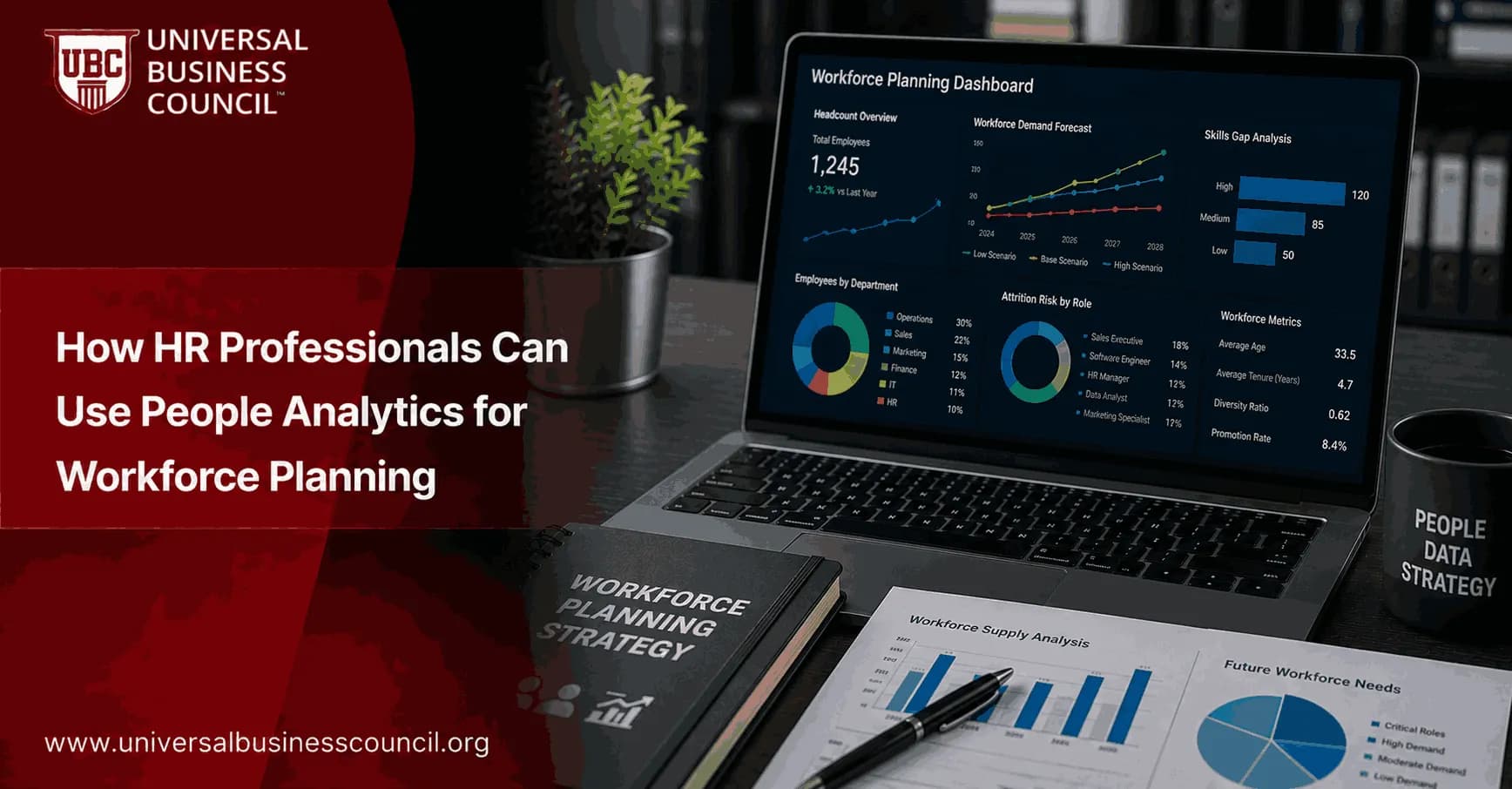
People analytics for workforce planning helps HR professionals move from headcount reporting to evidence-based decisions about hiring, skills, deployment, and retention. The point is not to produce prettier dashboards. The point is to answer the questions business leaders actually ask: How many people do we need? Which skills are missing? Where will turnover hurt us? What will the workforce cost under each growth scenario?
Done well, people analytics connects HR data with business strategy. It draws from HRIS records, performance data, engagement surveys, learning systems, compensation data, recruiting platforms, and external labor market information. SAP describes people analytics as a data-driven way to improve workforce decisions across the employee lifecycle, and that definition holds up because workforce planning touches almost every HR process.

As workforce planning becomes more strategic, the role of an HR Professional increasingly extends beyond administration to workforce planning, talent strategy, and evidence-based decision-making.
What People Analytics Changes in Workforce Planning
Traditional workforce planning often starts too late. A business unit misses its revenue target. A team burns out. A critical role stays open for 90 days. Then HR is asked to fix capacity.
People analytics changes the timing. You see the risk earlier.
Instead of asking, How many vacancies do we have?, you ask sharper questions:
Which roles are most likely to become capacity bottlenecks in the next two quarters?
Where is attrition rising faster than hiring?
Which skills are aging out of the organization?
Which teams have low internal mobility and high resignation risk?
How will a new product launch change workforce demand by role and location?
That shift matters. Finance teams track labor cost as a percentage of revenue, revenue per employee, and forecast accuracy. HR needs workforce metrics that can hold their own in the same planning conversation.
Start With the Workforce Planning Questions, Not the Tool
Most failed people analytics projects start with software. That is backwards.
Start with the planning question. Then decide which data matters. If the question is future capacity, you need headcount, turnover, hiring lead time, productivity assumptions, and demand forecasts. If the question is retention, you need tenure, manager changes, compensation position, engagement data, promotion history, absence trends, and exit reasons.
Common tools include Workday, SAP SuccessFactors, Oracle HCM, UKG, Microsoft Power BI, Tableau, Visier, and recruiting systems such as Greenhouse or iCIMS. The tool helps only if the data definitions are clean. I have seen workforce plans derailed because two regions defined contractors differently. Small data issue. Big planning error.
Use People Analytics to Forecast Headcount and Capacity
Headcount forecasting is where people analytics for workforce planning usually proves its value first.
HR can use historical hiring, turnover, internal mobility, and business growth data to estimate future workforce needs by business unit, role, geography, or project. This matters most in professional services, healthcare, technology, shared services, and any organization where demand shifts quickly.
Build scenarios leaders can compare
Do not give leaders one forecast and call it done. Give them scenarios.
Base case: Current business plan, expected turnover, normal hiring pace.
Growth case: Higher demand, faster hiring, added manager capacity.
Constraint case: Slower hiring, higher turnover, limited labor supply.
A simple scenario model can show whether a sales expansion requires 12 new account executives, 3 sales managers, 2 enablement roles, and extra recruiting capacity. Without that view, hiring requests appear one at a time, and HR is stuck reacting.
Identify Skills Gaps Before They Become Business Gaps
Skills planning is harder than headcount planning because job titles lie. Two people can share a title and have very different capabilities.
Use people analytics to map current skills against strategic priorities. Pull data from learning records, certifications, performance reviews, project assignments, manager assessments, and self-declared skills. Then compare those skills with future demand.
Take a technology team that has enough software engineers on paper, but too few people with cloud security, data engineering, or AI governance experience. Or a marketing team with plenty of campaign managers but limited capability in Google Analytics 4, marketing automation, attribution modeling, or lifecycle marketing.
This is where Universal Business Council learning pathways can support internal development. HR teams may want to connect workforce plans with related Universal Business Council courses in management, business analytics, marketing, and leadership as internal learning options for employees moving into priority roles.
Improve Recruitment With Evidence, Not Habit
People analytics can make recruiting more accurate and less wasteful. HR analytics providers and research firms routinely link disciplined selection data to better recruiting efficiency and lower attrition.
The practical work is not glamorous. You compare sourcing channels, time-to-fill, interview pass rates, offer acceptance, quality-of-hire, 90-day attrition, and first-year performance. Then you stop funding channels that look busy but do not produce retained talent.
Here is the trap: cost per applicant can be a vanity metric. I have seen a channel look cheap because it produced hundreds of applicants, but the retained-hire cost was poor once screening time and early turnover were included. Track cost per retained hire and quality-of-hire, not just applicant volume.
Building these capabilities is becoming a defining skill for an HR Analytics Expert, who combines workforce data, business context, and analytical insights to improve hiring, retention, and long-term workforce planning.
Recruiting metrics HR should monitor
Time-to-fill by role and hiring manager
Time-to-productivity for new hires
Offer acceptance rate by function and location
Source quality, measured by performance and retention
Selection adverse impact to detect possible bias
Hiring forecast accuracy against the workforce plan
Be careful with predictive hiring models. They can reduce noise, but they can also repeat old bias if trained on poor historical data. Use structured interviews, job-relevant criteria, and regular fairness checks.
Use Analytics to Reduce Attrition and Improve Internal Mobility
Turnover prediction is one of the most common people analytics use cases. It can be useful. It can also feel intrusive if handled badly.
The better approach is to analyze risk at group or segment level before acting on individual scores. Look for patterns by role, manager, location, tenure band, pay position, engagement level, workload, career movement, and recent organizational change.
One detail HR teams often miss: a manager change can be a serious attrition signal. In some organizations, regrettable turnover rises after a high-performing manager leaves, especially among employees with two to five years of tenure. That group is employable, experienced, and often tired of waiting for promotion.
Internal mobility data helps here. Track lateral moves, promotions, succession coverage, and time-in-role. If strong performers are not moving internally, they may move externally. To be blunt, a career path that exists only in a slide deck will not retain anyone.
Plan Better for Hybrid and Remote Work
Remote and hybrid work decisions should not rest only on executive preference or employee sentiment. Use data.
Compare productivity indicators, engagement scores, retention, absence, collaboration patterns, promotion rates, and manager effectiveness across remote, hybrid, and on-site groups. Be careful, though. The goal is not to spy on employees. Keyboard tracking and surveillance metrics damage trust and often measure activity rather than outcomes.
Better questions include:
Which roles need real-time coverage across time zones?
Which teams have weaker onboarding outcomes when fully remote?
Where does hybrid work improve retention without lowering service quality?
Which managers need training to lead distributed teams?
People analytics commentators such as Crunchr have noted that workforce planning since the pandemic puts more weight on hybrid work, employee sentiment, diversity insights, and data storytelling. HR needs all four.
Build Diversity, Equity, and Inclusion Into Workforce Plans
Diversity analytics should not sit in a separate quarterly report. It belongs in workforce planning.
Track representation, hiring rates, promotion rates, pay equity indicators, performance distribution, turnover, and succession pipeline diversity. Segment the data carefully. A company-wide representation number can hide problems in senior roles, technical functions, or high-growth business units.
Use the data to ask direct questions:
Are promotion rates consistent across demographic groups?
Are certain groups concentrated in roles with lower advancement?
Does turnover spike after parental leave, relocation, or manager changes?
Are pay gaps explained by role and tenure, or do unexplained gaps remain?
Ethics matter here. Employees need confidence that workforce data is used to improve fairness, not to label or limit them.
Create a Practical People Analytics Operating Model
You do not need a large data science team to start. You do need discipline.
Define the planning cycle. Align workforce planning with annual strategy, quarterly business reviews, and budget cycles.
Clean the core data. Standardize job families, locations, employee types, manager hierarchy, and termination reasons.
Select the key metrics. Start with headcount, vacancy rate, turnover, internal mobility, time-to-fill, skills coverage, labor cost, and diversity indicators.
Connect HR and finance. Workforce plans must tie to revenue, cost, margin, and operating plans.
Use dashboards for decisions. A dashboard is not a filing cabinet. Put decisions, owners, and deadlines next to the data.
Set governance rules. Define who can access data, how models are tested, and when human review is required.
Tell the story clearly. Leaders do not need every chart. They need the risk, the options, and the trade-off.
As HR functions rely more heavily on digital platforms and analytics tools, a Tech Certification can help professionals strengthen their understanding of emerging technologies, automation, and data-driven business processes.
What to Avoid
People analytics goes wrong quickly when HR overcomplicates it or chases prediction without trust.
Do not build a model before fixing definitions. Bad job architecture creates bad forecasts.
Do not treat correlation as causation. Certification candidates and new analysts often miss this. A variable may predict turnover without causing it.
Do not use black-box AI for high-stakes decisions. Hiring, promotion, and termination decisions need explainability and human oversight.
Do not ignore managers. Manager quality is often the hidden variable behind engagement, retention, and performance.
Do not report everything. Pick the metrics tied to workforce decisions.
The Next Step for HR Professionals
If you want people analytics for workforce planning to work, start with one business-critical workforce question this quarter. Choose a role family with hiring pressure, turnover risk, or a visible skills gap. Build a small dashboard, review it with finance and business leaders, and agree on the action.
Then build capability. HR professionals who want stronger grounding in analytics, strategy, and evidence-based management can explore relevant Universal Business Council programmes in HR, business analytics, management, and leadership. The best workforce planners are not just reporting data. They are helping the organization decide what kind of workforce it needs next.
Professionals preparing for the future of work may also benefit from a Deeptech Certification to build a broader understanding of AI, automation, and other advanced technologies that are reshaping workforce planning and organizational strategy.
FAQs
1. What Is People Analytics in Human Resources?
People analytics is the practice of collecting, analyzing, and interpreting employee and workforce data to improve HR decisions related to hiring, retention, performance, workforce planning, and employee engagement.
2. Why Is People Analytics Important for Workforce Planning?
People analytics helps HR professionals make data-driven workforce decisions by identifying talent gaps, forecasting staffing needs, improving productivity, and aligning workforce strategies with business goals.
3. How Does People Analytics Support Workforce Planning?
People analytics provides insights into employee performance, turnover, hiring trends, skills availability, and future workforce requirements, enabling HR teams to plan more effectively.
4. What Types of Data Are Used in People Analytics?
HR teams analyze data such as employee demographics, performance reviews, attendance, engagement surveys, recruitment metrics, turnover rates, learning records, and compensation information.
5. How Can HR Professionals Use People Analytics to Improve Hiring?
People analytics helps identify successful candidate profiles, optimize recruitment channels, reduce time-to-hire, improve candidate quality, and make more informed hiring decisions.
6. How Does People Analytics Help Reduce Employee Turnover?
By analyzing engagement levels, performance trends, compensation data, and employee feedback, HR can identify employees at risk of leaving and develop proactive retention strategies.
7. Can People Analytics Improve Employee Performance?
Yes. HR professionals can use workforce data to identify skill gaps, measure productivity, personalize development plans, and support managers with performance improvement initiatives.
8. How Does People Analytics Support Succession Planning?
People analytics identifies high-potential employees, tracks leadership readiness, evaluates critical roles, and helps organizations prepare future leaders through targeted development programs.
9. What Is Predictive Analytics in HR?
Predictive analytics uses historical employee data and statistical models to forecast future outcomes, such as hiring demand, employee turnover, workforce shortages, and performance trends.
10. How Can HR Use People Analytics for Skills Gap Analysis?
HR can compare existing employee skills with future business requirements to identify shortages, prioritize training programs, and plan strategic hiring initiatives.
11. How Does People Analytics Improve Employee Engagement?
By analyzing survey results, feedback, collaboration patterns, and workplace trends, HR can identify engagement challenges and implement initiatives that improve employee satisfaction.
12. What Role Does AI Play in People Analytics?
AI helps HR analyze large workforce datasets, identify hidden patterns, automate reporting, forecast workforce trends, and generate actionable insights more efficiently than manual analysis.
13. Which HR Metrics Are Most Important for Workforce Planning?
Key metrics include employee turnover rate, time-to-hire, cost-per-hire, absenteeism, employee engagement, productivity, internal mobility, retention rate, and workforce diversity.
14. How Can People Analytics Support Diversity and Inclusion?
People analytics helps organizations monitor hiring practices, promotion rates, pay equity, representation, and retention across different employee groups to support diversity and inclusion goals.
15. What Tools Are Commonly Used for People Analytics?
Organizations use HRIS platforms, workforce analytics software, business intelligence tools, employee engagement platforms, Microsoft Power BI, Tableau, and AI-powered HR solutions.
16. What Challenges Do HR Teams Face When Implementing People Analytics?
Common challenges include poor data quality, disconnected HR systems, privacy concerns, limited analytical skills, change management, and ensuring compliance with data protection regulations.
17. How Can Businesses Build a Data-Driven Workforce Planning Strategy?
Organizations should define workforce goals, collect accurate HR data, monitor key metrics, use predictive analytics, invest in HR technology, and regularly review workforce performance.
18. How Can HR Measure the Success of People Analytics Initiatives?
Success can be measured through improvements in hiring efficiency, employee retention, productivity, workforce planning accuracy, engagement scores, leadership development, and overall business performance.
19. What Common Mistakes Should HR Professionals Avoid When Using People Analytics?
Avoid relying on incomplete data, focusing only on historical reports, ignoring employee privacy, overlooking business objectives, and making decisions without validating insights. Effective people analytics combines data with human judgment rather than replacing it.
20. How Will People Analytics Shape the Future of Workforce Planning?
People analytics is expected to become a core part of modern HR by enabling predictive workforce planning, AI-assisted decision-making, personalized employee development, and proactive talent management. Organizations that effectively use workforce data will be better positioned to attract talent, improve retention, optimize workforce performance, and adapt to changing business needs.
Related Articles
View All
Hr
How HR Professionals Can Use Data to Identify Skills Gaps in the Workforce
Learn how HR professionals can use data, skills inventories, assessments, and workforce analytics to identify and close workforce skills gaps.

Hr
How HR Analytics Supports Strategic Talent Management and Succession Planning
Learn how HR analytics strengthens strategic talent management, improves succession planning, reduces leadership risk, and supports fairer workforce decisions.

Hr
Common HR Analytics Mistakes and How Professionals Can Avoid Them
Learn the most common HR analytics mistakes, from poor data quality to AI bias, and how professionals can build ethical, decision-ready people analytics.
Trending Articles
The Role of Blockchain in Ethical AI Development
How blockchain technology is being used to promote transparency and accountability in artificial intelligence systems.
AWS Career Roadmap
A step-by-step guide to building a successful career in Amazon Web Services cloud computing.
Top 5 DeFi Platforms
Explore the leading decentralized finance platforms and what makes each one unique in the evolving DeFi landscape.