

Future of SEO in an AI-First World
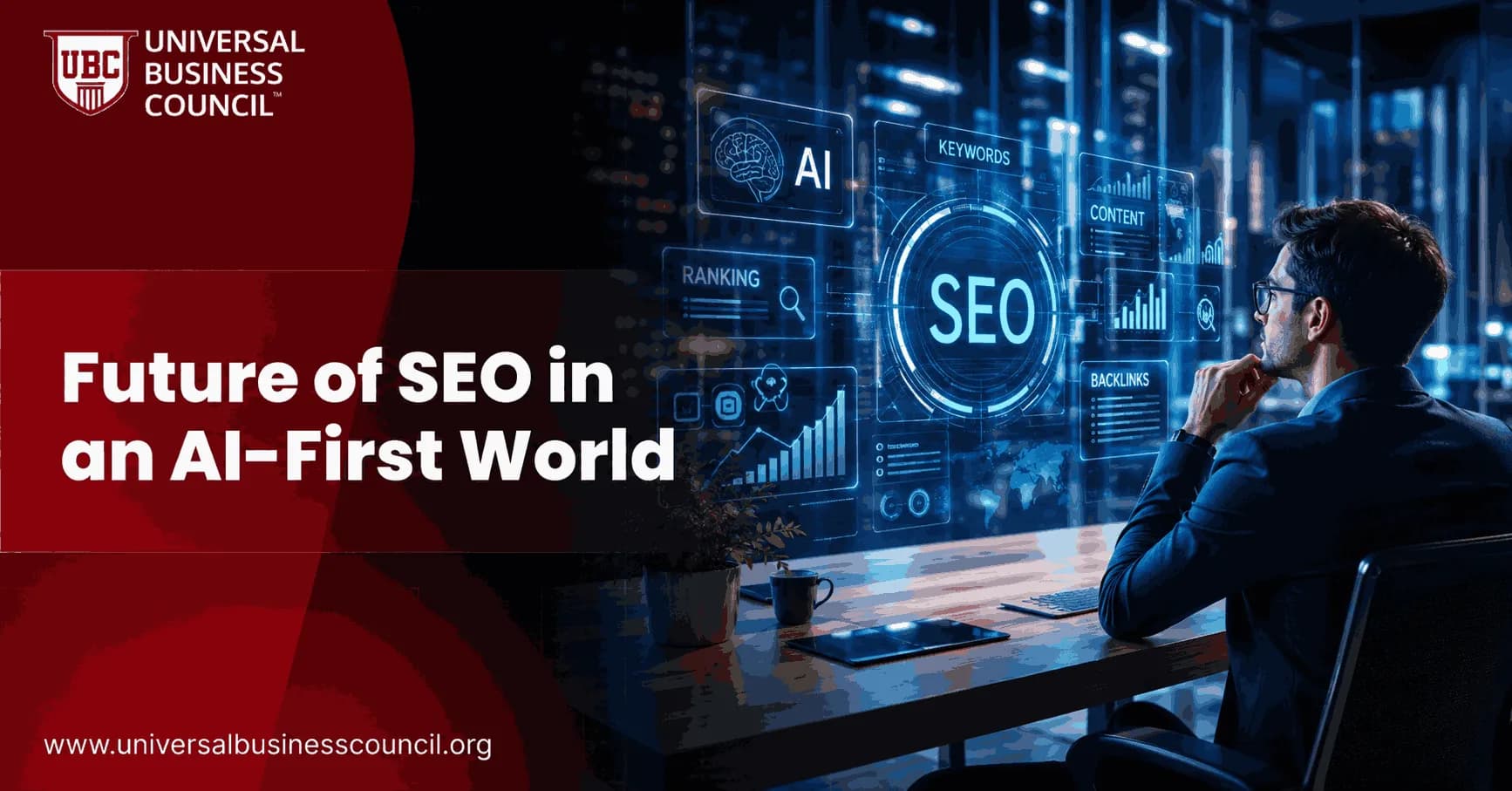
Search engine optimization is evolving faster than ever before. For years, businesses focused mainly on ranking websites on Google through keywords, backlinks, and technical SEO. But the rise of artificial intelligence is transforming how people discover information online.
Today, users rely on AI assistants, recommendation systems, social media platforms, and voice search instead of depending only on traditional search engines. Platforms like ChatGPT, Gemini, TikTok, YouTube, and Perplexity are redefining digital discovery and user behavior.

This shift has created an AI-first world where artificial intelligence influences:
Search results
Content recommendations
Customer engagement
Online visibility
Digital marketing strategies
SEO is not disappearing in this environment. Instead, it is becoming smarter, more conversational, and more focused on user experience and authority.
Professionals adapting to these modern changes are increasingly pursuing advanced Marketing Certification programs to understand evolving consumer behavior and digital strategies.
How AI Is Reshaping SEO
Artificial intelligence is fundamentally changing how search engines interpret and rank content.
Earlier SEO strategies focused heavily on:
Exact keywords
Meta descriptions
Backlinks
Search rankings
Modern AI-driven systems now understand:
Context
User intent
Natural language
Behavioral patterns
Conversational queries
For example, users no longer type:
“best AI tools”
Instead, they ask:
“What are the best AI tools for content marketing and automation?”
AI systems analyze meaning instead of matching only exact phrases.
This transformation is forcing businesses to create content that sounds natural, useful, and human-focused.
The Growth of Conversational Search
Conversational search has become one of the most important trends in modern SEO.
AI-powered systems like:
ChatGPT
Gemini
Claude
Perplexity
allow users to ask detailed questions naturally.
Voice assistants such as:
Siri
Alexa
Google Assistant
have accelerated this trend even further.
Businesses must now optimize content for:
Questions
Direct answers
Conversational language
Natural speech patterns
Humanity spent years training itself to communicate with search engines through awkward keyword fragments. Now the machines finally understand normal conversation, and suddenly everyone remembers how language works. Strange little technological circle.
Professionals preparing for AI-driven industries are increasingly exploring the AI Expert Certification.
SEO Is Becoming More User-Focused
In an AI-first world, SEO revolves around helping users rather than manipulating algorithms.
Modern search systems prioritize:
Helpful content
User satisfaction
Problem-solving information
Expertise
Trustworthiness
This means businesses must focus on:
Educational resources
Expert insights
Detailed guides
Interactive experiences
Personalized content
Search engines increasingly reward websites that provide genuine value.
AI-Powered Content Creation
Artificial intelligence tools are changing content creation dramatically.
AI can now assist with:
Blog writing
Keyword research
Competitor analysis
SEO optimization
Audience targeting
Performance tracking
This improves efficiency, but it also increases competition because millions of AI-generated articles are published every day.
Because of this content explosion, search engines increasingly prioritize:
Originality
Authenticity
Expertise
Real-world experience
Low-quality AI-generated spam content struggles to perform long term.
Businesses exploring advanced intelligent automation are increasingly interested in the Agentic AI Course.
Meanwhile, marketers and creators are improving advanced content automation skills through the Generative AI Expert Course.
Search Everywhere Optimization
Modern SEO no longer focuses only on Google Search.
Users now discover information through:
TikTok
YouTube
Amazon
Instagram
Reddit
LinkedIn
AI assistants
Voice devices
This shift has created a strategy called “Search Everywhere Optimization.”
For example:
TikTok creators optimize hashtags and engagement
YouTube creators optimize watch time and retention
Amazon sellers optimize product discoverability
AI assistants prioritize trusted structured content
Businesses must now optimize visibility across multiple digital ecosystems.
User Intent Is More Important Than Keywords
Keywords still matter, but user intent matters far more in AI-driven SEO.
AI systems prioritize content that:
Solves problems
Answers questions clearly
Matches user expectations
Provides valuable information
This means businesses should focus on:
Helpful guides
Educational content
Clear explanations
Problem-solving resources
Content designed only for keyword manipulation performs poorly over time.
Voice Search and Visual Search
Voice search continues growing rapidly worldwide.
Users increasingly rely on:
Smart speakers
Mobile assistants
Wearable devices
Voice search changes SEO because users speak naturally instead of typing short phrases.
At the same time, visual search technologies allow users to search using:
Images
Photos
Videos
Modern SEO strategies now include:
Image optimization
Conversational content
Featured snippets
Mobile-first experiences
The future of SEO will rely heavily on multimodal search experiences combining text, voice, visuals, and AI interaction.
Technical SEO Still Matters
Even in an AI-first world, technical SEO remains essential.
AI systems still depend on:
Fast websites
Structured data
Schema markup
Mobile responsiveness
Accessibility
Secure architecture
Technical optimization helps machines understand content more effectively.
Organizations preparing for future digital innovation often explore broader Deeptech Certification opportunities.
AI-Powered Coding and SEO Automation
SEO increasingly overlaps with coding and automation.
AI-powered coding tools help developers:
Improve website speed
Detect technical errors
Automate schema creation
Improve accessibility
Optimize performance
This growing intersection between coding and SEO has increased demand for the AI Powered Coding Expert Course.
Automation improves efficiency, but strategic human oversight remains necessary because AI occasionally produces decisions that feel suspiciously confident for something trained on the internet.
Brand Authority Is Becoming Critical
As AI-generated content floods digital platforms, trust becomes increasingly valuable.
AI systems are more likely to recommend:
Trusted brands
Verified experts
Reliable organizations
Established publishers
This means SEO now overlaps heavily with:
Branding
Reputation management
Thought leadership
Audience trust
Businesses building authority through consistent and expert-driven content will perform better in AI-driven search environments.
Companies also strengthen broader digital expertise through advanced Tech Certification programs.
Real-World Examples of AI-Driven SEO
YouTube
YouTube functions as one of the largest search engines where creators optimize:
Watch time
Audience retention
Click-through rates
Engagement
TikTok
TikTok increasingly serves as a discovery platform for:
Product reviews
Tutorials
Travel recommendations
Fashion trends
Amazon
Amazon dominates ecommerce discovery through AI-powered recommendation systems.
AI Assistants
AI systems like ChatGPT and Gemini provide direct answers instead of requiring users to browse multiple webpages manually.
These examples show that SEO is evolving far beyond traditional website rankings.
Challenges Businesses Will Face
Businesses entering the AI-first SEO era may face several challenges.
Increased Competition
AI tools make content production easier, increasing competition across industries.
Reduced Organic Traffic
AI-generated summaries may reduce direct website clicks.
Higher Quality Standards
Search engines increasingly prioritize trustworthy and expert-level content.
Greater Technical Complexity
SEO now requires stronger technical and AI optimization expertise.
Businesses relying only on outdated SEO strategies may struggle to remain competitive.
Opportunities Created by AI SEO
Despite these challenges, AI-driven SEO creates major opportunities.
Businesses can benefit through:
Better personalization
Improved customer targeting
Faster interactions
Enhanced analytics
Smarter automation
Companies adapting early may gain major competitive advantages in future search ecosystems.
The Future Skills SEO Professionals Need
Future SEO professionals will require expertise in:
Artificial intelligence
Automation
Technical SEO
Analytics
Content strategy
User psychology
SEO specialists are evolving into digital visibility strategists capable of managing AI-driven ecosystems.
The marketers still relying entirely on decade-old SEO tricks from random internet forums may eventually become tiny digital ghost stories passed around during marketing conferences.
Conclusion
The future of SEO in an AI-first world is not about replacing optimization strategies. It is about evolving SEO into a broader system focused on:
AI discoverability
Conversational experiences
User intent
Technical optimization
Brand authority
Multi-platform visibility
Artificial intelligence is transforming how people search for information online, but businesses will always need visibility and audience trust.
Companies that combine:
High-quality content
Technical excellence
AI integration
Audience engagement
Multi-platform discoverability
will continue succeeding in the evolving digital landscape.
Technology keeps changing how humans discover information, but people still want accurate, useful, and trustworthy answers quickly. The machines are simply becoming increasingly involved in deciding which answers appear first.
FAQs
1. What is the future of SEO in an AI-first world?
The future of SEO focuses on conversational search, AI discoverability, and personalized user experiences. Businesses must optimize content for AI systems, voice search, and multiple digital platforms. SEO will become more user-focused and authority-driven.
2. How is artificial intelligence changing SEO?
Artificial intelligence improves how search systems understand language, context, and user intent. AI helps deliver more accurate and personalized search experiences. Businesses now create content designed for both users and intelligent systems.
3. Why is conversational search important?
Conversational search reflects how people naturally speak when interacting with AI assistants and voice devices. Modern users ask detailed questions instead of typing short keyword phrases. Businesses optimizing conversational content improve visibility in AI-driven environments.
4. Does traditional SEO still matter today?
Yes, traditional SEO still matters because technical optimization, backlinks, and website performance remain important ranking factors. However, modern SEO also includes AI discoverability and conversational optimization. Businesses must combine old and new SEO practices.
5. What is Search Everywhere Optimization?
Search Everywhere Optimization means improving visibility across platforms like TikTok, YouTube, LinkedIn, Amazon, and AI assistants. Modern users discover information in many different ways. Businesses must therefore optimize across multiple ecosystems.
6. How does AI-generated content affect rankings?
AI-generated content can perform well if it provides original, useful, and trustworthy information. Search engines prioritize value and user satisfaction over automation alone. Human oversight remains essential for quality and authenticity.
7. Why is user intent important in modern SEO?
User intent helps AI systems understand what users truly want when searching online. Content that solves problems and answers questions clearly performs better than content focused only on keywords. Modern SEO revolves around user satisfaction.
8. How is voice search influencing SEO strategies?
Voice search encourages businesses to create conversational and question-based content. Users speak naturally through assistants like Alexa and Siri instead of typing short phrases. Content optimized for spoken language improves discoverability.
9. Are backlinks still valuable in AI-driven SEO?
Yes, backlinks remain important trust signals for search engines and AI systems. High-quality and relevant backlinks improve authority and credibility online. However, quality matters much more than quantity.
10. Why is content quality becoming more important?
AI-generated content has increased online competition significantly, making quality more valuable than ever. Search systems prioritize accurate, helpful, and trustworthy information. Businesses producing genuine value achieve stronger long-term visibility.
11. What role does technical SEO play in the future?
Technical SEO helps AI systems interpret content efficiently through structured data, schema markup, and optimized website performance. Fast-loading and accessible websites improve both discoverability and user experience. Technical foundations remain critical.
12. How are AI assistants changing user behavior?
AI assistants provide direct answers quickly, reducing the need for users to browse multiple webpages manually. This changes how businesses structure and optimize content. Companies now focus more on conversational and concise information delivery.
13. Can small businesses compete in AI-first SEO?
Yes, small businesses can compete effectively by focusing on niche expertise and authentic content strategies. Specialized knowledge and strong community trust often outperform generic mass-produced content. Relevance remains a powerful advantage.
14. What industries are most affected by AI-driven SEO?
Industries like ecommerce, healthcare, education, publishing, and technology are strongly affected by AI-driven SEO changes. These sectors rely heavily on online discoverability and customer engagement. AI is reshaping how users access information.
15. What skills should future SEO professionals learn?
Future SEO professionals should understand AI systems, automation, analytics, technical SEO, and content strategy. Communication and audience psychology also remain important. Modern SEO requires both technical and creative expertise.
16. Why is brand authority becoming critical for SEO?
AI systems are more likely to recommend trusted and recognized brands to users. Strong authority improves credibility, visibility, and customer trust. Businesses investing in reputation building often perform better online.
17. How does multimodal search affect SEO?
Multimodal search combines text, voice, images, and video into unified search experiences. Businesses must optimize multiple content formats for discoverability. This trend is shaping the future of online search behavior.
18. Will websites still matter in an AI-first future?
Yes, websites remain important because AI systems still require reliable and authoritative source material. Businesses need strong websites to establish credibility and provide detailed information. Websites continue serving as foundational digital assets.
19. What are the biggest challenges of AI-first SEO?
Major challenges include increased competition, reduced organic clicks, technical complexity, and higher content quality standards. Businesses must adapt quickly to changing technologies and user expectations. Strong expertise is becoming increasingly valuable.
20. What is the long-term future of SEO?
The long-term future of SEO involves conversational AI, personalized discovery, voice search, visual optimization, and cross-platform visibility. Businesses must focus on authority, trust, and user experience. SEO will continue evolving alongside artificial intelligence and digital behavior.
Related Articles
View All
Seo
The Rise of Answer Engines and the Future of SEO
Answer engines are transforming SEO by prioritizing direct responses, trusted sources, structured content, and machine-readable authority signals.
Seo
The End of Blue Links? Future of SEO Explained
AI answers are reducing reliance on traditional search results, pushing brands to optimize for visibility inside answer engines and AI assistants.

Seo
Best Claude SEO Rank Tracking
Tracking your visibility in Claude requires monitoring AI citations, brand mentions, answer inclusion, and authority signals beyond traditional keyword rankings. Learn how Claude SEO rank tracking works and which metrics matter most.
Trending Articles
The Role of Blockchain in Ethical AI Development
How blockchain technology is being used to promote transparency and accountability in artificial intelligence systems.
AWS Career Roadmap
A step-by-step guide to building a successful career in Amazon Web Services cloud computing.
Top 5 DeFi Platforms
Explore the leading decentralized finance platforms and what makes each one unique in the evolving DeFi landscape.