

Six Sigma Black Belt vs Master Black Belt: Skills, Scope, and Leadership
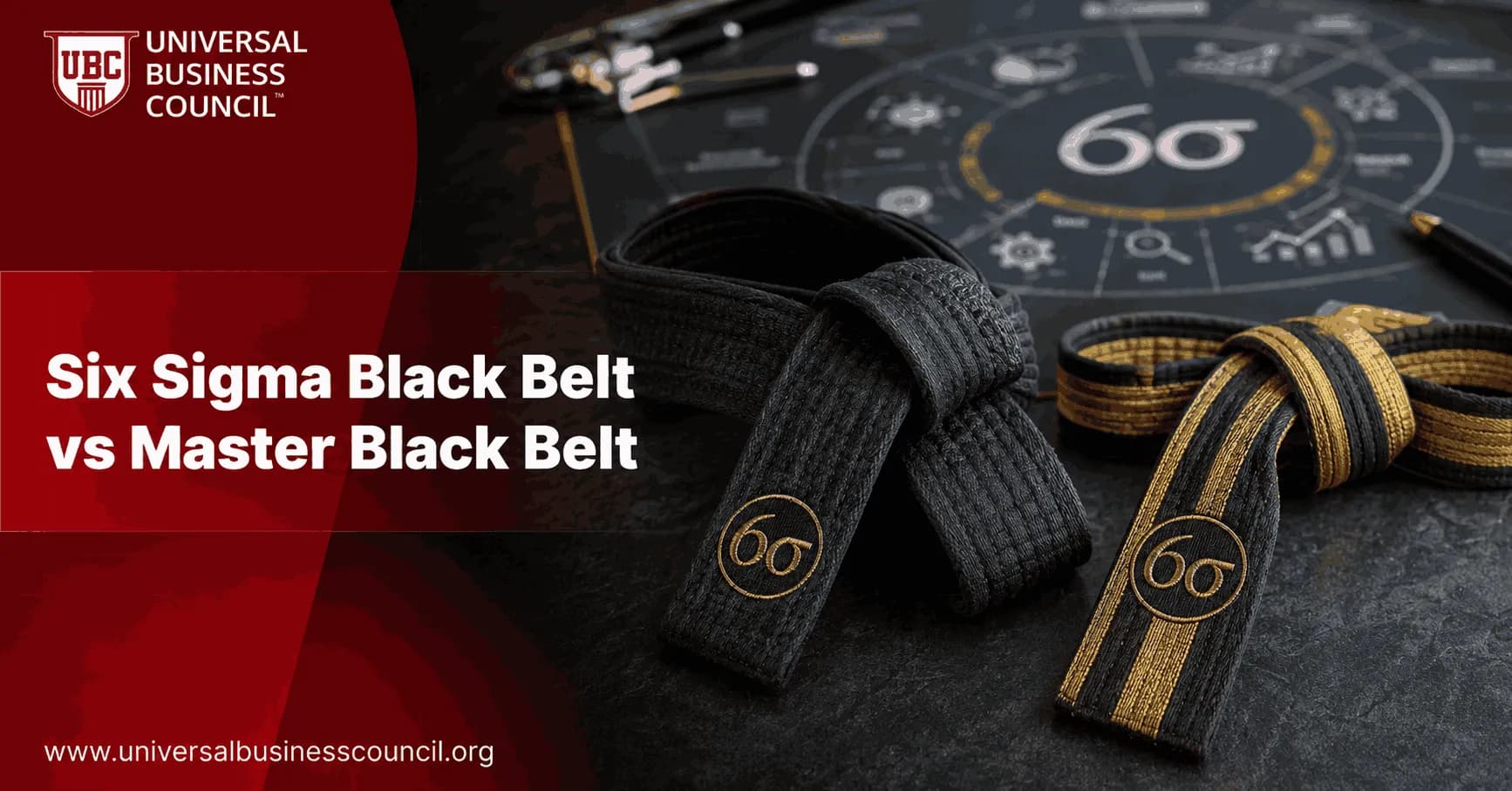
Six Sigma Black Belt vs Master Black Belt is not a simple seniority question. A Black Belt is the person you trust to run a difficult improvement project from problem statement to control plan. A Master Black Belt is the person you trust to design the improvement system, coach the project leaders, and keep the portfolio tied to business strategy. Anyone mapping out that climb usually starts with a Certified Six Sigma Expert credential, which builds the DMAIC and statistical foundation both belt levels are built on.
That distinction matters. Hire the wrong role and you either get isolated projects with no enterprise pull, or a strategy leader who is dragged into every data-cleaning meeting. Neither works for long.

Role comparison: what each belt is built to do
Six Sigma uses a tiered practitioner model, with Black Belt and Master Black Belt sitting at the top end of the capability ladder. ISO 18404 formalizes competency expectations for Lean and Six Sigma roles, including the split between project leadership and program-level oversight. As Master Black Belts move closer to enterprise strategy and portfolio governance, many pair their technical background with broader Management Certifications to build the leadership and stakeholder skills that role demands.
What a Six Sigma Black Belt does
A Six Sigma Black Belt leads complex improvement projects, usually inside a function, plant, service line, or cross-functional value stream. You can expect a Black Belt to:
Define and quantify improvement opportunities using DMAIC.
Lead multidisciplinary teams through Measure, Analyze, Improve, and Control work.
Apply statistical tools such as hypothesis testing, regression, control charts, and design of experiments.
Use process mapping, root cause analysis, FMEA, and capability analysis.
Coach Green Belts and help process owners sustain gains.
ASQ describes Black Belts as project leaders who understand team dynamics, assign roles, and manage improvement work with measurable results. That is the heart of the job: deliver the project.
What a Six Sigma Master Black Belt does
A Master Black Belt builds on Black Belt skill, then moves up a level. The role is less about running one project and more about shaping the organization's improvement engine. A Master Black Belt typically:
Selects and scopes high-value projects with executives and sponsors.
Mentors Black Belts and Green Belts through difficult technical and stakeholder issues.
Designs training curricula and assessment standards for belt development.
Sets governance rules for benefit tracking, tollgate reviews, and project selection.
Connects Six Sigma activity to strategic metrics such as cost, quality, cycle time, customer satisfaction, churn, and operating margin.
Master Black Belts work as strategists and mentors who guide improvement strategy and provide advanced technical support. If the Black Belt asks, "How do we solve this process problem?" the Master Black Belt asks, "Are we solving the right problems across the business?"
Skills: technical depth versus enterprise judgment
Both roles need data fluency. The difference is how that skill is used.
Black Belt skills
A strong Black Belt should be comfortable in the details. Not just naming tools, but using them correctly. Candidates often trip over control chart interpretation because they treat every point outside the average as a special cause. It is not. You need the right chart, the right subgrouping, and a disciplined reading of common cause versus special cause variation.
Black Belts also need practical project leadership. The messy part is rarely the formula. It is getting finance to agree on the savings logic, persuading a supervisor to release an operator for a kaizen session, or finding that two departments use different definitions of "defect" in the same dashboard.
Master Black Belt skills
A Master Black Belt needs deeper statistical range, but technical skill alone is not enough. To be blunt, the best analyst is not always the best Master Black Belt.
The role needs portfolio thinking. Which projects should be killed? Which are too small? Which sponsor is not engaged enough to clear roadblocks? Master Black Belts must also know when Six Sigma is the wrong tool. If the team has no stable process, no reliable data, and a need for rapid discovery, a Lean experiment or Agile sprint may come before a full DMAIC project. Increasingly, that data comes from automated systems and connected equipment, which is why some Master Black Belts also invest in a Deep Tech Certification to better understand the technical systems feeding their improvement portfolios.
Scope of responsibility and business impact
The Black Belt owns project execution. The Master Black Belt owns the system that produces good projects again and again.
Black Belt scope: individual or cross-functional projects, often within a department, product line, plant, or service process.
Master Black Belt scope: enterprise or multi-unit improvement portfolios, including governance, training, coaching, and strategic alignment.
Industry guidance often places Black Belt training at around 160 to 200 hours, plus mentored project work. Master Black Belt training is commonly 200 or more hours, supported by extensive prior Black Belt experience and a record of coaching others.
Reported financial targets vary by industry, but many organizations expect Black Belt projects to deliver six-figure benefits where the process scale supports it. Master Black Belt portfolios can reach multi-million-dollar annual impact because they coordinate many projects, not just one. Treat those figures as directional, not guaranteed. Savings claims are only credible when finance signs off and the control plan holds.
Leadership expectations: project captain versus program architect
Black Belt leadership
A Black Belt leads from the front. You define the problem, keep the team honest about data, run tollgate reviews, and push toward verified results. You work closely with process owners and middle managers. Your credibility comes from making the project easier to understand, not more complicated.
Master Black Belt leadership
A Master Black Belt leads through others. You coach sponsors, challenge weak charters, standardize methods, and build a pipeline of capable practitioners. You also need executive language. Senior leaders do not want a lecture on p-values. They want to know which operational constraint is hurting margin, service, risk, or customer experience.
This is why Master Black Belts increasingly sit near operational excellence, transformation, analytics, or strategy functions. The job overlaps with change leadership as much as quality engineering.
Which path is right for you?
Choose Black Belt if you want to become excellent at leading complex, data-driven improvement projects. It suits operations managers, process engineers, quality professionals, business analysts, healthcare administrators, service leaders, and technology managers responsible for measurable process performance.
Choose Master Black Belt if you already have serious project experience and want to shape how improvement work is selected, governed, taught, and scaled. It suits senior practitioners who can coach, challenge executives, and connect Six Sigma with Lean, digital operations, and enterprise performance management.
Universal Business Council readers can explore related Six Sigma certification pathways, Lean management courses, project management programmes, and business analytics training to build the mix of technical and leadership skills these roles require.
Practical next step
If you are still building your improvement record, start with Black Belt-level capability and complete at least one project with verified business results. If you already coach Black Belts and influence the project portfolio, prepare for Master Black Belt-level study. Bring evidence: charters, control plans, benefit validation, and sponsor feedback. Titles matter less than proof that the process improved and stayed improved. And as improvement portfolios lean more on digital tools and automated data, rounding out that record with a general Tech Certification can help bridge the gap between process leadership and the technology that increasingly powers it.
FAQs
1. What is the difference between a Six Sigma Black Belt and Master Black Belt?
A Six Sigma Black Belt typically leads complex process-improvement projects using DMAIC, data analysis, and statistical methods. A Master Black Belt generally operates at a broader level, coaching Black Belts and Green Belts, supporting project selection, developing improvement standards, and aligning Lean Six Sigma initiatives with organizational strategy.
A simple distinction is:
Black Belt → Leads improvement projects
Master Black Belt → Leads improvement capability across projects and teams
Exact responsibilities vary by organization and certification provider.
2. What does a Six Sigma Black Belt do?
A Black Belt leads complex improvement initiatives involving defects, variation, cost, quality, cycle time, productivity, or customer outcomes.
Typical responsibilities include defining problems, validating measurements, analyzing root causes, facilitating teams, applying statistical techniques, implementing improvements, managing stakeholders, and establishing controls.
Black Belts may work full-time in continuous improvement or combine Six Sigma leadership with another operational role.
3. What does a Six Sigma Master Black Belt do?
A Master Black Belt typically provides advanced methodological and strategic leadership.
Responsibilities may include:
Coaching Black Belts and Green Belts
Reviewing project methodology
Selecting or prioritizing improvement projects
Teaching Six Sigma methods
Advising senior leadership
Developing organizational standards
Supporting advanced statistical analysis
Tracking improvement portfolios
Validating benefits with business stakeholders
The role shifts attention from individual projects toward organizational improvement capability.
4. Is Master Black Belt higher than Black Belt?
Yes, within the commonly used Six Sigma belt hierarchy, Master Black Belt is generally considered more advanced than Black Belt.
A typical progression is:
White Belt → Yellow Belt → Green Belt → Black Belt → Master Black Belt
However, belt standards are not completely uniform across certification providers. Candidates should examine the specific experience, project, examination, and training requirements of the credential they are considering.
5. What skills does a Six Sigma Black Belt need?
A Black Belt generally needs strong capabilities in:
DMAIC + Process Mapping + Root-Cause Analysis + Statistics + Process Capability + FMEA + Change Management
Depending on the program and role, Black Belts may also use:
Measurement System Analysis
Hypothesis testing
Regression
Control charts
Design of Experiments
Financial-benefit analysis
Stakeholder management
Project leadership
Technical skills need to be combined with the ability to lead cross-functional teams.
6. What additional skills does a Master Black Belt need?
Master Black Belts typically require everything expected of a Black Belt plus deeper capabilities in:
Coaching + Strategy + Advanced Analytics + Portfolio Management + Governance + Leadership
They may need to assess whether teams are using statistical methods correctly, mentor practitioners through difficult projects, facilitate senior-level decisions, and develop improvement systems across multiple functions.
The role therefore requires substantial technical depth and organizational influence.
7. How do the scopes of Black Belt and Master Black Belt roles differ?
The difference can be understood through three levels:
Green Belt → Process or departmental improvement
Black Belt → Complex cross-functional projects
Master Black Belt → Multiple projects, practitioners, and strategic improvement programs
A Black Belt may be accountable for delivering the results of several important projects.
A Master Black Belt may be accountable for improving how an entire organization selects, executes, measures, and sustains improvement initiatives.
8. Does a Master Black Belt need more statistical knowledge?
Generally, yes.
Black Belts may use hypothesis testing, regression, process capability analysis, control charts, Measurement System Analysis, and Design of Experiments.
Master Black Belts may require deeper understanding of these techniques so they can coach practitioners, review analyses, identify methodological errors, and support especially complex problems.
However, advanced mathematics alone does not make someone an effective Master Black Belt. Organizational leadership becomes increasingly important.
9. What is the leadership difference between Black Belt and Master Black Belt?
Black Belt leadership is often project-centered.
The Black Belt leads teams through DMAIC, resolves project issues, engages stakeholders, and delivers measurable improvements.
Master Black Belt leadership is more system-centered.
The Master Black Belt develops practitioners, influences leaders, establishes improvement standards, supports project portfolios, and helps integrate continuous improvement with business strategy.
The progression is therefore partly a shift from doing improvement to enabling other people to do improvement effectively.
10. Does a Master Black Belt manage Black Belts?
Often, but not necessarily through formal line management.
Master Black Belts commonly coach, mentor, train, or provide methodological oversight to Black Belts and Green Belts.
For example, they may review project charters, challenge measurement plans, help select statistical methods, facilitate difficult analyses, and review Control plans.
Organizational structures vary, so a Master Black Belt may be a manager, technical authority, internal consultant, or Operational Excellence leader.
11. How do Black Belts and Master Black Belts use DMAIC differently?
A Black Belt primarily uses DMAIC to lead individual improvement projects:
Define → Measure → Analyze → Improve → Control
A Master Black Belt needs to understand DMAIC deeply enough to coach multiple teams through it.
The Master Black Belt may ask:
Is this actually a DMAIC project?
Is the problem statement supported by evidence?
Is the measurement system reliable?
Were root causes validated?
Does the solution address those causes?
Is the Control plan sufficient?
That methodological oversight helps maintain consistency across improvement programs.
12. What projects does a Six Sigma Black Belt lead?
Black Belts may lead projects involving:
Defect reduction
Scrap and rework
Customer complaints
Cycle-time reduction
Process variation
Yield improvement
Transaction errors
Supply-chain performance
Cost reduction
Service quality
Projects are generally selected because they have significant business impact and require structured analysis.
13. What initiatives does a Master Black Belt lead?
Master Black Belts may oversee broader initiatives such as:
Enterprise Lean Six Sigma deployment
Operational Excellence programs
Improvement project portfolios
Capability-building programs
Belt training and mentoring
Methodology governance
Strategic cost-reduction programs
Cross-business process transformation
They may also advise leadership on which improvement opportunities deserve resources.
14. How does project selection differ for a Master Black Belt?
A Black Belt often receives or develops a charter for a defined improvement opportunity.
A Master Black Belt may help determine which projects should exist in the first place.
Potential projects can be evaluated using factors such as:
Strategic Alignment + Financial Impact + Customer Impact + Risk + Feasibility + Resource Requirements
This helps prevent organizations from running technically impressive Six Sigma projects on problems that barely matter to the business.
15. What role does a Master Black Belt play in financial benefits?
Master Black Belts may help establish consistent methods for calculating and validating project benefits.
They can work with finance, sponsors, and process owners to distinguish:
Hard Savings → Cost Avoidance → Capacity Benefits → Revenue Impact
They may also review benefits across an improvement portfolio.
This is important because a department claiming $8 million in savings while the finance team cannot locate any of it tends to produce awkward steering-committee meetings.
16. How important is coaching for a Master Black Belt?
Coaching is one of the most important Master Black Belt capabilities.
Effective coaching involves helping practitioners think through problems rather than simply giving them answers.
A Master Black Belt may coach teams on:
Project definition
Scope
Data collection
Statistical analysis
Root-cause validation
Solution selection
Stakeholder resistance
Control planning
The objective is both to improve the project and develop the practitioner's capability.
17. Do you need to be a Black Belt before becoming a Master Black Belt?
In many certification and organizational pathways, substantial Black Belt knowledge and project experience are expected before Master Black Belt progression.
Requirements vary by provider, so candidates should verify prerequisites carefully.
Regardless of formal requirements, practical Black Belt experience is highly valuable because Master Black Belts are expected to coach others through problems they should understand from real project work, not merely from training slides.
18. Which career roles can a Master Black Belt pursue?
Potential roles include:
Master Black Belt
Operational Excellence Manager
Continuous Improvement Director
Business Excellence Leader
Process Excellence Director
Transformation Leader
Lean Six Sigma Consultant
Quality Director
Operational Excellence Consultant
Enterprise Improvement Leader
Career progression depends on industry experience, leadership ability, financial understanding, and organizational scope in addition to certification.
19. Should I pursue Black Belt or Master Black Belt certification?
Choose according to your experience and career objective.
A Black Belt is generally appropriate when you want to lead complex improvement projects and develop advanced analytical skills.
A Master Black Belt may be appropriate when you already possess substantial improvement experience and want to coach practitioners, manage improvement portfolios, establish standards, or lead enterprise Operational Excellence.
Do not pursue Master Black Belt solely because it is the next belt available. Certification progression should follow capability progression.
20. What is the career path from Six Sigma Black Belt to Master Black Belt?
A useful progression begins with demonstrated project leadership, not merely another examination.
The path can look like:
Green Belt
↓
Successful Improvement Projects
↓
Black Belt
↓
Complex Cross-Functional Projects
↓
Coaching and Mentoring
↓
Portfolio and Strategic Responsibility
↓
Master Black Belt
At the Black Belt stage, focus on mastering project execution.
Develop strong capability in:
DMAIC → Statistics → Root-Cause Analysis → Process Capability → FMEA → DOE → Control
But technical expertise is only one dimension.
Build evidence that you can deliver measurable outcomes such as:
Defect Reduction → Cost Reduction → Cycle-Time Improvement → Capacity Improvement → Customer Impact
For example, instead of merely stating:
“Led a Six Sigma project.”
A stronger professional achievement is:
“Led a cross-functional DMAIC initiative that reduced process defects from 6.8% to 2.1% and delivered $450,000 in validated annual savings.”
Next, expand beyond individual project delivery.
Begin coaching Green Belts and less experienced Black Belts.
Develop skills in:
Coaching → Facilitation → Training → Stakeholder Influence → Change Leadership
Then learn to manage improvement at the portfolio level.
A Master Black Belt should be able to evaluate multiple proposed initiatives and ask:
Does this project support business strategy?
Is the financial opportunity meaningful?
Is Six Sigma actually the correct methodology?
Are sufficient resources available?
How should this project be prioritized against other opportunities?
This creates a major shift:
Black Belt Thinking: “How do I make this project successful?”
becomes
Master Black Belt Thinking: “How do I make the organization's improvement system successful?”
Master Black Belts should also strengthen business skills.
Useful complementary capabilities include:
Financial Analysis + Strategy + Change Management + Project Portfolio Management + Data Analytics + Leadership
The comparison can be summarized as:
Area | Black Belt | Master Black Belt |
|---|---|---|
Primary Focus | Project execution | Improvement leadership |
Typical Scope | Complex projects | Multiple projects/programs |
DMAIC | Leads projects | Coaches and governs |
Statistics | Advanced application | Advanced application and coaching |
Team Role | Project leader | Coach/strategic leader |
Project Selection | Participates | Often guides prioritization |
Training | May support | Frequently leads |
Financial Focus | Project benefits | Portfolio benefits |
Stakeholders | Cross-functional | Senior/enterprise-level |
Career Direction | Improvement specialist | Operational Excellence leadership |
The essential progression is:
Technical Expert → Project Leader → Coach → Strategic Improvement Leader
A Black Belt proves that they can solve difficult process problems.
A Master Black Belt should demonstrate something broader: the ability to create an environment in which multiple teams consistently select the right problems, apply the right methods, deliver measurable results, and sustain those results.
That is why Master Black Belt should represent more than “Black Belt, but with additional statistics.”
The statistics remain important.
The harder challenge is scaling disciplined improvement across an organization full of competing priorities, limited resources, and departments that are each absolutely certain the process problem belongs to somebody else.
Related Articles
View All
Six Sigma
Six Sigma Career Path: Certifications, Roles, Salaries, and Skills
A practical guide to the Six Sigma career path, including belt levels, roles, salary ranges, required skills, and next steps for professionals.
Six Sigma
Six Sigma in Project Management: Better Scope, Schedule, and Quality Control
Learn how Six Sigma in project management improves scope control, schedule reliability, and quality using DMAIC, CTQs, control charts, and change governance.
Six Sigma
Six Sigma Change Management: Getting Stakeholder Buy-In for Improvements
Learn how Six Sigma change management improves stakeholder buy-in, reduces resistance, and helps DMAIC projects sustain measurable gains.
Trending Articles
The Role of Blockchain in Ethical AI Development
How blockchain technology is being used to promote transparency and accountability in artificial intelligence systems.
AWS Career Roadmap
A step-by-step guide to building a successful career in Amazon Web Services cloud computing.
Top 5 DeFi Platforms
Explore the leading decentralized finance platforms and what makes each one unique in the evolving DeFi landscape.