

Six Sigma Process Mining: Finding Hidden Inefficiencies
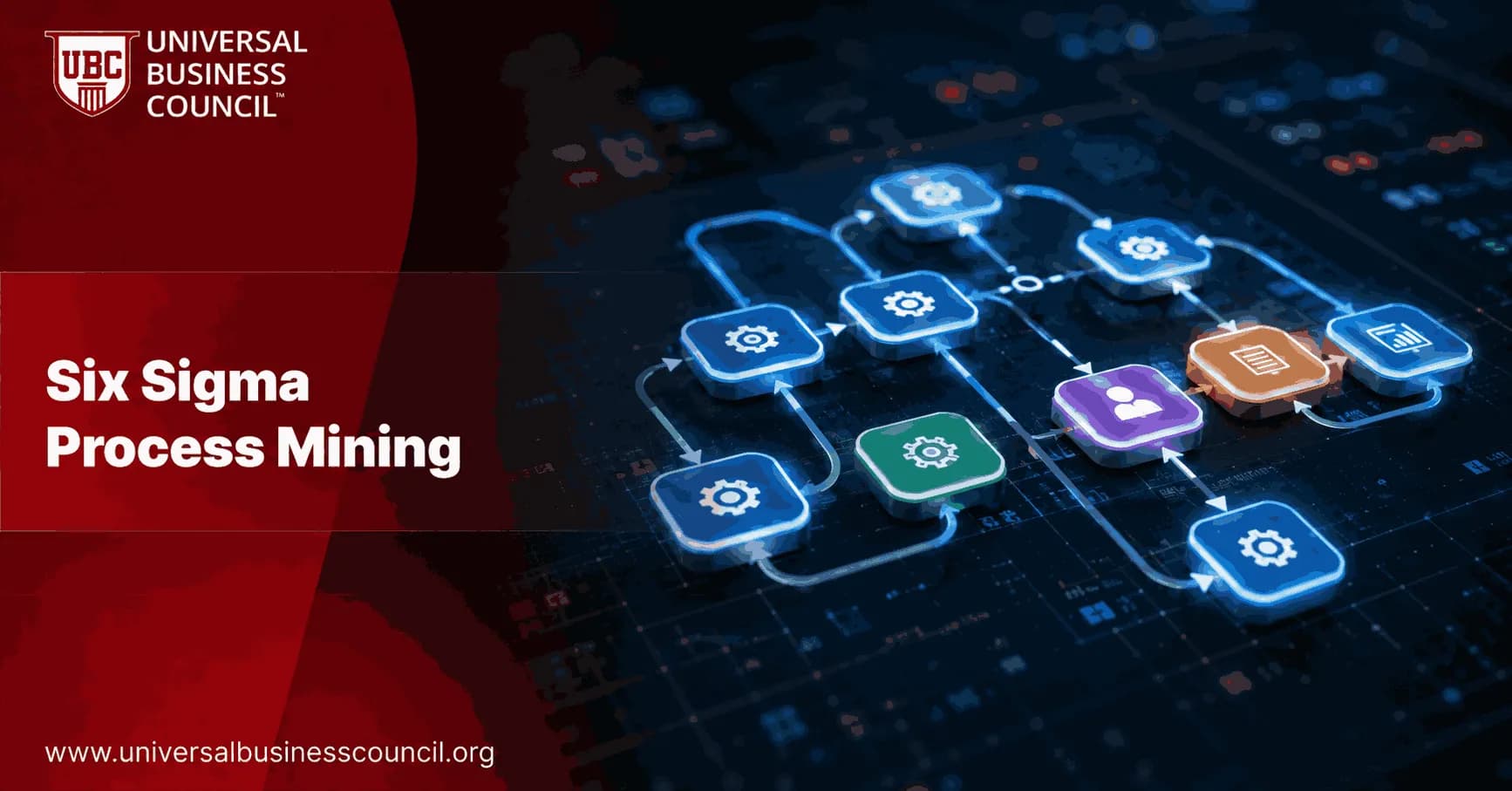
Six Sigma process mining gives you a factual view of how work actually moves through systems, not how people think it moves in a workshop. It combines event-log analysis with the DMAIC cycle to find variants, bottlenecks, rework loops, and compliance gaps that traditional process maps often miss. If you are building toward this discipline, the Certified Six Sigma Expert credential is a solid place to ground the DMAIC fundamentals that process mining builds on.
If you have ever sat through a brown-paper mapping session, you know the problem. The loudest team in the room shapes the map. The exception path gets dismissed as rare. Then the SAP or Salesforce data shows that the exception path is 28 percent of the workload. That is where process mining changes the Six Sigma conversation.

What Is Six Sigma Process Mining?
Process mining discovers, monitors, and improves real processes by extracting knowledge from event logs in business systems such as ERP, CRM, ITSM, workflow, and finance platforms. Six Sigma gives the improvement structure through DMAIC: Define, Measure, Analyze, Improve, and Control.
Together, they create a stronger operating model for process improvement. The Process Mining for Six Sigma approach, known as PMSS in academic research, formally links process mining activities to DMAIC phases. It moves teams from opinion-led diagnosis to evidence-led improvement.
The basic event log is simple but unforgiving. You need at least three fields:
Case ID: the order, invoice, claim, ticket, or application being tracked.
Activity name: the process step completed.
Timestamp: when the step happened.
In real projects, the hard part is not drawing the process model. It is cleaning duplicate event names, fixing missing timestamps, and agreeing whether a reopened case is rework or a valid customer change. That detail matters.
How Process Mining Improves Each DMAIC Phase
This is also where the discipline stops being a purely technical exercise and starts overlapping with process leadership, which is why many practitioners round out their DMAIC training with broader Management Certifications covering process ownership, change management, and cross-functional coordination.
Define: choose the right problem
Six Sigma projects often fail early because the scope is too broad. Process mining helps you define the project around actual pain points, such as one region with excessive rework or one product line with long approval queues.
Instead of asking stakeholders to describe the process, you show them the discovered process model. That usually ends the debate quickly. You can see which paths dominate volume, which variants are costly, and where customers wait.
Measure: replace samples with process facts
Manual time studies have value, but they are limited. Process mining measures cycle time, waiting time, touch time, rework frequency, variant volume, and first pass yield from timestamped records.
One practical warning: do not report only the average cycle time. In order-to-cash work, I have seen the median look acceptable while the 90th percentile hid a serious credit-release queue. Leadership usually cares about the tail because that is where escalations, churn risk, and cash delays live.
Analyze: find why performance differs
The Analyze phase is where Six Sigma process mining earns its keep. You can correlate long cycle times, SLA breaches, defects, or cancellations with attributes such as supplier, customer segment, region, channel, product family, or team.
Conformance checking is especially useful. It compares the actual process against a standard operating procedure and flags skipped controls, out-of-order approvals, extra handoffs, and non-compliant paths. In regulated industries, that is not just waste. It is risk.
Improve: target changes where they count
Process mining helps you avoid improvement theater. You can test whether removing a low-value approval, standardizing a path, changing work allocation, or automating a rule-based step affects the right metric. As automation and rule-based steps become a bigger part of this phase, teams increasingly lean on a Deep Tech Certification to understand where distributed ledgers, smart automation, or advanced data infrastructure could realistically fit into the improved process.
The results can be substantial. Genpact reported that a global bank increased straight-through processing from 43 percent to a range of 60 to 80 percent in selected processes and cut mortgage lead time to offer by 3 to 6 days. Deutsche Telekom reported more than 66 million euros in savings from process mining in procure-to-pay, including reductions in duplicate payments and missed discounts. These are not cosmetic wins.
Control: stop the process from drifting back
The Control phase is where many Lean Six Sigma projects weaken. A dashboard in week twelve is not a control plan. Process mining supports continuous monitoring of cycle time, compliance rate, rework loops, and new variants as they appear.
Set alert thresholds. Review conformance exceptions. Track whether the improved path is actually being followed. If the old workaround returns under month-end pressure, the event log will show it.
Hidden Inefficiencies You Can Expect to Find
Most organizations discover that their documented process is only one version of reality. Common findings include:
Variant proliferation: dozens of paths for the same process, often driven by local habits or system workarounds.
Rework loops: repeated approvals, document corrections, reopened tickets, and avoidable handbacks.
Bottlenecks: queues around credit checks, purchase approvals, quality review, claims validation, or master data updates.
Skipped controls: compliance steps missed under time pressure or handled outside the system.
Data quality defects: inconsistent activity names, missing status changes, and manual updates that distort reporting.
To be blunt, process mining will also expose uncomfortable management habits. Extra approvals often exist because leaders do not trust upstream decisions. Automation will not fix that by itself.
Where It Works Best
Six Sigma process mining is strongest in high-volume, system-tracked processes. Good candidates include procure-to-pay, order-to-cash, loan processing, insurance claims, customer service, IT incident management, supply chain planning, and internal audit.
GE Healthcare has been cited for freeing 1.3 billion US dollars in cash through process mining in order-to-cash work. Tech Data reportedly cut procure-to-pay cycle time by 57 percent within a year. Saint-Gobain used process mining to focus internal audit effort and saved an estimated 240 weeks per year.
It is the wrong tool when the process leaves little digital trace, the case ID is unreliable, or the organization is not ready to act on what the data shows. In those situations, fix data capture first.
Skills Professionals Need Next
If you work in operational excellence, quality, analytics, finance transformation, or business process management, learn both sides: Six Sigma discipline and process data literacy. You need to understand DMAIC, root-cause analysis, hypothesis testing, control plans, event logs, conformance checking, and dashboard design.
Connect this topic to the relevant Universal Business Council certification pages for Six Sigma, Lean Management, Business Analytics, Project Management, and Business Process Management. A useful learning path is simple: build Six Sigma fundamentals first, then add process mining, analytics, and automation skills. On the technical side, pairing that path with a general Tech Certification helps close the gap between reading an event log and actually understanding the systems, APIs, and data pipelines generating it.
Start With One Process, Not the Whole Enterprise
Pick one process with volume, pain, and clean enough data. Define the CTQ metric, extract the event log, discover the actual variants, and quantify the largest delay or rework loop. Then run DMAIC with the evidence in front of you.
Your next step: choose a process such as procure-to-pay or order-to-cash, check whether the system records case ID, activity, and timestamp, and build a baseline before another workshop creates another process map no one uses.
FAQs
1. What is Six Sigma process mining?
Six Sigma process mining combines Six Sigma's data-driven improvement methodology with process mining technology to identify inefficiencies, variation, bottlenecks, and process deviations using event data from business systems. Process mining reconstructs how processes actually operate based on digital records, while Six Sigma provides frameworks such as DMAIC for analyzing problems and implementing improvements. Together, they can help organizations move beyond assumptions and static process maps toward evidence-based understanding of real process performance.
2. How does process mining support Six Sigma?
Process mining supports Six Sigma by providing detailed evidence about how processes actually flow through an organization. It can reveal waiting times, repeated activities, rework loops, unnecessary handoffs, skipped steps, and deviations from expected workflows. Six Sigma teams can use these insights during the Measure and Analyze phases of DMAIC to identify potential improvement opportunities. Statistical analysis and process expertise can then determine which inefficiencies have the greatest impact on quality, cost, cycle time, or customer experience.
3. How does process mining find hidden process inefficiencies?
Process mining analyzes event logs generated by systems such as ERP, CRM, workflow, finance, manufacturing, and service-management platforms. These records typically show activities, timestamps, cases, and process sequences. Process mining software uses this information to reconstruct actual process paths and compare different variants. This can expose delays, repeated approvals, excessive handoffs, rework, and unexpected process paths that conventional interviews or workshops may overlook because, inconveniently, what people think a process does and what it actually does are often different things.
4. How is process mining used in the DMAIC methodology?
Process mining can support all five DMAIC phases. During Define, it can help identify high-impact process problems. During Measure, it establishes evidence-based process baselines. During Analyze, teams can investigate bottlenecks, variants, and rework. During Improve, process mining can help compare potential changes and evaluate pilot results. During Control, continuous monitoring can determine whether employees and systems follow the improved process and whether performance remains within expected levels.
5. What data is needed for Six Sigma process mining?
Process mining generally requires event-log data containing at least a case identifier, activity information, and timestamps. Additional attributes such as department, employee role, customer type, supplier, transaction value, product, location, or system can provide deeper analytical insights. Data may come from ERP, CRM, BPM, IT service management, manufacturing, healthcare, or financial systems. Data completeness, consistency, timestamp accuracy, and standardized activity definitions are essential because unreliable event data can produce misleading process models.
6. What are the benefits of combining Six Sigma and process mining?
Combining Six Sigma and process mining can provide faster process discovery, more accurate performance measurement, better bottleneck identification, improved root cause analysis, and stronger process monitoring. Process mining provides visibility into actual workflows, while Six Sigma helps teams quantify problems and validate improvement opportunities. The combination can reduce cycle times, defects, rework, waiting, compliance deviations, and operational costs while giving improvement teams a more objective foundation for decision-making.
7. How can process mining reduce process cycle time?
Process mining can reduce cycle time by showing where cases spend the most time waiting or moving between activities. Teams can compare high-performing and slow process variants to identify differences in approvals, handoffs, rework, resource allocation, or system interactions. Six Sigma analysis can then determine why these delays occur and whether they represent significant sources of variation. Improvements may include workflow redesign, automation, standardized routing, revised approval rules, or better resource allocation.
8. How does process mining help identify bottlenecks?
Process mining can calculate the time spent between activities and visualize where work accumulates or slows down. Bottlenecks may occur around approvals, manual reviews, resource shortages, system interfaces, or repeated handoffs. Teams can segment data by location, product, customer, employee group, or transaction type to determine whether delays are concentrated in particular areas. Six Sigma methods can then investigate the root causes and quantify how much each bottleneck affects overall process performance.
9. How can process mining identify rework and process defects?
Process mining can reveal when cases repeatedly return to previous activities, undergo duplicate processing, or follow unexpected paths. These patterns may indicate rework caused by incomplete information, errors, failed approvals, incorrect processing, or system problems. Six Sigma teams can quantify the frequency and cost of these loops and use root cause analysis to investigate why they occur. Eliminating recurring rework can improve first-time-right performance while reducing labor costs and overall process cycle time.
10. What KPIs should be tracked in Six Sigma process mining?
Useful KPIs include total cycle time, waiting time, first-time-right rate, rework rate, process variant frequency, number of handoffs, SLA compliance, defect rate, automation rate, process conformance, and Cost of Poor Quality. Teams may also monitor throughput, queue time, touch time, and exception rates. KPIs should be connected to customer and business requirements. Generating hundreds of process-mining metrics because the software permits it mostly transforms hidden inefficiency into highly visible dashboard clutter.
11. How does process mining improve root cause analysis in Six Sigma?
Process mining improves root cause analysis by allowing teams to compare process behavior across different groups and outcomes. For example, teams can examine whether delayed cases involve particular suppliers, approval routes, systems, locations, or process variants. These observations can generate stronger root cause hypotheses. Six Sigma statistical methods can then test whether suspected factors are meaningfully associated with poor performance. Process mining identifies patterns, while further analysis helps determine whether those patterns represent genuine causes.
12. What is conformance checking in Six Sigma process mining?
Conformance checking compares the process recorded in event data with a defined or expected process model. It can reveal skipped activities, incorrect sequences, unauthorized deviations, repeated steps, or other differences between actual and intended workflows. Six Sigma teams can measure the frequency and impact of these deviations and investigate their causes. Conformance checking is particularly useful in standardized, regulated, or compliance-sensitive processes where consistent execution is important.
13. How can process mining improve compliance and internal controls?
Process mining can help organizations monitor whether processes follow required procedures and control points. It may reveal missing approvals, unusual activity sequences, segregation-of-duties concerns, repeated overrides, or other deviations requiring investigation. Six Sigma teams can use this evidence to improve process reliability and reduce recurring control failures. Process mining should complement formal compliance, audit, legal, and risk-management frameworks rather than being treated as a replacement for them.
14. How can process mining improve customer experience?
Process mining can improve customer experience by identifying operational problems that create delays, repeated requests, inconsistent service, or failed transactions. Teams can trace customer-related cases across process stages and determine where waiting, rework, or handoffs occur. Six Sigma can translate customer expectations into Critical-to-Quality requirements and prioritize improvements accordingly. Reducing unnecessary process variation can result in faster response times, fewer errors, and more consistent service experiences.
15. What industries can use Six Sigma process mining?
Six Sigma process mining can be used in manufacturing, banking, finance, insurance, healthcare, logistics, supply chain, telecommunications, IT services, retail, government, and other industries with digital process records. Common applications include order-to-cash, procure-to-pay, claims processing, patient journeys, loan processing, incident management, production workflows, and customer service. Processes with high transaction volumes and reliable event data are often particularly suitable because patterns and variations can be analyzed systematically.
16. How does AI enhance Six Sigma process mining?
Artificial intelligence can enhance process mining by detecting unusual process patterns, predicting delays, identifying potential bottlenecks, and recommending areas for investigation. Machine learning can analyze combinations of process variables that may be difficult to evaluate manually. Six Sigma provides a structured framework for validating AI-generated insights and measuring whether proposed changes improve performance. Human oversight remains important because an algorithm identifying a pattern does not automatically mean it has discovered a root cause.
17. What tools are commonly used for process mining?
Process mining platforms can provide process discovery, conformance checking, performance analysis, variant comparison, and process monitoring capabilities. Well-known platforms in the broader process-mining market include Celonis, SAP Signavio Process Intelligence, UiPath Process Mining, and Microsoft Process Mining capabilities, among others. Organizations may combine these platforms with statistical tools such as Minitab, R, Python, or business intelligence software. Product capabilities and licensing change over time, so teams should evaluate current features against their specific requirements.
18. What are the challenges of using process mining with Six Sigma?
Common challenges include incomplete event logs, inconsistent activity names, inaccurate timestamps, fragmented systems, privacy concerns, complex data extraction, and limited process-mining expertise. Another challenge is interpreting discovered process variants correctly, since not every deviation represents a defect. Some variations may be necessary because of customer, regulatory, or operational requirements. Successful implementation therefore requires strong data governance, process expertise, statistical analysis, stakeholder participation, and clearly defined improvement objectives.
19. What are the best practices for Six Sigma process mining?
Best practices include starting with a clearly defined business problem, selecting a process with reliable event data, validating data quality, and establishing meaningful baseline KPIs. Teams should use process mining to identify patterns and potential causes, then apply Six Sigma analysis to validate those findings before implementing changes. Improvement results should be monitored continuously, and process owners should receive clear response procedures for emerging deviations. Data privacy, access controls, security, and governance should also be addressed from the beginning.
20. What is the future of Six Sigma and process mining?
The future of Six Sigma process mining is likely to involve increasingly real-time, predictive, and automated process improvement. AI can help predict delays and process failures, while digital twins and simulation can evaluate potential improvements before implementation. Continuous process monitoring can identify deviations as they emerge rather than months later during a review. Six Sigma provides the measurement and problem-solving discipline needed to turn these capabilities into sustainable improvements, creating a more evidence-based approach to operational excellence.
Related Articles
View All
Six Sigma
Six Sigma Cost of Poor Quality: Finding Hidden Losses
Six Sigma Cost of Poor Quality explains how defects, rework, downtime, and lost customers hide real financial losses inside everyday operations.
Six Sigma
Six Sigma vs Process Improvement: Is Six Sigma the Same Thing?
Six Sigma is a structured process improvement method, not a synonym for process improvement. Learn when to use Six Sigma, Lean, Kaizen, or simpler workflow fixes.
Six Sigma
Six Sigma vs Business Process Management: How They Work Together
Learn how Six Sigma and Business Process Management work together to reduce variation, improve workflows, and sustain process performance.
Trending Articles
The Role of Blockchain in Ethical AI Development
How blockchain technology is being used to promote transparency and accountability in artificial intelligence systems.
AWS Career Roadmap
A step-by-step guide to building a successful career in Amazon Web Services cloud computing.
Top 5 DeFi Platforms
Explore the leading decentralized finance platforms and what makes each one unique in the evolving DeFi landscape.