

AI Incident Management: Reporting, Response and Lessons Learned
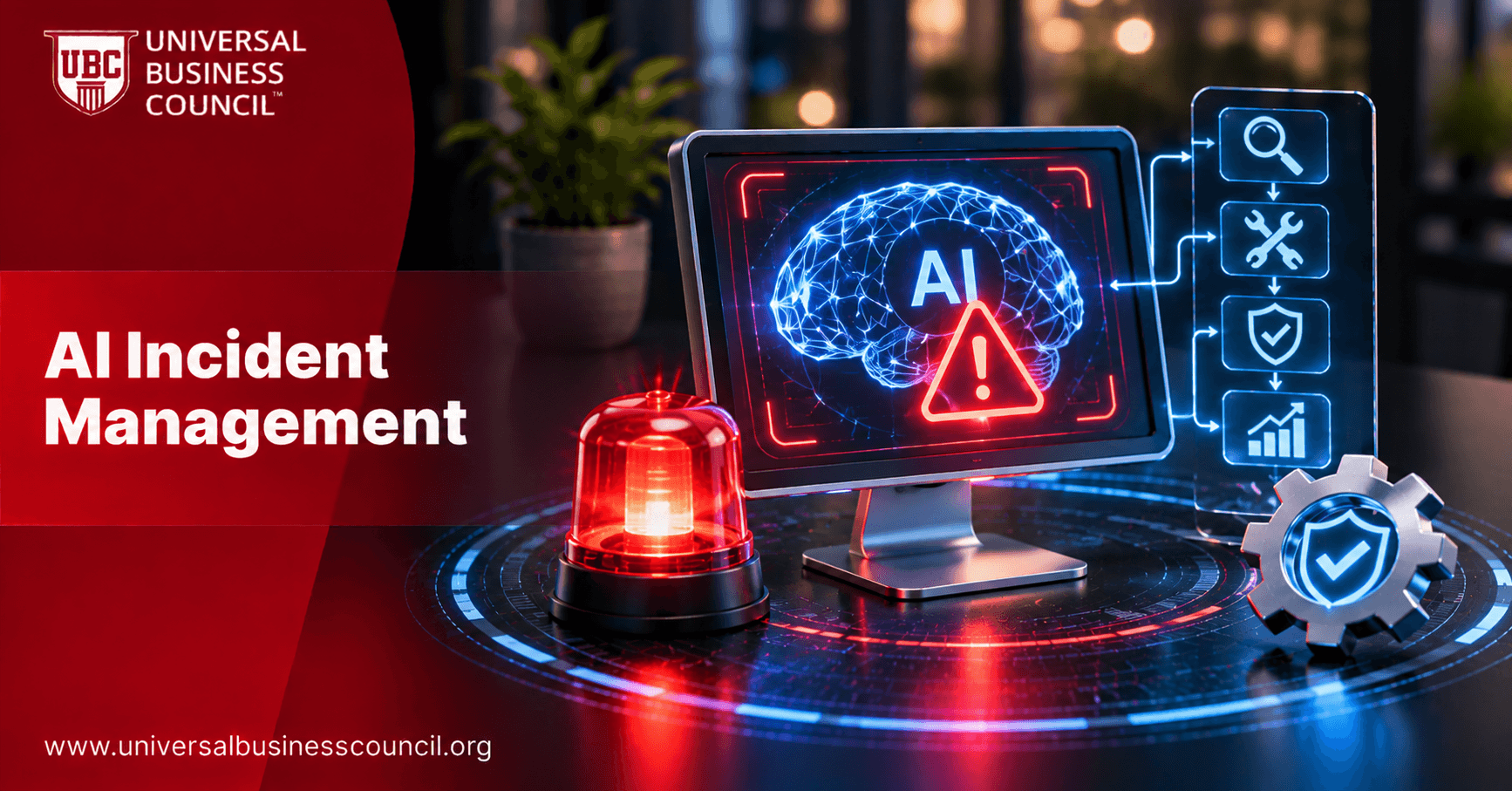
Plan on the assumption that something will eventually go wrong. Even well-tested AI systems produce harmful outputs, leak data, drift out of tolerance or get misused, and the organizations that handle these moments well are the ones that prepared for them. AI incident management is the discipline of detecting, reporting, responding to and learning from AI failures. This guide explains what counts as an AI incident, how to build reporting and response processes and how to turn each event into lasting improvement. For structured professional learning, see the certified responsible AI expert certification. This is general information, not legal advice.
What is AI incident management?
AI incident management is the set of policies, roles and procedures for handling events in which an AI system causes or could cause harm, or behaves in ways that breach your standards or legal duties. It sits alongside security incident response and quality management, and it often needs both teams to work together.

The goal is to limit harm, restore safe operation, meet notification duties and prevent a repeat.
What counts as an AI incident?
Define the term broadly enough that people report problems, and clearly enough that they know what to report.
Common incident types
Typical categories include:
Harmful, biased, offensive or unsafe outputs reaching users
Materially wrong outputs that influence decisions, such as incorrect advice or scoring
Exposure of personal or confidential data through a model, prompt or log
Security events such as prompt injection, data poisoning or model theft
Unauthorized actions taken by an AI agent
Significant performance drops or drift beyond agreed thresholds
Misuse of AI by staff, customers or third parties
Near misses
Include problems that were caught before harm occurred. Near misses reveal weaknesses cheaply, and a culture that reports them tends to have fewer serious incidents.
Building a reporting process
An incident you never hear about cannot be managed.
Make reporting easy and safe
Provide a simple channel for staff, customers and partners to report concerns, with clear instructions on what to include. Reassure staff that good-faith reporting will not be punished. Fear of blame is a leading reason incidents go unreported.
Detect proactively
Do not rely only on people noticing. Use monitoring for output quality, safety filters, drift, security alerts and unusual usage, and review complaints and support tickets for patterns.
Classify by severity
Set severity levels based on harm to people, legal exposure, data sensitivity, scale and reversibility. Severity decides who is alerted, how fast and what authority the response team has. Higher levels should reach senior leaders, legal and communications quickly.
Responding to an incident
A response follows a recognizable sequence, though the details depend on the case.
Contain
Limit further harm. That may mean pausing the system, switching to a fallback, disabling a feature, blocking an attack path or revoking access. Make sure someone has clear authority to pause a system without waiting for lengthy approvals.
Assess and investigate
Establish what happened, who and what was affected, how long it lasted and why. Preserve logs, prompts, outputs, model versions and configuration. Investigation often requires technical, legal, privacy and business input, and teams with strong engineering skills, such as those built through tech certifications, can trace causes more quickly.
Notify and communicate
Determine who must be told and when. Privacy and sector laws may require notice to regulators or affected individuals within set periods, and contracts may require notice to customers or partners. Communicate clearly and accurately, without speculation or minimizing.
Coordinate messages
Keep legal, communications and technical teams aligned so that statements are consistent and truthful. Communications staff who understand accurate, audience-focused messaging, such as through a digital marketing course, can support clear public explanations.
Fix and recover
Correct the immediate problem, remediate affected people where appropriate and test thoroughly before restoring service. Decide whether controls such as human review or filters should stay in place longer than before.
Learning from incidents
The value of an incident lies in what you change afterward.
Run a blameless review
Hold a structured post-incident review that focuses on causes and system weaknesses, not on individuals. Ask what allowed the issue, why it was not caught sooner and what would prevent or limit a repeat.
Track actions to completion
Assign owners and deadlines for each improvement, whether in testing, monitoring, training, policy, vendor terms or design. Report progress to leadership and verify that fixes work.
Share lessons carefully
Circulate findings internally so other teams benefit. Where appropriate and lawful, contribute to industry learning through information-sharing groups, removing confidential details.
Governance, people and records
Incident management needs ownership and evidence.
Roles and training
Name an incident lead, define who sits on the response team and train people through exercises. Confirm that those with response authority and privileged access hold the qualifications they claim, using verification such as HireValid.
Vendors and contracts
Third-party AI incidents affect you. Require vendors to report incidents quickly, cooperate with investigations and share root-cause information.
Reliable records
Maintain a register of incidents with timelines, decisions, notifications and fixes. Secure, tamper-evident records support regulators and audits, and they connect to topics in deep tech certifications.
Conclusion
AI incident management helps organizations handle failures calmly and lawfully. Define what counts as an incident, make reporting easy, monitor proactively and classify by severity. Respond by containing, investigating, notifying and fixing, then run blameless reviews and track improvements. Support the process with clear roles, vendor commitments and reliable records, and rehearse it before you need it.
Frequently asked questions
These are the questions teams ask most about AI incidents.
1. What is an AI incident?
An event where an AI system causes or could cause harm or breaches standards or law.
2. What are examples?
Harmful outputs, data exposure, security attacks, unauthorized agent actions and major drift.
3. What is a near miss?
A problem caught before it caused harm.
4. Why track near misses?
They reveal weaknesses before serious harm occurs.
5. Who should report incidents?
Anyone who notices a problem, including staff, customers and partners.
6. How do we encourage reporting?
Make it simple and protect good-faith reporters from blame.
7. How do we set severity?
Consider harm, legal exposure, data sensitivity, scale and reversibility.
8. Who can pause a system?
A named person with clear authority and no approval delay.
9. What should be preserved?
Logs, prompts, outputs, versions and configurations.
10. When must regulators be told?
When laws require it, often within set periods, so check your obligations.
11. Do we notify affected individuals?
Where law or fairness requires it, yes.
12. Who should be on the response team?
Technical, legal, privacy, security, communications and business leads.
13. How is it different from security incident response?
It adds non-security harms such as bias, safety and misleading outputs.
14. How do we communicate externally?
Clearly, accurately and in coordination with legal and communications teams.
15. What is a blameless review?
A review that focuses on causes and system weaknesses, not on individuals.
16. How do we ensure fixes happen?
Assign owners and deadlines and verify results.
17. Should we rehearse?
Yes. Exercises expose gaps before a real event.
18. What about vendor AI incidents?
Require quick reporting, cooperation and root-cause sharing in contracts.
19. What records should we keep?
Timelines, decisions, notifications, fixes and review outcomes.
20. How often should we review the process?
Regularly and after every significant incident.
Related Articles
View All
Artificial Intelligence
AI Incident Response Plan: A Step-by-Step Template
Learn how to create an effective AI incident response plan with a practical, step-by-step approach. Explore how to identify AI-related incidents, assign response responsibilities, assess risks, contain threats, communicate with stakeholders, and document lessons learned using a structured template.

Artificial Intelligence
AI Supply Chain Risk Management: Models, Data and Dependencies
Explore AI supply chain risk management and how organizations can identify and address vulnerabilities across AI models, training data, third-party tools, and software dependencies. Learn about common risks, security controls, vendor assessments, and best practices for building secure, reliable, and responsible AI systems.

Artificial Intelligence
ISO/IEC 23894 and AI Risk Management: What Organizations Need to Know
Understand ISO/IEC 23894 and its role in managing risks associated with artificial intelligence. Explore the standard's key guidelines, risk assessment processes, and practical implementation steps to help organizations identify, evaluate, and address AI risks while supporting responsible and trustworthy AI development.
Trending Articles
The Role of Blockchain in Ethical AI Development
How blockchain technology is being used to promote transparency and accountability in artificial intelligence systems.
AWS Career Roadmap
A step-by-step guide to building a successful career in Amazon Web Services cloud computing.
Top 5 DeFi Platforms
Explore the leading decentralized finance platforms and what makes each one unique in the evolving DeFi landscape.