

AI Supply Chain Risk Management: Models, Data and Dependencies
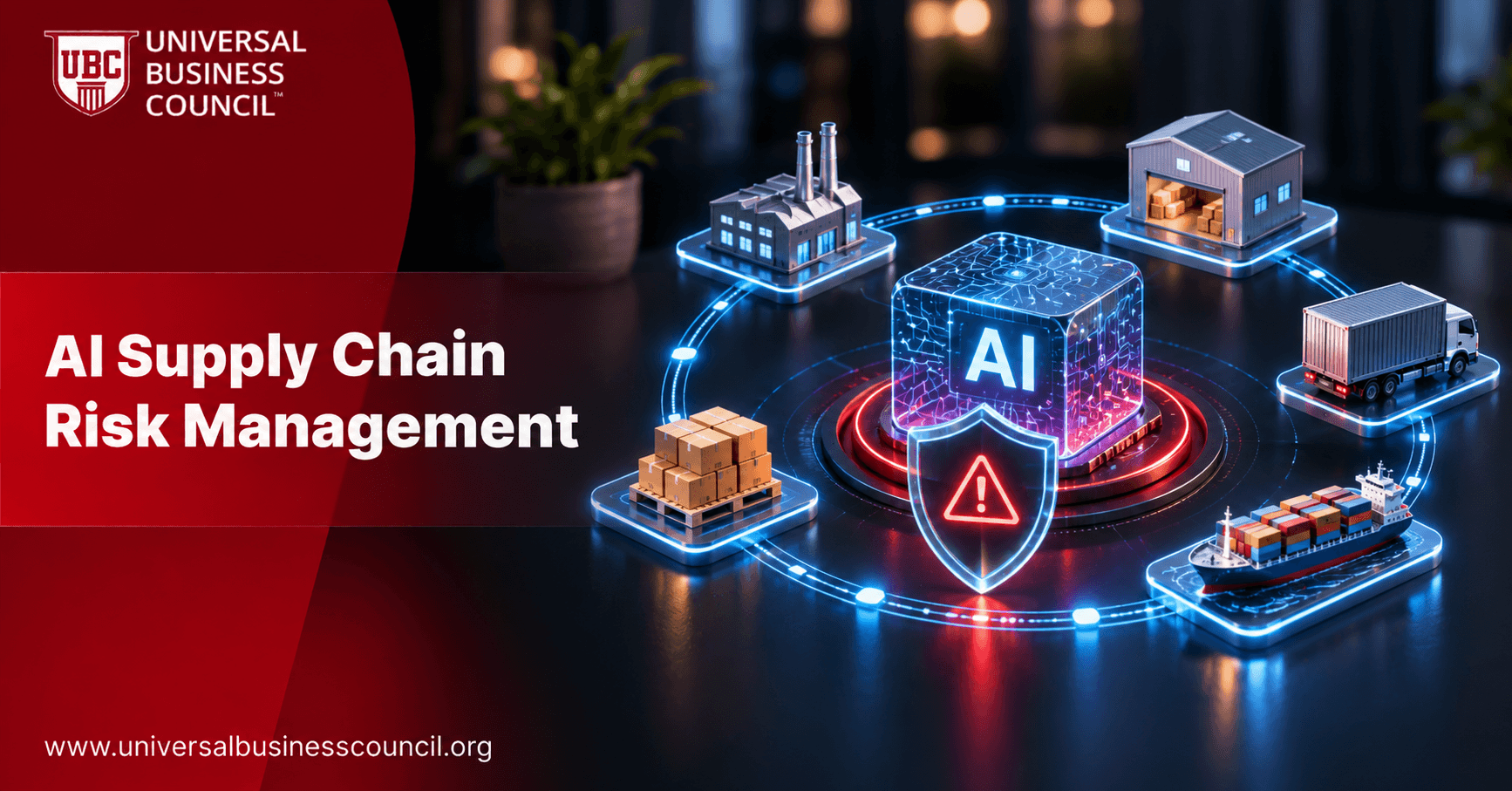
You inherit what you import. Almost no organization builds an AI system entirely from scratch: pretrained models, open-source libraries, third-party datasets, cloud platforms and API providers all sit underneath the finished product. Each one is a dependency, and each can carry legal, security and quality risks into your environment. AI supply chain risk management is the practice of knowing what those dependencies are and controlling the risk they bring. This guide covers the main risk areas, the controls that work and how to document them. For formal grounding in the field, see the certified responsible AI expert certification. This is general information, not legal advice.
What is AI supply chain risk management?
AI supply chain risk management is the process of identifying, assessing and controlling risks that arise from the models, data, software, services and suppliers your AI systems rely on. It extends familiar third-party and software supply chain practices to the new components that AI introduces, such as training data and pretrained weights.

The aim is simple to state and hard to achieve: know what is in your AI systems, where it came from and whether you can trust it.
The components of an AI supply chain
Mapping the chain is the first task. Most AI systems depend on several layers.
Models
Pretrained and foundation models may come from vendors or open repositories. Risks include hidden weaknesses, unclear training data, restrictive or unclear licenses, unexpected behavior and silent updates by the provider.
Data
Training, fine-tuning and retrieval data can come from internal systems, purchased sets or public sources. Risks include poor quality, bias, missing consent, copyright problems, personal data and deliberate tampering.
Software and infrastructure
Libraries, frameworks, containers and cloud services form the technical base. They carry ordinary software vulnerabilities, plus risks specific to machine learning tooling, such as unsafe model file formats.
Services and people
API providers, labeling vendors, consultants and contractors handle your data and shape your systems. Their security practices, working conditions and trustworthiness all matter.
Pretrained and foundation models
Training, tuning and retrieval datasets
Open-source and commercial software
Cloud, API and hosting providers
Labeling, annotation and consulting partners
Key risks to manage
These risks appear again and again across AI supply chains.
Security compromise
Malicious or tampered models, poisoned data and vulnerable libraries can give attackers a way in or change system behavior. Models downloaded from public sources should be treated as untrusted code until checked.
Legal and compliance exposure
Unclear data rights, license restrictions, privacy law violations and sector rules can make a system unlawful to use or sell. These problems often surface late, when changing course is costly.
Quality, bias and safety
Inherited bias or weak performance in a component carries through to your product. You remain responsible for outcomes even when the flaw started upstream.
Concentration and continuity
Dependence on a single provider creates risk if prices change, terms shift, service stops or a model is withdrawn. Plan for substitution and exit.
Opaque changes
Providers may update models without notice, altering behavior that you tested. Ask about change notification and version pinning.
Controls that work
A practical program combines visibility, checks and contracts.
Build an AI bill of materials
Keep a record of each system's components: model name and version, source, license, datasets, key libraries, hosting and vendors. This makes it far easier to respond when a vulnerability or legal issue appears in a component.
Verify before you use
Scan models and code for malicious content, check source reputation, confirm integrity with hashes or signatures where available and review licenses and data terms. For data, check provenance, consent and quality, and document known limits.
Contract for transparency and responsiveness
Ask suppliers for documentation, testing evidence, security practices, change notice and incident reporting, and write commitments into agreements. Include audit rights where risk justifies them, plus exit and data return provisions.
Reduce dependence
Design systems so that components can be swapped, keep backups of critical assets and avoid hard-coding to one provider where practical. Engineers who build these architectures benefit from solid technical foundations, and many develop them through tech certifications.
Governance, people and evidence
Supply chain controls need ownership and records.
Assign accountability
Give each system an owner who is responsible for its dependencies, and set approval rules for adopting new models, datasets and vendors. Higher-risk uses should require review by security, privacy, legal and risk teams.
Check the people involved
Suppliers' staff and your own contractors can create risk. Confirm credentials and backgrounds of key personnel and vendors with services such as HireValid, within legal limits.
Protect the record
Maintain tamper-evident records of component versions, approvals and checks so you can show regulators and customers how you managed the chain. Provenance and integrity techniques connect to topics explored in deep tech certifications.
Communicate honestly
Do not claim that your AI is "fully secure" or "built on verified data" unless you can prove it. Teams that promote AI products can learn to describe safeguards accurately through a digital marketing course.
Conclusion
AI supply chain risk management helps organizations control the risks that come with models, data, software and suppliers. Map the chain, keep an AI bill of materials, verify components before use and contract for transparency and change notice. Reduce single-provider dependence, assign owners and keep reliable records. Because the chain changes constantly, review it on a schedule and whenever a component is updated or replaced.
Frequently asked questions
These are the questions teams ask most about AI supply chains.
1. What is an AI supply chain?
The models, data, software, services and suppliers an AI system depends on.
2. Why does it matter?
Risks in any component can pass into your product.
3. Am I responsible for upstream flaws?
Often yes, since you deploy the system and answer to users and regulators.
4. What is an AI bill of materials?
A record of a system's models, datasets, libraries, vendors and versions.
5. Are public pretrained models safe?
Treat them as untrusted until you check source, integrity, license and behavior.
6. What is model tampering?
Altering a model to hide malicious code or change its behavior.
7. How do we check dataset provenance?
Review origin, collection method, consent, licenses and known gaps.
8. What license issues arise?
Restrictions on commercial use, redistribution or specific applications.
9. Can data have copyright risk?
Yes, so review data rights and seek legal advice for uncertain sources.
10. What is vendor concentration risk?
Dependence on one provider that could change terms, prices or availability.
11. What is version pinning?
Locking to a specific model version so behavior does not change unexpectedly.
12. How do we handle silent model updates?
Require change notice, pin versions and retest after updates.
13. What should contracts include?
Documentation, security, change notice, incident reporting, audit rights and exit terms.
14. Who owns supply chain risk?
The system owner, supported by security, legal, privacy and procurement.
15. How do we scan models?
Use security tools that check files for malicious content and review formats.
16. What if a component is found vulnerable?
Use your bill of materials to find affected systems, then patch, replace or restrict.
17. Do labeling vendors pose risk?
Yes, through data exposure, quality issues and security practices.
18. How often should we review the chain?
On a schedule and whenever components or vendors change.
19. Can small teams manage this?
Yes, with a simple register and basic checks scaled to risk.
20. What records are needed?
Component lists, approvals, checks, contracts and incident logs.
Related Articles
View All
Artificial Intelligence
ISO/IEC 23894 and AI Risk Management: What Organizations Need to Know
Understand ISO/IEC 23894 and its role in managing risks associated with artificial intelligence. Explore the standard's key guidelines, risk assessment processes, and practical implementation steps to help organizations identify, evaluate, and address AI risks while supporting responsible and trustworthy AI development.
Artificial Intelligence
NIST AI Risk Management Framework: A Practical Implementation Guide
Explore the NIST AI Risk Management Framework and learn how to implement it across the AI lifecycle. Understand its four core functions, Govern, Map, Measure, and Manage, along with practical steps for identifying AI risks, improving accountability, and building trustworthy AI systems.
Artificial Intelligence
AI Risk Management: Identifying, Assessing and Mitigating AI Risks
Understand what AI risk management is and explore the key strategies organizations use to identify, assess, mitigate, and monitor AI-related risks. Learn how effective risk management supports AI security, fairness, transparency, regulatory compliance, and responsible AI adoption.
Trending Articles
The Role of Blockchain in Ethical AI Development
How blockchain technology is being used to promote transparency and accountability in artificial intelligence systems.
AWS Career Roadmap
A step-by-step guide to building a successful career in Amazon Web Services cloud computing.
Top 5 DeFi Platforms
Explore the leading decentralized finance platforms and what makes each one unique in the evolving DeFi landscape.