

Third-Party AI Risk Assessment: A Vendor Due Diligence Checklist
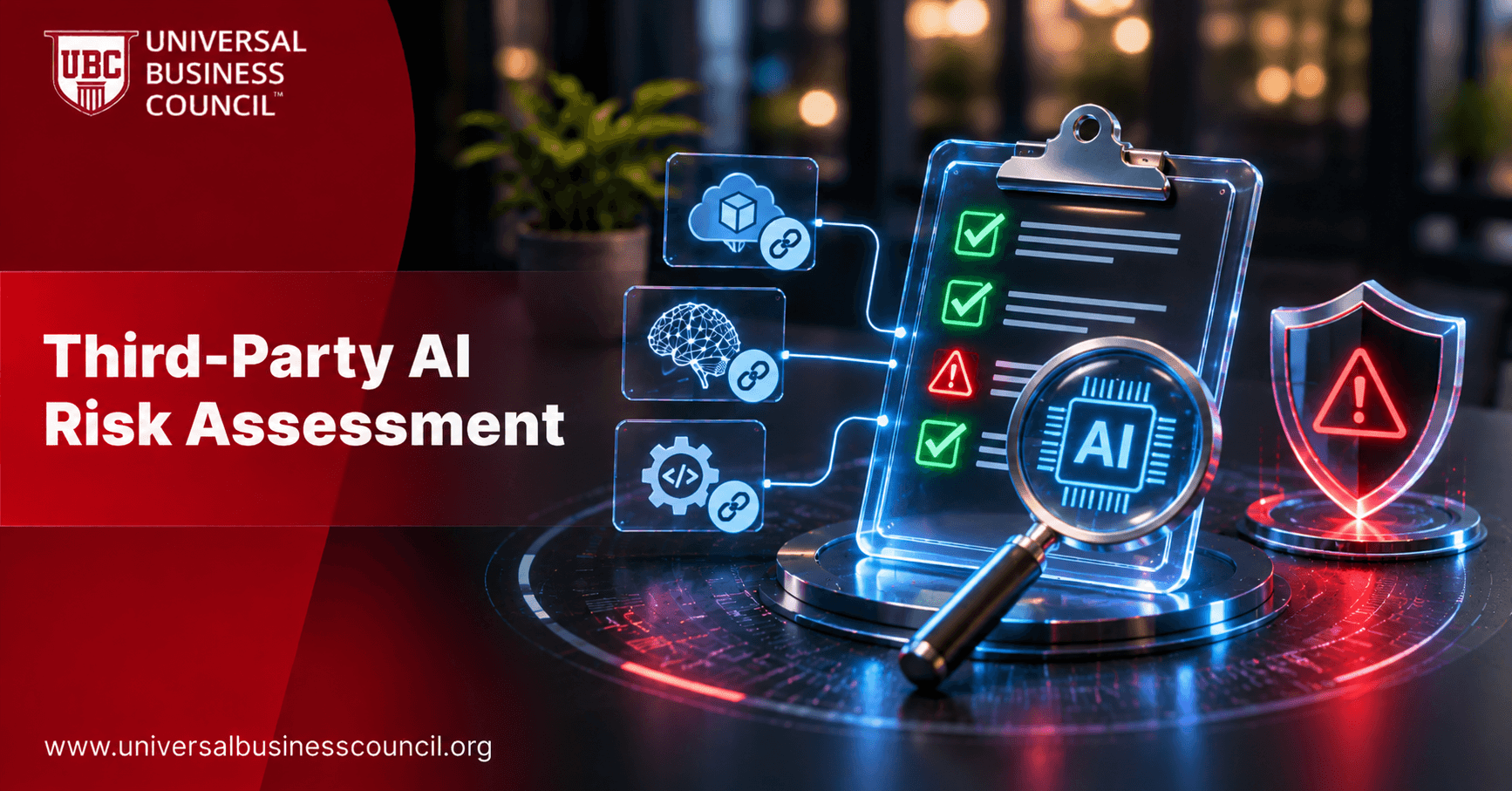
Buying AI does not transfer the risk to the seller. Regulators, customers and courts generally look to the organization that deploys a system, whoever built it. That is why third-party AI risk assessment has become a core compliance task, and why a vendor's sales deck is not due diligence. This guide offers a practical checklist you can adapt, organized by the areas that matter most: the vendor, the system, data, security, fairness, transparency and contracts. For structured professional learning, see the certified responsible AI expert certification. This is general information, not legal advice.
What is third-party AI risk assessment?
Third-party AI risk assessment is the structured review of an external supplier and its AI product before you buy, and again while you use it. It asks whether the vendor is reliable, whether the system is safe and lawful for your intended use and whether the contract gives you the protections you need.

It builds on standard vendor risk management but adds questions that are specific to AI, such as training data, model behavior, bias testing and change control.
Before you start: define use and risk
Due diligence should match the risk. Begin by writing down what the system will do, whom it will affect, what data it will touch and whether it informs decisions about people. A scheduling assistant and a candidate-screening tool call for very different depth.
Assign a risk tier, name an internal owner and decide which teams must review the answers, usually security, privacy, legal, compliance and the business sponsor.
The due diligence checklist
Use these sections as a starting point and add sector-specific items.
Vendor background and governance
Understand who you are dealing with and how they manage AI.
Does the vendor have an AI governance policy, named accountable leaders and a risk process?
Are relevant certifications or independent assessments available, and what do they actually cover?
What is their record on incidents, complaints and regulatory issues?
Is the company financially stable, and what happens to the service if it is acquired or closes?
The AI system itself
Ask for documentation that explains what the system is and how it behaves. Request model cards or equivalent descriptions of purpose, intended and prohibited uses, performance, known limitations and update practices. Ask which parts use third-party or foundation models, since that adds another layer of dependency.
Data practices
Data questions often reveal the biggest risks.
What data was used for training, and does the vendor have the right to use it?
Will your data be used to train or improve models, shared with others or retained, and for how long?
Where is data stored and processed, and who are the sub-processors?
Can data be deleted on request or at contract end?
Cross-border concerns
Check data transfer rules and any sector restrictions on storing or processing data abroad. Make sure the vendor can describe its data flows clearly.
Security and resilience
Review access controls, encryption, logging, vulnerability management, incident response and testing, including AI-specific testing such as prompt injection and data extraction. Ask about uptime commitments, backups and disaster recovery. Technical staff who evaluate these answers benefit from sound engineering knowledge, which many build through tech certifications.
Fairness, safety and performance
Ask how the vendor tests for bias, accuracy, robustness and harmful output, on what data and with what results. Request evidence relevant to your use case and population, and ask for the thresholds the vendor considers acceptable. For high-impact uses, run your own validation before relying on vendor claims.
Transparency and human oversight
Find out what explanations the system provides, what logs you can access and how humans can review or override outputs. Check whether you can meet your own duties to users, such as notifying them about AI use or supporting appeals.
Contract protections to request
Due diligence findings should flow into the contract. Common provisions include limits on data use and training, security and breach notification obligations, change notice for model updates, audit and testing rights, cooperation with regulators, performance commitments, liability and indemnity terms and clear exit and data return arrangements.
Align with your legal duties
Make sure the contract supports your obligations under privacy, consumer protection, employment and sector rules. If a duty cannot be met because of vendor limits, record the gap and decide whether to negotiate, add controls or choose another supplier.
Verifying people, records and claims
Documents and promises are only part of the picture.
Check the people
For high-risk or sensitive engagements, confirm the credentials and backgrounds of key vendor staff and contractors who will have access to your data or systems, using services such as HireValid within legal limits.
Keep a clear audit trail
Store questionnaires, evidence, risk decisions and approvals in a secure, traceable system. Integrity-focused record keeping connects to ideas explored in deep tech certifications.
Monitor and reassess
Due diligence does not end at signing. Reassess on a schedule, after major vendor changes and after incidents. Track performance, complaints and compliance with contract terms, and keep an exit plan current.
Be accurate in your own claims
If you promote products that use vendor AI, describe their capabilities and safeguards accurately. A digital marketing course can help teams communicate without overstating what the technology can do.
Conclusion
Third-party AI risk assessment protects organizations from inheriting a supplier's weaknesses. Define your use and risk tier, then review the vendor's governance, the system's documentation, data practices, security, fairness and performance evidence and transparency and oversight features. Turn findings into contract terms, verify key people and keep an audit trail. Reassess regularly, because both vendors and the systems they sell keep changing.
Frequently asked questions
These are the questions teams ask most about vendor AI due diligence.
1. What is third-party AI risk assessment?
A structured review of an AI supplier and product before and during use.
2. Why can't we rely on the vendor's assurances?
You remain accountable for how the system affects people and for legal compliance.
3. How is AI due diligence different from normal vendor review?
It adds questions on training data, model behavior, bias and change control.
4. Who should be involved?
Security, privacy, legal, compliance, procurement and the business owner.
5. How deep should the review be?
Match it to the risk tier of the intended use.
6. What documents should we request?
Model cards or equivalents, security reports, data policies and test results.
7. Should vendors use our data for training?
Only with clear permission and strong safeguards, and usually not by default.
8. What about sub-processors?
Ask for a list and review how they handle your data.
9. What security evidence matters?
Access control, encryption, testing, incident response and AI-specific testing.
10. How do we assess bias claims?
Ask for methods and results relevant to your population, and validate on your own data for high-impact uses.
11. What is change notice?
Advance warning when the vendor updates a model or feature.
12. Why do audit rights matter?
They let you verify claims when risk is high.
13. What if the vendor refuses to share information?
Treat it as a risk factor, and add controls or consider another supplier.
14. Can certifications replace our review?
No. Check what they cover and whether they match your use.
15. What exit terms should we seek?
Data return and deletion, transition support and continuity of service.
16. How do we handle foundation model dependencies?
Ask which models the vendor uses and how they are managed and updated.
17. What should we monitor after signing?
Performance, incidents, complaints, contract compliance and vendor changes.
18. When should we reassess?
On a schedule and after major changes or incidents.
19. Who approves the final decision?
The system owner, with sign-off based on risk tier.
20. What records should we keep?
Questionnaires, evidence, risk decisions, approvals and contracts.
Related Articles
View All
Artificial Intelligence
Chief AI Officer Responsibilities: Governance, Risk and Strategy
Explore the responsibilities of a Chief AI Officer (CAIO) and how the role supports AI adoption across an organization. Learn how CAIOs lead AI strategy, establish governance frameworks, manage risks, oversee compliance, and align AI initiatives with business goals.

Artificial Intelligence
AI Supply Chain Risk Management: Models, Data and Dependencies
Explore AI supply chain risk management and how organizations can identify and address vulnerabilities across AI models, training data, third-party tools, and software dependencies. Learn about common risks, security controls, vendor assessments, and best practices for building secure, reliable, and responsible AI systems.
Artificial Intelligence
Responsible AI Checklist for AI Developers, Data Scientists and Product Managers
Use this Responsible AI Checklist to evaluate how your organization develops, deploys, and manages AI systems. Explore key considerations for fairness, transparency, accountability, data privacy, security, risk management, and human oversight to support safer and more trustworthy AI adoption.
Trending Articles
The Role of Blockchain in Ethical AI Development
How blockchain technology is being used to promote transparency and accountability in artificial intelligence systems.
AWS Career Roadmap
A step-by-step guide to building a successful career in Amazon Web Services cloud computing.
Top 5 DeFi Platforms
Explore the leading decentralized finance platforms and what makes each one unique in the evolving DeFi landscape.