

Microsoft Agent 365: The Control Plane for Agents
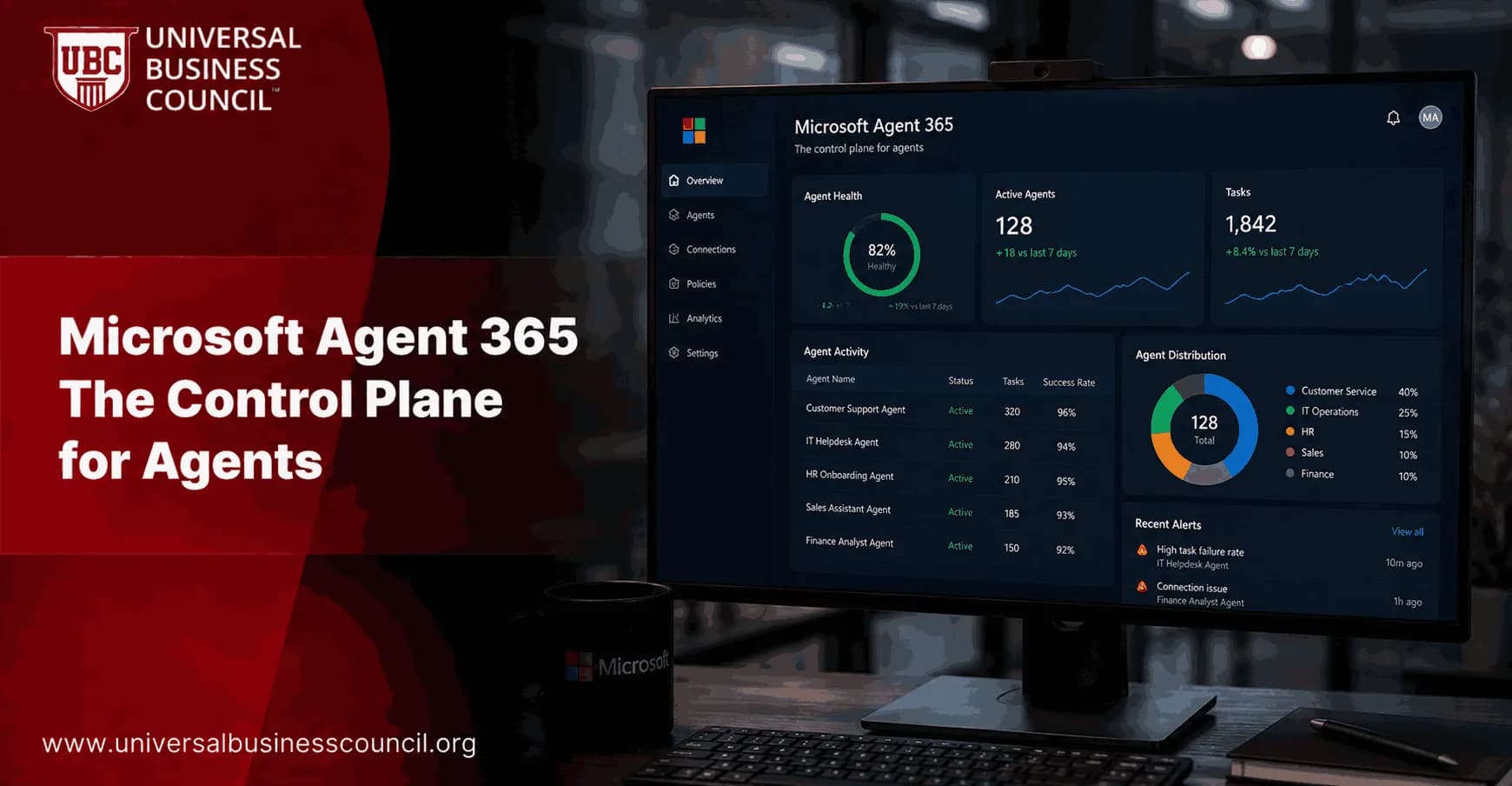
The enterprise technology landscape is evolving at an unprecedented pace. Consequently, organizations now depend on intelligent, autonomous systems to manage vast and complex workflows. Microsoft Agent 365 emerges as a decisive answer to this demand. Furthermore, it functions as the central control plane that governs every AI agent deployed within an enterprise environment. As a result, businesses gain structured oversight of their automated operations.
Moreover, professionals who invest in a recognized Marketing Certification are increasingly discovering that understanding AI agent platforms is a core competency. In addition, the convergence of marketing intelligence and AI automation has made this knowledge indispensable for modern practitioners.

Therefore, this article explores Microsoft Agent 365 in depth—covering its architecture, capabilities, use cases, and the pathways professionals can take to harness it effectively.
What Is Microsoft Agent 365?
Microsoft Agent 365 is an enterprise-grade platform engineered to serve as the definitive control plane for AI-powered agents. Specifically, it delivers a unified interface through which organizations can deploy, configure, monitor, and retire autonomous agents at scale. Therefore, businesses no longer need to manage disparate agent systems across multiple disconnected tools.
Additionally, the platform integrates with existing enterprise productivity ecosystems, cloud infrastructure, and data pipelines. Thus, it becomes the nerve center of an organization's entire agentic intelligence framework. Furthermore, its design ensures that every automated action remains transparent, accountable, and aligned with business objectives.
Notably, professionals pursuing a Tech Certification now recognize Microsoft Agent 365 as a foundational tool to understand. Consequently, certification curricula across the globe are incorporating agentic platform management as a core subject area.
Core Architecture of the Control Plane
The platform operates on a three-tier architectural model. Primarily, this structure ensures seamless coordination between autonomous agents and human operators:
Orchestration Layer: Assigns tasks to agents, manages priorities, and coordinates multi-agent communication in real time.
Execution Layer: Runs individual agent workflows, tracks live progress, and captures detailed activity logs.
Governance Layer: Applies security policies, enforces compliance standards, and controls agent access permissions.
Consequently, each layer reinforces the others, creating a robust and reliable system for enterprise-scale agent management. Moreover, this architecture prevents agents from operating beyond their defined operational boundaries.
Why the Control Plane Matters in Modern AI Deployments
As enterprises embrace increasingly autonomous systems, governance becomes a non-negotiable requirement. Specifically, without a dedicated control plane, AI agents operate in isolation. Therefore, errors propagate undetected, resources are misallocated, and business outcomes become unpredictable.
In contrast, Microsoft Agent 365 addresses these challenges by providing a single, authoritative source of truth for all agent activities. Furthermore, it enables real-time monitoring, intervention, and course correction at every stage of agent execution. As a result, organizations maintain continuous control without sacrificing the speed and efficiency that automation provides.
Additionally, as professionals deepen their expertise in Agentic AI, they develop a stronger appreciation for why control plane infrastructure is essential. Moreover, understanding this layer separates capable practitioners from those who merely use AI tools without strategic oversight.
Key Capabilities That Define the Platform
The platform delivers a comprehensive suite of capabilities that address the full lifecycle of AI agent management. Notably, these features distinguish it from conventional automation frameworks:
Agent Lifecycle Management: Create, deploy, pause, update, and decommission agents from a centralized dashboard.
Policy Enforcement: Define and apply role-based access controls, data handling rules, and operational boundaries.
Performance Analytics: Access detailed dashboards covering task completion rates, error frequencies, and throughput metrics.
Cross-Agent Orchestration: Enable agents to share context, delegate subtasks, and collaborate on complex workflows.
Enterprise Integration APIs: Connect agents with CRMs, ERPs, data warehouses, and third-party services seamlessly.
Audit and Compliance Logging: Maintain immutable records of every agent action to satisfy regulatory and internal audit requirements.
Therefore, teams adopting this platform gain a competitive advantage by managing complexity without increasing operational overhead. Consequently, agent ecosystems can scale rapidly while remaining fully governed.
Who Benefits from Microsoft Agent 365?
The platform serves a diverse range of professionals and organizations. Specifically, its architecture accommodates both technical and non-technical users. Furthermore, professionals who have earned an AI Certification are particularly well-positioned to implement and optimize the platform within their organizations. As a result, certified practitioners lead deployments with greater confidence and precision.
Marketing Professionals
Marketing teams deploy AI agents to automate audience segmentation, content publishing, lead nurturing, and performance analysis. Consequently, Microsoft Agent 365 allows them to coordinate all these agents from a single control interface. Moreover, campaign timelines shorten dramatically when agents operate within a governed, orchestrated framework.
Furthermore, marketers who combine platform expertise with a formal Marketing Certification can deliver measurable ROI improvements. Therefore, this combination of theoretical knowledge and hands-on platform skill is rapidly becoming a differentiator in the marketing profession.
Entrepreneurs and Freelancers
Entrepreneurs use AI agents to automate customer acquisition, operational reporting, and service delivery. Therefore, the control plane model enables them to manage multiple automated workflows without building expensive internal operations teams. Moreover, freelancers who build AI-powered solutions for clients can offer managed agent services as a premium offering.
Additionally, the platform's scalability means that individual consultants and large corporations use the same robust infrastructure. Consequently, the barrier to professional AI deployment is significantly reduced for independent practitioners.
Enterprise IT and Development Teams
IT departments rely on Microsoft Agent 365 to maintain security standards across all deployed agents. Additionally, development teams use its APIs to build custom agent workflows tailored to specific business processes. Therefore, technical teams benefit from reduced integration complexity and a standardized deployment framework.
Real-World Use Cases of Microsoft Agent 365
Practical applications demonstrate the platform's broad utility. Specifically, the following scenarios illustrate how organizations deploy Microsoft Agent 365 to achieve tangible results:
Customer Service Automation
Organizations deploy agents to handle first-line customer inquiries, process returns, and manage appointment scheduling continuously. Consequently, the control plane ensures that each agent adheres to response guidelines and escalates complex cases to human representatives appropriately. Therefore, customer satisfaction increases while support costs decrease significantly.
Financial Operations and Regulatory Compliance
Finance teams automate invoice processing, fraud pattern detection, and regulatory reporting through dedicated agents. Moreover, the governance layer of the platform enforces strict compliance protocols at every step. Consequently, audit trails are generated automatically, simplifying regulatory reviews and reducing the risk of compliance violations.
Content Creation and Publishing Pipelines
Content teams deploy coordinated agents to draft, review, optimize, and publish material across multiple channels. Furthermore, the control plane ensures consistent brand voice, maintains delivery schedules, and flags quality issues before publication. As a result, content production capacity expands without a corresponding increase in headcount.
Supply Chain and Logistics Management
Supply chain operations benefit from agents that monitor inventory levels, predict demand fluctuations, and coordinate vendor communications. Therefore, Microsoft Agent 365 ensures that all logistics agents operate within approved parameters and that exceptions trigger immediate human review. Consequently, supply chain efficiency improves while operational risk decreases.
How to Get Started with Microsoft Agent 365
Adopting the platform effectively requires a deliberate and structured approach. First, organizations should map their existing business processes and identify workflows best suited for agent automation. Next, they should define clear governance policies, including access permissions, compliance requirements, and escalation protocols.
Subsequently, teams can configure their first agents through the platform's interface, beginning with lower-risk, high-volume tasks. Moreover, piloting in a controlled environment before full deployment reduces implementation risk. Therefore, a phased rollout strategy typically yields better long-term outcomes than large-scale simultaneous deployments.
Furthermore, investing in professional education accelerates adoption. Specifically, earning credentials in technology management, AI strategy, and agentic system design equips practitioners with the frameworks needed to maximize platform value. Additionally, active participation in professional communities and regular review of platform documentation keeps teams current with evolving capabilities.
The Future of Agent Management with Microsoft Agent 365
The trajectory of enterprise AI is unambiguous: autonomous agents will become more numerous, more capable, and more deeply embedded in business operations. Consequently, the importance of a robust control plane will only intensify in the years ahead. Specifically, Microsoft Agent 365 is architected to evolve alongside these advancements, incorporating more sophisticated orchestration, decision-support, and compliance capabilities over time.
Moreover, as national and international AI governance frameworks mature, organizations will face increasing regulatory pressure to demonstrate oversight of their automated systems. Therefore, enterprises that establish control plane governance practices today will be significantly better prepared for compliance requirements tomorrow.
In addition, the convergence of large language models, multimodal AI, and agentic systems will give rise to entirely new categories of enterprise workflows. As a result, professionals who develop deep expertise in Microsoft Agent 365 now will hold a durable competitive advantage in the AI-driven economy of the future.
Conclusion
In summary, Microsoft Agent 365 represents a transformative advancement in enterprise AI infrastructure. Specifically, it provides the control plane that modern organizations require to deploy, monitor, and scale autonomous AI agents responsibly and effectively. Furthermore, it bridges the essential gap between machine autonomy and human accountability, making it an indispensable component of any serious AI strategy.
Consequently, professionals across marketing, technology, entrepreneurship, and operations who invest in understanding this platform position themselves at the forefront of enterprise AI. Moreover, pairing platform expertise with recognized certifications in marketing, technology, agentic AI, and artificial intelligence creates a powerful professional profile. Therefore, the time to build this expertise is now—because the organizations and practitioners who act decisively today will lead the intelligent enterprise of tomorrow.
FAQs
1. What exactly is Microsoft Agent 365?
Microsoft Agent 365 is an enterprise platform that functions as the central control plane for managing, deploying, orchestrating, and governing AI agents across complex business operations. Furthermore, it provides unified visibility into every agent's activity and performance.
2. What is a control plane in the context of AI agents?
A control plane is the centralized system that manages and coordinates all agents within an ecosystem. Consequently, it handles task assignment, performance monitoring, policy enforcement, and compliance tracking across every automated workflow.
3. Who are the primary users of this platform?
Marketing professionals, enterprise IT teams, entrepreneurs, freelancers, developers, and operations managers all benefit from the platform. Moreover, any professional who designs or deploys AI-driven workflows will find significant value in its capabilities.
4. How does Microsoft Agent 365 enforce compliance?
The governance layer applies role-based access controls, enforces operational boundaries, and generates immutable audit logs automatically. Therefore, organizations can satisfy both internal governance standards and external regulatory requirements without manual intervention.
5. Can small businesses and startups use this platform?
Yes. The platform is designed to scale from individual practitioners to large multinational enterprises. Furthermore, its intuitive interface and modular architecture allow smaller teams to adopt it incrementally without requiring deep technical expertise from day one.
6. How does an AI agent differ from a traditional automation bot?
An AI agent makes autonomous, context-aware decisions based on goals and real-time data. In contrast, a traditional bot follows rigid, pre-programmed rules without adaptability. Therefore, agents handle far more complex and dynamic tasks than conventional automation tools.
7. How does the platform manage multiple agents working simultaneously?
The orchestration layer coordinates communication between agents, assigns tasks based on context and priority, and enables seamless handoffs. Consequently, multiple agents collaborate on complex workflows without conflicts or duplication of effort.
8. Does using Microsoft Agent 365 require advanced coding skills?
Basic deployment and management require minimal coding knowledge. However, advanced customization, API integration, and custom workflow design benefit from technical expertise. Additionally, structured certification programs significantly accelerate the learning process for new users.
9. How does the platform integrate with existing enterprise software?
Integration APIs allow the platform to connect with CRMs, ERPs, data warehouses, productivity suites, and cloud services. Therefore, businesses can embed agent management into their existing technology stack without requiring significant architectural changes.
10. Which industries gain the most value from this platform?
Financial services, healthcare, retail, marketing, logistics, and customer service sectors benefit most from intelligent agent management. Moreover, any industry that relies on repetitive, data-intensive, or decision-heavy workflows can achieve significant efficiency gains through deployment.
11. How does the platform handle agent errors in real time?
The execution layer continuously monitors agent actions and immediately flags any deviation from approved parameters. Consequently, human operators receive instant alerts and can intervene, correct, or halt agent activity before errors have broader operational impact.
12. What performance metrics does the platform track?
The analytics module tracks task completion rates, agent response times, error frequencies, resource utilization, and throughput volumes. Therefore, teams have comprehensive, actionable data to continuously optimize agent performance and resource allocation.
13. Can agents improve their performance over time within the platform?
Yes. When connected to machine learning models, agents refine their decision-making based on historical performance data. Furthermore, the control plane ensures these improvements remain within defined operational and compliance boundaries at all times.
14. How does the platform protect sensitive enterprise data?
Data encryption, granular access controls, and comprehensive activity logging work together across all architectural layers. Specifically, no agent can access data beyond its defined permission scope, and all data interactions are logged for review and audit purposes.
15. What certifications are most valuable for professionals using this platform?
Certifications in marketing management, enterprise technology, agentic AI, and artificial intelligence strategy are all highly relevant. Moreover, these credentials demonstrate both theoretical understanding and practical readiness to deploy and govern AI agent ecosystems effectively.
16. How does the platform support human-in-the-loop decision-making?
Organizations can configure approval gates at critical workflow junctures, requiring human review before agents proceed with high-stakes actions. Therefore, the platform preserves human judgment where it matters most while allowing full automation of routine, low-risk tasks.
17. What role do APIs play in the platform's functionality?
APIs enable agents to communicate with external data sources, enterprise systems, and third-party services in real time. Consequently, agents can access current information and execute actions across an organization's entire digital ecosystem through a single managed interface.
18. How does Microsoft Agent 365 compare to legacy automation platforms?
Legacy platforms follow predetermined rules and lack contextual decision-making capability. In contrast, this platform supports autonomous, goal-oriented agents operating within a governed control plane. Furthermore, its compliance and audit features address enterprise requirements that older automation tools were never designed to meet.
19. Is the platform suitable for global enterprise deployments?
Yes. The platform supports multi-region deployments and adheres to international data governance and privacy standards. Moreover, its architecture accommodates the regulatory requirements of multiple jurisdictions simultaneously, making it appropriate for multinational organizations.
20. What is the recommended first step for organizations adopting this platform?
Organizations should begin by auditing existing business processes to identify workflows with high automation potential. Subsequently, they should define governance policies, select a pilot use case, and deploy their first agents in a controlled environment. Consequently, this phased approach reduces implementation risk and builds organizational confidence before broader rollout.
Related Articles
View All
Artificial Intelligence
Meta Introduces Muse: A New AI Agent for Online Shopping, Travel, and More
Meta introduces Muse, a new AI agent designed to assist users with online shopping, travel planning, email tasks, and other everyday digital activities.
Artificial Intelligence
AI Agents for Marketing: How Autonomous Tools Are Changing Campaign Management
AI agents for marketing are changing campaign management by automating execution, personalization, optimization, and analytics while humans set strategy.

Artificial Intelligence
Microsoft to Allow Users to Disable Web Search in Windows 11
Microsoft is introducing a new Windows 11 feature that allows users to disable web search results directly from the operating system's search interface. The update gives users more control over their search experience, enhances privacy preferences, and helps streamline local file and application searches.
Trending Articles
The Role of Blockchain in Ethical AI Development
How blockchain technology is being used to promote transparency and accountability in artificial intelligence systems.
AWS Career Roadmap
A step-by-step guide to building a successful career in Amazon Web Services cloud computing.
Top 5 DeFi Platforms
Explore the leading decentralized finance platforms and what makes each one unique in the evolving DeFi landscape.