

Best Customer Success Certifications for Professionals
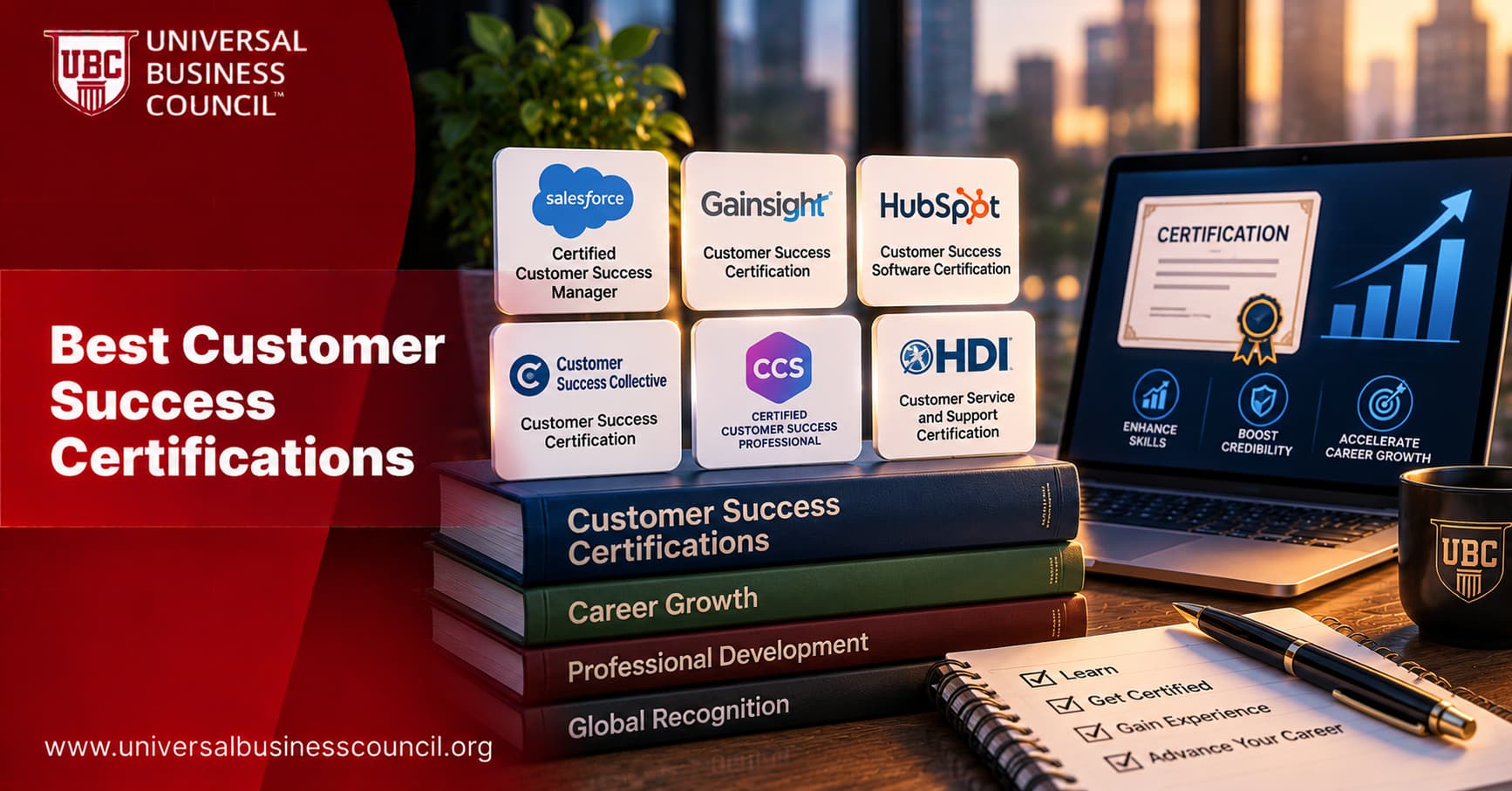
The best certification is rarely the one with the fanciest name. It is the one that fits where you are, where you want to go, and what employers in your market actually ask for. That is the honest starting point for choosing the best customer success certifications for professionals. A credential can open doors, add structure, and give you shared language with hiring teams, but only if it matches your goals. This guide shows how to judge certifications, which types are worth your time, and how to pick by career stage, with a marketing lens throughout. On the core customer success side, the Certified Customer Success Professional certification is a good place to begin.
What Are the Best Customer Success Certifications for Professionals?
There is no single ranked list that works for everyone. "Best" depends on your goal. A career changer needs a different credential than a team lead.

A customer success certification is a credential showing you have studied the field. A solid one usually covers:
The customer lifecycle, from onboarding to renewal and advocacy
Core metrics and how to use them
Account planning and risk management
Communication and customer relationships
Tools and data basics
Beyond the core certifications, many professionals add credentials in marketing, technology, tools, and leadership. Together, they form a stack that tells employers what you can do.
Why Certifications Matter
A certification will not replace real experience. What it does is add structure, a shared vocabulary, and a clear signal of commitment. That helps most when you are changing careers, moving up, or trying to stand out in a crowded applicant pool. It also builds your own confidence, since you can speak about churn, adoption, and health scores with a framework behind you.
There is a marketing side too. Marketing makes the promise and customer success keeps it. Happy customers become reviews, referrals, and case studies that make campaigns cheaper and more believable. Marketers who understand retention, and not only reach, plan smarter, which is why a digital marketing expert certification pairs well with customer-facing work. Getting attention is half the job. Keeping it is the other half.
How to Judge a Certification
Before you spend time or money, check:
Relevance: does it match the role you want next?
Curriculum: does it cover lifecycle, metrics, strategy, and communication?
Practical content: are there case studies, projects, or real scenarios?
Recognition: do employers in your market mention it or similar ones?
Provider credibility: who issues it, and how long have they done so?
Cost and time: does the effort match the benefit for you?
Updates: is the material kept current as the field changes?
Fees, formats, and syllabi change, so confirm current details on the provider's own site before you decide.
Types of Certifications Worth Considering
Core customer success certifications
These teach the foundations: lifecycle, metrics, playbooks, and strategy. For most people, this is the first stop, since it builds the vocabulary used in every interview and job post.
Digital marketing certifications
Useful for CSMs who want to work with campaigns, advocacy programs, and case studies. They help you see the customer journey from both sides.
Tech certifications
Many CSMs support technical products. Picking up tech certifications helps you understand what you are guiding customers through and speak the same language as technical users.
Deep tech certifications
As products lean on AI, blockchain, and other advanced tech, deeper knowledge builds trust. Exploring deep tech certifications is one way to stay ahead if you support complex or emerging products.
Platform and tool certifications
Vendors of CRMs, customer health platforms, and analytics tools often run their own training. These prove you can use specific software. They help most once you already know the field.
Leadership and management certifications
For senior CSMs stepping into team lead or director roles. Coaching, hiring, and strategy skills matter more at this stage than product knowledge.
Skills a Good Certification Should Build
Look for programs that cover:
Churn rate
Net Promoter Score (NPS)
CSAT
Customer health score
Net revenue retention
Product adoption
Customer health score
This combines usage, support tickets, survey results, and engagement into one signal. A falling score gives the CSM time to step in before the customer leaves.
Net revenue retention
When this passes 100%, existing customers are spending more than you lose to churn. If a certification does not teach you to explain this clearly, keep looking.
Which Certification Fits Your Stage
Beginner or career changer
Start with a core customer success certification. Add a short course on a CRM and a spreadsheet. Your goal is vocabulary, proof of commitment, and a framework for interviews.
Mid-career CSM
Add depth. A tool certification, a marketing credential, or a tech course can widen your value. Choose based on the accounts you handle and the skills your team lacks.
Senior CSM or leader
Look at leadership, strategy, and cross-team skills. At this level, how you coach and how you connect customer outcomes to company growth matter more than another entry-level credential.
How Certifications Show Up at Work
Here are a few everyday pictures, kept general on purpose.
A software company: a CSM with onboarding training builds a week-one setup plan and a month-three usage review.
A subscription box brand: a CSM trained in health scoring spots skipped deliveries and offers a lighter plan before cancellation.
A fitness app: a CSM with a marketing background turns member wins into short stories that attract new users.
An online course platform: a CSM trained in tools builds a simple dashboard to catch learners who stopped halfway.
Each case shows learning turning into action. The promise in the campaign is kept in the experience.
How to Get the Most Out of Any Certification
Pick one with a purpose. Know which role or skill you are aiming for.
Study with a project. Apply each lesson to a real or pretend account.
Build proof. Create a sample onboarding plan or health score sheet from what you learn.
Update your resume and LinkedIn. Add the credential and the skills it taught.
Practice explaining. Be ready to describe what you learned in plain words.
Keep learning. One certification is a start, not a finish.
For businesses hiring customer success professionals, HireValid can support the recruitment process through background verification, helping employers make more informed hiring decisions.
Common Mistakes to Avoid
Collecting credentials without using them. Skills matter more than badges.
Skipping research. Check relevance and current details first.
Expecting a certification to replace experience. It supports it.
Choosing by price alone. Fit matters more than the lowest cost.
Ignoring tools and data. Employers expect both.
Stopping after one. The field keeps changing.
Where Certifications Are Heading
AI is already changing customer success. Tools can predict churn, draft check-in messages, and answer routine questions. Because of that, human skills like empathy and judgment are becoming more valuable, and good programs are starting to teach them alongside tools and data.
Expect more certifications to blend customer success with technology and marketing. Professionals who keep learning across those areas will have the widest options.
Conclusion
So, what are the best customer success certifications for professionals? The honest answer is that the best one is the one that fits your goal, your stage, and your market. Start by understanding what a strong certification covers: the customer lifecycle, core metrics like churn rate, NPS, CSAT, customer health score, and net revenue retention, plus account planning, communication, and tools. Judge each option by relevance, curriculum, practical content, recognition, provider credibility, cost, time, and how current the material is.
Then build a stack. Begin with a core customer success certification, and add digital marketing, tech, deep tech, tool, or leadership credentials as your career grows. Beginners should focus on vocabulary and proof of commitment, mid-career professionals on depth, and leaders on strategy and coaching.
Marketing links all of it. Happy customers produce reviews, referrals, and case studies, and professionals who understand retention earn more influence. Avoid common traps like collecting badges without using them or expecting a certification to replace experience. As AI handles more routine work, the human side of customer success becomes more valuable, and the best customer success certifications for professionals will help you grow it. Choose with purpose, apply what you learn, and let your work do the rest of the talking.
FAQs
1. What are the best customer success certifications for professionals?
There is no single best. The right one depends on your goal, career stage, and the roles in your market.
2. Do I need a certification to work in customer success?
No, but it helps with structure, vocabulary, and standing out, especially for career changers.
3. Which certification should a beginner start with?
A core customer success certification that covers the lifecycle, metrics, and strategy.
4. Are certifications worth the money?
They can be, if the content fits your goals and you apply what you learn. Check current fees first.
5. How long does a certification take?
It varies by provider and format, so check the current details on the provider's site.
6. Will a certification get me a job?
It supports your application, but experience, projects, and interview skills matter too.
7. Can I get certified with no experience?
Yes. Many programs welcome beginners and help them build a foundation.
8. What should a good certification cover?
The lifecycle, core metrics, account planning, communication, and basic tools.
9. Are marketing certifications useful for CSMs?
Yes. They help with advocacy, case studies, and understanding the full customer journey.
10. Do CSMs need tech certifications?
Not always, but they help when you support technical products.
11. What are deep tech certifications?
They cover advanced areas like AI and blockchain, useful if you support complex products.
12. Are tool or platform certifications worth it?
They are useful once you know the field and use that software at work.
13. What certifications suit senior CSMs and leaders?
Leadership, coaching, and strategy programs usually fit best.
14. How do I choose between two certifications?
Compare relevance, curriculum, practical content, recognition, cost, and time.
15. Do certifications expire?
Some do and some do not. Check each provider's current policy.
16. Should I list certifications on my resume?
Yes, near the top if they are relevant, alongside the skills and projects they taught.
17. How many certifications do I need?
Quality matters more than quantity. One well-chosen credential, plus proof of skills, is a good start.
18. What is a customer health score?
It is a combined signal of usage, feedback, and engagement that shows how an account is doing.
19. What is net revenue retention?
It measures revenue kept and grown from existing customers, after counting losses and upgrades.
20. How is AI changing customer success certifications?
Programs are blending tools and data with human skills like empathy and judgment.
Related Articles
View All
Business
How to Improve Product Adoption Through Customer Success
Discover how to improve product adoption by helping customers understand, use, and gain value from your product. Explore practical strategies for onboarding, feature discovery, customer education, and ongoing engagement.
Business
Customer Onboarding Best Practices
Effective customer onboarding helps new customers understand your product, achieve their goals, and see value sooner. Discover practical best practices for setting expectations, personalizing the onboarding experience, providing timely support, and measuring results to improve customer satisfaction and retention.
Business
How customer success certification can help your career
A customer success certification can help you build relevant skills, demonstrate your knowledge, and prepare for new career opportunities. Explore how certification supports professional development, strengthens your resume, and helps you progress from entry-level roles to customer success leadership.
Trending Articles
The Role of Blockchain in Ethical AI Development
How blockchain technology is being used to promote transparency and accountability in artificial intelligence systems.
AWS Career Roadmap
A step-by-step guide to building a successful career in Amazon Web Services cloud computing.
Top 5 DeFi Platforms
Explore the leading decentralized finance platforms and what makes each one unique in the evolving DeFi landscape.