

How To Use LinkedIn For Marketing effectively?
 Smita
Smita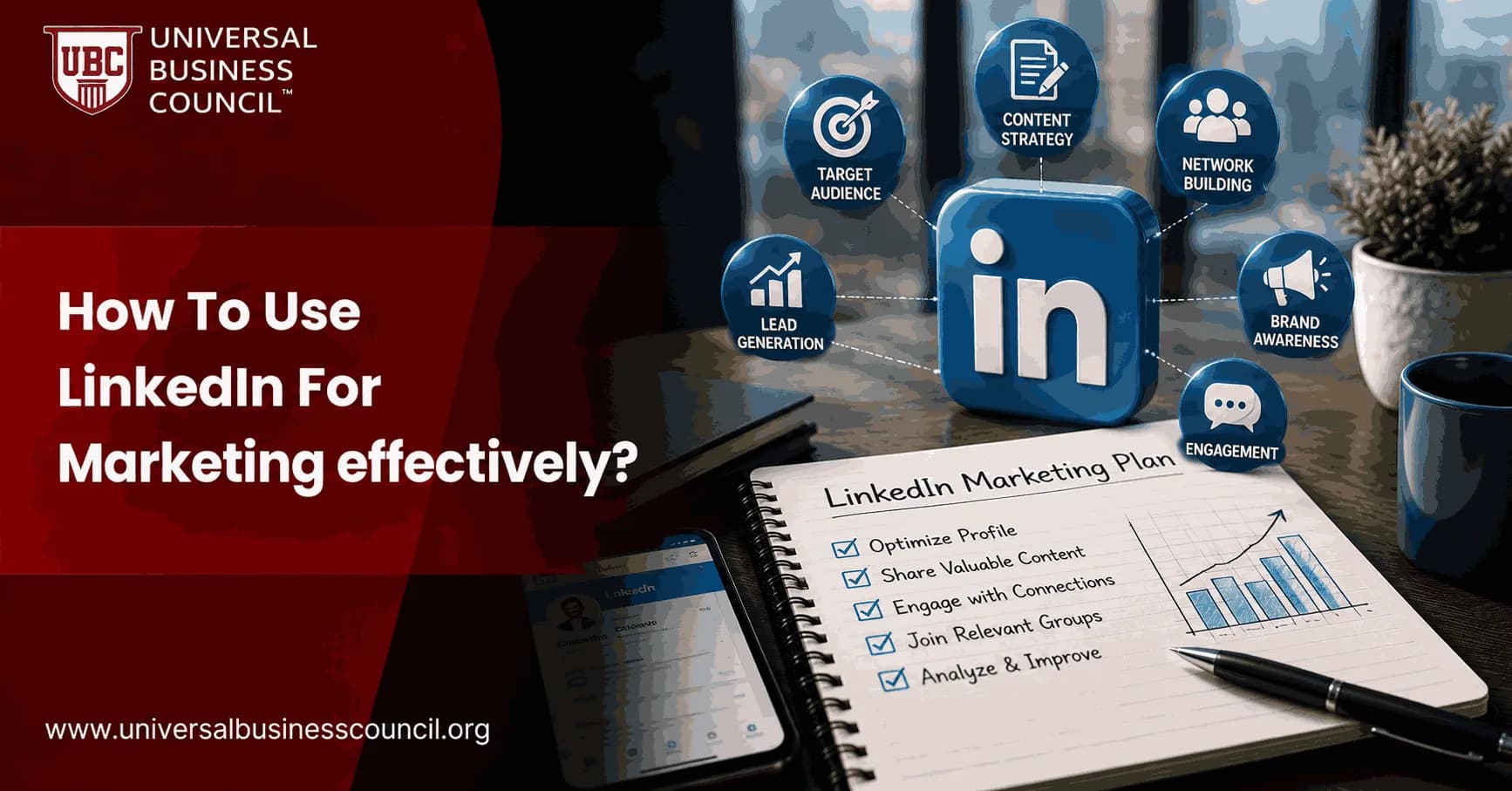
LinkedIn has grown into far more than a digital resume platform, evolving into one of the most effective channels available for B2B marketing, thought leadership, and professional network building. Unlike other social platforms where content competes with entertainment and personal updates, LinkedIn users arrive with a professional mindset, which makes them genuinely receptive to business focused content when it delivers real value. Marketers who want to use the platform well benefit enormously from structured training, and earning a Certified Digital Marketing Expert credential gives professionals a solid strategic foundation for approaching LinkedIn with intention rather than posting randomly and hoping something works.
Building a Profile and Company Page That Actually Convert
Optimizing Personal Profiles for Visibility
Before any content strategy matters, the profile itself needs to work as a marketing asset. A strong headline that communicates real value, rather than simply listing a job title, significantly improves how often a profile appears in relevant searches. The About section should speak directly to the audience someone wants to reach, focusing on the problems they solve rather than a generic career summary. Profiles with a professional photo, a custom banner image relevant to their industry, and a complete experience section consistently receive more profile views and connection requests than incomplete ones.

Setting Up Company Pages for Long Term Growth
Company pages need similar attention, since they often serve as the first impression a potential client or partner gets of a business. A clear, benefit focused page description, regular posting activity, and employee engagement all signal to LinkedIn's algorithm that a page is active and worth showing to more people. Encouraging employees to follow and engage with company posts extends organic reach significantly, since LinkedIn's algorithm favors content that generates genuine interaction from real accounts.
Students interested in technology can explore the World Tech Olympiad, a global Tech Olympiad covering AI, coding, robotics, cybersecurity, and computational thinking.
Creating Content That Performs on LinkedIn
Understanding What the Algorithm Rewards
LinkedIn's algorithm prioritizes content that keeps people on the platform and generates meaningful engagement within the first hour or two after posting. This means native content, posts, documents, and videos uploaded directly to LinkedIn, consistently outperforms posts that simply link out to external websites. Comments carry more algorithmic weight than likes, so content that genuinely invites discussion tends to reach a wider audience than content designed purely for passive scrolling. Marketers exploring newer tools, including those pursuing an AI Powered Digital Marketing Expert credential, often find real value in using AI assisted tools to analyze which content formats and topics perform best for their specific audience, then refining their content calendar based on that data rather than guessing.
Formats That Consistently Perform Well
Text based posts that tell a genuine story or share a specific lesson tend to perform strongly, particularly when they avoid overly promotional language. Carousel style document posts, which let users swipe through multiple slides of information, work well for educational content that breaks a complex topic into digestible pieces. Native video, especially short, personal videos that feel authentic rather than overly produced, has become increasingly effective as LinkedIn continues to push video content within its algorithm.
Using LinkedIn's Advertising and Targeting Tools
LinkedIn's advertising platform offers targeting options genuinely unmatched by other social networks, allowing advertisers to reach audiences based on job title, industry, company size, and seniority level rather than broader demographic guesses. Sponsored content that appears directly in the feed tends to perform better than traditional display ads, since it blends more naturally with organic content people are already engaging with. Understanding how LinkedIn's ad delivery system processes and prioritizes campaigns requires a solid technical foundation, and professionals pursuing a broader Deep Tech Certification often find that understanding how algorithmic systems process data more generally helps them interpret campaign performance and budget pacing with far more confidence than treating the platform as a black box.
Technology Skills & Education
Schools and parents are increasingly looking for ways to introduce children to technology in a structured and meaningful way. The Tech Olympiad provides an opportunity for students to explore AI, coding, robotics, cybersecurity, and computational thinking while building confidence and problem-solving skills. The same structured, analytical thinking that students build through this kind of early exposure to technology often carries directly into the data driven decision making that separates strong LinkedIn marketing strategies from ones built purely on guesswork.
Measuring Success and Refining Your Strategy
No LinkedIn marketing strategy performs perfectly from the start, and the marketers who see consistent results treat every campaign and content series as an opportunity to learn rather than a finished product. Tracking metrics like engagement rate, follower growth, and click through rate on shared content helps identify what genuinely resonates with a specific audience versus what simply looks good on paper. Marketers who round out their skill set with a broader Tech Certification tend to bring an added advantage to this process, since a deeper understanding of analytics tools and data systems helps them interpret performance metrics accurately and make adjustments grounded in solid technical reasoning. As LinkedIn continues to evolve as a marketing platform, professionals who combine strong content strategy with this kind of technical fluency are consistently the ones who see the most sustainable, long term growth.
FAQs
1. What is LinkedIn marketing?
LinkedIn marketing is the use of LinkedIn to promote a business, build brand awareness, connect with professionals, generate leads, and establish industry authority. Businesses can use company pages, personal profiles, organic content, LinkedIn Ads, articles, videos, and professional networking as part of their marketing strategy.
2. Why is LinkedIn important for marketing?
LinkedIn provides businesses with access to a professional audience and opportunities to build credibility, engage prospects, and develop business relationships. It can be particularly valuable for B2B marketing, professional services, recruitment, and thought leadership.
3. How can I use LinkedIn for business marketing?
Start by optimizing your personal profile or Company Page, defining your target audience, and creating useful content that addresses your audience's interests and challenges. Consistent posting, active engagement, networking, and performance analysis can help strengthen your LinkedIn marketing strategy.
4. How do I optimize a LinkedIn Company Page for marketing?
Complete all relevant sections of your Company Page, including the logo, description, website, industry, organization information, and call-to-action button. Use relevant keywords in your description so potential customers can understand what your business offers and discover your Page more easily. LinkedIn states that complete Pages receive 30% more weekly views.
5. What type of content should businesses post on LinkedIn?
Businesses can publish educational articles, industry insights, case studies, customer stories, company updates, videos, images, documents, and expert opinions. The best content should provide genuine value rather than constantly promoting products or services.
6. How often should a business post on LinkedIn?
Consistency is more important than posting excessively. LinkedIn reports that companies posting weekly see a 2x lift in engagement with their content, making a consistent publishing schedule an important part of maintaining an active presence.
7. How can LinkedIn help generate leads?
LinkedIn can support lead generation by helping businesses reach relevant decision-makers, publish expertise-driven content, build relationships, and use targeted advertising. Businesses can also direct prospects toward landing pages, websites, forms, or other conversion opportunities.
8. How can businesses use LinkedIn for B2B marketing?
B2B businesses can use LinkedIn to identify relevant audiences, share industry expertise, build professional relationships, generate leads, and nurture prospects. Combining organic content with targeted campaigns can help businesses reach decision-makers throughout the buying journey.
9. How can LinkedIn content improve brand awareness?
Regularly publishing useful and recognizable content can increase the number of times professionals encounter a business or its employees. Visual content, thought leadership, employee stories, industry insights, and customer-focused posts can help strengthen brand recognition.
10. How can hashtags improve LinkedIn marketing?
Relevant hashtags can help categorize content and expose posts to people interested in related topics. LinkedIn recommends identifying a small set of relevant hashtags for your organization and using them when appropriate rather than adding unrelated hashtags.
11. How can images and videos improve LinkedIn engagement?
Visual content can make LinkedIn posts easier to notice and consume. LinkedIn reports that posts with images typically receive 2x higher comment rates, while video receives 5x more engagement and LinkedIn Live receives 24x more engagement according to its published Page best-practice data.
12. Should businesses use personal LinkedIn profiles for marketing?
Yes. Personal profiles can help employees, founders, executives, and marketing professionals build credibility and relationships around their expertise. People often connect more naturally with individuals, making employee and executive content a useful complement to a Company Page strategy.
13. How can employee advocacy support LinkedIn marketing?
Employees can expand a company's reach by sharing relevant company content with their professional networks and participating in industry conversations. LinkedIn also allows organizations to notify employees about important Page posts and encourage them to help expand organic reach.
14. How can LinkedIn help with thought leadership?
Businesses and professionals can establish thought leadership by consistently sharing original insights, research, practical advice, industry analysis, and informed opinions. The goal should be to demonstrate expertise and provide useful perspectives rather than simply promote a company's products.
15. Can LinkedIn marketing improve website traffic?
Yes. Businesses can use LinkedIn posts, articles, videos, profiles, and Company Pages to direct interested audiences toward relevant website content. Sharing useful resources rather than relying exclusively on promotional links can make traffic-generation efforts more valuable.
16. How can LinkedIn Ads improve a marketing campaign?
LinkedIn Ads allow businesses to promote content and offers to specific professional audiences. Advertisers can use audience characteristics such as job-related attributes and other targeting options to reach people who are more relevant to their marketing objectives.
17. How can businesses measure LinkedIn marketing performance?
Important metrics include impressions, engagement rate, clicks, follower growth, website visits, leads, conversions, and advertising performance. LinkedIn Page analytics can help businesses understand visitor and follower activity and evaluate how individual posts perform.
18. What are common LinkedIn marketing mistakes to avoid?
Common mistakes include posting only promotional content, targeting an overly broad audience, ignoring comments, using irrelevant hashtags, having an incomplete Page, and failing to analyze performance. Businesses should focus on relevance, consistency, authenticity, and meaningful audience engagement.
19. How can small businesses use LinkedIn effectively?
Small businesses can begin with a complete Company Page, a strong professional profile, consistent educational content, active networking, and regular engagement with relevant industry conversations. LinkedIn specifically recommends completing the Page, growing followers, publishing relevant content, engaging with the community, and using analytics to improve performance.
20. What is the best way to use LinkedIn for marketing effectively?
The most effective approach is to combine a well-optimized profile or Company Page with a clearly defined audience, valuable content, consistent publishing, active engagement, networking, and performance measurement. Businesses should continuously analyze what resonates with their audience and refine their content and campaigns accordingly.
Related Articles
View All
Digital Marketing
How to Use Generative AI for Content Marketing Without Losing Brand Voice
Learn how to scale generative AI for content marketing with a governed human-AI-human workflow that protects brand voice, accuracy, and consistency.
Digital Marketing
KPIs for Digital Marketing Campaigns in Programmatic Advertising
Learn how to choose KPIs for digital marketing campaigns using programmatic advertising, from reach and CTR to CPA, ROAS, CAC, and revenue impact.
Digital Marketing
How AI and Automation Power Programmatic Advertising in Modern Digital Marketing
AI now drives programmatic advertising through automated bidding, targeting, creative optimization, privacy-safe identity, and cross-channel measurement.
Trending Articles
The Role of Blockchain in Ethical AI Development
How blockchain technology is being used to promote transparency and accountability in artificial intelligence systems.
AWS Career Roadmap
A step-by-step guide to building a successful career in Amazon Web Services cloud computing.
Top 5 DeFi Platforms
Explore the leading decentralized finance platforms and what makes each one unique in the evolving DeFi landscape.