

From Keywords to AI Answers: How SEO, GEO, and AEO Shape Online Visibility
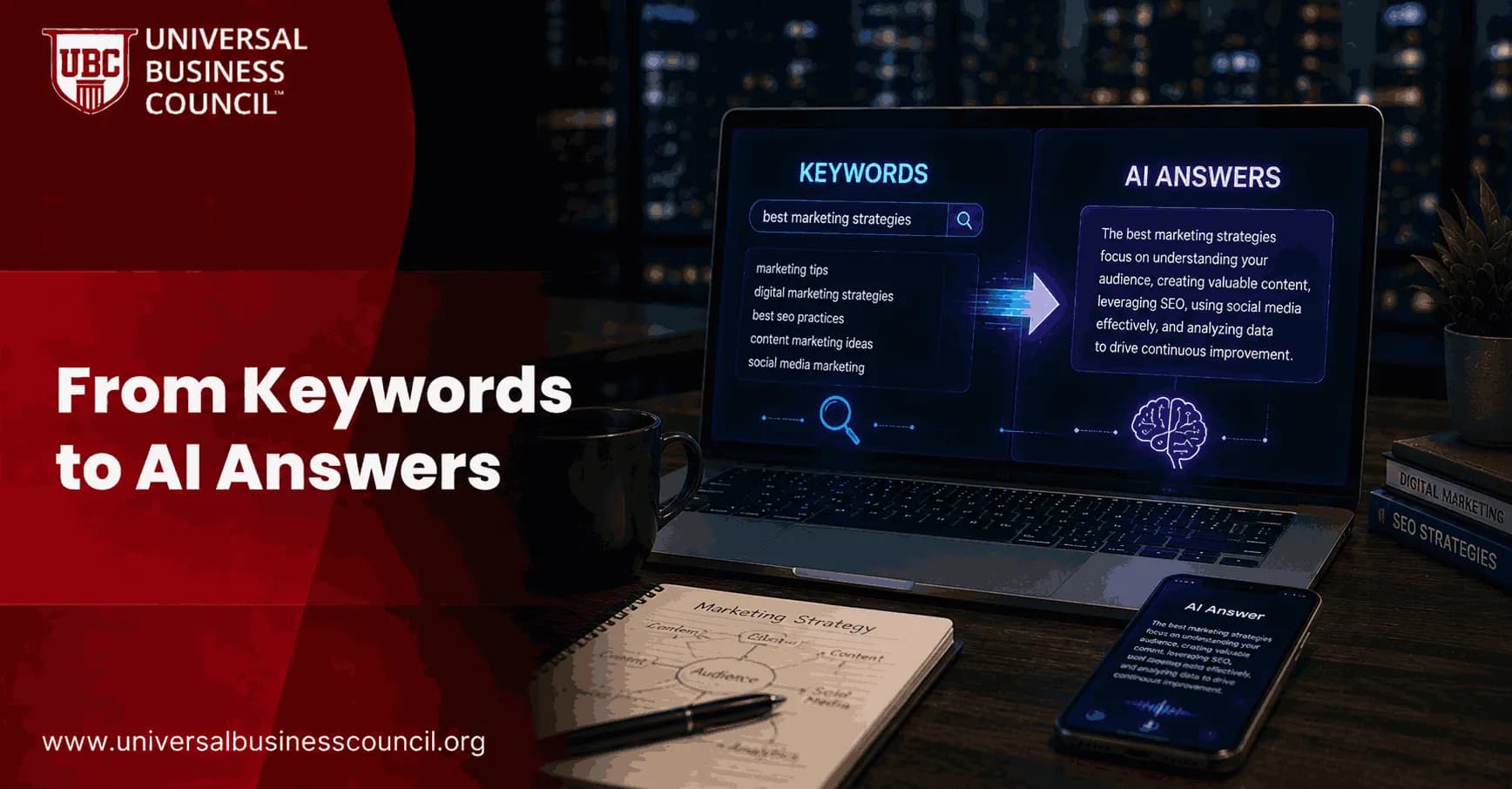
SEO, GEO, and AEO now define how organizations compete for visibility across search engines, AI-generated answers, and conversational discovery platforms. While the terminology is evolving quickly, the underlying goal remains consistent: make credible, useful, and technically accessible content easier for users and systems to find, interpret, and trust.
For digital marketing professionals, this shift is not simply about ranking for keywords. It is about understanding how search engines, answer engines, and generative AI tools select sources, summarize information, and influence user decisions before a click ever occurs.

What Do SEO, GEO, and AEO Mean?
Search Engine Optimization
Search Engine Optimization, or SEO, is the established practice of improving a website's visibility in traditional search results. It includes technical optimization, content quality, keyword relevance, internal linking, backlinks, page experience, and authority signals.
SEO still matters because AI features often depend on the same crawling, indexing, and quality assessment systems used by search engines. If a page cannot be discovered, interpreted, or trusted in classic search, it is unlikely to perform well in AI-assisted search experiences.
Generative Engine Optimization
Generative Engine Optimization, or GEO, refers to practices aimed at increasing visibility in generative AI systems such as AI Overviews, ChatGPT-style tools, Perplexity, Gemini, and other platforms that synthesize answers from multiple sources.
In practice, GEO focuses on topical authority, brand credibility, entity clarity, and consistent mentions across trustworthy sources. It is less about a single page ranking first and more about whether a brand, expert, or resource is recognized as a reliable source in a wider information ecosystem.
Answer Engine Optimization
Answer Engine Optimization, or AEO, focuses on helping content appear in direct answers, featured snippets, AI summaries, voice results, and FAQ-style responses. It emphasizes clear definitions, concise answers, structured formatting, semantic HTML, and direct responses to user intent.
AEO is especially relevant for informational searches such as what-is, how-to, comparison, and troubleshooting queries. These are the types of searches where users increasingly expect immediate answers rather than a list of links.
Is AI Search Optimization Really Different From SEO?
Google's published guidance indicates that optimizing for generative AI search remains part of optimizing for the overall search experience. Google has also clarified that special tactics such as creating llms.txt files, artificially chunking content, or rewriting content only for AI systems are not required for visibility in its AI features.
This creates an important distinction. From a technical perspective, SEO, GEO, and AEO are not completely separate disciplines. They are connected through the same principles of discoverability, usefulness, trust, and relevance. From a strategic perspective, however, user behavior is changing. A user may now receive a complete AI-generated answer without clicking a result, which means visibility must include being cited, summarized, or referenced, not only ranked.
Professionals studying digital strategy through Universal Business Council programs such as Digital Marketing Certification, Marketing Management Certification, or related analytics courses should view SEO, GEO, and AEO as complementary capabilities rather than isolated tactics.
Why AI Answers Are Changing Online Visibility
Traditional SEO has often measured success through rankings, impressions, clicks, and conversions. AI search introduces additional visibility signals, including:
Citation presence: Whether your content is named or linked in an AI-generated answer.
Answer inclusion: Whether your explanation is summarized in a featured or AI response.
Entity recognition: Whether your brand, author, product, or organization is understood as a known authority.
Source diversity: Whether your expertise is reinforced across websites, forums, publications, documentation, and reviews.
Click quality: Whether fewer but more informed visitors convert at higher rates.
Industry research helps explain why this matters. Reporting on AI Overviews indicates that they appear for a meaningful share of Google searches, particularly informational queries, and that AI systems may cite pages that do not rank in the top positions of traditional search results. Surveys also suggest that many marketing leaders are increasing investment in AEO and GEO practices, though such survey data should be evaluated carefully based on methodology and sample quality.
How SEO, GEO, and AEO Work Together
SEO Creates the Foundation
SEO ensures that content can be crawled, indexed, understood, and evaluated. This includes technical health, site architecture, page speed, mobile usability, schema markup, internal links, and high-quality content.
Without this foundation, GEO and AEO efforts are limited. AI systems cannot cite what they cannot reliably access, and answer engines are less likely to use unclear or poorly structured content.
AEO Improves Extractability
AEO helps systems identify direct answers within a page. Effective AEO content often includes a concise answer near the beginning, followed by deeper explanation, examples, steps, and supporting evidence.
For example, a page targeting the query what is customer lifetime value should provide a direct definition first, then explain the formula, use cases, limitations, and examples. This format supports both human learning and machine interpretation.
GEO Builds Broader Trust Signals
GEO extends beyond on-page content. It considers whether a brand is discussed, cited, and validated across credible digital environments. AI systems often synthesize information from multiple sources, so a consistent presence across authoritative publications, professional profiles, documentation, community discussions, and research-backed content can strengthen visibility.
This does not mean manufacturing mentions or using manipulative promotion. Google has warned against inauthentic mentions and spam-like tactics. Sustainable GEO depends on genuine expertise, clear authorship, original research, and useful contributions.
Practical Content Strategies for AI Search Visibility
Organizations can adapt to AI search without abandoning proven SEO. The following practices support SEO, GEO, and AEO simultaneously:
Lead with a clear answer: Start key sections with direct definitions or conclusions before adding detail.
Use semantic headings: Organize content with meaningful H2 and H3 headings that reflect user questions.
Build topical depth: Cover related subtopics, examples, risks, and decision factors in one comprehensive resource.
Demonstrate expertise: Include author credentials, original analysis, data sources, case examples, and practical experience.
Structure information clearly: Use lists, tables, FAQs, summaries, and step-by-step formats where appropriate.
Strengthen internal linking: Connect related resources such as certification pages, course modules, industry guides, and glossary content.
Maintain technical quality: Ensure fast loading, mobile usability, clean HTML, indexability, and schema markup where relevant.
Monitor AI visibility: Track not only rankings and clicks but also mentions, citations, AI answer inclusion, and branded search demand.
Examples Across Business Contexts
B2B Software
A software company may optimize documentation for troubleshooting queries by adding concise summaries, step-by-step fixes, schema markup, and internal links to product education pages. If community forums frequently discuss the same issue, the company can contribute helpful, transparent responses rather than promotional messages.
Professional Services
A consulting firm can improve AI visibility by publishing expert explainers, regulatory updates, decision frameworks, and case-based insights. These assets help answer engines extract reliable explanations and help generative systems associate the firm with specific areas of expertise.
Education and Certification
For professional education providers, content can answer career-focused queries such as how to become a certified digital marketing professional or which management certification supports leadership development. Universal Business Council can use internal linking to connect articles with relevant certification pathways, course outlines, and learning resources.
A Tech Certification can complement these learning pathways by helping professionals develop expertise in emerging technologies, digital systems, automation, and technical problem-solving skills that are increasingly valuable across modern business and leadership roles.
Measurement: What Marketers Should Track Next
SEO performance measurement is expanding. Traditional metrics remain important, but they should be supplemented with AI-era indicators:
Organic rankings for priority queries
AI Overview or answer box inclusion
Frequency of brand mentions in generative AI responses
Referral traffic from AI-assisted platforms
Conversion rates from AI-referred visitors
Branded search volume and direct traffic trends
Content engagement quality, including time on page and assisted conversions
This broader measurement model helps teams avoid overreacting to click declines. In some cases, AI answers may reduce low-intent traffic while increasing the quality of visitors who do click through.
Common Mistakes to Avoid
Treating GEO and AEO as shortcuts: They do not replace content quality, technical SEO, or credibility.
Over-optimizing for machines: Content should be written for human understanding first, with structure that also helps systems interpret it.
Publishing thin FAQ pages: Direct answers are useful, but they need context, evidence, and depth.
Ignoring brand authority: AI systems evaluate signals beyond one webpage, including broader reputation and consistency.
Using manipulative mentions: Forced, low-quality, or inauthentic references can damage trust.
Conclusion: Visibility Now Means Being Found, Trusted, and Cited
The movement from keywords to AI answers does not eliminate SEO. It raises the standard for it. SEO, GEO, and AEO represent an integrated approach to modern online visibility: SEO makes content discoverable, AEO makes it answer-ready, and GEO strengthens authority across the wider digital ecosystem.
For professionals and enterprises, the priority is clear. Build technically sound websites, publish evidence-based content, structure answers clearly, and cultivate genuine authority. As AI search matures, the organizations that succeed will not be those chasing every new label, but those consistently producing content that people and intelligent systems can trust.
FAQs
1. What Does “From Keywords to AI Answers” Mean?
The phrase reflects the evolution of search from keyword-focused rankings to AI-generated answers, conversational search experiences, and answer-driven discovery across digital platforms.
2. What Are SEO, GEO, and AEO?
SEO (Search Engine Optimization), GEO (Generative Engine Optimization), and AEO (Answer Engine Optimization) are complementary strategies used to improve visibility in search engines, AI-powered search systems, and answer-focused platforms.
3. How Has Search Changed Over Time?
Search has evolved from simple keyword matching to sophisticated systems that understand user intent, context, entities, and natural language queries.
4. What Is SEO?
SEO is the practice of optimizing websites and content to improve rankings and visibility in traditional search engine results pages.
5. What Is GEO?
Generative Engine Optimization (GEO) focuses on helping content become discoverable, referenceable, and citable by AI-powered search engines and generative AI systems.
6. What Is AEO?
Answer Engine Optimization (AEO) focuses on creating content that directly answers user questions and can be featured in snippets, voice search results, and AI-generated responses.
7. Why Are Keywords Still Important?
Keywords remain important because they help search engines and AI systems understand content topics and user intent, even though search now goes far beyond exact keyword matching.
8. How Does User Intent Influence Modern Search?
User intent helps search engines determine what information users actually want, allowing them to provide more relevant results and answers.
9. How Does SEO Support Online Visibility?
SEO improves a website's ability to rank for relevant searches, attract organic traffic, and build long-term digital authority.
10. How Does GEO Support Online Visibility?
GEO increases the chances that a brand's content will be referenced, summarized, or cited by AI systems when generating responses.
11. How Does AEO Support Online Visibility?
AEO helps content appear as direct answers in featured snippets, voice assistants, answer boxes, and AI-generated search experiences.
12. What Types of Content Perform Well Across SEO, GEO, and AEO?
FAQs, how-to guides, tutorials, research reports, case studies, comparison articles, and expert-driven resources tend to perform well.
13. How Does E-E-A-T Influence SEO, GEO, and AEO?
Experience, Expertise, Authoritativeness, and Trustworthiness help establish credibility, increasing visibility across traditional search and AI-driven platforms.
14. What Role Does Structured Data Play?
Structured data helps search engines and AI systems understand content context, entities, relationships, and important information more effectively.
15. How Are AI-Powered Search Engines Changing Marketing Strategies?
Marketers must now optimize content not only for rankings but also for AI citations, answer extraction, and conversational search interactions.
16. What Metrics Should Businesses Track in the AI Search Era?
Important metrics include organic traffic, keyword rankings, featured snippets, AI citations, answer visibility, branded searches, conversions, and engagement.
17. What Are Common Mistakes Businesses Make?
Common mistakes include focusing only on rankings, neglecting answer-focused content, ignoring AI search trends, publishing generic articles, and overlooking technical SEO.
18. How Can Businesses Adapt to the Shift from Keywords to AI Answers?
Businesses should create authoritative content, optimize for questions, strengthen E-E-A-T signals, implement structured data, and focus on solving user problems comprehensively.
19. Why Is an Integrated Approach Important?
SEO, GEO, and AEO work best together because customers discover information through multiple channels, including search engines, AI assistants, answer engines, and voice interfaces. Visibility is no longer about owning a ranking alone; it is about being present wherever answers are delivered.
20. What Is the Future of Online Visibility?
The future of online visibility lies in integrating SEO, GEO, and AEO into a unified strategy that prioritizes user intent, trusted content, technical excellence, and AI readiness. Businesses that adapt to this shift will be better positioned to earn traffic, citations, authority, and customer trust in an increasingly AI-driven digital landscape.
Related Articles
View All
Digital Marketing
Building an AI-Ready Content Strategy with SEO, GEO, and AEO
Learn how to build an AI-ready content strategy by integrating SEO, GEO, and AEO to improve search visibility, AI citations, and trusted answers.
Digital Marketing
How to Measure Success Across SEO, GEO, and AEO Campaigns
Learn how to measure SEO, GEO, and AEO campaign success with unified KPIs for rankings, answer visibility, AI citations, conversions, and revenue.
Digital Marketing
SEO, GEO, and AEO Explained: A Practical Guide for Marketers and Business Leaders
Learn how SEO, AEO, and GEO work together to improve rankings, direct answers, and AI citations, with practical steps for modern marketing teams.
Trending Articles
The Role of Blockchain in Ethical AI Development
How blockchain technology is being used to promote transparency and accountability in artificial intelligence systems.
AWS Career Roadmap
A step-by-step guide to building a successful career in Amazon Web Services cloud computing.
Top 5 DeFi Platforms
Explore the leading decentralized finance platforms and what makes each one unique in the evolving DeFi landscape.