

Career Growth After Food Handler Certification: Jobs, Skills, and Advancement Paths
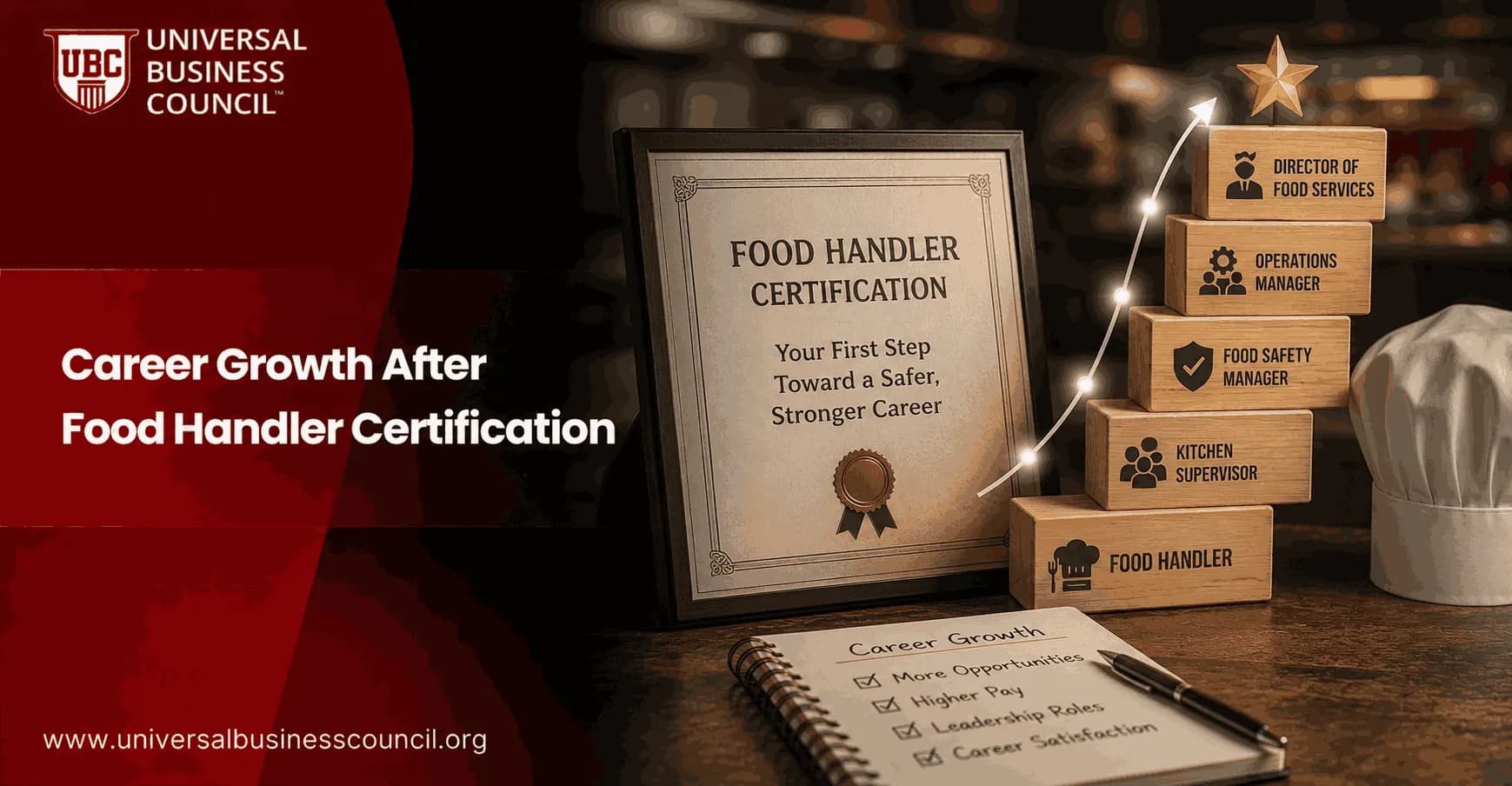
Career growth after food handler certification starts with a simple truth: the certificate gets you through the door, but your habits on the job decide how far you move. Employers use the food handler certificate as proof that you understand hygiene, contamination control, allergen awareness, and safe time and temperature practices. Supervisors then watch for something harder to teach: whether you can stay accurate when the kitchen is noisy, the ticket rail is full, and someone has forgotten to label a container.
That is where careers are made. A food handler card can lead to restaurant work, healthcare food service, manufacturing, quality assurance, training, and regulatory roles. Not overnight. Usually not without another credential. But the path is real, and it is clearer than many new workers realize.

Professionals who want to build beyond entry-level food service often strengthen their credentials with programs such as the Certified Food Handler Professional™, which demonstrate a deeper commitment to food safety and operational excellence.
What Food Handler Certification Actually Does for Your Career
A food handler certificate confirms that you understand basic food safety rules. In many U.S. states, food workers who serve the public must hold a valid food handler card, often renewed every 2 to 3 years. In Australia, FSANZ Standard 3.2.2A has required certified food handlers in covered food businesses since December 2023.
For you, the immediate career value is practical:
You qualify for more food handler jobs where certification is required or preferred.
You are easier to onboard because the employer does not need to start with basic compliance training.
You can show a hiring manager that you take food safety seriously before your first shift.
You have a base credential for later training, such as Food Safety Supervisor, Food Protection Manager, ServSafe Manager, HACCP, or SQF-related programmes.
To be blunt, the certificate alone will not beat three years of strong kitchen experience. In jurisdictions where it is mandatory, employers may simply expect you to have it. Still, if two entry-level applicants look similar, the certified applicant is less risky to hire.
As food allergies become a greater focus across restaurants, healthcare, and food manufacturing, earning a Certified Allergen Management Professional™ credential can further strengthen your qualifications for roles that require strict allergen control and customer safety.
Food Handler Jobs You Can Target First
Restaurants, Cafes, Hotels, and Catering
This is the most common starting point. With a food handler certificate, you can apply for roles such as kitchen assistant, prep cook, line cook, server, buffet attendant, dishwasher, catering assistant, and food runner. Many job postings require a food handler or ServSafe certificate at hire or within the first 90 days.
Progression usually looks like this:
Food handler or kitchen assistant
Prep cook or station support
Line cook or station cook
Lead cook or shift supervisor
Kitchen manager or back-of-house supervisor
The fastest movers are not always the flashiest cooks. They are the people who date-label correctly, rotate stock without being asked, keep raw poultry below ready-to-eat foods, and do not pencil-whip temperature logs at the end of the night. Managers notice that.
Healthcare and Institutional Food Service
Hospitals, aged-care facilities, schools, universities, correctional facilities, and corporate cafeterias all need trained food service staff. Common roles include dietary aide, tray line aide, cafeteria worker, cook, and food service worker.
These settings are less glamorous than restaurant work, but they often offer steadier schedules and clearer procedures. They also expose you to strict allergen controls, texture-modified diets, patient tray accuracy, and documentation. If you are careful by nature, this path can suit you well.
Food Manufacturing, Processing, and Packaging
Food manufacturing is a strong option if you prefer process, machinery, and quality checks over front-of-house service. Entry roles include production line worker, packaging operator, food processing assistant, and product testing support.
From there, you can move toward quality assurance technician, product testing role, HACCP coordinator, or packaging specialist. The work is detail-heavy. A missed seal check or an incorrect batch record can create a recall risk, so reliability matters as much as speed.
Ghost Kitchens and Meal-Prep Services
Delivery-only kitchens, virtual brands, and meal-prep companies have changed entry-level food work. These operations depend on batch production, tight labeling, fast packing, digital order systems, and strict cold-holding or hot-holding control.
If you are comfortable with kitchen display systems, inventory apps, digital temperature probes, and barcode labels, you will stand out. In a high-volume prep environment, the person who catches that a cooler has drifted above 41 F or 5 C before the lunch production run may save the day.
Skills That Turn Certification Into Promotion
Core Technical Skills
Your certificate covers the basics, but you need to perform them under pressure. Focus on these:
Time and temperature control: Know cooling, reheating, holding, and storage limits used in your jurisdiction.
Cross-contamination prevention: Separate raw and ready-to-eat foods, use correct boards and utensils, and clean between tasks.
Allergen awareness: Treat allergen requests as safety issues, not preferences.
Cleaning and sanitizing: Understand contact time, concentration, and when to wash, rinse, and sanitize.
Stock rotation: Use first-in, first-out and check expiry dates before service.
One common mistake bites new staff: they sanitize a visibly dirty surface without cleaning it first. Sanitizer is not magic. Food residue can reduce its effectiveness, and an experienced supervisor will correct that immediately.
Soft Skills Supervisors Actually Track
Promotions often go to people who make the shift easier to run. Build these habits:
Reliability: Arrive prepared. Cover the station you are assigned.
Communication: Report broken refrigeration, missing labels, pest sightings, or allergen concerns early.
Calm pace: Work quickly without cutting safety corners.
Adaptability: Accept menu changes, new cleaning logs, and updated procedures without drama.
Team awareness: Help the next station before you are asked.
Managers remember the person who says, the sauce was out for 3 hours, I discarded it and logged the waste. That sentence shows judgment.
Advanced Skills for Better Roles
Once you have the basics, choose a direction. If you want the culinary track, build knife skills, station speed, cooking technique, and plating discipline. If you want quality or regulatory work, get comfortable with records, corrective actions, internal audits, and HACCP principles. If you want management, learn scheduling, labor cost, inventory, waste tracking, and coaching.
Universal Business Council learners who want broader advancement can also pair food safety training with related courses in operations management, business management, leadership, and compliance. Those areas matter when you move from doing the work to supervising the system.
As digital monitoring systems, automated food production, and compliance software become more common across the industry, a Deep Tech Certification can also help professionals understand the technologies transforming modern food operations.
Advancement Paths After Food Handler Certification
Operations and Management Path
This is the standard restaurant or institutional route. You start in handling or prep, cross-train on stations, then take responsibility for a shift or team. Additional manager-level food safety certification often becomes necessary before you supervise others.
Best fit: you like pace, people, service standards, and solving problems in real time.
Wrong fit: you dislike interruptions or cannot tolerate schedule pressure.
Food Safety, Quality, and Regulatory Path
This path suits detail-oriented workers. You might start on a production line, then assist with sampling, label checks, temperature verification, and corrective action records. Over time, roles can include quality assurance technician, HACCP coordinator, SQF coordinator, food safety officer, regulatory affairs officer, or third-party food safety auditor.
Reported salaries for food quality and safety roles in Canada vary widely by experience and specialization, with the higher end usually requiring more than a handler certificate. Expect to need HACCP, audit training, documentation skill, and sector experience to reach those levels.
Training and Education Path
Some food handlers become the person who trains everyone else. Large chains, hospitals, campuses, and manufacturers often need internal trainers who can teach hygiene, allergen control, cleaning, and safe handling. With advanced credentials, you may move into food safety instruction or consulting.
Best fit: you communicate clearly, correct people without embarrassing them, and enjoy procedure.
Culinary Specialist Path
If food itself is your interest, use the certificate as your safety base and build technical craft. Cooks, bakers, butchers, sous-chefs, and chefs all need strong food safety judgment. A talented cook who ignores temperature control is a liability. A safe cook who keeps learning can move far.
How to Accelerate Career Growth After Food Handler Certification
Use a simple 12-month plan:
Keep your certificate current. Put the issue date and renewal date on your resume.
Ask to cross-train. Learn prep, dish, line, receiving, and storage. Breadth helps promotion.
Volunteer for safety tasks. Temperature logs, opening checks, allergen labels, and closing sanitation are visible responsibilities.
Track one metric. Waste, prep accuracy, order errors, or cooler compliance. Numbers make your promotion case stronger.
Add one advanced credential. Choose Food Protection Manager, Food Safety Supervisor, HACCP, or a quality-focused course based on your target role.
Document examples. Keep notes on training you delivered, audits passed, process fixes, and equipment issues you reported.
Do not chase every certificate at once. Pick the next credential that matches your path. A future kitchen manager needs supervisory and manager-level food safety training. A future QA technician needs HACCP thinking and documentation practice. A future trainer needs communication skill and advanced safety knowledge.
Future Outlook for Certified Food Handlers
Demand for trained food handlers is supported by tighter regulation, higher customer expectations, and growth in business models that depend on safe high-volume production. Ghost kitchens, meal-prep services, institutional kitchens, and food manufacturing all need workers who can follow procedure and use digital tools.
Technology is now part of the job. Digital temperature monitoring, inventory software, kitchen display systems, automated packaging equipment, and audit apps are common in better-run operations. If you can work safely and handle the tech without slowing the team, you become easier to promote.
Your Next Step
If you already hold a food handler certificate, choose your advancement path this week: operations, culinary, quality, training, or regulatory work. Then add the one skill your chosen path demands next. For many professionals, the best move is a manager-level food safety credential paired with practical leadership training through Universal Business Council programmes in food safety, operations, and management.
Start small. Ask your supervisor which safety task they trust only to their best staff. Learn that task, do it right for 30 days, and use it as your first promotion signal.
Pairing practical food safety experience with a relevant Tech Certification can help professionals adapt to increasingly technology-driven kitchens, quality systems, and food manufacturing environments while supporting long-term career growth.
FAQs
1. What Is a Food Handler Certification?
A food handler certification is a credential that demonstrates an individual's understanding of basic food safety principles, including hygiene, safe food handling, contamination prevention, cleaning, sanitation, and temperature control. Requirements vary by country, state, or local authority.
2. Why Is Food Handler Certification Important?
Food handler certification helps employees understand safe food handling practices, supports compliance with local regulations where required, and contributes to protecting public health by reducing food safety risks.
3. Can Food Handler Certification Help Advance Your Career?
Yes. While certification alone does not guarantee a promotion, it can strengthen your qualifications, demonstrate commitment to food safety, and improve your competitiveness for food service positions.
4. Which Industries Value Food Handler Certification?
Common industries include:
Restaurants
Hotels
Cafés
Catering companies
Hospitals
Schools and universities
Food manufacturing
Retail grocery stores
Bakeries
Airlines and cruise lines
5. What Entry-Level Jobs Can You Get After Certification?
Typical entry-level roles include:
Food Handler
Kitchen Assistant
Restaurant Crew Member
Food Service Worker
Cafeteria Assistant
Bakery Assistant
Catering Assistant
Deli Associate
Hiring requirements vary by employer.
6. Can Food Handler Certification Lead to Higher-Paying Jobs?
Certification may improve eligibility for certain positions, but salary depends on factors such as experience, location, employer, job responsibilities, and additional qualifications.
7. What Skills Do Employers Look For Besides Certification?
Employers often value:
Food safety knowledge
Customer service
Teamwork
Communication
Time management
Attention to detail
Reliability
Problem-solving
8. Can You Become a Supervisor After Earning Certification?
Certification can support career progression, but supervisory roles typically also require practical experience, leadership skills, and employer-specific qualifications.
9. Does Certification Help in Food Manufacturing Careers?
Yes. Many food manufacturing employers value workers who understand food safety procedures, sanitation standards, quality control, and regulatory compliance.
10. Can Certification Help You Work Internationally?
Some employers recognize food safety training, but certification requirements differ by country. You should verify local regulations before applying for international positions.
11. Can Food Handler Certification Help You Start a Food Business?
Yes. Understanding food safety principles is valuable for entrepreneurs operating restaurants, food trucks, catering businesses, bakeries, or home-based food businesses, although additional licenses and permits are often required.
12. How Can You Continue Growing Your Career?
Career development may include:
Gaining hands-on experience
Completing advanced food safety training
Learning kitchen management
Developing leadership skills
Earning hospitality qualifications
Pursuing supervisory certifications
13. What Certifications Can Complement Food Handler Training?
Depending on your career goals, additional certifications may include:
Food Protection Manager Certification
HACCP (Hazard Analysis and Critical Control Points)
Allergen Awareness Training
Hospitality Management Certifications
Occupational Health and Safety Training
14. Can Food Handler Certification Help in Hospitality Careers?
Yes. Hotels, resorts, event venues, and catering companies often value employees with food safety knowledge as part of broader hospitality operations.
15. What Salary Factors Affect Career Growth?
Salary can be influenced by:
Experience
Job title
Employer
Geographic location
Industry sector
Additional certifications
Leadership responsibilities
16. What Soft Skills Improve Career Advancement?
Important soft skills include:
Professionalism
Communication
Leadership
Adaptability
Customer service
Organization
Conflict resolution
Continuous learning
17. What Common Mistakes Should Certified Food Handlers Avoid?
Avoid:
Ignoring food safety procedures
Failing to follow hygiene protocols
Neglecting ongoing training
Assuming certification replaces practical experience
Overlooking local regulatory requirements
18. How Can You Stand Out to Employers?
Build a strong resume by combining certification with practical experience, positive references, customer service skills, reliability, and a commitment to continuous professional development.
19. Is Food Handler Certification Enough for Long-Term Career Growth?
Food handler certification is an excellent starting point, but long-term advancement usually comes from combining it with work experience, additional training, leadership skills, and a strong understanding of food safety regulations. A certificate may help open the kitchen door, but consistent performance is what usually keeps it open and leads to bigger opportunities.
20. What Is the Best Career Path After Food Handler Certification?
The best path depends on your interests and goals. Many professionals begin in entry-level food service roles and progress into positions such as shift supervisor, kitchen manager, food safety coordinator, catering manager, hospitality manager, or quality assurance specialist. By continually developing technical knowledge, earning advanced certifications, and gaining hands-on experience, you can build a rewarding career in the food service and hospitality industries.
Related Articles
View All
Food
Why Food Handler Certification Matters for Hospitality and Food Service Careers
Food handler certification protects guests, supports compliance, improves employability, and helps hospitality professionals move into trusted roles.

Food
Food Handler vs. Food Safety Manager: Key Differences, Training, and Career Opportunities
Learn the key differences between Food Handler and Food Safety Manager roles, including training, legal requirements, exams, and career paths.

Food
How to Become a Certified Food Handler Professional: Step-by-Step Career Path
Learn how to become a certified food handler professional, from local requirements and exams to renewal, supervisor roles, and food safety career growth.
Trending Articles
The Role of Blockchain in Ethical AI Development
How blockchain technology is being used to promote transparency and accountability in artificial intelligence systems.
AWS Career Roadmap
A step-by-step guide to building a successful career in Amazon Web Services cloud computing.
Top 5 DeFi Platforms
Explore the leading decentralized finance platforms and what makes each one unique in the evolving DeFi landscape.