

What Is a Food Handler Professional? Roles, Responsibilities, and Career Benefits
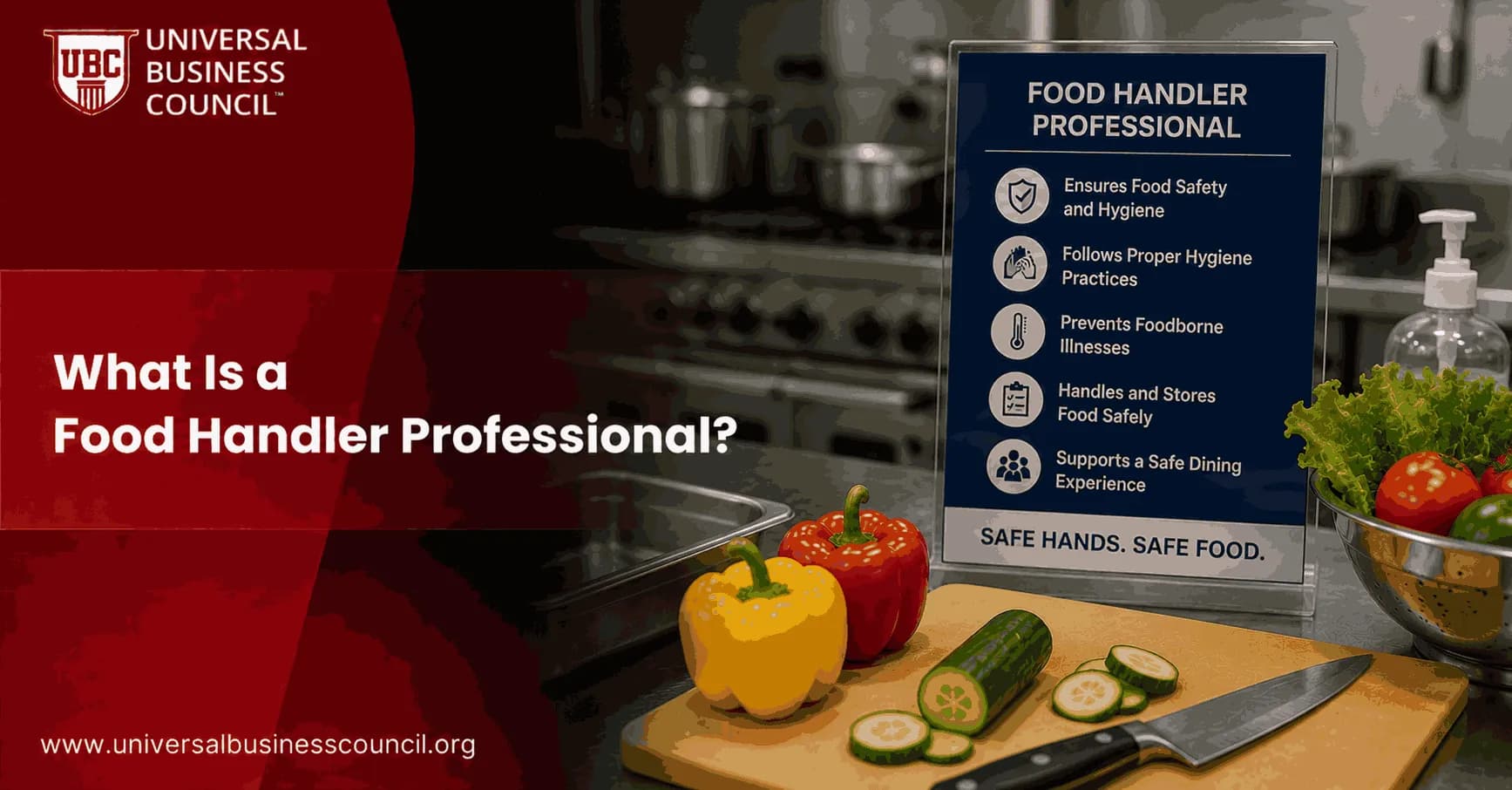
A food handler professional is a trained worker who handles food, utensils, equipment, packaging, or food-contact surfaces in a food business. The role looks simple from the outside. It is not. If you touch a cutting board, plate a salad, unload dairy, sanitize a prep table, or pack ready-to-eat meals, your habits can prevent illness or create risk.
The Centers for Disease Control and Prevention estimates that foodborne illness affects about 48 million people in the United States each year, leading to 128,000 hospitalizations and 3,000 deaths. That is why food handler training is not a box-ticking exercise. It is a public health control at the point where food is actually received, prepared, held, served, and cleaned up.

For professionals planning a long-term career in hospitality or food service, earning a Certified Food Handler Professional™ credential is a practical way to strengthen core food safety knowledge while demonstrating commitment to industry standards from the beginning.
What Is a Food Handler Professional?
A food handler professional is any person who works with food or food-contact surfaces in a food establishment. That includes restaurants, hotels, cafes, hospitals, schools, grocery counters, catering businesses, food trucks, production plants, and distribution operations.
Common food handler roles include:
Cooks, chefs, prep cooks, and line cooks
Servers, bussers, hosts, and food runners
Dishwashers and cleaning staff
Baristas, bartenders, and barbacks
Food packers, production operators, and retail deli staff
A useful distinction: a food handler is not always a food safety manager. Food handlers carry out safe practices during daily work. Food safety managers design procedures, verify compliance, train teams, and deal with audits or inspections. Both roles matter. But the manager cannot stand at every sink, every reach-in cooler, or every slicer at 7:30 p.m. on a Friday. The handler makes the system real.
As food allergy awareness becomes a greater priority across restaurants, healthcare, and catering services, many employers also encourage experienced staff to pursue a Certified Allergen Management Professional™ credential to build confidence in allergen control alongside everyday food safety practices.
Where Food Handler Professionals Work
You will find food handler professionals across the food chain, not only in commercial kitchens.
Restaurants, cafes, hotels, and bars
This is the most visible setting. Food handlers receive deliveries, prep ingredients, cook orders, serve meals, and clean equipment. Customer speed matters, but safety still comes first. To be blunt, the rush is where bad habits show up.
Institutional food service
Hospitals, schools, long-term care homes, and workplace cafeterias depend on food handlers who can follow strict hygiene, allergen, and dietary requirements. In a hospital tray line, a small labeling error can affect a patient with diabetes, kidney disease, or a severe allergy.
Food processing and manufacturing
In plants and packing facilities, food handlers may operate equipment, package finished products, monitor line cleanliness, and follow sanitation schedules. These workplaces often connect handler tasks to formal systems such as Hazard Analysis and Critical Control Points, better known as HACCP.
Retail food operations
Grocery stores, bakeries, butcher counters, sushi counters, and ready-to-eat food sections all rely on trained handlers. Cold holding, date marking, glove use, cleaning, and separation of raw and cooked foods are daily controls.
Core Responsibilities of a Food Handler Professional
The exact job description changes by site, but the core responsibilities are consistent.
1. Receiving and checking deliveries
Food safety starts at the back door. A food handler may inspect packaging, check for pest damage, reject products with broken seals, and confirm chilled or frozen goods arrive at safe temperatures. One detail from real kitchens: delivery checks often fail when the thermometer is missing, not when staff lack knowledge. Keep the probe thermometer where deliveries happen, not buried in a chef drawer.
2. Storing food correctly
Storage is where cross-contamination quietly begins. Raw poultry should not sit above washed lettuce. Chemicals should not be stored near dry ingredients. Labels need dates that staff can read under poor lighting during service.
Good storage practice includes:
Separating raw and ready-to-eat foods
Using first-in-first-out rotation
Keeping cold food cold and hot food hot
Covering and labeling containers
Discarding expired or unsafe food
3. Preparing, cooking, cooling, and reheating food safely
Food handlers follow recipes, but they also control hazards. That means washing produce where required, preventing bare-hand contact with ready-to-eat items where local rules apply, using clean utensils, and cooking foods to required internal temperatures.
Cooling is a common weak spot. A large pot of soup left deep in a walk-in can stay in the danger zone too long. Shallow pans, ice baths, smaller portions, and logged cooling checks are not paperwork theater. They reduce bacterial growth.
4. Serving, packaging, and distributing food
Servers and packers are food handlers too. They manage clean contact with plates, trays, packaging, garnishes, and utensils. Delivery and takeaway operations add another layer: time control, packaging integrity, and allergen accuracy.
5. Cleaning and sanitizing
Cleaning removes visible soil. Sanitizing reduces microorganisms to safer levels. Mixing those up is a classic beginner mistake. A greasy prep table sprayed with sanitizer has not been cleaned well enough for the sanitizer to work properly.
Food handler professionals clean and sanitize:
Cutting boards and knives
Prep tables and counters
Food equipment and smallwares
Service areas and dining surfaces
Hand-contact points such as handles and switches
6. Reporting problems quickly
A food handler should report illness, contamination, broken refrigeration, pest activity, chemical spills, allergen mistakes, or suspected unsafe food. Silence costs more than a discarded batch. In well-run operations, staff are not punished for raising a safety concern.
Food Safety Skills Every Food Handler Needs
A capable food handler professional needs practical knowledge, not just a certificate on a wall.
Personal hygiene: handwashing, clean clothing, hair restraint, glove use, and illness reporting.
Cross-contamination control: separating raw animal foods from cooked or ready-to-eat foods.
Time and temperature control: monitoring cooking, holding, cooling, reheating, and storage.
Allergen awareness: preventing cross-contact and communicating accurately with supervisors and customers.
Cleaning and sanitation: knowing the difference between washing, rinsing, sanitizing, and air drying.
Communication: speaking up when something is unsafe, unclear, or out of specification.
The best handlers also build small habits. They check the sanitizer test strip before the rush. They change gloves after handling raw chicken. They write the time on the pan before placing it in the cooler. Small things. Big difference.
Training and Certification Requirements
Many local and state health departments require food handler training, a food handler certificate, or a food handler card for workers who handle food or food-contact surfaces. Requirements vary by jurisdiction, so check the rules where you work.
Most food handler courses cover:
Causes of foodborne illness
Personal hygiene and handwashing
Contamination and cross-contamination
Safe temperatures and holding times
Cleaning and sanitizing procedures
Basic food law and inspection expectations
At higher responsibility levels, professionals often move toward Certified Food Protection Manager training or similar supervisory credentials. That step is worth it if you plan to become a shift lead, kitchen manager, food safety coordinator, or operations manager.
For internal learning pathways, Universal Business Council readers may also connect food handler training with related study in food safety, hospitality management, operations management, and compliance-focused business education. Those subjects fit together well because food safety is both a technical discipline and a management responsibility.
Career Benefits of Becoming a Food Handler Professional
High employability
Food handlers are needed anywhere food is prepared, stored, sold, served, or packaged. The United States alone has hundreds of thousands of restaurants and grocery stores, and that does not include hospitals, schools, hotels, manufacturing plants, airlines, stadiums, and catering businesses.
Accessible entry point
Many food handler roles are open to candidates with a high school diploma or equivalent plus approved food handler training. That makes the role a practical entry point for people starting in hospitality, retail food, food production, or public health work.
Transferable skills
Food safety knowledge travels. Handwashing, temperature control, allergen awareness, storage discipline, and cleaning standards are useful across employers and sectors. A worker who understands these basics is easier to train and safer to schedule.
Clear path into supervision
Experienced food handlers often move into lead cook, shift supervisor, kitchen manager, production lead, quality technician, or food safety coordinator roles. The best supervisors usually have floor experience. They know what happens when the walk-in is crowded, the dish machine backs up, and the dinner rush starts early.
Meaningful public health impact
This work protects people you will never meet. Children, older adults, pregnant customers, and people with weakened immune systems are more vulnerable to foodborne illness. A careful food handler reduces that risk every shift.
Future Outlook for Food Handler Professionals
Food handler roles are becoming more formal, not less. The FDA Food Safety Modernization Act shifted food safety thinking toward prevention, and many facilities now use stronger documentation, supplier controls, audits, and traceability practices. Digital temperature logs and automated alerts are growing too, but people still have to act on the information.
Population growth and food system expansion add to the need. The United Nations has projected the world population to reach about 9.7 billion by 2050. More people means more food production, more distribution, and more points where trained handlers are needed.
Technology will change the job. It will not remove the need for judgment. A sensor can show that a cooler is at the wrong temperature. A trained food handler knows to move the food, report the fault, document the action, and stop using unsafe stock until a supervisor decides what to do next.
As commercial kitchens continue adopting digital monitoring systems, smart sensors, and automated compliance tools, professionals who complement their operational experience with a Deep Tech Certification can better understand the technologies transforming modern food safety management.
How to Start as a Food Handler Professional
Check local requirements. Look up your city, county, state, or national food handler rules.
Complete recognized training. Choose a course that covers hygiene, contamination, temperature control, cleaning, and basic regulations.
Practice the basics every shift. Handwashing, labeling, thermometer use, and clean work areas matter most.
Ask for feedback. A good supervisor can show you where mistakes usually happen in your specific workplace.
Plan your next credential. If you want a leadership role, study food protection management, HACCP, operations, and team supervision.
A food handler professional is not just someone who works around food. You are part of the safety system that protects customers, patients, guests, students, and co-workers. Start with a recognized food handler course, then build toward supervisory food safety and hospitality management training if you want to turn the role into a long-term career.
As food operations increasingly combine traditional food safety practices with digital compliance systems and connected equipment, adding a Tech Certification alongside food safety qualifications can help professionals prepare for supervisory and management opportunities in modern food businesses.
FAQs
What Is a Food Handler Professional?
A food handler professional is an individual who prepares, cooks, stores, serves, packages, or transports food while following established food safety, hygiene, and sanitation practices. Their role is to help ensure that food is handled safely and complies with applicable health regulations and workplace standards.
What Does a Food Handler Professional Do?
A food handler professional is responsible for:
Preparing food safely
Maintaining personal hygiene
Preventing cross-contamination
Monitoring food storage conditions
Following temperature control procedures
Cleaning and sanitizing equipment
Supporting food safety compliance
Who Can Become a Food Handler Professional?
Anyone interested in working in the food service or hospitality industry can become a food handler professional. Requirements vary depending on the employer and local regulations, and some jurisdictions require food handler training or certification.
Which Industries Employ Food Handler Professionals?
Food handler professionals work in various industries, including:
Restaurants
Cafés
Hotels and resorts
Catering companies
Hospitals
Schools and universities
Bakeries
Food manufacturing
Retail grocery stores
Food delivery and meal preparation services
Why Is the Role of a Food Handler Professional Important?
Food handlers play a critical role in protecting public health by reducing the risk of foodborne illnesses, maintaining food quality, and ensuring customers receive safe meals.
What Skills Should a Food Handler Professional Have?
Important skills include:
Food safety knowledge
Personal hygiene
Attention to detail
Communication
Teamwork
Time management
Safe food handling
Problem-solving
What Qualifications Are Needed to Become a Food Handler Professional?
Many entry-level positions require no prior experience. However, employers may prefer or require food handler certification or other food safety training depending on local regulations.
Is Food Handler Certification Mandatory?
Certification requirements differ by country, state, province, and local authority. In some locations it is legally required, while in others it may be recommended or determined by employer policy.
What Topics Are Covered in Food Handler Training?
Training commonly includes:
Personal hygiene
Handwashing
Foodborne illness prevention
Cross-contamination prevention
Cleaning and sanitizing
Temperature control
Food storage
Allergen awareness
Workplace safety
What Is the Difference Between a Food Handler and a Food Safety Manager?
A food handler focuses on safely preparing and handling food during daily operations, while a food safety manager oversees food safety systems, staff training, documentation, inspections, and regulatory compliance.
How Can a Food Handler Prevent Foodborne Illnesses?
Food handlers can reduce risks by washing their hands properly, preventing cross-contamination, cooking and storing food safely, maintaining clean work areas, and following workplace food safety procedures.
What Are the Daily Responsibilities of a Food Handler Professional?
Daily duties may include:
Preparing ingredients
Monitoring food storage
Cleaning and sanitizing equipment
Serving food safely
Checking temperatures
Following hygiene standards
Recording food safety information where required
What Career Opportunities Are Available for Food Handler Professionals?
Career opportunities include:
Kitchen Assistant
Restaurant Crew Member
Catering Assistant
Bakery Assistant
Food Service Worker
Shift Supervisor
Kitchen Supervisor
Food Safety Coordinator
Food Safety Manager
Career progression often depends on experience, training, and additional qualifications.
Can Food Handler Professionals Advance Their Careers?
Yes. Many professionals progress into supervisory, management, quality assurance, hospitality management, or food safety leadership roles by gaining experience and earning additional certifications.
What Certifications Can Help Food Handler Professionals?
Useful certifications may include:
Food Handler Certification
Food Protection Manager Certification
HACCP Certification
Allergen Awareness Training
Hospitality Management Certifications
Occupational Health and Safety Certifications
What Common Challenges Do Food Handler Professionals Face?
Challenges may include:
Maintaining hygiene during busy shifts
Managing food temperatures
Preventing cross-contamination
Handling customer allergen requests
Keeping up with changing food safety regulations
Working efficiently under pressure
How Can Technology Support Food Handler Professionals?
Technology can assist through:
Digital temperature monitoring
Electronic food safety records
Inventory management systems
IoT sensors
Automated sanitation reminders
AI-assisted food safety monitoring
These tools support, but do not replace, proper food safety training and professional judgment.
What Common Mistakes Should Food Handler Professionals Avoid?
Avoid:
Inadequate handwashing
Improper food storage
Ignoring cleaning schedules
Cross-contamination
Poor temperature monitoring
Working while ill when workplace policy or regulations prohibit it
Is Being a Food Handler Professional a Good Career Choice?
For many people, yes. It offers opportunities to enter the hospitality and food service industry, develop practical skills, and build a pathway toward supervisory or management positions. Success often comes from consistently applying food safety knowledge and continuing to learn throughout your career. Every safe meal served reflects many small, careful decisions made behind the scenes.
What Is the Future of the Food Handler Profession?
The role of food handler professionals continues to evolve with advances in food safety technology, automation, digital monitoring, and stricter regulatory standards. While tools such as AI, IoT sensors, and electronic compliance systems are improving efficiency, skilled food handlers remain essential for maintaining hygiene, protecting public health, and ensuring safe food preparation. Professionals who combine strong food safety practices with ongoing education and adaptability will be well positioned for long-term success in the hospitality and food service industry.
Related Articles
View All
Food
How to Become a Certified Food Handler Professional: Step-by-Step Career Path
Learn how to become a certified food handler professional, from local requirements and exams to renewal, supervisor roles, and food safety career growth.

Food
Career Growth After Food Handler Certification: Jobs, Skills, and Advancement Paths
Explore career growth after food handler certification, including entry-level jobs, promotion skills, quality roles, and practical advancement paths.

Food
Food Handler Professional Checklist: Daily Safety Practices for Food Service Teams
A practical food handler professional checklist for daily hygiene, temperature control, storage, cleaning, pest checks, and documentation.
Trending Articles
The Role of Blockchain in Ethical AI Development
How blockchain technology is being used to promote transparency and accountability in artificial intelligence systems.
AWS Career Roadmap
A step-by-step guide to building a successful career in Amazon Web Services cloud computing.
Top 5 DeFi Platforms
Explore the leading decentralized finance platforms and what makes each one unique in the evolving DeFi landscape.