

Food Handler Professional Checklist: Daily Safety Practices for Food Service Teams
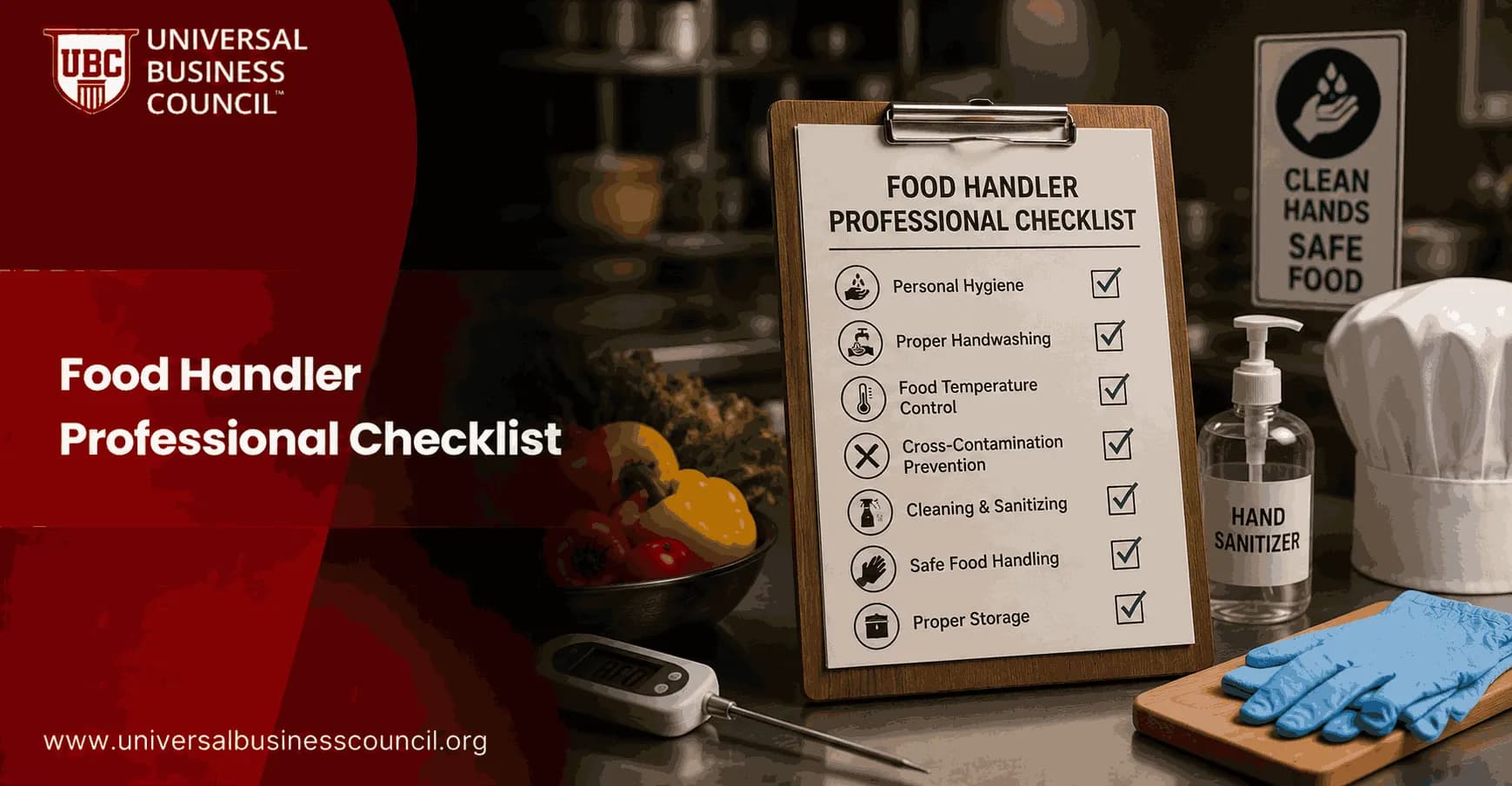
A food handler professional checklist turns food safety from a good intention into a daily routine you can inspect, correct, and prove. For food service teams, it should cover personal hygiene, time and temperature control, cross contamination, cleaning, pest control, storage, and documentation before small mistakes reach the customer.
Good teams do not rely on memory. During a rush, a cook can forget to log a hot holding temperature. A server can grab ready-to-eat garnish with bare hands. A delivery can sit near the back door for 20 minutes because nobody owns receiving. The checklist gives each task a name, an owner, and a time.

For professionals looking to strengthen their food safety credentials beyond the basics, the Certified Food Handler Professional™ program provides structured knowledge that complements the daily practices outlined in this checklist and supports long-term career development.
Why a Daily Food Handler Professional Checklist Matters
Foodborne illness prevention depends on routine controls. Public health guidance from agencies such as the U.S. Food and Drug Administration and local health departments keeps pointing to the same risk areas: sick employees, poor handwashing, unsafe holding temperatures, contaminated equipment, and cross contact between raw and ready-to-eat foods.
HACCP, short for Hazard Analysis and Critical Control Points, is still the backbone. You identify where hazards can occur, set controls, monitor them, and record corrective actions. A daily checklist brings that system to the prep table, walk-in cooler, dish area, and service line.
To be blunt, the clipboard checklist still works if people use it honestly. Digital checklists work better for multi-site teams because supervisors can see missed logs, photos, corrective actions, and timestamps without waiting for paper to be scanned. The tool matters less than the discipline behind it.
Food businesses that regularly manage allergen risks can also benefit from advanced training such as the Certified Allergen Management Professional™, helping teams strengthen allergen control alongside routine food safety procedures.
Daily Food Handler Professional Checklist
Use this checklist at opening, during service, and at close. For high-volume operations, record critical temperatures more than once per day, especially before lunch, mid-shift, and before closing.
1. Employee Health and Personal Hygiene
Confirm all food handlers are fit for work and have reported symptoms such as vomiting, diarrhea, jaundice, fever with sore throat, or infected wounds.
Exclude or restrict sick employees according to your local health code and facility policy.
Check that staff wash hands before food handling, after restroom use, after touching hair or face, after handling raw food, after taking out trash, and after using chemicals.
Verify hand sinks have warm water, soap, and single-use towels. Prep sinks and mop sinks are not handwashing stations.
Confirm correct glove use. Gloves must be changed between tasks and never replace handwashing.
Prevent bare-hand contact with ready-to-eat food unless your jurisdiction allows a specific approved procedure.
Require hair restraints and limit jewelry. Rings, watches, and bracelets collect soil and make proper handwashing harder.
Keep employee food, drinks, phones, and personal items out of food preparation areas.
The most common hygiene failure I see in busy kitchens is not dramatic. It is a line cook changing gloves without washing hands first. It looks safe from across the room. It is not.
2. Receiving and Approved Sources
Accept deliveries only from approved suppliers with traceable invoices or delivery records.
Inspect packaging for damage, leaks, pest evidence, ice crystals from thawing and refreezing, or signs of spoilage.
Check receiving temperatures for refrigerated, frozen, and hot delivered foods.
Reject products that are unsafe, unlabelled, out of temperature, or from unapproved sources.
Move received foods quickly into correct storage. Do not let deliveries sit in the temperature danger zone while the team finishes another task.
This step is where many checklists get weak. Receiving often happens when the kitchen is short-staffed. Assign one trained person to accept deliveries, even if the order is small.
3. Cold Storage, Frozen Storage, and FIFO
Keep refrigerated foods at or below 5°C or 41°F, unless your local regulation sets a stricter limit.
Keep frozen foods at or below -18°C or 0°F where that standard applies.
Store raw meat, poultry, and seafood below ready-to-eat foods to prevent drips and cross contamination.
Keep dry goods off the floor, covered, labelled, and away from chemicals.
Use FIFO, First In, First Out, so older stock is used first.
Label prepared and opened foods with product name, preparation or opening date, and use-by date.
Remove expired, spoiled, or unlabelled food immediately.
Do not treat FIFO as a stockroom slogan. Pull the old sauce container forward. Put the new one behind it. If the label is missing, the product should not stay in service.
4. Preparation and Cross Contamination Control
Separate raw animal foods from ready-to-eat foods during preparation.
Use separate or color coded boards and utensils for raw poultry, raw meat, seafood, produce, and ready-to-eat items.
Wash produce according to facility procedure before cutting or serving.
Thaw frozen food safely in refrigeration, under cold running water, as part of cooking, or by another approved method. Do not thaw food on a counter.
Clean and sanitize prep surfaces between tasks, especially after raw meat, poultry, seafood, or allergen-containing foods.
Use a cleaned and sanitized thermometer for internal temperature checks.
Color coded boards help, but only if staff follow the system. A green board sitting under raw chicken is worse than no color system at all because it gives managers false confidence.
5. Cooking, Cooling, Reheating, and Holding
Cook foods to required internal temperatures under your local code and product procedure.
Verify temperatures with a calibrated food thermometer, not color, texture, or steam.
Do not leave cooked foods at room temperature for more than 2 hours before cooling, holding, or serving.
Follow approved cooling procedures, using shallow pans, ice baths, blast chilling, or smaller portions where appropriate.
Reheat food to the required internal temperature before placing it in hot holding.
Maintain hot holding at 60°C or 140°F in some checklist standards, or 135°F where that local restaurant code applies.
Maintain cold holding at or below 5°C or 41°F.
Record corrective action when food is out of range, such as reheating, rapid chilling, discarding, or calling maintenance.
A temperature log with only perfect numbers is suspicious. Real operations have deviations. What matters is whether your team catches them early and records what they did next.
6. Cleaning, Sanitizing, and Chemical Control
Set up the three-compartment sink correctly: wash, rinse, sanitize, and air dry.
Test sanitizer concentration using the right test strips for the chemical in use.
Clean and sanitize food contact surfaces before use, after raw food contact, after spills, and at scheduled intervals.
Inspect slicers, mixers, ice machines, beverage nozzles, gaskets, and other equipment that collect residue.
Store chemicals below and away from food, utensils, single-use items, and food contact surfaces.
Label spray bottles clearly. Never use an unmarked bottle in a food area.
Sanitizer strength is a quiet failure point. Too weak does not sanitize. Too strong can create a chemical hazard. Test it, write it down, and replace the solution when needed.
7. Pest Control and Waste
Check for droppings, gnaw marks, insects, nesting materials, damaged packaging, and unusual odors.
Keep doors closed or screened. Report gaps around doors, drains, and utility penetrations.
Remove garbage from prep areas during the day, not only at close.
Keep outdoor waste containers closed and the surrounding area clean.
Document pest sightings and notify the licensed pest control provider or responsible manager.
8. Documentation, Training, and Supervisor Review
Record refrigerator, freezer, hot holding, cold holding, cooking, cooling, and reheating temperatures at scheduled times.
Maintain cleaning schedules with task, time, employee initials, chemical used, and supervisor verification.
Keep maintenance records for refrigeration, dish machines, thermometers, ventilation, and hot holding equipment.
File supplier records, invoices, delivery receipts, and product traceability information.
Maintain employee food safety training records and health reporting acknowledgments.
Complete a daily food safety walk and assign corrective actions before the shift ends.
If you manage a team, audit the checklist against reality. Open the cooler. Check the thermometer. Look at the cutting boards. Ask one employee when they must wash hands. Paper compliance is not food safety.
Paper Checklist or Digital Checklist?
Both can work. Paper is cheap and easy to start. Digital tools are better when you need timestamps, reminders, trend reports, photo evidence, and multi-location oversight.
Use paper if you run a small operation with a tight team and one accountable manager. Use a digital checklist if you manage several outlets, frequent staff turnover, or complex compliance records. App-based walkthroughs also reduce the old problem of backfilled logs at the end of the shift.
As digital monitoring, automated compliance systems, and smart kitchen technologies become more common, professionals may also benefit from a Deep Tech Certification to better understand the technology supporting modern food safety operations.
Common Mistakes That Break the Checklist
Too many boxes: A 90-line checklist becomes wallpaper. Keep daily tasks practical and move weekly items to a separate audit.
No corrective action field: A failed temperature check without a documented response is an unfinished control.
Manager-only ownership: Food handlers should own the checks they perform. Supervisors verify.
Untrained staff: If employees do not understand why 41°F matters, they will treat logging as clerical work.
No review: Someone must read the logs, spot patterns, and fix the root cause.
How This Supports Professional Development
A food handler professional checklist is also a training map. It shows what your team must know: hygiene, safe receiving, allergens, cross contamination, time-temperature control, cleaning, pest prevention, and documentation.
For internal learning pathways, connect this checklist with relevant Universal Business Council courses in food operations, quality management, compliance, and business management. If you supervise people, pair technical food safety training with management education. The hard part is rarely knowing the rule. The hard part is building a shift routine that people follow at 12:30 p.m. when tickets are stacked.
Build Your Daily Routine
Start with one page. Put the checklist where work happens, not in a binder nobody opens. Assign owners by station. Review exceptions daily. Keep temperature limits aligned with your local health authority, the FDA Food Code where applicable, and your facility policy.
Your next step: walk your kitchen with this food handler professional checklist before the next service period. Fix one weak control today, then train the team on why it matters.
Combining consistent food safety practices with a relevant Tech Certification can help professionals prepare for increasingly technology-driven food service, manufacturing, and quality management environments while supporting future career growth.
FAQs
1. What Is a Food Handler Professional Checklist?
A food handler professional checklist is a structured list of food safety, hygiene, and workplace practices that helps food service employees prepare, handle, store, and serve food safely while supporting compliance with applicable regulations.
2. Why Is a Food Handler Checklist Important?
A checklist promotes consistency, reduces the risk of foodborne illness, improves workplace organization, and helps employees follow established food safety procedures.
3. What Should You Check Before Starting Work?
Before beginning your shift:
Wash your hands thoroughly.
Wear clean clothing or a clean uniform.
Tie back long hair or wear appropriate hair restraints.
Remove unnecessary jewelry if required by workplace policy.
Report any illness according to your employer's procedures.
4. How Often Should Food Handlers Wash Their Hands?
Food handlers should wash their hands before handling food and after activities such as using the restroom, handling raw food, touching garbage, coughing, sneezing, or touching potentially contaminated surfaces.
5. What Personal Hygiene Practices Should Food Handlers Follow?
Good hygiene practices include:
Maintaining clean hands
Keeping fingernails clean and trimmed
Wearing clean uniforms
Using hair restraints where required
Avoiding food preparation when ill
Covering cuts with appropriate waterproof bandages and gloves when necessary
6. Why Is Preventing Cross-Contamination Important?
Cross-contamination can transfer harmful microorganisms from one food or surface to another. Using separate utensils, cutting boards, and proper cleaning procedures helps reduce this risk.
7. How Should Raw and Ready-to-Eat Foods Be Stored?
Raw foods should generally be stored separately from ready-to-eat foods to reduce the risk of cross-contamination. Follow local food safety guidelines and workplace procedures for proper storage.
8. How Should Food Temperatures Be Monitored?
Food handlers should use a calibrated food thermometer and follow applicable local food safety regulations for cooking, holding, cooling, and reheating temperatures.
9. Why Is Cleaning Different from Sanitizing?
Cleaning removes dirt and food residue, while sanitizing reduces microorganisms on cleaned surfaces to safer levels using approved methods or sanitizing agents.
10. How Often Should Food Contact Surfaces Be Cleaned?
Food contact surfaces should be cleaned and sanitized at appropriate intervals, including between tasks, after handling raw foods, and according to workplace food safety procedures.
11. How Should Food Allergens Be Managed?
Food handlers should:
Know common food allergens.
Prevent cross-contact.
Follow workplace allergen procedures.
Communicate clearly with customers and coworkers about allergen-related requests.
12. What Should Be Checked During Food Storage?
Regularly verify:
Proper labeling
Expiration or use-by dates
Storage temperatures
Packaging condition
Stock rotation using FIFO (First In, First Out), where applicable
13. Why Is Pest Prevention Important?
Maintaining clean facilities, storing food properly, and reporting signs of pests help reduce contamination risks and protect food safety.
14. What Equipment Should Food Handlers Inspect?
Inspect:
Refrigerators
Freezers
Thermometers
Cooking equipment
Handwashing stations
Cleaning supplies
Food storage containers
Report damaged or malfunctioning equipment promptly.
15. How Can Food Handlers Maintain Workplace Safety?
Follow safe lifting practices, clean spills promptly, use equipment correctly, wear appropriate protective equipment when required, and follow workplace safety procedures.
16. What Documentation May Be Required?
Depending on the workplace, documentation may include:
Temperature logs
Cleaning schedules
Food delivery records
Training records
Allergen documentation
Inspection reports
17. What Common Mistakes Should Food Handlers Avoid?
Avoid:
Skipping handwashing
Improper food storage
Cross-contamination
Ignoring temperature controls
Using dirty equipment
Working while ill when prohibited by workplace policy
18. How Can Food Handlers Continue Improving Their Skills?
Stay informed through ongoing food safety training, refresher courses, workplace coaching, updated regulations, and professional certifications where appropriate.
19. How Can a Daily Checklist Improve Professional Performance?
Using a daily checklist helps build consistent habits, reduce errors, improve efficiency, and reinforce food safety standards. In busy kitchens, memory is useful, but a reliable checklist is considerably less affected by long shifts and lunchtime chaos.
20. What Is the Best Professional Checklist for Every Food Handler?
An effective daily checklist includes:
Personal hygiene verification
Proper handwashing
Safe food storage
Temperature monitoring
Cross-contamination prevention
Equipment inspection
Cleaning and sanitizing
Allergen awareness
Workplace safety checks
Accurate record-keeping
Following a consistent checklist supports safer food handling, protects customers, helps meet workplace standards, and contributes to professional growth in the food service and hospitality industry.
Related Articles
View All
Food
Top Food Safety Skills Every Food Handler Professional Must Master
Master the food safety skills every food handler needs, from hygiene and temperature control to allergen management, HACCP basics, and certification.

Food
Workplace Safety and Sanitation Standards for Food Handler Professionals
Learn the key workplace safety and sanitation standards food handler professionals must follow for hygiene, illness control, cleaning, and temperature safety.

Food
Food Handler Professional Exam Tips to Study and Pass with Confidence
Practical Food Handler Professional Exam Tips covering study plans, key temperatures, allergens, practice exams, and test-day strategies to pass confidently.
Trending Articles
The Role of Blockchain in Ethical AI Development
How blockchain technology is being used to promote transparency and accountability in artificial intelligence systems.
AWS Career Roadmap
A step-by-step guide to building a successful career in Amazon Web Services cloud computing.
Top 5 DeFi Platforms
Explore the leading decentralized finance platforms and what makes each one unique in the evolving DeFi landscape.