

Workplace Safety and Sanitation Standards for Food Handler Professionals
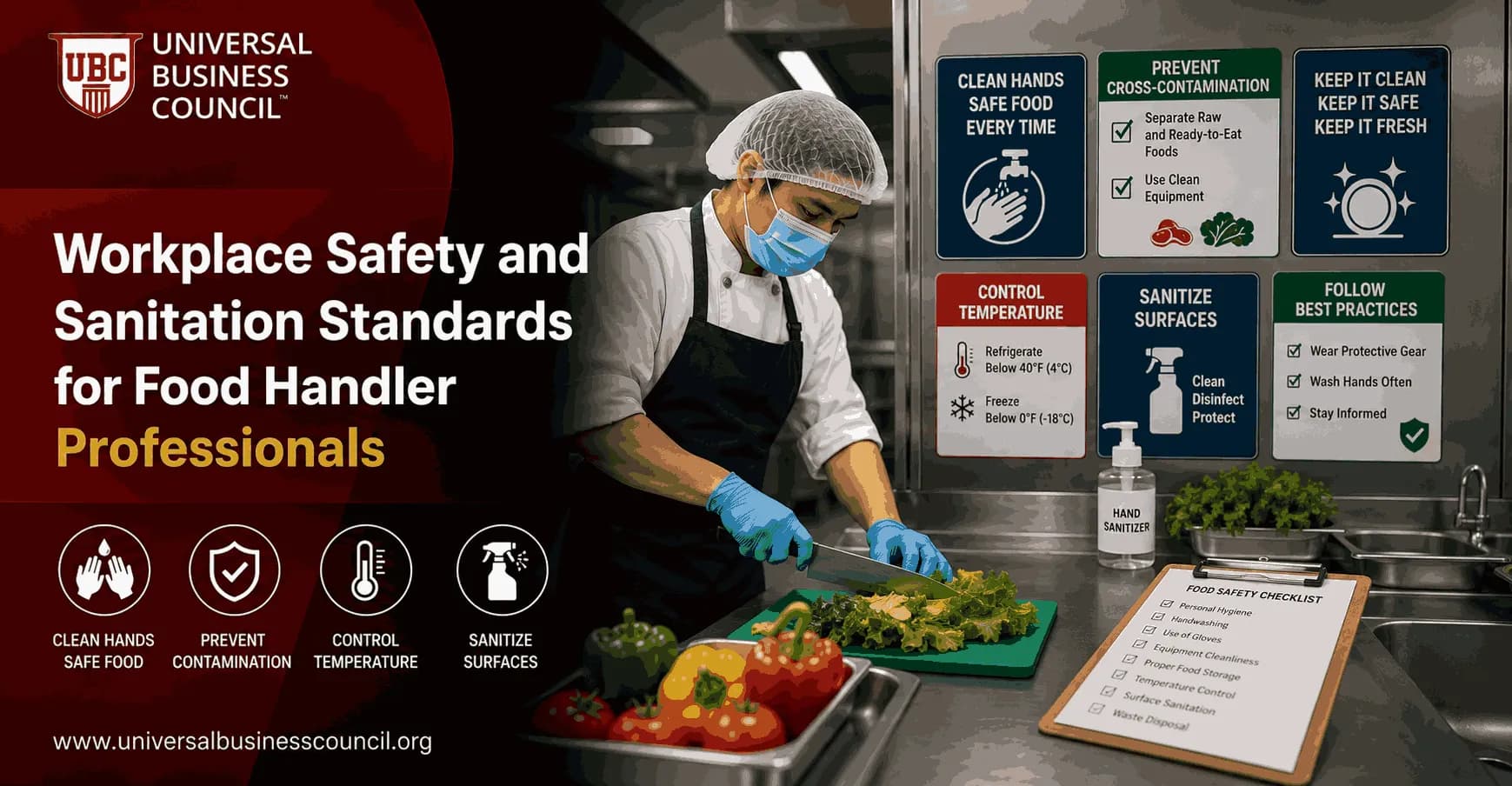
Workplace safety and sanitation standards for food handler professionals are not paperwork. They are the daily controls that keep pathogens, allergens, chemicals, burns, and unsafe food out of service. If you prepare, serve, store, clean, or supervise food operations, you need to know the rules well enough to apply them during a rush, not just during an inspection.
The modern standard is built around clear sources: the 2022 U.S. FDA Food Code, state and local health department rules, institutional food safety manuals, and specialized frameworks such as the Tri-Service Food Code used in U.S. military food service. These documents agree on the core point. Food safety depends on trained people following repeatable procedures.

As food operations become more regulated and technology-driven, many professionals strengthen their practical skills through credentials such as the Certified Food Handler Professional™, helping them apply food safety standards consistently in real-world environments.
Why Food Handler Professionals Need Formal Standards
Food service work moves quickly. A cook changes gloves, answers a phone, grabs raw chicken, plates a salad, and wipes a counter. That whole sequence may take less than three minutes. One missed handwash can undo good purchasing, good storage, and good cooking.
Standards create the baseline. They define what must happen every shift:
Hands are washed at approved handwash sinks.
Sick employees report symptoms and stay out of food areas.
Raw and ready-to-eat foods are separated.
Food-contact surfaces are cleaned and sanitized on schedule.
Cold food stays cold, hot food stays hot.
Workers use personal protective equipment when the task requires it.
Certification matters because these rules are detailed. A food handler certification usually covers entry-level duties for staff who prepare or serve food. A food manager certification is broader and applies to supervisors who run systems, verify logs, correct employees, and prepare for inspections. In New York, for example, food handler certification is not mandatory statewide for every individual, but retail food stores preparing food on site must have at least one certified supervisor under state Article 20-C requirements.
If you are moving from line-level food handling into a supervisory role, this is a natural point to connect food safety training with operations and compliance management skills.
The Regulatory Landscape: FDA, State Codes, and Institutional Rules
The 2022 FDA Food Code
The 2022 FDA Food Code is the central reference for many U.S. food safety programs. It provides model requirements for hygiene, handwashing, employee health, cleaning, sanitizing, and time-temperature control. State and local governments often adopt FDA-based rules, then add their own licensing, training, or inspection procedures.
Tri-Service Food Code and Military Food Service
U.S. military food service uses the Tri-Service Food Code, TB MED 530, alongside FDA Food Code principles. Military training materials require initial food sanitation and safety training within 30 days of beginning work. That timeline is a useful benchmark for any organization designing onboarding.
State and Local Health Departments
Local rules matter. Washington food worker guidance, for instance, gives direct instructions on illness exclusion, handwashing, glove use, temperature control, and cleanup after vomiting or diarrhea incidents. New Jersey training programs focus heavily on hygiene, cross-contamination, and time-temperature rules. Do not assume rules are identical across jurisdictions. Check the local health department before writing your standard operating procedure.
Alongside regulatory compliance, specialized qualifications such as the Certified Allergen Management Professional™ can help food service teams strengthen allergen awareness, improve cross-contact prevention, and build safer customer communication practices.
Personal Hygiene: The First Control Point
Handwashing is the control that gets repeated all day. The FDA recommends washing hands with warm water and soap for at least 20 seconds before and after handling food and after high-risk activities such as using the bathroom. In professional kitchens, the list is longer.
You should wash hands after:
Using the restroom.
Entering the kitchen or returning from a break.
Handling garbage, dirty dishes, chemicals, money, or phones.
Eating, drinking, smoking, or touching your face.
Handling raw meat, poultry, seafood, or eggs.
Changing tasks or before putting on gloves.
Use only the designated handwash sink. Not the three-compartment sink. Not the mop sink. Not a prep sink. Handwash sinks must stay open and stocked with soap, approved drying supplies, and a trash receptacle.
Here is a practical audit detail that catches teams off guard: the sink may be stocked at 9 a.m., then blocked by a bus tub at 12:20 p.m. during lunch. Inspectors notice that. So do good managers. If the hand sink is blocked, the procedure has already failed.
Illness Reporting and Worker Health
Food handler professionals should never work while sick with vomiting, diarrhea, jaundice, or symptoms linked to reportable illnesses such as norovirus, hepatitis A, Salmonella, Shigella, or E. coli. Washington guidance states that workers should not return until vomiting and diarrhea have been gone for at least 24 hours.
Managers need a written illness reporting policy, not a vague request to "use good judgment." Ask employees to report symptoms before the shift starts. Put the policy in onboarding. Repeat it before peak seasons. In facilities serving highly susceptible populations, such as older adults, hospital patients, or young children, return-to-work rules may require medical clearance after certain diagnoses.
To be blunt, the worst policy is the one that punishes honesty. If workers believe reporting illness means losing shifts, they will hide symptoms. That is a management failure as much as a sanitation failure.
Clothing, Gloves, Hair Restraints, and Wounds
Clean clothing and hair control are basic, but they still show up in inspection findings. Food handlers should wear clean uniforms or work clothing, keep hair tied back or covered, and keep personal belongings away from food and food-contact surfaces.
Gloves help only when used correctly. Wash hands before putting gloves on. Use single-use gloves for ready-to-eat food tasks. Change them when switching tasks, after contamination, after tearing, and after leaving the workstation. Never wash and reuse disposable gloves.
Wound control needs more attention than many new food handlers expect:
Hand or wrist wounds should be covered with an impermeable bandage or gauze, protected with a finger cot when needed, then covered by a single-use glove.
Arm wounds need an impermeable bandage and covered sleeves.
Body wounds should be covered with a dry, tight-fitting bandage.
This is not overkill. A small cut becomes a food safety risk when it sits under a torn glove during prep.
Clean, Separate, Cook, Chill: The Working Framework
The FDA promotes a simple four-step model: clean, separate, cook, chill. It works because it is easy to teach and easy to check.
Clean
Clean hands, utensils, prep tables, cutting boards, slicers, and high-touch areas. Food-contact surfaces used with time and temperature control for safety foods should be cleaned at least every four hours when in continuous use. During a long prep shift, set a timer. Do not rely on memory.
Separate
Keep raw meat, poultry, seafood, and eggs away from ready-to-eat food. Use separate cutting boards and utensils. Store raw foods below ready-to-eat items in refrigeration. This one rule prevents many avoidable failures.
Cook
Use a thermometer. The FDA stresses that color and texture are not reliable safety indicators for meat, poultry, seafood, or egg products. If your team says, "It looks done," retrain them.
Chill
Cold holding should remain at or below 41°F, while hot holding should stay at 135°F or above. The FDA recommends keeping refrigerators at or below 40°F and freezers at or below 0°F, verified with appliance thermometers. Cool hot foods quickly in shallow containers. Do not thaw food on the counter. Use refrigeration, cold running water, or microwave thawing followed by immediate cooking.
Cleaning, Sanitizing, and Disinfection
Cleaning removes visible soil. Sanitizing reduces microorganisms on food-contact surfaces to safe levels. Disinfection is stronger and is often used for high-risk contamination events or non-food-contact surfaces, depending on the product label and local rules.
A sound warewashing workflow follows this sequence:
Scrape and pre-rinse as needed.
Wash.
Rinse.
Sanitize.
Air dry on clean racks or drainboards.
Do not towel-dry sanitized equipment. Do not stack wet pans so moisture gets trapped. In dish areas, one worker handling soiled items and another handling rinsing and sanitizing can reduce cross-contamination. It also protects workers when hot water, chemicals, and sharp items are in play. Dishwashing gloves and aprons are PPE, not optional accessories.
As digital monitoring, smart kitchen equipment, AI-assisted compliance, and automated sanitation systems become more common, a Deep Tech Certification can help professionals understand the technologies increasingly supporting modern food safety operations.
Incident Response: Vomiting or Diarrhea in a Food Area
Norovirus and similar pathogens spread easily. That is why some state manuals specify formal cleanup procedures for vomiting or diarrhea events. The Washington food worker manual describes a structured response that includes moving people away, blocking off the area, using disposable gloves, masks, shoe covers, and gowns, cleaning visible material, disinfecting, and addressing equipment or utensils within 25 feet of the incident.
Your workplace should have a kit ready. Include PPE, disposable towels, garbage bags, approved disinfectant, signage or barrier tape, and written instructions. Do not make the shift lead invent the process at 7:30 p.m. with a full dining room.
Allergen Control and Customer Communication
Allergen safety is part of sanitation. Servers and food handlers need to know common allergens, ingredient risks, and how to prevent cross-contact. If a guest asks about nuts, shellfish, dairy, eggs, wheat, soy, sesame, or fish, do not guess. Check the recipe, label, or manager-approved allergen resource.
Cross-contact can happen through fryers, cutting boards, tongs, gloves, garnish stations, or shared prep tables. The safest answer is not always "yes, we can make that." Sometimes the honest answer is that the kitchen cannot control the risk. Professionals say that clearly.
Training Checklist for Food Handler Professionals
Use this checklist when building or reviewing your food safety training program:
Local food code and licensing requirements are identified.
Food handler and food manager roles are clearly separated.
Handwashing rules are demonstrated, not just explained.
Illness reporting is written, signed, and reinforced.
Temperature logs include corrective actions, not only readings.
Cleaning schedules show who, what, when, and with which chemical.
Employees know glove rules and wound coverage rules.
Allergen questions have an approved response process.
Vomit and diarrhea cleanup procedures are documented and practiced.
If you supervise teams, pair technical food safety learning with Universal Business Council courses in operations, compliance, or management. Food safety improves when managers can train, measure, correct, and coach consistently.
Final Step: Build Standards That Survive a Busy Shift
The real test of these standards is not a quiet training room. It is the Saturday rush, the short-staffed breakfast shift, the broken reach-in cooler, and the new employee who is afraid to ask where the hand sink is.
Start with the FDA Food Code principles, confirm your state and local requirements, then turn them into simple job aids: handwashing triggers, temperature limits, cleaning schedules, illness reporting steps, and incident response cards. If you are preparing for certification or moving into supervision, choose the Universal Business Council food safety or operations learning path that matches your role, then apply one checklist on your next shift.
Pairing food safety expertise with a relevant Tech Certification can prepare professionals for leadership roles where compliance, operational efficiency, and digital systems increasingly work together.
FAQs
How Important Are Workplace Safety and Sanitation Standards for Food Handlers?
Workplace safety and sanitation standards are essential for protecting public health, preventing foodborne illnesses, reducing workplace accidents, and maintaining compliance with food safety regulations. Following these standards also helps improve operational efficiency and customer confidence.
What Are Workplace Safety Standards in Food Handling?
Workplace safety standards are guidelines and procedures designed to protect employees from hazards such as slips, burns, cuts, chemical exposure, electrical risks, and improper equipment use while ensuring safe food preparation.
What Is Food Sanitation?
Food sanitation refers to cleaning and disinfecting food preparation areas, equipment, utensils, and surfaces to reduce harmful microorganisms and maintain a hygienic environment.
Why Is Personal Hygiene Critical for Food Handlers?
Good personal hygiene helps prevent contamination by reducing the spread of bacteria, viruses, and other harmful microorganisms. Proper handwashing, clean uniforms, and reporting illness are key hygiene practices.
How Often Should Food Handlers Wash Their Hands?
Food handlers should wash their hands before preparing food and after activities such as using the restroom, handling raw food, touching garbage, coughing, sneezing, cleaning, or touching potentially contaminated surfaces.
What Are the Basic Sanitation Practices Every Food Handler Should Follow?
Essential sanitation practices include:
Cleaning and sanitizing work surfaces
Washing hands properly
Preventing cross-contamination
Maintaining proper food storage
Using clean equipment
Following waste disposal procedures
What Is Cross-Contamination and How Can It Be Prevented?
Cross-contamination occurs when harmful microorganisms transfer from one surface, food, or object to another. It can be minimized by separating raw and ready-to-eat foods, using dedicated utensils, cleaning equipment thoroughly, and practicing good hygiene.
Why Is Temperature Control Important in Food Safety?
Proper temperature control helps reduce the growth of harmful microorganisms. Food handlers should follow local food safety regulations and workplace procedures for cooking, cooling, reheating, and storage temperatures.
How Should Cleaning and Sanitizing Be Performed?
Cleaning removes dirt, grease, and food residue, while sanitizing reduces microorganisms on cleaned surfaces. Both steps are necessary and should follow the manufacturer's instructions for approved cleaning and sanitizing products.
What Personal Protective Equipment (PPE) May Food Handlers Use?
Depending on the workplace, PPE may include:
Disposable gloves
Hair restraints
Aprons
Face masks where required
Slip-resistant footwear
Heat-resistant gloves for hot equipment
How Should Chemicals Be Stored in Food Facilities?
Cleaning chemicals should be clearly labeled, stored separately from food and food-contact items, and handled according to manufacturer instructions and workplace safety procedures.
Why Is Equipment Maintenance Important?
Well-maintained equipment supports food safety, improves operational efficiency, reduces breakdowns, and helps prevent workplace injuries caused by faulty machinery.
How Can Food Handlers Prevent Workplace Accidents?
Food handlers can reduce accidents by cleaning spills promptly, using equipment correctly, wearing appropriate footwear, following lifting techniques, reporting hazards, and participating in workplace safety training.
What Role Does Waste Management Play in Food Safety?
Proper waste management helps reduce contamination, discourage pests, improve sanitation, and create a cleaner working environment.
How Should Food Allergens Be Managed?
Food handlers should understand common allergens, prevent cross-contact, follow allergen handling procedures, accurately communicate ingredient information, and follow workplace protocols for allergy-related requests.
Why Are Food Safety Inspections Important?
Food safety inspections help verify compliance with regulations, identify sanitation issues, improve operational standards, and reduce risks associated with food preparation and storage.
What Records Should Food Businesses Maintain?
Depending on local regulations and business operations, records may include:
Temperature logs
Cleaning schedules
Equipment maintenance records
Pest control documentation
Employee training records
Food delivery and storage records
What Common Workplace Safety Mistakes Should Food Handlers Avoid?
Common mistakes include:
Skipping handwashing
Ignoring sanitation schedules
Improper chemical storage
Unsafe equipment operation
Failing to report illness
Inadequate temperature monitoring
Poor housekeeping practices
How Can Food Handler Professionals Stay Updated on Safety Standards?
Professionals should participate in refresher training, review updated food safety regulations, follow guidance from local health authorities, attend industry workshops, and complete continuing education or certification programs when appropriate. Food safety standards evolve, and staying informed is part of maintaining professional competence.
What Is the Future of Workplace Safety and Sanitation for Food Handlers?
The future of workplace safety and sanitation is expected to combine traditional food safety principles with digital technologies such as AI-assisted monitoring, IoT sensors, automated sanitation systems, predictive maintenance, and electronic compliance records. While technology can improve efficiency and monitoring, skilled food handlers will continue to play a central role in maintaining safe food practices, protecting public health, and ensuring compliance with evolving food safety regulations.
Related Articles
View All
Food
Food Handler Professional Checklist: Daily Safety Practices for Food Service Teams
A practical food handler professional checklist for daily hygiene, temperature control, storage, cleaning, pest checks, and documentation.

Food
Cross-Contamination Prevention Tips for Certified Food Handler Professionals
Practical cross-contamination prevention guidance for certified food handlers, covering storage, hand hygiene, sanitizing, allergens, SOPs, and exam prep.

Food
Food Storage and Temperature Control Best Practices for Food Handler Professionals
Food storage and temperature control guidance for food handlers, including danger zones, cold holding, hot holding, cooling, labeling, FIFO, and HACCP logs.
Trending Articles
The Role of Blockchain in Ethical AI Development
How blockchain technology is being used to promote transparency and accountability in artificial intelligence systems.
AWS Career Roadmap
A step-by-step guide to building a successful career in Amazon Web Services cloud computing.
Top 5 DeFi Platforms
Explore the leading decentralized finance platforms and what makes each one unique in the evolving DeFi landscape.