

Common Foodborne Illnesses and How Food Handler Professionals Prevent Them
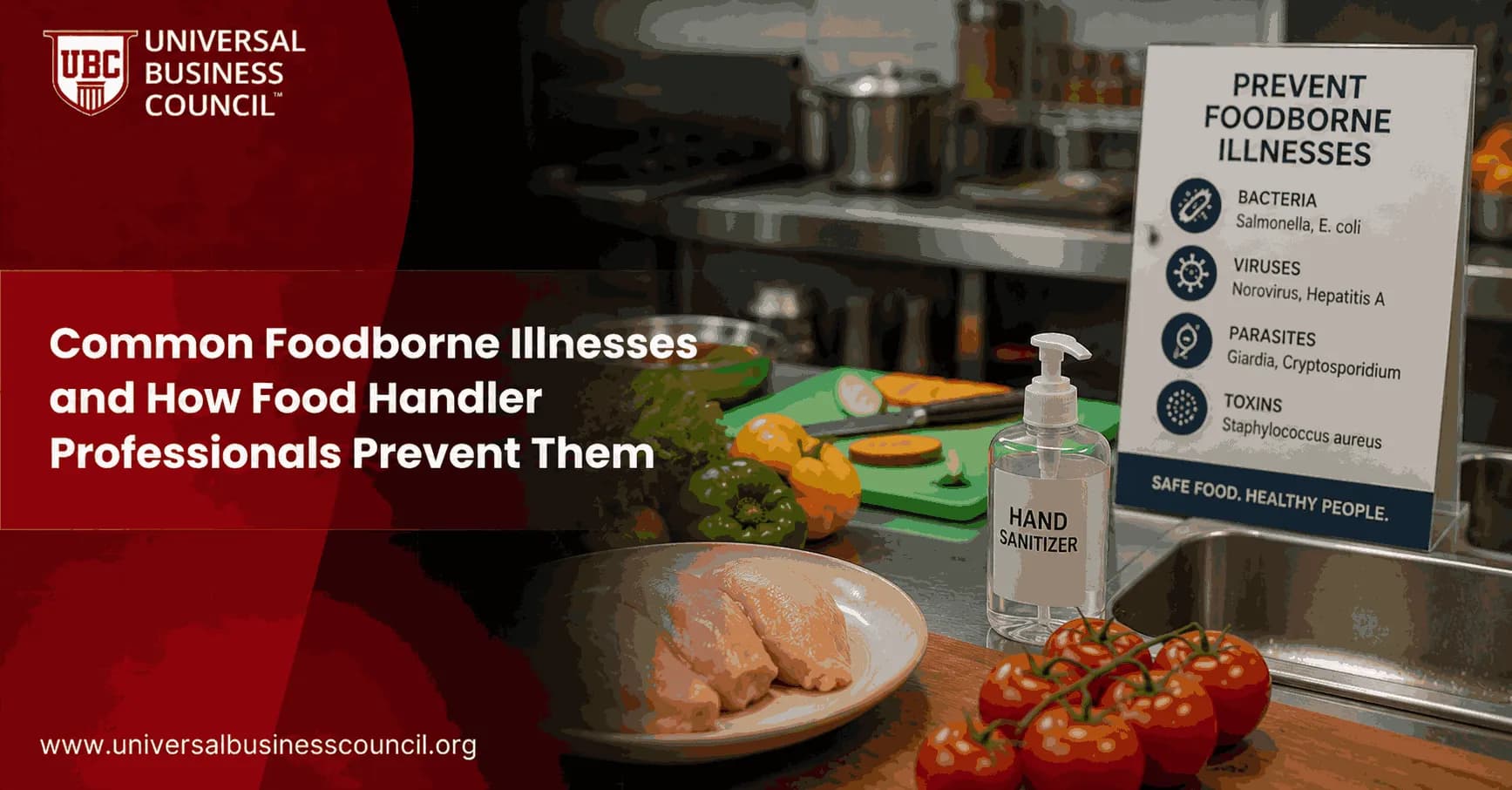
Foodborne illnesses are not rare accidents. They are predictable failures in hygiene, temperature control, sourcing, or supervision. The World Health Organization estimates that about 600 million people become ill each year after eating contaminated food, with roughly 420,000 deaths. In the United States, the Centers for Disease Control and Prevention estimates 48 million illnesses, 128,000 hospitalizations, and 3,000 deaths each year from foodborne pathogens.
For food handler professionals, the lesson is blunt: most outbreaks start with ordinary work done badly. A sick employee plates ready to eat food. A deep pan of stew cools too slowly. Raw chicken juice reaches a salad station. A slicer gets wiped, but not sanitized. Small misses become public health events.

Building these habits early through a Certified Food Handler Professional™ program helps food service professionals develop the practical knowledge needed to reduce contamination risks and maintain consistent food safety standards in day-to-day operations.
Why Foodborne Illnesses Still Matter
Foodborne illnesses carry both health and business costs. The USDA Economic Research Service has estimated billions of dollars in annual US costs from major bacterial pathogens, including Campylobacter, Salmonella, Listeria monocytogenes, and E. coli O157:H7. That figure reflects medical expenses, lost productivity, and premature death.
The human cost is harder to put on a balance sheet. WHO estimates that unsafe food causes tens of millions of years of healthy life lost each year, with children under 5 carrying a large share of foodborne disease cases despite being a small part of the population. In a food service operation, the same risk shows up as customer complaints, inspection findings, staff absences, discarded food, and sometimes litigation.
Reported US outbreak-associated illnesses have declined over recent decades, according to CDC outbreak surveillance data. Good news, yes. But surveillance misses many illnesses, and CDC still describes foodborne disease as common, costly, and preventable.
The Most Common Foodborne Illnesses Food Handlers Must Know
Norovirus
Norovirus is the leading cause of foodborne illness in the United States and worldwide. CDC estimates about 5.5 million domestically acquired foodborne illnesses each year in the US from norovirus.
The hard part is that norovirus does not need a complex supply chain failure. It often spreads through infected food workers, contaminated hands, shared surfaces, and ready to eat foods such as salads, sandwiches, fruit, and bakery items. Alcohol hand sanitizer is not a substitute for proper handwashing with soap and water.
Campylobacter
Campylobacter is one of the most common bacterial causes of diarrhea, and poultry is a frequent source. It accounts for hundreds of thousands of US cases per year. Most healthy adults recover, but the infection can trigger Guillain-Barre syndrome, a serious neurologic condition.
For handlers, the practical controls are simple but non-negotiable: keep raw poultry separate, cook it fully, wash hands after handling it, and clean and sanitize every surface it touches.
Salmonella
Salmonella causes more than 1 million US infections each year, according to CDC estimates. It is linked to raw or undercooked eggs, poultry, meat, and contaminated produce. It can also cause severe bloodstream infection and long term complications such as reactive arthritis.
Salmonella is the reason you do not guess doneness. Color is not enough. Use a calibrated thermometer.
Shiga Toxin Producing E. coli, Including E. coli O157:H7
Shiga toxin producing E. coli, often shortened to STEC, can cause severe illness even at low infectious doses. CDC estimates hundreds of thousands of STEC illnesses per year in the US. E. coli O157:H7 is especially concerning because it can lead to hemolytic uremic syndrome and kidney failure, particularly in children.
Common sources include undercooked ground beef, raw milk, contaminated produce, and contaminated water. Ground beef is riskier than a steak because bacteria on the surface can be mixed through the product during grinding.
Clostridium perfringens
Clostridium perfringens causes close to a million US illnesses each year. It is the classic banquet, buffet, and batch-cooking pathogen. Large volumes of meat, gravy, beans, soups, and stews can stay warm for too long in the center, giving spores time to germinate and multiply.
This is where inexperienced kitchens get caught. A six-inch-deep container may look cold at the edge while the center sits in the danger zone. Use shallow pans. Stir. Vent. Measure the middle.
Listeria monocytogenes
Listeria causes fewer cases than norovirus or Salmonella, but it is far more dangerous for pregnant people, newborns, older adults, and immunocompromised customers. It accounts for roughly a thousand US illnesses per year, and food safety agencies note high hospitalization and death rates.
Listeria is associated with ready to eat foods such as deli meats, soft cheeses, and refrigerated products. It can grow at cold temperatures, which makes environmental cleaning and date control critical in deli, catering, and chilled food operations.
Food safety today extends beyond controlling pathogens alone. Many food businesses also encourage staff to pursue a Certified Allergen Management Professional™ credential to strengthen their understanding of allergen risks, cross-contact prevention, and safe communication with customers who have food allergies.
Five Risk Factors Behind Many Foodborne Illnesses
Environmental health guidance commonly points to five recurring risk factors in food service:
Improper holding time and temperature: Hot food held below 135°F, cold food held above 41°F, slow cooling, and extended room temperature storage.
Poor personal hygiene: Weak handwashing, bare-hand contact with ready to eat foods, and staff working while ill.
Inadequate cooking: Poultry, ground meat, eggs, and seafood not cooked to safe internal temperatures.
Contaminated equipment: Cutting boards, slicers, knives, thermometers, and prep tables that are not cleaned and sanitized correctly.
Food from unsafe sources: Unapproved suppliers, raw milk, untraceable products, or ingredients with poor temperature history.
If you manage food handlers, build your training around these five. They explain most day-to-day risk better than a long microbiology lecture.
How Food Handler Professionals Prevent Foodborne Illnesses
1. Practice Strict Hand Hygiene
Handwashing is basic, but it is not easy to enforce during a rush. Food handlers should wash with soap and water after using the restroom, handling raw animal foods, touching waste, cleaning, coughing, eating, drinking, or switching tasks.
Supervisors should also exclude or restrict workers with vomiting, diarrhea, jaundice, sore throat with fever, or diagnosed reportable infections. This matters most for norovirus. One symptomatic worker can contaminate dozens of ready to eat portions before anyone realizes what happened.
2. Control Time and Temperature
Temperature control is the spine of food safety. Keep cold foods at 41°F or below and hot foods at 135°F or above. Cook poultry to at least 165°F and ground meats to 160°F. FDA Food Code cooling standards commonly require cooling cooked food from 135°F to 70°F within 2 hours, then from 70°F to 41°F within a total of 6 hours.
Use thermometers, not habits. Calibrate them. The ice-point method should read 32°F in an ice water slurry. This is one of those details that trips certification candidates, because they remember the number but forget that the probe must sit in the slurry without touching the container.
3. Prevent Cross Contamination
Separate raw and ready to eat foods at every step:
Store raw poultry below raw beef, seafood, produce, and ready to eat food.
Use color-coded or clearly assigned boards and utensils.
Clean and sanitize prep surfaces between tasks.
Never use the same tongs for raw and cooked products.
Keep wiping cloths in sanitizer solution at the correct concentration.
To be blunt, cross contamination is often a workflow problem. If the salad station sits beside raw chicken prep, training alone will not fix it. Change the layout or the sequence.
4. Buy From Approved Sources
Food handlers cannot inspect safety into a product that arrived unsafe. Purchase from approved suppliers with traceability, temperature control, and documented food safety practices. Avoid unpasteurized dairy unless permitted and controlled under local rules. Treat raw flour, raw dough, raw chicken, and raw milk as high risk, as CDC consumer guidance also warns.
5. Use HACCP Thinking, Even in Small Operations
Hazard Analysis and Critical Control Point, known as HACCP, is not just for factories. Its logic works in a cafe, school kitchen, hospital, hotel, or catering operation.
Identify hazards, such as Salmonella in raw poultry.
Define critical control points, such as cooking.
Set critical limits, such as 165°F for poultry.
Monitor with calibrated tools.
Take corrective action when limits are missed.
Keep records that prove the system worked.
Records matter. If a cooler runs at 48°F overnight, a log tells you when the problem started and which products need to be discarded. Without records, you are guessing.
As food safety systems increasingly rely on digital temperature sensors, automated monitoring platforms, cloud-based HACCP records, and AI-assisted compliance tools, a Deep Tech Certification can help professionals understand the technologies supporting modern food safety management and operational efficiency.
Training, Certification, and Food Safety Culture
Training turns rules into repeatable behavior. A strong food handler program should cover pathogen basics, handwashing, illness reporting, allergen awareness, time-temperature control, cleaning and sanitizing, receiving checks, and incident response.
Certification also gives managers a common language. When a supervisor says, this is a critical limit, staff should know it is not a preference. It is a control point tied to customer safety.
Food safety connects to broader professional development in operations management, quality management, compliance, and risk management. It is not only a kitchen issue. It is a management system issue, and the Universal Business Council certification catalog covers those adjacent disciplines.
What Food Handler Professionals Should Do Next
Start with a shift-level audit. Pick one day this week and check the basics without warning: handwashing access, sanitizer concentration, thermometer calibration, cooler logs, hot holding temperatures, illness reporting, and raw-to-ready storage order.
Fix the first failure you find. Then document the fix, train the team, and verify it again. That cycle is how food handler professionals prevent common foodborne illnesses in real operations, not just on paper.
As commercial kitchens continue adopting digital food safety systems and smart operational technologies, complementing food safety expertise with a Tech Certification can prepare professionals for supervisory and management roles that combine compliance, technology, and operational excellence.
FAQs
What Are Foodborne Illnesses?
Foodborne illnesses, sometimes called food poisoning, are illnesses caused by consuming contaminated food or beverages. Contamination may result from harmful bacteria, viruses, parasites, toxins, or other hazards.
Why Should Food Handler Professionals Understand Foodborne Illnesses?
Understanding foodborne illnesses helps food handlers follow safe food handling practices, reduce contamination risks, protect public health, and comply with workplace food safety standards.
What Are the Most Common Foodborne Illnesses?
Some commonly recognized foodborne illnesses are associated with:
Salmonella
Escherichia coli (E. coli)
Listeria monocytogenes
Norovirus
Campylobacter
Clostridium perfringens
Staphylococcus aureus
The prevalence of specific illnesses varies by region and food source.
What Causes Foodborne Illnesses?
Foodborne illnesses can result from:
Poor personal hygiene
Cross-contamination
Improper cooking
Unsafe food storage
Inadequate cleaning and sanitizing
Contaminated water
Improper temperature control
What Are the Common Symptoms of Foodborne Illness?
Symptoms may include:
Nausea
Vomiting
Diarrhea
Stomach cramps
Fever
Fatigue
Symptoms vary depending on the cause, and some illnesses can be more serious for vulnerable individuals.
How Can Proper Handwashing Prevent Foodborne Illnesses?
Thorough handwashing removes harmful microorganisms from the hands, reducing the chance of transferring contaminants to food, utensils, and preparation surfaces.
How Does Preventing Cross-Contamination Improve Food Safety?
Separating raw and ready-to-eat foods, using clean equipment, and following proper sanitation procedures help prevent harmful microorganisms from spreading during food preparation.
Why Is Temperature Control Important?
Proper cooking, cooling, holding, and storage temperatures help reduce the growth of harmful microorganisms. Food handlers should follow the temperature requirements established by local food safety authorities and workplace procedures.
How Does Cleaning and Sanitizing Prevent Foodborne Illness?
Cleaning removes visible dirt and food residue, while sanitizing reduces microorganisms on cleaned surfaces, helping maintain a hygienic food preparation environment.
Why Is Personal Hygiene Essential for Food Handlers?
Good hygiene practices, including clean uniforms, proper handwashing, illness reporting, and appropriate grooming, reduce the likelihood of contaminating food.
How Can Safe Food Storage Reduce Foodborne Illness Risks?
Proper food storage helps maintain food quality, prevents cross-contamination, supports stock rotation, and keeps food under appropriate environmental conditions.
What Role Does Allergen Management Play in Food Safety?
Although food allergens do not cause foodborne illnesses, proper allergen management helps prevent allergic reactions by reducing allergen cross-contact and ensuring accurate communication about ingredients.
Why Should Food Handlers Report Illness?
Food handlers experiencing symptoms such as vomiting, diarrhea, or fever should follow workplace illness reporting policies and applicable regulations to reduce the risk of contaminating food.
How Can Food Handler Training Reduce Foodborne Illnesses?
Training helps employees understand safe food handling procedures, sanitation standards, contamination risks, and food safety regulations, improving consistency across food service operations.
What Equipment Helps Maintain Food Safety?
Common food safety equipment includes:
Food thermometers
Refrigerators
Freezers
Handwashing stations
Sanitizing supplies
Temperature monitoring systems
Food storage containers
What Common Mistakes Increase Foodborne Illness Risk?
Avoid:
Inadequate handwashing
Improper food storage
Cross-contamination
Poor temperature control
Infrequent cleaning and sanitizing
Working while ill when prohibited
How Can Restaurants Reduce Foodborne Illness Risks?
Restaurants can reduce risks by implementing food safety management systems, training employees regularly, maintaining equipment, monitoring temperatures, conducting sanitation checks, and following local health regulations.
How Does Technology Support Food Safety?
Digital temperature monitoring, automated alerts, inventory management systems, AI-assisted analytics, and IoT sensors can help businesses monitor food safety conditions more effectively and identify potential issues earlier.
What Is the Most Effective Way to Prevent Foodborne Illnesses?
Consistently applying food safety principles, including proper hygiene, temperature control, sanitation, safe storage, and ongoing staff training, is the most effective approach. Food safety rarely depends on one dramatic action. It is usually the result of many small, consistent habits performed correctly every day.
How Do Food Handler Professionals Protect Customers from Foodborne Illnesses?
Food handler professionals protect customers by following established food safety procedures, maintaining high hygiene standards, preventing cross-contamination, monitoring food temperatures, storing food correctly, and participating in continuous training. By combining these best practices with compliance with local food safety regulations, food service professionals play a vital role in reducing foodborne illness risks and maintaining a safe, trusted dining environment.
Related Articles
View All
Food
Workplace Safety and Sanitation Standards for Food Handler Professionals
Learn the key workplace safety and sanitation standards food handler professionals must follow for hygiene, illness control, cleaning, and temperature safety.

Food
Cross-Contamination Prevention Tips for Certified Food Handler Professionals
Practical cross-contamination prevention guidance for certified food handlers, covering storage, hand hygiene, sanitizing, allergens, SOPs, and exam prep.

Food
Food Storage and Temperature Control Best Practices for Food Handler Professionals
Food storage and temperature control guidance for food handlers, including danger zones, cold holding, hot holding, cooling, labeling, FIFO, and HACCP logs.
Trending Articles
The Role of Blockchain in Ethical AI Development
How blockchain technology is being used to promote transparency and accountability in artificial intelligence systems.
AWS Career Roadmap
A step-by-step guide to building a successful career in Amazon Web Services cloud computing.
Top 5 DeFi Platforms
Explore the leading decentralized finance platforms and what makes each one unique in the evolving DeFi landscape.