

Cross-Contamination Prevention Tips for Certified Food Handler Professionals
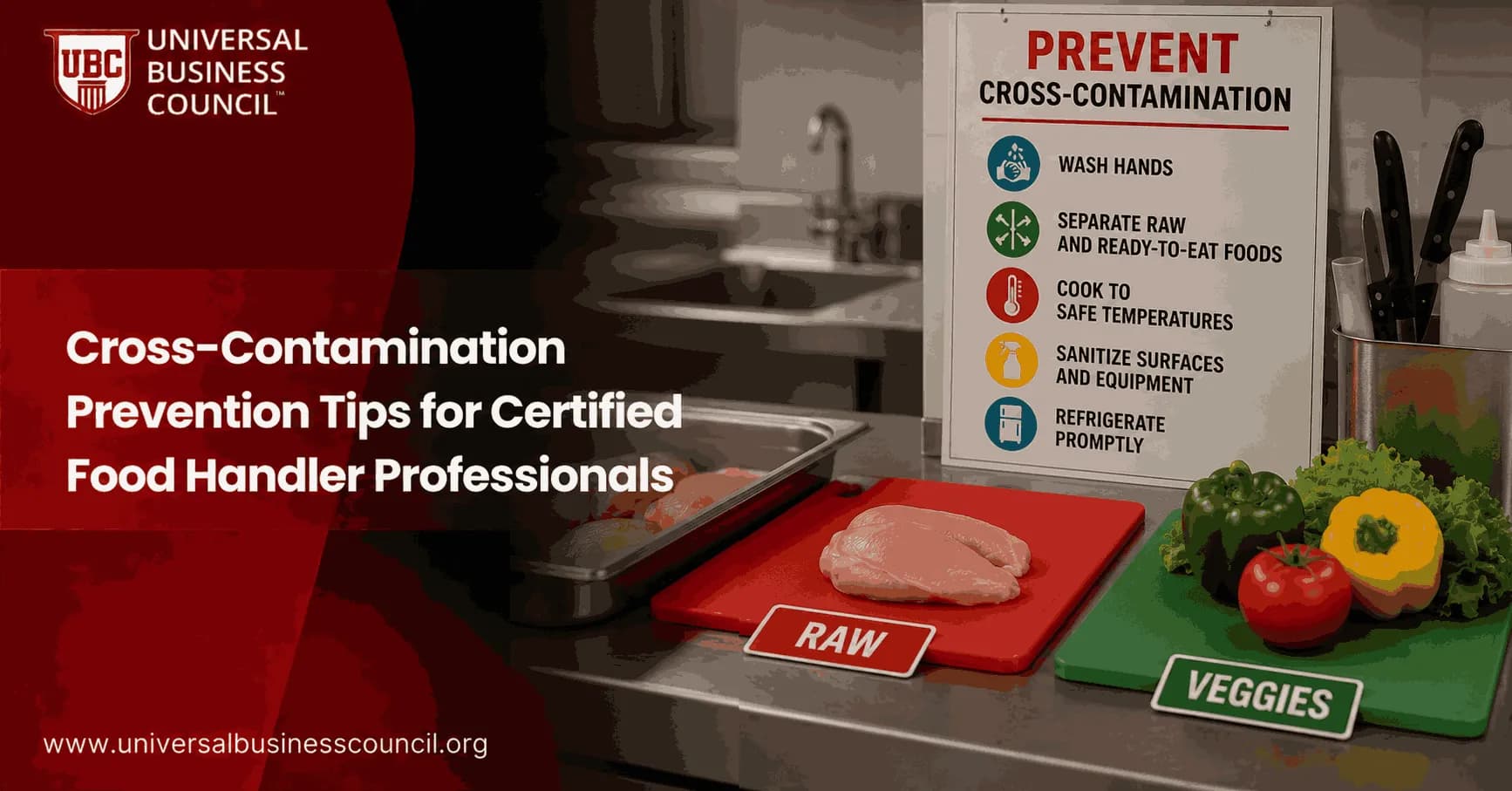
Cross-contamination prevention is one of the first skills a certified food handler must master because a single missed step can move pathogens or allergens from a raw ingredient, dirty surface, or unwashed hand onto food that will not be cooked again. That is the risk. No drama needed.
The CDC estimates that foodborne illness affects about 48 million people in the United States each year, leading to roughly 128,000 hospitalizations and 3,000 deaths. Those numbers explain why food handler certification programs, health departments, and the FDA Food Code place such heavy emphasis on separating raw and ready-to-eat food, handwashing, cleaning, sanitizing, and allergen control.

Professionals looking to strengthen these practical food safety skills often begin with the Certified Food Handler Professional™, which reinforces the everyday standards required to prevent contamination in commercial food environments.
What Cross-Contamination Means in Daily Food Handling
Cross-contamination is the transfer of harmful microorganisms or allergens from one food, surface, utensil, piece of equipment, or person to another. The classic example is raw chicken juice reaching a salad prep area. The salad will not receive a kill step, so any transferred Salmonella or Campylobacter can go straight to the customer.
Allergen cross-contact is related but not identical. It happens when an allergen, such as peanut, milk, egg, shellfish, soy, wheat, sesame, fish, or tree nuts, is unintentionally transferred to food that should not contain it. A shared fryer used for shrimp and fries is a common problem. So is a dessert spoon moved from a nut topping bin to a plain ice cream container.
Why Certification Programs Treat This as a Core Competency
Most food handler courses in the United States cover contamination, hygiene, storage order, time and temperature control, cleaning and sanitizing, and allergen basics. Many states require a food handler card within 30 to 60 days of employment, and several jurisdictions require ANAB-accredited certificate programs that follow ASTM E2659.
Health departments do not ask for these credentials just to collect paperwork. They expect you to apply the training during prep, service, cooling, cleaning, and closing. In some jurisdictions, working without the required food handler card can be cited during an inspection.
Most food handler exams require about a 70 percent passing score. The questions that trip people up are rarely obscure. They are practical: where raw poultry belongs in the cooler, when to wash hands after changing gloves, and what must happen before a prep table can be sanitized.
As allergen awareness becomes an increasingly important part of food safety programs, the Certified Allergen Management Professional™ can help food service professionals build deeper expertise in allergen control, cross-contact prevention, and safe customer communication.
Tip 1: Store Food in the Correct Refrigerator Order
Bad storage creates quiet failures. You may not see the drip from a tray of raw chicken onto a box of washed lettuce until it is too late.
Use this top-to-bottom order in refrigerators and walk-ins:
Ready-to-eat foods, cooked foods, washed produce, desserts, and covered sauces
Seafood
Whole cuts of beef and pork
Ground meats and injected meats
Raw poultry at the bottom
The logic is simple: foods with higher final cooking temperature requirements go lower, so their juices cannot drip onto foods that need less cooking or no cooking at all.
Use sealed containers. Label pans clearly. Do not rely on memory during a Friday dinner rush.
Tip 2: Separate Raw and Ready-to-Eat Prep Work
If your kitchen has enough space, assign separate prep zones for raw proteins and ready-to-eat foods. If space is tight, separate by time instead. Finish raw prep, remove dirty tools, clean, rinse, sanitize, let the surface air dry, and only then start salad or sandwich prep.
Use separate cutting boards and utensils. Color-coding helps, but it is not magic. A red board only works if staff actually reserve it for raw meat and clean it correctly after use.
A common failure looks like this: raw chicken is portioned on a board, the knife is wiped with a towel, then the same board is used to slice cucumbers. That towel made the problem worse. It spread contamination instead of removing it.
Tip 3: Wash Hands at the Moments That Matter
Handwashing is not a nice extra. It is a control step.
Use the standard method taught in food handler training:
Wet hands with clean running water.
Apply soap.
Scrub hands, wrists, between fingers, and under nails for at least 20 seconds.
Rinse well.
Dry with a disposable towel or approved hand dryer.
Wash your hands before food prep and after handling raw meat, poultry, seafood, eggs, trash, cleaning chemicals, money, phones, face, hair, or body. Also wash after using the restroom, after eating, after smoking or vaping, and after changing tasks.
Gloves do not replace handwashing. Change gloves when you change tasks, when gloves tear, after touching non-food surfaces, and before handling ready-to-eat food. Wash hands before putting on a new pair. To be blunt, a dirty glove is just a washable-looking dirty hand.
Tip 4: Clean and Sanitize in the Right Sequence
Sanitizer is not designed to cut through grease, crumbs, raw protein residue, or dried sauce. Clean first. Then sanitize.
Use this sequence for food-contact surfaces:
Scrape or remove food debris.
Wash with detergent and clean water.
Rinse with clean water if required by the detergent or local procedure.
Apply sanitizer at the correct concentration.
Allow proper contact time.
Air dry. Do not towel dry a sanitized surface.
Common sanitizer ranges include chlorine at about 50 to 100 ppm and quaternary ammonium compounds around 200 ppm, depending on label directions and local code. Use test strips. Do not guess. In real kitchens, I have seen a quat bucket look fine but test below the target line after heavy towel use. At that point, it is colored water with confidence.
Tip 5: Control Time and Temperature, Even Though It Is Not Enough Alone
Time and temperature control does not stop cross-contamination by itself. A contaminated salad is still unsafe even if it stays cold. But temperature control can limit bacterial growth when a small contamination event occurs.
Certified food handlers should know the temperature danger zone, safe cooking temperatures, cooling procedures, reheating requirements, and hot and cold holding limits used in their jurisdiction. The FDA Food Code is the main reference many programs align with, while state and local rules may add detail.
Use calibrated thermometers. Log cooling times. Do not cool large stockpots in the walk-in and hope for the best. Hope is not a control.
Tip 6: Treat Allergens as a Separate Control System
Allergen cross-contact needs deliberate procedures. General cleaning helps, but it may not be enough when crumbs, oils, powders, or shared utensils are involved.
Build these habits into service:
Store allergen-containing ingredients in sealed, labeled containers.
Use dedicated or color-coded tools for allergen-sensitive orders when possible.
Prepare allergen-free orders on a cleaned and sanitized surface.
Change gloves and wash hands before handling allergen-free food.
Use fresh utensils, pans, parchment, or foil barriers where appropriate.
Never guess about ingredients or substitutions.
If the kitchen uses shared fryers, shared grills, or shared garnish containers, say so honestly. The wrong answer to a guest with a severe allergy is not a small service mistake. It can become a medical emergency.
Tip 7: Design Workflow So Food Does Not Cross Paths
Good workflow prevents mistakes before they happen. Raw chicken should not travel past the salad station. Dirty dish carts should not cut through plating space. Receiving boxes should not sit on prep tables. These are layout problems, not just staff problems.
Managers and certified food protection leaders should check:
Whether raw and ready-to-eat prep areas are physically separated
Whether hand sinks are stocked and easy to reach
Whether sanitizer buckets are labeled and tested
Whether staff know the storage order in the walk-in
Whether allergen orders have a clear communication path from server to kitchen
This is where food safety connects with operations management. Universal Business Council readers building broader capability can connect this topic with internal training content on process control, quality management, risk management, and operations leadership.
Modern kitchens are also adopting digital temperature monitoring, automated sanitation tracking, AI-assisted inspections, and connected food safety systems. A Deep Tech Certification can help professionals understand the technologies supporting today's compliance and operational excellence.
Tip 8: Use SOPs and Checks, Not Memory
Standard operating procedures turn training into repeatable behavior. A good SOP says who does the task, when it happens, what tools are used, what standard must be met, and what correction is required if the standard is missed.
For cross-contamination prevention, write SOPs for:
Receiving and storing raw animal foods
Prep table cleaning and sanitizing between tasks
Cutting board and knife use
Glove changes and handwashing
Allergen order handling
Ill employee reporting and restriction
Thermometer cleaning and calibration
Keep the forms short. A one-page checklist that gets used beats a binder that stays in the office.
Tip 9: Build Food Safety Culture on the Line
Training matters, but behavior decides the outcome. People skip steps when they are rushed, understaffed, or unclear about priorities. If managers praise speed but ignore unsafe shortcuts, staff learn the real rule quickly.
Use short coaching moments. Correct issues immediately and specifically: Wash hands and change gloves before moving from raw shrimp to the salad station. That works better than a vague reminder to be careful.
Health departments increasingly expect food businesses to show active control, not just certificates on file. Texas, for example, has used outbreak history and administrative rules to reinforce employee training requirements, including hygiene and cross-contamination prevention.
What to Study Before Your Food Handler Exam
If you are preparing for certification, focus on the practical topics most likely to appear in questions and inspections:
Correct cooler storage order
When and how to wash hands
Proper glove use
Cleaning versus sanitizing
Safe sanitizer concentration and test strip use
Raw-to-ready-to-eat contamination scenarios
Major food allergens and cross-contact controls
Time and temperature control basics
Illness reporting and personal hygiene
Do not memorize definitions only. Picture the work. If a question describes a cook moving from raw burgers to buns, your answer should be automatic: stop, remove gloves, wash hands, put on clean gloves, and use clean utensils.
Next Step for Certified Food Handler Professionals
Choose one shift this week and audit only cross-contamination prevention. Watch storage, hands, boards, knives, towels, sanitizer buckets, and allergen orders. Write down three fixes. Then train the team on those fixes before the next service.
If you manage people, go beyond the food handler card. Connect cross-contamination prevention with documented SOPs, supervisor checks, and Universal Business Council learning paths in food safety, quality systems, and operations management. The certificate proves you learned the rule. The daily system proves you can run it.
Pairing food safety expertise with a relevant Tech Certification can further prepare professionals for leadership roles where operational efficiency, digital compliance systems, and quality management increasingly work together.
FAQs
How Can Certified Food Handler Professionals Prevent Cross-Contamination?
Certified food handlers can reduce the risk of cross-contamination by practicing proper hand hygiene, separating raw and ready-to-eat foods, using clean equipment, following sanitation procedures, and complying with workplace food safety guidelines.
What Is Cross-Contamination in Food Handling?
Cross-contamination occurs when harmful microorganisms, allergens, or other contaminants are transferred from one food, surface, utensil, or person to another, potentially increasing the risk of foodborne illness.
Why Is Cross-Contamination Prevention Important?
Preventing cross-contamination helps protect customers from foodborne illnesses, supports food safety compliance, preserves food quality, and maintains customer trust.
What Are the Most Common Sources of Cross-Contamination?
Common sources include:
Raw meat, poultry, and seafood
Unwashed hands
Dirty utensils
Cutting boards
Food preparation surfaces
Improper food storage
Cleaning cloths
Food allergens
How Often Should Food Handlers Wash Their Hands?
Food handlers should wash their hands before handling food and after activities such as handling raw foods, using the restroom, touching garbage, cleaning, coughing, sneezing, or touching contaminated surfaces.
Why Should Raw and Ready-to-Eat Foods Be Separated?
Separating raw foods from ready-to-eat foods helps reduce the transfer of harmful microorganisms that may be present in raw ingredients.
How Can Cutting Boards Help Prevent Cross-Contamination?
Using separate cutting boards for raw meat, seafood, poultry, vegetables, and ready-to-eat foods helps minimize the risk of transferring contaminants between foods.
Why Should Utensils Be Cleaned and Sanitized Frequently?
Regular cleaning removes food residue, while sanitizing reduces microorganisms on food-contact surfaces. Both steps are essential to maintaining safe food preparation areas.
How Should Food Be Stored to Reduce Cross-Contamination?
Food should be stored according to workplace procedures and local food safety regulations. Generally, raw foods should be kept separate from ready-to-eat foods, and products should be properly covered, labeled, and stored at appropriate temperatures.
How Does Temperature Control Help Prevent Contamination?
Maintaining appropriate storage, cooking, cooling, and reheating temperatures helps limit the growth of harmful microorganisms and supports safe food handling practices.
What Role Do Gloves Play in Food Safety?
Disposable gloves can help reduce direct hand contact with food when used correctly. Gloves should be changed frequently and never replace proper handwashing.
How Should Food Allergens Be Managed?
Food handlers should prevent allergen cross-contact by using dedicated equipment where appropriate, cleaning surfaces thoroughly, following workplace allergen procedures, and communicating accurately about ingredients.
Why Is Equipment Maintenance Important?
Properly maintained equipment is easier to clean, functions more effectively, and reduces contamination risks associated with damaged or malfunctioning surfaces.
How Can Cleaning Schedules Improve Food Safety?
Routine cleaning schedules help ensure that food preparation areas, equipment, storage areas, and utensils remain consistently clean and sanitized throughout daily operations.
What Personal Hygiene Practices Reduce Cross-Contamination?
Important practices include:
Frequent handwashing
Wearing clean uniforms
Using hair restraints
Covering cuts appropriately
Avoiding food preparation when ill
Following workplace hygiene policies
What Workplace Habits Help Prevent Cross-Contamination?
Helpful habits include:
Cleaning spills promptly
Storing chemicals separately from food
Using designated preparation areas
Following standard operating procedures
Monitoring sanitation regularly
What Common Mistakes Should Food Handlers Avoid?
Avoid:
Skipping handwashing
Using the same utensils for raw and cooked foods without cleaning
Improper food storage
Reusing contaminated gloves
Ignoring cleaning schedules
Mishandling food allergens
How Can Ongoing Training Improve Cross-Contamination Prevention?
Regular training reinforces food safety knowledge, introduces updated regulations, strengthens workplace consistency, and helps employees maintain safe food handling practices.
What Is the Most Effective Daily Habit for Preventing Cross-Contamination?
Consistently following established food safety procedures throughout every shift is one of the most effective ways to reduce contamination risks. Small actions, such as washing hands at the right time or changing utensils between tasks, often make a significant difference in maintaining food safety. Clean habits are easier to maintain than repairing the consequences of unsafe ones.
How Can Certified Food Handler Professionals Maintain the Highest Food Safety Standards?
Certified food handlers can maintain high standards by combining proper hygiene, safe food storage, temperature control, effective cleaning and sanitizing, allergen management, and continuous professional education. By following workplace procedures and staying informed about evolving food safety regulations, professionals help protect customers, support regulatory compliance, and contribute to a safer and more reliable food service environment.
Related Articles
View All
Food
Workplace Safety and Sanitation Standards for Food Handler Professionals
Learn the key workplace safety and sanitation standards food handler professionals must follow for hygiene, illness control, cleaning, and temperature safety.

Food
Food Handler Professional Exam Tips to Study and Pass with Confidence
Practical Food Handler Professional Exam Tips covering study plans, key temperatures, allergens, practice exams, and test-day strategies to pass confidently.

Food
Food Storage and Temperature Control Best Practices for Food Handler Professionals
Food storage and temperature control guidance for food handlers, including danger zones, cold holding, hot holding, cooling, labeling, FIFO, and HACCP logs.
Trending Articles
The Role of Blockchain in Ethical AI Development
How blockchain technology is being used to promote transparency and accountability in artificial intelligence systems.
AWS Career Roadmap
A step-by-step guide to building a successful career in Amazon Web Services cloud computing.
Top 5 DeFi Platforms
Explore the leading decentralized finance platforms and what makes each one unique in the evolving DeFi landscape.