How to Become a Certified Food Handler Professional: Step-by-Step Career Path
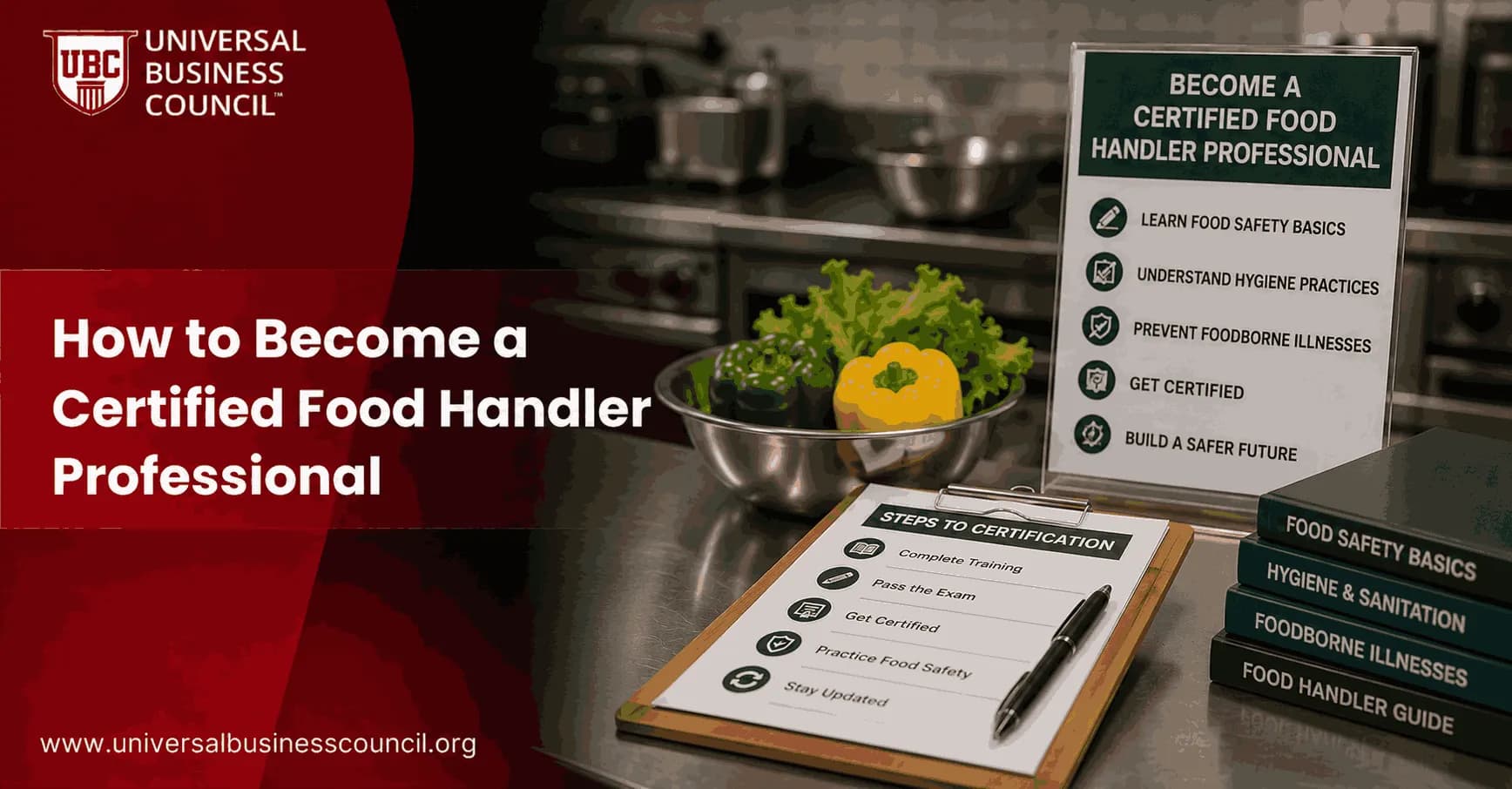
A certified food handler professional is someone trained to handle, prepare, store, and serve food in a way that reduces contamination risk and meets local health rules. If you work with unpackaged food, utensils, prep surfaces, or food equipment, you may need a food handler card before you can work independently.
The path is straightforward. Check your local requirement, take an approved course, pass the exam, keep proof on file, and renew on schedule. But the details matter. A card accepted in one county may not be accepted in another, and a missed renewal date can turn into a compliance problem during an inspection.

For people planning a long-term career in hospitality, catering, or commercial food production, becoming a Certified Food Handler Professional™ is a practical first step toward building strong food safety habits and meeting employer expectations from day one.
What a Certified Food Handler Professional Does
Food handler certification confirms that you understand the daily practices that keep food safe. Most approved training covers five core areas: food safety basics, personal hygiene, time and temperature control, cleaning and sanitation, and cross-contamination and allergens.
That sounds basic until you are in a real kitchen at 7:15 p.m. The rail is full, a prep cook is switching from raw chicken to lettuce, and nobody has logged the cooler temperature since lunch. Certification gives you the baseline habits to catch those risks before they become violations or, worse, illnesses.
Common certified food handler roles include:
Line cook or prep cook
Server, barista, deli worker, or buffet attendant
Catering assistant
School, hospital, or corporate cafeteria worker
Food production or packaging operator
Step 1: Confirm Your Local Food Handler Requirements
Start with your jurisdiction. Food handler rules are usually set by a state, province, county, city, or local health department. In the United States, statewide requirements exist in places such as California, Oregon, Washington, Texas, Alaska, Utah, Illinois, and Hawaii.
Deadlines vary. Some workers must complete training within 14 days of hire, as in Washington and Utah. Other states use a 30-day window, including California, Oregon, Texas, and Illinois. A few allow longer.
Do this before paying for a course:
Search your local health department website for approved food handler providers.
Check whether your employer requires a specific program.
Confirm whether the course is accepted statewide or only locally.
Look for ANAB accreditation or explicit health department approval where required.
California is a useful example. Most food handlers must obtain a card within 30 days of hire, and the card is generally valid for 3 years. Some counties, including San Bernardino, Riverside, and San Diego, have their own local card rules, so verify before you enroll.
Step 2: Choose an Approved Food Handler Course
Most entry-level courses are short, practical, and available online. Many take about 60 to 90 minutes. Well-known options include ServSafe Food Handler, StateFoodSafety, and providers approved by local health departments. In some areas, community colleges or municipal health departments also run in-person sessions.
Course fees are usually modest. Many food handler courses cost roughly $10 to $30, though some permits and local programs cost more. New York City food protection applications, for example, may run higher than a basic online food handler card in another state.
Choose based on acceptance, not brand recognition alone. A polished course is useless if your county inspector will not accept the certificate.
As food allergy awareness continues to grow across the industry, many employers also encourage experienced staff to pursue a Certified Allergen Management Professional™ credential to strengthen their understanding of allergen controls alongside everyday food safety practices.
Step 3: Learn the Core Food Safety Skills
Your training will focus on practical controls. Pay close attention to the topics below, because they appear on exams and in daily inspection checks.
Personal hygiene
You will learn when and how to wash hands, when to report illness, how to use gloves correctly, and why jewelry, uncovered hair, and poorly covered wounds create risk. New food workers often think gloves replace handwashing. They do not.
Time and temperature control
This is where many candidates lose points. You need to understand the temperature danger zone, hot holding, cold holding, cooling, reheating, and thermometer use. In many Food Code based settings, time and temperature control for safety foods should be kept out of the 41°F to 135°F danger zone as much as possible. Cooling is especially easy to mishandle. Hot food should typically cool from 135°F to 70°F within 2 hours, then to 41°F within 4 more hours.
Cross-contamination and allergens
You will study how pathogens move from raw foods, hands, boards, knives, towels, and storage shelves. Allergens demand the same discipline. A knife used on a peanut butter dessert can still be a serious risk if it is then used for an allergen-free order without proper washing and sanitizing.
Cleaning and sanitation
Cleaning removes soil. Sanitizing reduces microorganisms to safer levels. The difference shows up on exams, and it shows up in kitchens. A surface can look clean and still fail as a food-contact surface if it was not sanitized correctly.
Step 4: Pass the Food Handler Exam
After the course, you will take an assessment. Basic food handler exams are often multiple choice and may be non-proctored. ServSafe Food Handler, for example, uses a 40-question assessment with no time limit and a 75 percent passing score. Some California food handler exams use 40 questions with a 70 percent passing threshold.
Use this exam strategy:
Memorize the high-risk temperature rules first.
Read questions for the word first, especially in illness, spill, and contamination scenarios.
Do not assume the clean-looking answer is the safe answer.
Watch for allergen questions, because the correct action is often to prevent contact, not just remove visible food.
To be blunt, the exam is not hard if you take the course seriously. The people who fail usually rush through the modules while doing something else.
Step 5: Get Your Card and Give Proof to Your Employer
Once you pass, you usually receive a printable certificate or a digital food handler card. Save it in more than one place. Your employer may need to keep a copy for inspection, and you may need to show proof during onboarding.
A good habit: store the certificate PDF in your phone files and email it to yourself. If you manage a team, keep a simple spreadsheet with employee name, provider, certificate date, expiration date, and a renewal reminder. Inspectors often ask for training records on the spot. Scrambling through old inboxes is a bad look.
Step 6: Renew Before It Expires
Food handler cards commonly last 2 to 3 years, depending on the jurisdiction. California cards are valid for 3 years. Food safety manager certifications often last 3 to 5 years and usually require a proctored exam to renew.
Set a calendar reminder 60 days before expiration. Do not wait until the week before a health inspection or a new job start date. Standards change, and renewal is a useful refresher, especially if you have moved into a lead role.
Career Path After Food Handler Certification
Entry-level certified food handler
This is the starting point. You work safely, follow standard operating procedures, and build speed without cutting corners. Managers notice the person who checks sanitizer concentration and labels prep containers correctly when the shift is slammed.
Lead food handler or shift supervisor
After you gain experience, you may train new staff, monitor station hygiene, check logs, and correct unsafe behavior. This is where soft skills matter. Barking at a coworker for a missed handwash rarely works. A better move is to stop the task, explain the risk in one sentence, and reset the station.
Certified food safety manager
If you want supervisory responsibility, move toward a Food Safety Manager Certification or a local food protection manager credential. Manager-level programs go deeper into regulatory compliance, hazard control, facility sanitation, documentation, and corrective action. Exams are commonly proctored and may require a passing score around 75 percent.
Trainer, QA, or compliance specialist
In larger food plants, hotels, hospitals, and multi-unit restaurant groups, food safety becomes a systems job. You may work with audit records, supplier controls, ISO-based processes, GFSI-benchmarked standards, corrective action reports, and staff training. If your long-term goal is operations leadership, pair food safety knowledge with management training. Universal Business Council readers may also consider related learning in operations management, compliance, leadership, and quality systems as internal development pathways.
How Online Training Is Changing the Path
Online food handler training is now common because it helps workers finish certification quickly and helps employers meet onboarding deadlines. Basic handler exams are often remote and non-proctored. Manager exams are more likely to use online proctoring, with identity checks and video monitoring.
Online is convenient, but do not treat it as a shortcut. The certificate may get you through onboarding. Your habits get you through inspection.
Food businesses are also adopting digital temperature monitoring, automated compliance systems, and smart kitchen technologies. Understanding these tools through a Deep Tech Certification can complement traditional food safety knowledge as commercial kitchens become increasingly technology-driven.
Common Mistakes to Avoid
Buying the wrong course: Always verify local acceptance before you pay.
Missing county exceptions: Some local cards override statewide assumptions.
Ignoring expiration dates: Renewal is part of being certified.
Studying only handwashing: Temperature control, allergens, and cross-contamination matter just as much.
Forgetting employer records: A certificate nobody can find may still create an inspection problem.
Best Next Step
If you want to become a certified food handler professional, start with your local health department's approved provider list today. Choose an accepted course, finish it within your required deadline, and save your certificate where both you and your employer can reach it. If you already hold your card and want to move up, target a food safety manager credential next, then build skills in operations, compliance, and team leadership through Universal Business Council professional development resources.
As food service operations continue to modernize with digital recordkeeping, smart monitoring, and automated compliance platforms, combining food safety expertise with a Tech Certification can help professionals prepare for leadership roles that blend operational excellence with modern technology.
FAQs
What Is a Certified Food Handler Professional?
A certified food handler professional is an individual who has completed approved food safety training and, where required, passed a certification exam demonstrating knowledge of safe food handling practices. Certification requirements vary by country, state, province, or local health authority.
Why Should You Become a Certified Food Handler?
Certification helps you understand food safety principles, improve your employment prospects, meet employer or legal requirements where applicable, and contribute to safer food service operations.
Who Needs Food Handler Certification?
Depending on local regulations and workplace policies, certification may be required or recommended for:
Restaurant employees
Café staff
Catering professionals
Hotel food service workers
Bakery employees
Food truck operators
Grocery and deli staff
School and hospital food service workers
What Are the Eligibility Requirements for Food Handler Certification?
Most food handler programs have minimal eligibility requirements and are open to beginners. Specific age limits or requirements depend on the training provider and local regulations.
What Topics Are Covered in Food Handler Training?
Typical training includes:
Personal hygiene
Foodborne illness prevention
Cross-contamination prevention
Cleaning and sanitizing
Safe food storage
Temperature control
Allergen awareness
Workplace safety
Basic food safety regulations
How Do You Enroll in a Food Handler Course?
Choose a training provider that is accepted by your employer or recognized by the relevant regulatory authority. Many providers offer both classroom-based and online learning options.
Can You Complete Food Handler Training Online?
Yes. Many approved organizations offer online courses. Before enrolling, verify that the certification is recognized in your jurisdiction or by your employer.
How Long Does Food Handler Training Take?
Course duration varies depending on the provider and local requirements. Many introductory programs can be completed in a few hours.
Is There an Exam After the Training?
Many food handler certification programs include an assessment or examination. The format and passing requirements differ among providers and jurisdictions.
How Can You Prepare for the Food Handler Exam?
Helpful preparation strategies include:
Reading the course materials carefully
Taking practice quizzes
Reviewing key food safety concepts
Understanding workplace scenarios
Revising regularly
What Happens After You Pass the Exam?
After successfully completing the course and assessment, you typically receive a certificate or credential, depending on the provider's process and local requirements.
How Long Is Food Handler Certification Valid?
Certification validity varies by jurisdiction and issuing organization. Many certificates require renewal after a specified number of years.
How Can You Renew Food Handler Certification?
Renewal requirements differ by location and provider. In many cases, renewal involves completing refresher training, passing a new assessment, or meeting updated regulatory requirements.
What Skills Does a Certified Food Handler Develop?
Certification helps develop skills in:
Safe food preparation
Hygiene practices
Food storage
Temperature monitoring
Sanitation
Allergen awareness
Workplace safety
Regulatory compliance
Can Food Handler Certification Improve Career Opportunities?
Yes. Certification can strengthen your qualifications for positions in restaurants, hotels, catering companies, hospitals, schools, retail food businesses, and other hospitality and food service settings.
Can You Advance Beyond Food Handler Certification?
Yes. Career progression may include earning additional qualifications such as:
Food Protection Manager Certification
HACCP Certification
Hospitality Management Certifications
Allergen Awareness Training
Occupational Safety Certifications
What Common Mistakes Should New Food Handlers Avoid?
Avoid:
Ignoring food safety procedures
Skipping handwashing
Improper food storage
Cross-contamination
Failing to monitor temperatures
Neglecting ongoing professional development
How Can You Keep Your Food Safety Knowledge Up to Date?
Stay informed by renewing certifications when required, participating in refresher training, reviewing updates from local food safety authorities, and following changes in industry standards and regulations.
Is Food Handler Certification Worth It?
For many individuals pursuing careers in hospitality and food service, yes. Certification demonstrates a commitment to food safety, provides foundational industry knowledge, and may improve employability. It is an investment in professional skills rather than simply another certificate to file away.
What Is the Best Path to Becoming a Certified Food Handler Professional?
The best approach is to complete a recognized food handler training program, study food safety fundamentals thoroughly, pass the required assessment, and apply those principles consistently in the workplace. By combining certification with hands-on experience, continuous learning, and a commitment to high food safety standards, you can build a strong foundation for a successful and rewarding career in the food service and hospitality industry.
Related Articles
View All
Food
What Is a Food Handler Professional? Roles, Responsibilities, and Career Benefits
Learn what a food handler professional does, key food safety responsibilities, required training, and how the role can lead to management careers.

Food
Career Growth After Food Handler Certification: Jobs, Skills, and Advancement Paths
Explore career growth after food handler certification, including entry-level jobs, promotion skills, quality roles, and practical advancement paths.

Food
Food Handler Professional Checklist: Daily Safety Practices for Food Service Teams
A practical food handler professional checklist for daily hygiene, temperature control, storage, cleaning, pest checks, and documentation.
Trending Articles
The Role of Blockchain in Ethical AI Development
How blockchain technology is being used to promote transparency and accountability in artificial intelligence systems.
AWS Career Roadmap
A step-by-step guide to building a successful career in Amazon Web Services cloud computing.
Top 5 DeFi Platforms
Explore the leading decentralized finance platforms and what makes each one unique in the evolving DeFi landscape.