

Why Food Handler Certification Matters for Hospitality and Food Service Careers
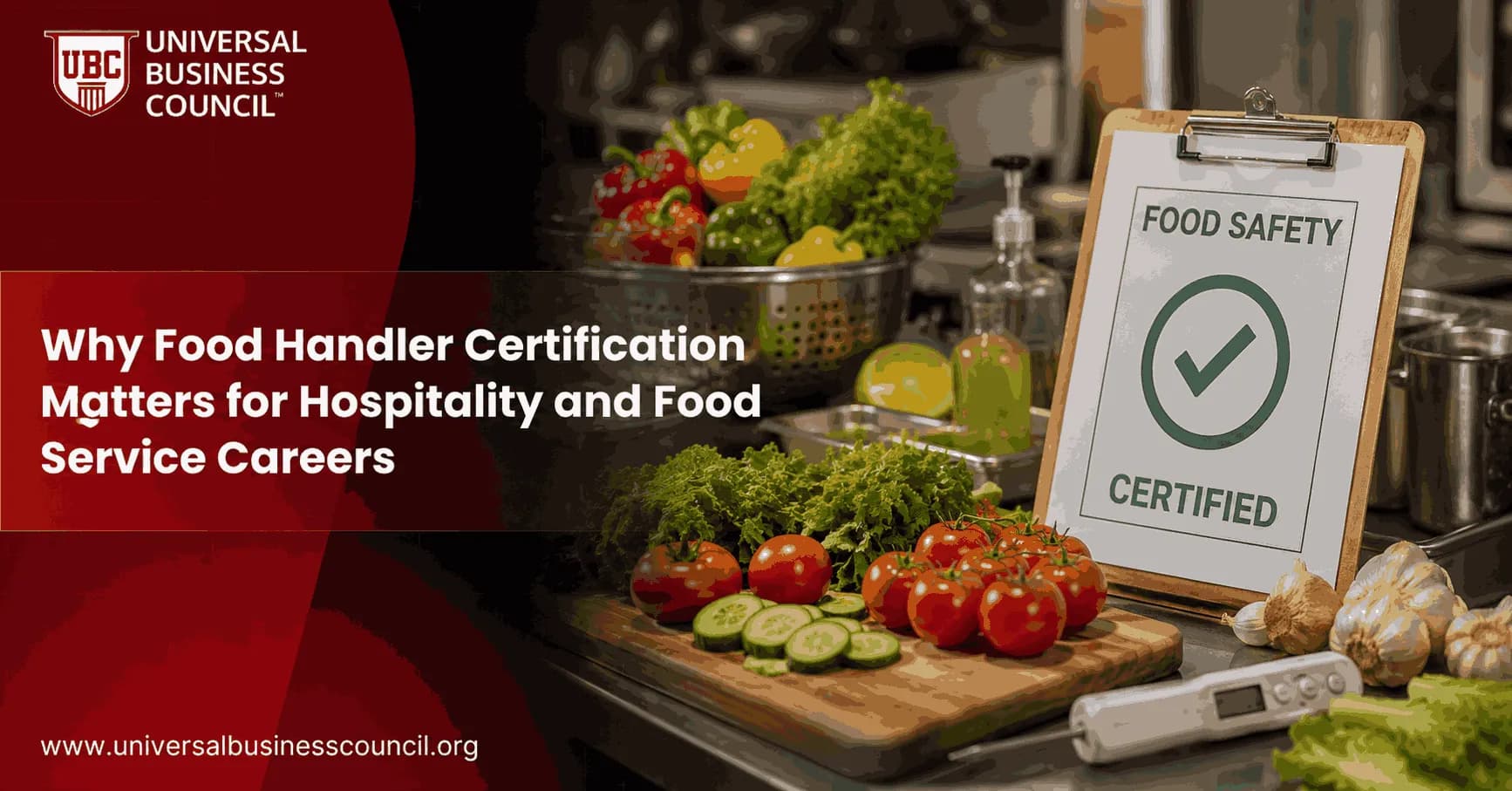
Food handler certification is no longer a nice extra for hospitality and food service careers. It is often the credential that gets you on the schedule, keeps a kitchen compliant, and shows a manager that you understand the daily habits that protect guests from foodborne illness.
If you have worked a lunch rush, you know food safety is not abstract. It is the cook who checks chicken at 165°F with a cleaned probe thermometer. It is the server who flags a shellfish allergy before the ticket reaches the line. It is the prep cook who labels yesterday's diced tomatoes instead of guessing. Small actions. Big consequences.

For professionals starting or advancing in hospitality, earning a Certified Food Handler Professional™ credential can strengthen these essential skills while demonstrating a commitment to recognized food safety standards from the very beginning of their careers.
What Food Handler Certification Actually Covers
A food handler certification verifies that you have been trained in safe food handling, preparation, service, storage, and sanitation. Most programs cover the same core risks because the science is consistent across restaurants, hotels, catering operations, school cafeterias, and institutional kitchens.
Typical food safety training includes:
Foodborne illness prevention, covering bacteria, viruses, parasites, and toxins
Time and temperature control, such as cold holding at 41°F or below and hot holding at 135°F or above under the FDA Food Code
Cross contamination prevention across raw poultry, ready-to-eat foods, cutting boards, and utensils
Cleaning and sanitizing, including sanitizer concentration, contact time, and test strips
Personal hygiene, especially handwashing, glove use, illness reporting, and hair restraint
Allergen management, which matters as much at the register as it does on the cook line
Many employers recognize training tied to providers and frameworks such as ServSafe, ANSI-accredited programs, ISO 22000, and food safety systems aligned with the Global Food Safety Initiative. The credential tells an operator that you have at least the baseline knowledge to work safely without being taught every rule from scratch.
Why Certification Has Become a Hiring Requirement
In many regions, food handler certification is tied directly to legal compliance. Across the United States, most states and many counties require some form of food handler training for people who prepare, serve, transport, or clean equipment used for food. Some jurisdictions require proof before an employee can start work.
California is a clear example. Most food service workers, including cooks, servers, bartenders, bussers, dishwashers, prep workers, supervisors, and managers, need a California food handler card unless they fall under a specific exemption. That is not a management-only rule. It reaches the whole operation.
For you, this changes the job search. If two people apply for an entry-level kitchen role and one already holds a valid food handler card, the certified candidate is easier to place on the rota. No delay. No compliance gap. That matters when a restaurant is short-staffed on a Friday and the general manager needs someone cleared for food contact immediately.
As food businesses place greater emphasis on customer safety, many professionals also choose to build expertise beyond basic food handling. A Certified Allergen Management Professional™ credential complements food handler training by helping staff understand allergen risks, cross-contact prevention, and safe communication with guests who have food allergies.
The Public Health Case Is Strong
Food handler certification matters because restaurants and delis are a major setting for foodborne illness outbreaks. U.S. Centers for Disease Control and Prevention outbreak data has repeatedly shown that a large share of reported foodborne illness outbreaks are linked to restaurants or delis.
That does not mean restaurant teams are careless. It means the risk is concentrated where food is prepared in volume, under time pressure, by many hands, for immediate consumption. A single missed handwash after handling raw chicken can affect dozens of plates. A pan cooling too slowly in a deep container can turn into a bacterial growth problem before anyone sees a visible sign.
Public health research has also found that certified managers and workers tend to score higher on food safety knowledge tests than non-certified staff. That sounds obvious, but it matters. Knowledge does not guarantee perfect behavior, but poor knowledge almost guarantees weak controls.
Knowledge Shows Up in the Details
Health inspectors rarely ask philosophical questions. They ask for the cold log. They check the date mark. They watch whether the sanitizer bucket has a test strip nearby. They ask who is the person in charge.
In one hotel breakfast operation I reviewed, the team kept beautiful buffet displays but had no reliable cooling process for cooked potatoes used the next morning. The fix was not expensive: shallow pans, uncovered cooling in the walk-in until safe, labels, and a two-stage cooling check. Certification teaches that kind of thinking. Not glamorous. Necessary.
Certification Protects Employers From Real Business Risk
Food safety failures are expensive before anyone talks about lawsuits. A failed inspection can mean fines, forced retraining, discarded inventory, lost service hours, or temporary closure. Worse, one outbreak can undo years of guest trust.
Certified employees reduce that risk because they understand the controls that inspectors, insurers, franchisors, and corporate food safety teams expect to see. In large branded operations, including fast food chains such as McDonald's and Burger King, food handler certification and structured training are part of holding consistent standards across high-volume service.
For hotels, the risk is wider than one dining room. A food safety incident can hit banquets, room service, breakfast, conferences, and online reviews. Guests may not know the difference between a line cook's error and a brand standard failure. They remember the property name.
Modern food businesses are also adopting digital temperature monitoring, smart kitchen systems, automated compliance records, and AI-supported quality management. Professionals interested in these emerging technologies can strengthen their understanding through a Deep Tech Certification, helping them adapt to the evolving operational side of food safety.
How Food Handler Certification Helps Your Career
For hospitality and food service careers, certification gives you three practical advantages.
1. You Become Employable Faster
Many employers cannot legally place you in a food handling role until training is complete. A valid card or certificate removes that friction. This is especially useful for students, seasonal workers, career changers, and anyone applying across multiple jurisdictions.
2. You Signal Professional Discipline
Good managers hire for habits, not just personality. A food handler certification tells them you have been exposed to the basics: temperature logs, cross contamination, allergen controls, and personal hygiene standards. It also suggests you take the work seriously.
To be blunt, kitchens notice. The person who labels, rotates, and checks sanitizer without being chased is the person supervisors trust when the chef is off-site.
3. You Build a Path Toward Supervision
A basic food handler card is not the same as manager-level food safety training. That distinction matters. If your goal is shift lead, kitchen supervisor, catering manager, food and beverage manager, or restaurant general manager, plan for layered credentials.
Food handler certification fits entry-level and active food contact roles.
Food protection manager certification fits supervisory responsibility and person-in-charge duties.
ISO 22000 or HACCP-based training fits quality, compliance, production, and larger food operations.
The wrong move is stopping at the basic card if you want management. It proves awareness, not mastery. Pair it with operations, leadership, and business management study. Universal Business Council learners can connect this topic with relevant UBC programmes in hospitality operations, management, and leadership when building a longer-term career plan.
Why Certification Builds Guest Trust
Guests rarely ask to see your certificate. They do notice the behavior it creates.
They notice when a server handles an allergy question confidently instead of guessing. They notice when a buffet is clean, utensils are separated, and staff replace trays instead of topping up old food endlessly. They notice when a bartender washes hands after handling glassware and garnishes.
Trust is built in these small moments. In hospitality, that trust drives reviews, repeat visits, group bookings, and brand reputation. Food handler certification supports the culture behind those moments.
What to Look for in a Food Handler Certification
Choose a certification that matches where you work or want to work. Do not buy the cheapest online course until you check whether your local health department accepts it.
Check legal acceptance. Your city, county, state, province, or country may name approved providers.
Look for recognized standards. ANSI-accredited options, ServSafe training, and programs aligned with accepted food safety frameworks carry more weight.
Confirm renewal rules. Food handler cards expire. Track the date before an inspection or job move forces the issue.
Choose language access if needed. Training only works if workers understand it clearly. Public health agencies increasingly stress training access for employees with limited English proficiency.
Match the level to your goal. Basic food handler training is right for many roles. Managers need deeper certification.
Food Safety Skills Will Matter More, Not Less
Consumer awareness is rising. Regulations are getting tighter. Operators are investing more in traceability, allergen controls, documented procedures, and food safety management systems such as ISO 22000.
This trend will not stay limited to big chains. Smaller restaurants, food trucks, catering businesses, hotel kitchens, and independent bakeries face the same public health expectations, even when their training budgets are smaller.
If you want mobility, certification helps. A recognized food safety credential travels better than informal experience because employers can verify it quickly. For international hospitality professionals, familiarity with ISO, GFSI, HACCP principles, and recognized food handler training makes your experience easier to read across borders.
Your Next Step
If you are entering food service, get food handler certification before you apply, or before your first shift if your jurisdiction allows that timing. If you already work in hospitality, check the expiry date on your card and ask your manager what certification is needed for promotion.
Then go one level higher. Learn allergen control properly. Practice temperature logging until it is automatic. If you are aiming for supervisor or manager roles, add manager-level food safety training and combine it with business, operations, and leadership development through relevant Universal Business Council learning pathways. That combination is where a food service job starts turning into a durable hospitality career.
As hospitality operations continue to embrace digital food safety systems and technology-driven compliance, combining food safety expertise with a relevant Tech Certification can help professionals prepare for broader operational, supervisory, and management responsibilities in the modern food service industry.
FAQs
Why Does Food Handler Certification Matter for Hospitality and Food Service Careers?
Food handler certification demonstrates a foundational understanding of food safety practices, hygiene, sanitation, and contamination prevention. It can improve employability, support regulatory compliance where required, and help professionals contribute to a safer dining experience.
What Is Food Handler Certification?
Food handler certification is a credential earned after completing food safety training and, in many cases, passing an assessment. Requirements vary by country, state, province, or local health authority.
Who Needs a Food Handler Certification?
Depending on local regulations and employer policies, certification may be required or recommended for:
Restaurant staff
Café employees
Catering professionals
Hotel food service workers
Bakery staff
School cafeteria employees
Food truck operators
Grocery and deli workers
How Does Certification Improve Food Safety?
Food handler training teaches safe practices such as proper handwashing, temperature control, cross-contamination prevention, allergen awareness, cleaning and sanitizing, and safe food storage, helping reduce the risk of foodborne illness.
Can Food Handler Certification Improve Job Opportunities?
Yes. Many employers prefer or require certified candidates because certification demonstrates a commitment to food safety and professional standards. However, hiring decisions also depend on experience, skills, and local requirements.
Does Food Handler Certification Increase Employability?
Certification can strengthen a resume by showing employers that you have completed recognized food safety training and understand basic workplace hygiene and sanitation practices.
Which Hospitality Careers Benefit from Food Handler Certification?
Certification can support careers in:
Restaurants
Hotels
Resorts
Catering companies
Cruise lines
Event venues
Hospitals
Schools
Corporate cafeterias
Food manufacturing facilities
Can Food Handler Certification Help Career Advancement?
Yes. While certification alone does not guarantee promotion, it can support progression into roles with greater responsibility when combined with experience, leadership skills, and additional training.
How Does Certification Benefit Employers?
Employers benefit from having trained staff who understand food safety procedures, helping reduce operational risks, improve compliance, and maintain consistent food handling standards.
What Skills Are Learned During Food Handler Training?
Common topics include:
Personal hygiene
Foodborne illness prevention
Cross-contamination prevention
Time and temperature control
Cleaning and sanitizing
Safe food storage
Allergen management
Workplace safety
Is Food Handler Certification Required Everywhere?
No. Requirements vary by jurisdiction. Some locations require certification by law for certain food service roles, while others leave it to employer policies. Always check the regulations that apply in your area.
How Long Is Food Handler Certification Valid?
The validity period depends on the certifying organization and local regulations. Many certifications require renewal after a specified number of years.
Can Certification Help You Start a Food Business?
Yes. Food safety knowledge is valuable for entrepreneurs operating restaurants, food trucks, catering businesses, bakeries, or other food-related ventures. Additional business licenses and permits may also be required.
How Does Certification Support Customer Confidence?
Customers are more likely to trust businesses that prioritize food safety through employee training, hygiene practices, and compliance with food safety standards.
What Additional Certifications Can Complement Food Handler Training?
Professionals may also pursue:
Food Protection Manager Certification
HACCP Certification
Allergen Awareness Training
Hospitality Management Certifications
Occupational Health and Safety Training
What Common Mistakes Should Certified Food Handlers Avoid?
Avoid:
Becoming complacent after certification
Ignoring workplace food safety procedures
Skipping refresher training
Neglecting hygiene standards
Failing to report illness when required
How Can Professionals Keep Their Food Safety Knowledge Current?
Stay updated by renewing certifications as required, participating in refresher courses, reviewing guidance from local food safety authorities, and following changes in industry regulations and best practices.
Why Do Hospitality Employers Value Certified Food Handlers?
Certified employees often require less foundational food safety training, demonstrate an understanding of industry standards, and help businesses maintain safe and compliant food service operations.
Is Food Handler Certification Worth It for a Long-Term Career?
For many professionals, yes. Certification provides a strong foundation in food safety and can enhance career prospects when combined with practical experience, customer service skills, and continuous learning. Like many professional credentials, it opens opportunities, but long-term success depends on how well the knowledge is applied every day.
How Does Food Handler Certification Support Long-Term Career Growth?
Food handler certification is more than a compliance requirement in many workplaces. It establishes essential food safety knowledge, strengthens professional credibility, and supports career development across hospitality and food service industries. By combining certification with hands-on experience, ongoing education, and a commitment to high standards, professionals can pursue roles with greater responsibility while contributing to safer food service operations and better customer experiences.
Related Articles
View All
Food
Career Growth After Food Handler Certification: Jobs, Skills, and Advancement Paths
Explore career growth after food handler certification, including entry-level jobs, promotion skills, quality roles, and practical advancement paths.

Food
Food Handler Professional Checklist: Daily Safety Practices for Food Service Teams
A practical food handler professional checklist for daily hygiene, temperature control, storage, cleaning, pest checks, and documentation.

Food
Food Handler Certification Guide: Requirements, Training, and Exam Preparation
A practical guide to food handler certification requirements, approved training formats, exam topics, renewal rules, and preparation steps for food workers.
Trending Articles
The Role of Blockchain in Ethical AI Development
How blockchain technology is being used to promote transparency and accountability in artificial intelligence systems.
AWS Career Roadmap
A step-by-step guide to building a successful career in Amazon Web Services cloud computing.
Top 5 DeFi Platforms
Explore the leading decentralized finance platforms and what makes each one unique in the evolving DeFi landscape.