

Food Handler Certification Guide: Requirements, Training, and Exam Preparation
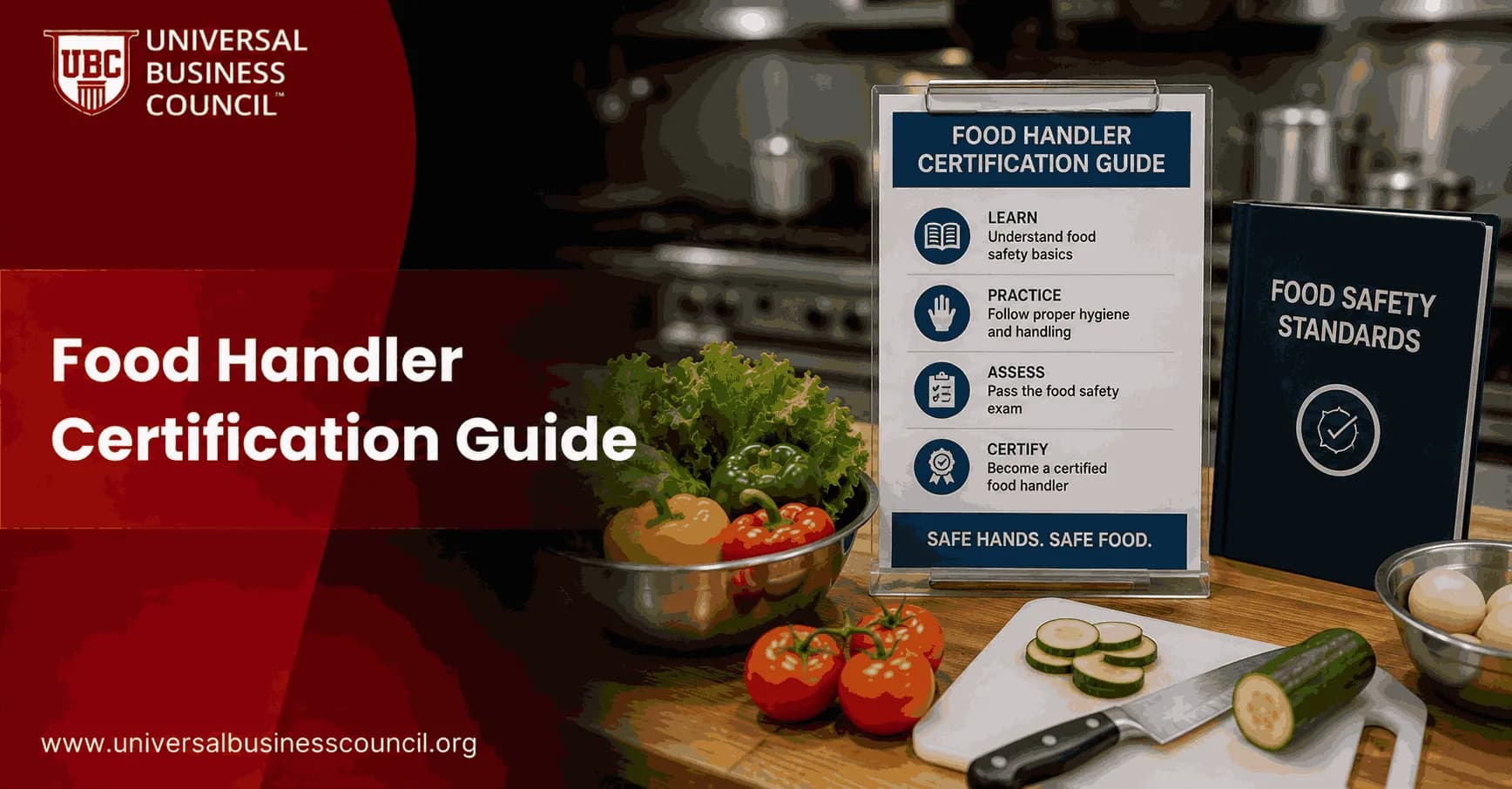
Food handler certification proves you understand the food safety basics expected of frontline food workers: handwashing, cleaning and sanitizing, temperature control, cross-contamination prevention, and safe handling of ready-to-eat foods. In many U.S. jurisdictions, it is not optional. You may need a food handler card before you can keep working past your first 30 or 60 days, and your employer may need your certificate on file during a health inspection.
Here is the detail that catches people out. Requirements are local. California, Texas, New York City, Boston, and Southern Nevada do not handle certification the same way. Before you pay for a course, check the health department rules for the city, county, or state where you will work.

For anyone planning a long-term career in hospitality, catering, or commercial food production, becoming a Certified Food Handler Professional™ is a practical way to build recognized food safety knowledge while demonstrating a commitment to workplace compliance from the very beginning.
What food handler certification means
A food handler certificate, sometimes called a food handler card, shows that you completed an approved food safety course and passed an assessment. It is designed for workers who handle unpackaged food, utensils, food-contact surfaces, or equipment used to prepare and serve food.
The certificate is not the same as a food manager certification. A food handler course usually covers practical, entry-level safety practices. A food manager or food protection course is aimed at the person in charge, such as a kitchen manager, supervisor, or permit holder.
That distinction matters. In New York City, the Health Department requires at least one supervisor certified in food protection to be on site whenever a food service establishment is operating. Boston requires each establishment to have at least one full-time manager certified as a food manager as part of the food service permit process.
Food handler certification requirements by location
Most U.S. states require food workers to complete food safety training. Still, the exact rule depends on where you work. Some places require all food handlers to be certified. Others focus on managers or supervisors.
Common rules you should check
Who must be certified: all food handlers, only employees who handle unpackaged food, or only managers.
Deadline after hire: California requires most food handlers to obtain a card within 30 days of hire. Texas gives food employees 60 days under Texas Administrative Code Rule 228.33.
Renewal period: Texas food handler certificates are generally valid for 2 years. California food handler cards are valid for 3 years.
Approved provider: some jurisdictions require an ANAB-accredited certificate program that meets ASTM E2659.
Recordkeeping: employers may need to keep a paper or electronic certificate available on site.
Examples from major jurisdictions
California: food handlers generally need an ANAB-accredited program, a 40-question exam, and a minimum score of 70 percent. The card must be renewed every 3 years.
Texas: food employees who work with unpackaged food, utensils, food equipment, or food-contact surfaces must complete an accredited, state-approved course. Many online courses take about 2 hours.
New York City: the Food Protection Course is free online and includes 15 lessons, lesson quizzes, and a certification exam for supervisors.
Boston: a certified food manager is required for food service permitting. The city accepts accredited exams from approved certification bodies.
Southern Nevada Health District: candidates can prepare with a video series and a training book available in multiple languages.
To be blunt, do not assume a national provider is accepted everywhere. ANAB accreditation is widely recognized, and states such as California, Texas, Illinois, Arizona, West Virginia, and New Mexico use ANAB-accredited food handler program requirements in different ways. Local approval still controls.
While certification requirements often begin with basic food safety training, many employers also encourage experienced staff to pursue a Certified Allergen Management Professional™ credential as food allergy management becomes an increasingly important part of everyday kitchen operations.
What food handler training usually covers
Food handler certification training is practical. You are not studying abstract policy. You are learning what keeps guests from getting sick during a busy lunch rush when the sanitizer bucket is low, the prep sink is backed up, and a new employee reaches for gloves without washing hands first.
Personal hygiene and handwashing
Expect detailed questions on when and how to wash hands. Training commonly teaches that you should wash before food preparation, before touching clean equipment, after handling dirty dishes, after using the restroom, and after touching your face or body.
The standard method is specific. Wet hands with warm running water, apply soap, scrub all surfaces for 10 to 15 seconds, rinse, and dry with a single-use towel. The full process should take at least 20 seconds. Use only a designated handwashing sink. Not the prep sink. Not the dish sink.
Temperature control
The temperature danger zone is one of the most tested topics. You should know how time and temperature affect bacterial growth, how to cool food safely, and which foods need higher cooking temperatures.
Many candidates memorize one number and then miss the scenario questions. Intact meats and eggs served immediately may have different minimum internal temperature requirements from ground meats or poultry. Study the chart from your approved course, not a random image from social media.
Cross-contamination prevention
Training covers how pathogens move from raw food to ready-to-eat food. That includes cutting boards, knives, gloves, aprons, storage shelves, and wiping cloths.
A question that often trips up first-time candidates is refrigerator storage order. The safest general rule is to store foods that require the highest final cooking temperature below foods requiring lower temperatures. Raw poultry belongs below raw beef, not above salad greens.
Cleaning and sanitizing
Cleaning removes visible soil. Sanitizing reduces microorganisms to safer levels. They are not the same task.
Courses usually cover food-contact surfaces, sanitizer strength, air drying, and when equipment must be cleaned and sanitized. A common standard is between uses and at least every 4 hours during continuous use, depending on the local code and operation.
Online, classroom, and health department training options
Food handler training has moved heavily online. Many approved programs are self-paced, mobile-friendly, and video-based. That works well for shift workers who cannot attend a classroom session at 9 a.m. on a weekday.
Common formats include:
Online private-provider courses: used in states such as Texas, California, and Massachusetts, often with instant certificate download after passing.
Health department courses: NYC offers a free online Food Protection Course in English, Spanish, and Chinese. Southern Nevada provides its own videos and book for the local card test.
Classroom or blended training: often used for manager-level certification through providers accepted by cities such as Boston.
If you are building a career beyond frontline work, connect food handler certification with broader study in operations management, compliance, service quality, and hospitality business practice through Universal Business Council learning pathways. The food safety card gets you compliant. Management training helps you run the system so the same mistakes do not repeat every Friday night.
As food businesses adopt digital temperature monitoring, automated compliance software, and smart kitchen technologies, professionals who understand these systems through a Deep Tech Certification can complement their food safety expertise with valuable technology skills.
How the exam works
Most food handler exams are multiple-choice. They are usually short, but they are not a formality. California programs commonly use a 40-question exam with a 70 percent passing score. One Massachusetts provider uses 40 multiple-choice questions with a 75 percent passing score.
ServSafe notes that its food handler course and assessment have no formal prerequisites, which is typical for this credential. You do not need prior kitchen experience. You do need to read the questions carefully.
Exam topics to master
When to wash hands and which sink to use
Safe glove use and bare-hand contact rules for ready-to-eat foods
Temperature danger zone concepts
Minimum internal cooking temperatures from your course chart
Cooling, reheating, and hot holding basics
Cleaning versus sanitizing
Raw and ready-to-eat food separation
Employee illness reporting
Pest prevention and facility hygiene
Food handler exam preparation plan
You can prepare efficiently if you treat the course like job training, not a box to tick. Use this simple plan.
Confirm the rule first. Search your state or local health department website. Check whether the provider must be ANAB-accredited or locally approved.
Choose the right course. Pick a course accepted where you work. If you are in California or Texas, pay close attention to state-specific approval.
Study the temperature chart. Do not guess. Write the key cooking and holding temperatures on a note card.
Practice scenario questions. Focus on what you should do next when something goes wrong, such as a broken cooler or a contaminated cutting board.
Take the exam when you are fresh. A 2-hour online course after a closing shift is a bad plan. Fatigue creates careless misses.
Save your certificate immediately. Download the file, email it to yourself, and give a copy to your manager if required.
In real operations, the certificate audit is boring until it is not. I have watched managers lose half an afternoon before an inspection because three employees had valid cards, but the files sat in personal email inboxes and nobody could produce them. Make a shared compliance folder. Name files by employee, credential, and expiration date. Simple beats clever.
Renewal and compliance after passing
Food handler certification expires. Put the renewal date on your calendar as soon as you pass. If you supervise staff, track expiration dates monthly, not the day before inspection.
For employers, the practical controls are straightforward:
Collect certificates during onboarding.
Store paper or digital copies where managers can access them.
Track deadlines for new hires, especially the 30-day and 60-day rules.
Use approved providers only.
Refresh high-risk topics during pre-shift meetings, especially handwashing, cooling, and allergen handling.
Certification does not replace daily supervision. It gives workers a baseline. The manager still has to correct the employee who changes gloves without washing hands, the prep cook who stacks raw chicken above produce, and the team member who wipes a table with sanitizer that has not been tested all shift.
Your next step
If you need food handler certification for work, start with your local health department rule, then select an approved course and schedule the exam before your employment deadline. If you manage people, go one level deeper. Study food manager requirements in your city and pair food safety compliance with structured training in operations, risk, and service management through Universal Business Council resources.
As restaurants and food production facilities continue investing in digital food safety systems and automated operational tools, combining practical food safety knowledge with a Tech Certification can help professionals prepare for supervisory and management roles in increasingly technology-enabled workplaces.
FAQs
What Is Food Handler Certification?
Food handler certification is a credential that demonstrates a person's understanding of basic food safety principles, including personal hygiene, safe food handling, sanitation, cross-contamination prevention, and temperature control. Certification requirements vary by country, state, province, and local health authority.
Why Is Food Handler Certification Important?
Food handler certification helps promote safe food handling practices, reduces the risk of foodborne illnesses, supports regulatory compliance where required, and improves professional knowledge in the food service industry.
Who Needs Food Handler Certification?
Depending on local laws and employer policies, certification may be required or recommended for:
Restaurant employees
Café workers
Hotel food service staff
Catering professionals
Bakery employees
Food truck operators
Grocery and deli workers
School and hospital food service employees
What Topics Are Covered in Food Handler Certification?
Most certification programs include:
Personal hygiene
Handwashing
Foodborne illness prevention
Cross-contamination prevention
Cleaning and sanitizing
Food storage
Temperature control
Allergen awareness
Workplace safety
Basic food safety regulations
How Do You Get Food Handler Certification?
The typical process involves:
Choosing an approved training provider.
Completing the required training.
Passing the certification assessment, if required.
Receiving your certificate.
The exact process depends on your local regulatory requirements.
Can You Earn Food Handler Certification Online?
Yes. Many recognized organizations offer online food handler certification courses. Before enrolling, verify that the course is accepted by your employer or local regulatory authority.
How Long Does Food Handler Training Take?
Many introductory courses can be completed within a few hours, although the exact duration depends on the provider and jurisdiction.
Is There an Exam for Food Handler Certification?
Many programs include a final assessment or exam to evaluate your understanding of food safety concepts. Exam formats vary by training provider.
How Can You Prepare for the Certification Exam?
Helpful preparation methods include:
Reviewing course materials
Taking practice quizzes
Understanding food safety principles
Studying real-world workplace scenarios
Revising regularly
How Long Is Food Handler Certification Valid?
Certification validity varies depending on the issuing organization and local regulations. Many certifications require periodic renewal.
How Do You Renew Food Handler Certification?
Renewal may involve completing refresher training, passing another assessment, or meeting updated regulatory requirements. Always check the renewal process specified by your certifying organization or local authority.
What Skills Do Certified Food Handlers Learn?
Certification helps develop skills in:
Personal hygiene
Safe food preparation
Temperature monitoring
Food storage
Cleaning and sanitizing
Allergen awareness
Cross-contamination prevention
Workplace safety
Can Food Handler Certification Improve Employment Opportunities?
Yes. Many employers prefer candidates who have completed recognized food safety training because it demonstrates a commitment to safe food handling and industry standards.
Which Industries Value Food Handler Certification?
Certification is commonly valued in:
Restaurants
Hotels
Catering businesses
Hospitals
Schools
Retail food stores
Food manufacturing
Bakeries
Cruise lines
Institutional food services
Can Food Handler Certification Help Advance Your Career?
Yes. Combined with practical experience and additional training, certification can support career progression into supervisory, quality assurance, or food safety management roles.
What Certifications Can You Pursue After Food Handler Certification?
Professionals may continue with:
Food Protection Manager Certification
HACCP Certification
Allergen Awareness Training
Hospitality Management Certifications
Occupational Health and Safety Certifications
What Common Mistakes Should Certified Food Handlers Avoid?
Avoid:
Skipping handwashing
Improper food storage
Ignoring temperature controls
Cross-contamination
Neglecting ongoing training
Failing to follow workplace food safety procedures
How Can You Keep Your Food Safety Knowledge Current?
Stay updated by renewing certifications when required, participating in continuing education, following guidance from local food safety authorities, and keeping up with changes in regulations and industry best practices.
Is Food Handler Certification Worth It?
For many people working in hospitality and food service, yes. It provides foundational food safety knowledge, can improve employability, and helps demonstrate professionalism. A certificate may not prepare every meal, but it shows you've learned the principles that help keep those meals safe.
What Is the Best Food Handler Certification Guide for Beginners?
The best approach is to choose a recognized training provider, understand your local certification requirements, study core food safety principles thoroughly, and apply them consistently in the workplace. Food handler certification is not just about passing an exam. It is about developing the knowledge, habits, and professional responsibility needed to protect customers, support regulatory compliance, and build a successful long-term career in the hospitality and food service industry.
Related Articles
View All
Food
Career Growth After Food Handler Certification: Jobs, Skills, and Advancement Paths
Explore career growth after food handler certification, including entry-level jobs, promotion skills, quality roles, and practical advancement paths.

Food
Food Handler Professional Exam Tips to Study and Pass with Confidence
Practical Food Handler Professional Exam Tips covering study plans, key temperatures, allergens, practice exams, and test-day strategies to pass confidently.

Food
Why Food Handler Certification Matters for Hospitality and Food Service Careers
Food handler certification protects guests, supports compliance, improves employability, and helps hospitality professionals move into trusted roles.
Trending Articles
The Role of Blockchain in Ethical AI Development
How blockchain technology is being used to promote transparency and accountability in artificial intelligence systems.
AWS Career Roadmap
A step-by-step guide to building a successful career in Amazon Web Services cloud computing.
Top 5 DeFi Platforms
Explore the leading decentralized finance platforms and what makes each one unique in the evolving DeFi landscape.