

The Future of Food Handling: Technology, Compliance, and Professional Standards
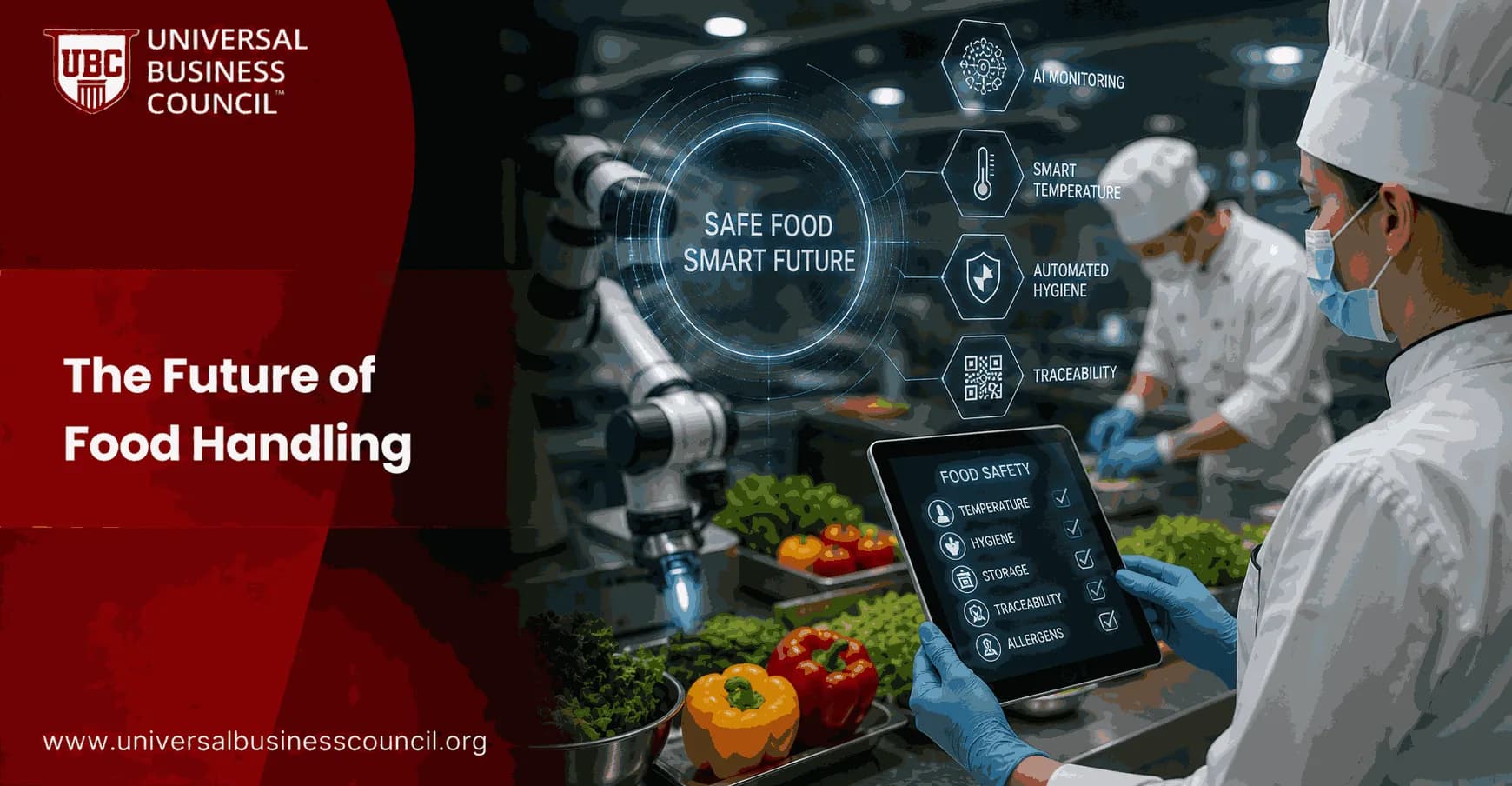
The future of food handling is being shaped by sensors, digital traceability, artificial intelligence, and stricter professional standards. The basics still matter. Clean hands, safe temperatures, allergen control, documented corrective action. But the way you prove those controls now looks very different.
A clipboard on the cooler door is no longer enough for many food businesses. Inspectors, auditors, retailers, and enterprise buyers expect time-stamped records, fast product tracing, and staff who understand both HACCP principles and the software behind the monitoring system. That changes the skill set required across restaurants, processors, logistics companies, retailers, and food technology teams.

As digital systems become part of everyday food safety operations, professionals are increasingly strengthening their practical knowledge through credentials such as the Certified Food Handler Professional™, which complements both traditional food safety practices and modern compliance expectations.
Why Food Handling Is Becoming More Digital
Food handling has always been risk-based. The main hazards are familiar: microbiological contamination, allergens, chemical residues, and physical foreign material. What has changed is the scale of the supply chain. A single ingredient may move through farms, packers, processors, cold storage providers, distributors, and retailers before it reaches a consumer.
That complexity has pushed the industry toward data-supported food safety management. Codex Alimentarius promotes internationally recognized food standards, while ISO 22000 gives organizations a management system structure for food safety. HACCP remains the operational backbone because it forces teams to identify hazards, set critical limits, monitor controls, and act when something goes wrong.
Here is the blunt truth: technology does not replace HACCP. It makes weak HACCP plans more visible.
Alongside digital transformation, specialized training such as the Certified Allergen Management Professional™ helps food businesses improve allergen control, strengthen compliance programs, and reduce one of the industry's most significant food safety risks.
Food Safety Technology Changing Daily Operations
1. Sensors, IoT, and Real Time Temperature Monitoring
Temperature abuse is still one of the easiest ways to lose product, fail an audit, or create a public health risk. Networked sensors now monitor coolers, freezers, production rooms, delivery vehicles, and storage areas around the clock.
The FDA Food Code sets 41 degrees Fahrenheit or below as the cold holding limit for many time and temperature control for safety foods. A sensor system can alert a manager when a walk-in cooler hits 44 degrees Fahrenheit at 2:10 a.m. A paper log usually finds that problem after opening, if anyone notices at all.
Good systems do three things:
Record temperature and humidity continuously
Send alerts before a critical limit is breached for too long
Create audit-ready records with time stamps and corrective actions
One detail that trips up new managers: the alert itself is not the corrective action. Auditors want to see what you did next. Did you move the product? Check internal food temperature? Call maintenance? Dispose of affected inventory? The record has to answer those questions.
2. AI in Food Safety and Compliance
Artificial intelligence is moving from pilot projects into ordinary compliance work. Teams use it to scan supplier data, spot unusual inspection results, predict contamination risk, and track regulatory changes across markets.
In a multi-country food business, regulatory tracking can become a full-time burden. AI-supported tools can compare new safety alerts, ingredient restrictions, or labeling changes against recipes and supplier records. That does not remove human judgment. It gives QA, regulatory affairs, and operations teams a shorter list of issues that deserve attention.
Useful AI applications in food handling include:
Risk scoring suppliers based on audit history, complaints, and nonconformance trends
Flagging unusual temperature patterns in the cold chain
Identifying batches affected by a raw material recall
Supporting visual inspection for packaging defects or foreign bodies
Helping quality teams prioritize sampling plans
Do not treat AI output as evidence by itself. Treat it as a decision support tool. Your food safety plan still needs defined responsibilities, validation, verification, and documented review.
3. Blockchain, Digital Traceability, and Product Passports
Traceability has become one of the biggest pressure points in food handling. The United States FDA Food Traceability Final Rule, issued under the Food Safety Modernization Act, requires additional records for certain foods on the Food Traceability List, including items such as leafy greens, certain cheeses, and fresh-cut fruits and vegetables.
The direction is clear. Regulators want faster tracing. Retailers want better supplier visibility. Consumers want to know origin, allergens, and sometimes environmental impact.
Blockchain-based traceability systems are designed to create tamper-resistant records across trading partners. Digital Product Passports, often accessed through QR codes, can carry product origin, allergen details, batch information, and sustainability-related data.
The hard part is not the QR code. It is data discipline. If receiving teams enter lot numbers inconsistently, or suppliers use different naming conventions, even an expensive traceability platform becomes messy fast.
4. Smart Packaging and Rapid Detection
Smart packaging is starting to support food safety decisions beyond the printed date code. Some packaging uses freshness indicators, temperature exposure markers, or embedded sensors to show whether a product has been handled correctly.
Rapid testing is also changing response times. Point of care diagnostics can detect some microbiological or chemical risks faster than traditional lab workflows. Whole genome sequencing has become a powerful tool for identifying and comparing pathogens during outbreak investigations. Public health agencies such as the U.S. Centers for Disease Control and Prevention use genome sequencing networks to connect cases that may come from the same source.
For operators, faster detection changes expectations. If you know sooner, you are expected to act sooner.
5. Robotics and Automation in Handling and Hygiene
Automation reduces variation. That matters in food handling because many failures come from rushed, tired, or poorly trained people doing repetitive work.
Robotic handling systems can reduce direct product contact. Automated cleaning and disinfection systems can make sanitation more consistent in high-throughput environments. Automated dosing can also reduce chemical handling errors.
Still, automation creates new risks. Who verifies that the cleaning robot reached the shadowed area behind the conveyor support? Who checks that the automated slicer is reassembled correctly after sanitation? Equipment management, preventive maintenance, and operator competence become central to the food safety system.
Compliance Is Moving Toward Data-Rich Proof
Food safety compliance used to rely heavily on periodic inspection and paper evidence. That model is not gone, but it is being replaced by digital records, integrated systems, and stronger traceability expectations.
Inspectors and auditors are adapting too. They may review electronic temperature records, exception reports, digital sanitation logs, supplier dashboards, or traceability simulations. A trace exercise that once took hours may now be expected in minutes.
The strongest food businesses build systems around three questions:
Can we see the risk quickly? Sensors, analytics, and staff reporting help here.
Can we prove control? Records must be complete, accurate, and easy to retrieve.
Can we trace affected product fast? Lot-level discipline matters across receiving, production, storage, and dispatch.
As technologies such as AI, IoT sensors, blockchain traceability, and advanced analytics become standard across food operations, a Deep Tech Certification can help professionals better understand the digital systems supporting modern compliance and operational decision-making.
Global Standards Are Raising the Bar
HACCP, ISO 22000, and FSSC 22000 remain central to professional food safety practice. FSSC 22000 Version 6, effective in 2024, strengthened expectations around food safety culture, quality control, equipment management, and documentation. That signals a broader shift from checking forms to assessing how the organization actually behaves.
The certification market reflects that demand. Industry estimates place the global food certification market at roughly USD 6 to 7 billion in the mid-2020s, with steady annual growth in the low single digits. The reasoning is simple. Buyers want assurance. Regulators want evidence. Companies want fewer surprises.
Global harmonization is also gaining importance. Codex standards, ISO-based systems, and retailer-driven schemes help align expectations across borders. If you work in export, private label manufacturing, global sourcing, or food logistics, you need to understand more than local inspection rules.
Sustainability Is Becoming a Food Handling Issue
Sustainability is no longer separate from food safety. Packaging choices, chemical residues, water use, waste, and environmental contaminants are entering compliance conversations.
PFAS are a useful example. These per- and polyfluoroalkyl substances have been used in some grease-resistant food packaging. Regulatory scrutiny has increased in several markets because these compounds persist in the environment and raise health concerns. If you specify packaging, you now need to think beyond shelf appeal and unit cost.
This is where food handling professionals need broader judgment. The cheapest liner, coating, or packaging format may create future compliance exposure.
What Professional Standards Now Require
The future of food handling depends on people who can work across operations, compliance, and technology. A supervisor does not need to code an AI model, but they should understand what a sensor alert means, when to quarantine product, and how to document a deviation properly.
Core competencies now include:
HACCP planning and critical control point monitoring
Allergen management and cross-contact prevention
Digital recordkeeping and audit preparation
Traceability mapping from supplier to customer
Cold chain data interpretation
Supplier risk management
Understanding ISO 22000, FSSC 22000, and Codex principles
Basic AI, IoT, and data analytics literacy for food operations
This is where structured learning matters. Connect your development to Universal Business Council certification or course pages in food safety, compliance management, operations management, quality management, and digital transformation. Professionals who combine safety knowledge with data fluency will be better prepared for senior roles.
How to Prepare Your Organization for the Next Phase
You do not need to buy every new tool. Start with the weak points that create the most risk.
Audit your current records. Check whether temperature logs, sanitation records, allergen checks, and receiving records are complete and retrievable.
Map traceability one step forward and one step back. Then test how long it takes to identify affected lots.
Prioritize cold chain monitoring. If you handle chilled or frozen food, sensor-based alerts usually pay for themselves through reduced spoilage and better compliance evidence.
Train supervisors on digital evidence. They must know how to respond to alerts, not just acknowledge them.
Review packaging and supplier risks. Include PFAS, allergen controls, country-of-origin rules, and documentation quality.
Build certification into workforce development. Use formal training to keep teams aligned with HACCP, ISO 22000, FSSC 22000, and traceability expectations.
The Next Standard: Certified Expertise Plus Digital Proof
The future of food handling will not be defined by technology alone. It will be defined by trained professionals who can use technology to prove safe practice.
Start with the fundamentals: HACCP, hygiene, allergen control, temperature management, and traceability. Then add digital monitoring, AI-supported compliance review, and stronger supplier data. If you are building your career, pursue structured certification in food safety, compliance, quality, or operations through Universal Business Council learning pathways. If you manage a team, make digital food safety competence part of every supervisor's development plan.
Combining recognized food safety qualifications with a relevant Tech Certification can prepare professionals for leadership roles where operational excellence increasingly depends on both regulatory expertise and digital capability.
FAQs
What Is the Future of Food Handling?
The future of food handling is expected to combine advanced food safety practices with technologies such as artificial intelligence (AI), automation, Internet of Things (IoT) sensors, robotics, blockchain, and real-time monitoring to improve food quality, traceability, and operational efficiency.
How Is Artificial Intelligence Changing Food Handling?
AI can help businesses monitor food safety, predict equipment failures, optimize inventory, automate quality inspections, and analyze operational data to support faster and more informed decision-making.
What Role Will Automation Play in Food Handling?
Automation is increasingly being used for repetitive tasks such as food preparation, packaging, sorting, labeling, cleaning, and warehouse operations, helping improve consistency and productivity.
How Can IoT Improve Food Safety?
IoT devices can continuously monitor temperature, humidity, refrigeration systems, and storage conditions, sending real-time alerts when conditions move outside acceptable ranges.
Will Robotics Become Common in Commercial Kitchens?
Many commercial kitchens and food manufacturing facilities are adopting robotic systems for tasks such as cooking, packaging, ingredient handling, and cleaning. Adoption varies depending on cost, operational needs, and business size.
How Does Blockchain Support the Future of Food Handling?
Blockchain can improve food traceability by creating transparent records of sourcing, transportation, storage, and distribution, making it easier to investigate food safety incidents and verify supply chain information.
What Is Smart Food Storage?
Smart food storage uses connected sensors and monitoring systems to track environmental conditions, reduce food waste, improve inventory management, and maintain food quality.
How Will Predictive Analytics Improve Food Safety?
Predictive analytics can analyze operational data to identify potential risks before they become serious issues, helping businesses improve preventive maintenance and food safety management.
Can AI Reduce Food Waste?
Yes. AI can forecast demand, optimize inventory levels, recommend purchasing quantities, and identify products nearing expiration, helping businesses reduce unnecessary food waste.
How Will Digital Food Safety Records Replace Paper Logs?
Many organizations are transitioning to digital record-keeping systems that automatically capture temperature readings, sanitation logs, inspections, and compliance documentation, improving accuracy and accessibility.
Will Contactless Food Service Continue to Grow?
Contactless ordering, payment, pickup, and delivery are expected to remain important in many food service operations because they can improve convenience and operational efficiency.
How Will Sustainability Influence Food Handling?
Businesses are increasingly focusing on reducing food waste, improving energy efficiency, using sustainable packaging, sourcing responsibly, and implementing environmentally friendly operational practices.
What New Skills Will Future Food Handlers Need?
Future food handlers may benefit from understanding:
Food safety regulations
Digital monitoring systems
Food safety software
Basic data analysis
Automation technologies
Equipment maintenance
Sustainability practices
How Will Food Safety Regulations Continue to Evolve?
Food safety regulations are expected to continue adapting to new technologies, supply chain risks, traceability requirements, and evolving public health standards. Businesses should monitor guidance from their local regulatory authorities.
Can Technology Replace Human Food Handlers?
Technology can automate certain repetitive tasks, but human oversight remains essential for food preparation, quality assurance, customer service, regulatory compliance, and responding to unexpected situations.
How Can Small Food Businesses Prepare for the Future?
Small businesses can prepare by investing in staff training, adopting practical digital tools, improving food safety processes, monitoring industry trends, and implementing technology where it delivers measurable value.
What Certifications Will Become More Valuable?
In addition to food handler certification, employers may value credentials related to:
HACCP
Food Protection Management
Allergen Awareness
Food Quality Management
Occupational Safety
Digital food safety systems
What Challenges Will the Food Industry Face?
Key challenges include:
Labor shortages
Rising operating costs
Food waste reduction
Cybersecurity for connected systems
Regulatory compliance
Supply chain disruptions
Sustainability expectations
How Can Businesses Stay Competitive in the Future of Food Handling?
Organizations can remain competitive by embracing innovation, investing in employee training, adopting evidence-based food safety technologies, continuously improving operational processes, and maintaining a strong focus on customer safety and product quality. Technology evolves quickly, but consistently safe food handling remains the foundation of customer trust.
What Does the Future of Food Handling Look Like?
The future of food handling is expected to combine skilled professionals with intelligent technologies to create safer, more efficient, and more sustainable food systems. AI, automation, IoT, blockchain, and predictive analytics are likely to enhance operations rather than replace human expertise. Businesses that balance innovation with rigorous food safety practices, regulatory compliance, and continuous workforce development will be best positioned to succeed in the evolving food service and food manufacturing industries.
Related Articles
View All
Food
Food Handler Professional Checklist: Daily Safety Practices for Food Service Teams
A practical food handler professional checklist for daily hygiene, temperature control, storage, cleaning, pest checks, and documentation.

Food
Workplace Safety and Sanitation Standards for Food Handler Professionals
Learn the key workplace safety and sanitation standards food handler professionals must follow for hygiene, illness control, cleaning, and temperature safety.

Food
Food Handler Professional Exam Tips to Study and Pass with Confidence
Practical Food Handler Professional Exam Tips covering study plans, key temperatures, allergens, practice exams, and test-day strategies to pass confidently.
Trending Articles
The Role of Blockchain in Ethical AI Development
How blockchain technology is being used to promote transparency and accountability in artificial intelligence systems.
AWS Career Roadmap
A step-by-step guide to building a successful career in Amazon Web Services cloud computing.
Top 5 DeFi Platforms
Explore the leading decentralized finance platforms and what makes each one unique in the evolving DeFi landscape.