

SEO in the Age of AI Assistants
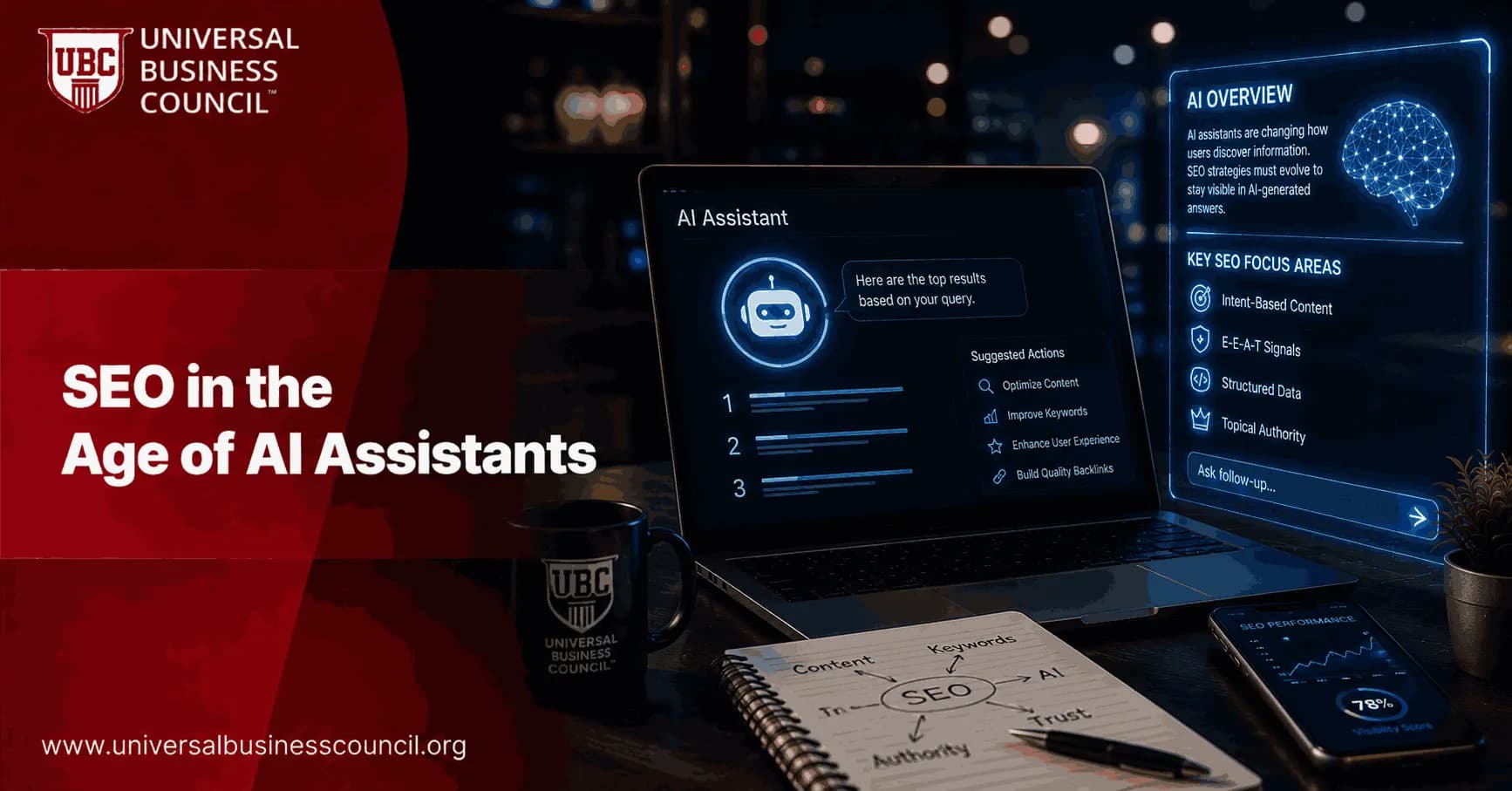
Search engine optimization is entering a completely new phase. For years, businesses depended on traditional search engines to attract visitors, generate leads, and increase online visibility. SEO strategies focused heavily on keywords, backlinks, page rankings, and technical optimization.
Today, artificial intelligence is changing how people search online.

AI assistants such as ChatGPT, Gemini, Claude, and Perplexity are reshaping digital behavior by providing direct, conversational answers instead of long lists of search results. Users now expect fast, personalized, and accurate information without browsing multiple websites.
This transformation is forcing businesses and marketers to rethink how SEO works in the modern digital landscape. Companies that adapt to AI-driven search experiences will continue growing, while brands relying only on outdated SEO methods may lose visibility over time. Humanity spent decades training people to search with keywords, and now everyone talks to AI systems like impatient coworkers demanding instant summaries. Technology evolves. Human impatience evolves faster.
Professionals adapting to these changes often pursue advanced Marketing certification programs to strengthen their understanding of modern digital marketing and evolving consumer behavior.
How AI Assistants Are Reshaping Search
Traditional search engines typically provide users with ranked lists of websites. AI assistants work differently by:
Generating direct answers
Understanding conversational prompts
Summarizing information
Personalizing responses
Providing contextual recommendations
This means users spend less time clicking multiple search results.
The Growth of Conversational Search
Modern users search using natural language rather than short keyword phrases.
For example:
Old search query: “best SEO tools”
Modern AI query: “What are the best SEO tools for small businesses in 2026?”
This shift requires businesses to create content optimized for:
Conversational questions
Long-tail queries
Semantic relevance
User intent
SEO is becoming more human-focused instead of algorithm-focused.
Why Traditional SEO Alone Is No Longer Enough
Traditional SEO strategies often focused on:
Keyword stuffing
Backlink quantity
Exact-match optimization
Search engine manipulation
AI assistants are changing these priorities completely.
Modern AI systems evaluate:
Content quality
Expertise
Trustworthiness
User experience
Relevance
Low-quality pages designed only to manipulate rankings are becoming less effective.
Authority Is Becoming More Important
AI assistants prioritize trusted and authoritative sources when generating responses.
Businesses must now focus on:
Publishing expert-driven content
Building brand trust
Creating accurate information
Demonstrating real experience
Professionals looking to understand artificial intelligence and modern intelligent systems often pursue the AI Expert certification to strengthen their expertise in AI technologies and digital transformation.
The Rise of Zero-Click Search
One of the biggest trends affecting SEO is the increase in zero-click searches.
Zero-click searches happen when users receive answers directly from:
AI-generated summaries
Search snippets
Voice assistants
Smart search previews
without visiting websites.
This reduces clicks for basic informational content.
However, websites can still benefit because visibility through AI systems improves:
Brand awareness
User trust
Industry authority
Future customer engagement
Content Quality Is More Valuable Than Ever
The internet is now flooded with AI-generated material, making originality increasingly important.
Successful content now requires:
Human expertise
Clear explanations
Real-world examples
Research-backed insights
Authentic perspectives
Businesses creating useful and informative content are more likely to remain visible in AI-driven search systems.
AI Content Requires Human Oversight
Generative AI tools can help businesses:
Create outlines
Generate drafts
Produce metadata
Analyze keywords
Personalize content
However, AI-generated material still requires human editing and expertise to ensure:
Accuracy
Originality
Relevance
Trustworthiness
Professionals interested in modern content automation increasingly explore the Generative ai expert course to understand advanced generative AI applications.
Voice Search Is Expanding Rapidly
Voice assistants are changing search behavior significantly.
Users increasingly search through:
Smartphones
Smart speakers
Wearable devices
AI chat platforms
Voice searches tend to be:
Longer
More conversational
More question-focused
Businesses must optimize content for natural language queries and conversational phrases.
The Role of Technical SEO in AI Search
Technical SEO remains extremely important despite the rise of AI assistants.
Search engines and AI systems still rely on technically optimized websites for:
Crawling
Indexing
Content understanding
Performance analysis
Important technical SEO elements include:
Website speed
Mobile responsiveness
Security
Accessibility
Structured data
Structured Data Improves AI Visibility
Schema markup helps AI systems interpret website information more effectively.
Structured data supports:
Product information
FAQ sections
Reviews
Articles
Business details
Websites using proper schema markup may gain stronger visibility in AI-generated summaries.
AI Assistants and Personalized Search
AI-powered search experiences are highly personalized.
Results often depend on:
User behavior
Preferences
Search history
Context
Geographic location
This means SEO strategies must become more adaptive and user-focused.
Businesses can no longer rely only on ranking for a single keyword because users may receive completely different AI-generated responses.
The Emergence of Agentic AI
Agentic AI refers to autonomous AI systems capable of performing actions independently.
Future AI assistants may:
Compare products automatically
Conduct research
Book services
Make recommendations
Complete transactions
This will significantly impact online discovery and digital marketing strategies.
Professionals preparing for autonomous AI technologies increasingly explore the Agentic AI course to understand intelligent automation and decision-making systems.
User Experience Is a Core SEO Signal
Modern SEO is closely connected to user experience.
Search engines and AI systems evaluate:
Website usability
Navigation simplicity
Mobile performance
Readability
Page speed
Poor user experience can negatively affect both visibility and engagement.
Businesses must focus on designing websites that provide real value to users rather than simply targeting algorithms.
AI-Powered Coding and SEO Automation
AI-assisted coding tools are transforming website optimization and SEO management.
Businesses now use AI systems for:
Technical audits
Error detection
Website monitoring
Performance optimization
Code generation
Developers adapting to AI-driven development environments often pursue the AI Powered coding expert Course to improve automation and coding efficiency.
Social Media Is Influencing SEO
Social media platforms are becoming major discovery engines.
Users increasingly search directly on:
TikTok
YouTube
Reddit
Instagram
LinkedIn
AI systems also analyze:
User engagement
Community discussions
Creator recommendations
Social popularity
This makes social visibility more important for SEO success.
Community-Based Content Is Growing
Users trust authentic community discussions more than traditional advertising.
Communities help businesses build:
Trust
Loyalty
Engagement
Referral traffic
Platforms like Reddit and Discord are becoming increasingly influential in AI-driven search environments.
SEO Careers Are Evolving
SEO professionals must now develop broader digital skills.
Modern SEO expertise requires understanding:
AI systems
Data analysis
Semantic search
User psychology
Automation tools
Conversational optimization
Technology professionals aiming to remain competitive often pursue recognized Tech certification programs to strengthen expertise in emerging technologies.
Organizations exploring advanced innovation strategies also increasingly value Deeptech certification programs focused on digital transformation and intelligent technologies.
Best Practices for SEO in the AI Era
Focus on Expertise
Create authoritative and trustworthy content regularly.
Optimize for Human Conversations
Use question-based and natural language content structures.
Improve Technical Performance
Ensure websites are fast, secure, and mobile-friendly.
Build Multi-Platform Visibility
Businesses should combine SEO with social media and community engagement.
Prioritize User Trust
Reliable and transparent content performs better in AI-generated search experiences.
Conclusion
SEO is evolving rapidly in the age of AI assistants. Traditional ranking methods alone are no longer enough to maintain strong digital visibility.
AI systems are transforming how users search, consume information, and interact with websites. Businesses must now focus on:
Conversational search optimization
Technical performance
Content quality
User experience
Brand authority
AI-friendly formatting
The future of SEO belongs to businesses that successfully combine intelligent technology with genuine human expertise. Companies that refuse to adapt may eventually realize their carefully optimized keyword pages are being ignored while users ask AI assistants for direct answers instead. The internet changes quickly, and algorithms rarely wait for nostalgia to catch up.
FAQs
1. What is SEO in the age of AI assistants?
SEO in the age of AI assistants involves optimizing content for both search engines and AI-powered systems. Businesses now focus more on conversational queries, semantic meaning, and user intent. AI assistants are changing how people discover online information.
2. Why are AI assistants affecting SEO?
AI assistants provide direct answers instead of only displaying website links. This changes user behavior and reduces dependence on traditional search browsing. Businesses must adapt content for AI-generated recommendations and summaries.
3. What is conversational SEO?
Conversational SEO focuses on optimizing content for natural language and spoken queries. Users increasingly search using complete questions rather than short keywords. This approach improves visibility in AI and voice search systems.
4. Are backlinks still important in SEO?
Yes, backlinks still matter because they help establish authority and trust. However, search engines now prioritize content quality and relevance more heavily. Strong user experience is also becoming increasingly important.
5. What are zero-click searches?
Zero-click searches occur when users receive answers directly from AI summaries or snippets without opening websites. This trend is growing rapidly with AI assistants and voice search technologies. Businesses must focus on authority and visibility.
6. How does AI affect website traffic?
AI assistants may reduce traffic for basic informational pages by providing instant answers. However, authoritative websites still attract users seeking detailed insights and services. Strong branding remains important for visibility.
7. Why is content originality important now?
The internet contains massive amounts of repetitive AI-generated material. Original and expert-driven content helps businesses stand out and build trust. Search engines and users both value authenticity and useful insights.
8. How does voice search change SEO strategies?
Voice search requires businesses to optimize for conversational phrases and long-form questions. Users interact differently with voice assistants compared to traditional typing. This changes keyword and content strategies significantly.
9. What is semantic search?
Semantic search focuses on understanding context and meaning rather than exact keywords. AI systems analyze user intent and relationships between topics. This improves search accuracy and personalization.
10. Why is user experience important for SEO?
Search engines and AI systems prioritize websites that provide smooth and valuable user experiences. Fast loading speed, mobile optimization, and readability improve engagement. Poor usability can negatively affect visibility.
11. What role does structured data play in AI SEO?
Structured data helps AI systems understand website content more effectively. It improves visibility for products, FAQs, reviews, and articles. Proper schema markup supports better indexing and AI interpretation.
12. Can AI-generated content perform well in SEO?
AI-generated content can perform well if it is accurate, useful, and properly edited. However, generic or repetitive content often struggles to rank effectively. Human expertise still plays an essential role.
13. What is agentic AI?
Agentic AI refers to intelligent systems capable of acting independently and making decisions. These systems may influence future search behavior and online recommendations. Businesses are preparing for more autonomous AI technologies.
14. How does social media influence SEO today?
Social media platforms affect visibility, engagement, and online discovery significantly. AI systems increasingly analyze creator content and community discussions. Strong social presence can improve traffic and authority.
15. Will AI replace SEO professionals?
AI will automate many repetitive SEO tasks, but strategic thinking and creativity remain human strengths. SEO professionals must adapt by learning AI tools and advanced analytics. The field is evolving rather than disappearing.
16. Why is technical SEO still important?
Technical SEO helps search engines and AI systems crawl, understand, and index websites efficiently. Fast and secure websites improve both rankings and user experience. Technical optimization remains a core SEO factor.
17. How can businesses improve authority in AI search?
Businesses can improve authority by publishing expert-driven and trustworthy content consistently. Positive engagement and strong branding also help build credibility. AI systems prioritize reliable information sources.
18. What skills are important for future SEO careers?
Future SEO professionals need skills in AI systems, automation, analytics, semantic search, and user behavior. Understanding conversational search is also becoming essential. Continuous learning is increasingly important.
19. Why is personalized search growing?
AI assistants personalize results based on behavior, context, and user preferences. This creates more customized search experiences for individuals. Businesses must adapt strategies to reach broader audiences.
20. What is the future of SEO?
The future of SEO will focus on conversational optimization, AI integration, technical performance, and user trust. Businesses must combine technology with high-quality content and strong branding. SEO will become more personalized and intelligent over time.
Related Articles
View All
Seo
Best Claude SEO Rank Tracking
Tracking your visibility in Claude requires monitoring AI citations, brand mentions, answer inclusion, and authority signals beyond traditional keyword rankings. Learn how Claude SEO rank tracking works and which metrics matter most.
Seo
The Rise of Answer Engines and the Future of SEO
Answer engines are transforming SEO by prioritizing direct responses, trusted sources, structured content, and machine-readable authority signals.
Seo
SEO After ChatGPT, Gemini & AI Search
ChatGPT, Gemini, and AI search are changing how users find answers, forcing SEO teams to rethink rankings, citations, authority, and content structure.
Trending Articles
The Role of Blockchain in Ethical AI Development
How blockchain technology is being used to promote transparency and accountability in artificial intelligence systems.
AWS Career Roadmap
A step-by-step guide to building a successful career in Amazon Web Services cloud computing.
Top 5 DeFi Platforms
Explore the leading decentralized finance platforms and what makes each one unique in the evolving DeFi landscape.