

Six Sigma Green Belt vs Black Belt: Key Differences and Career Paths
Six Sigma Green Belt vs Black Belt is not just a question of seniority. It is a choice about project scope, statistical depth, time commitment, and the kind of business problems you want to own. Green Belts usually improve processes inside a team or department. Black Belts lead larger, cross-functional programs where the stakes, politics, and data complexity are higher. For professionals looking to build structured process improvement skills, a Certified Six Sigma Expert pathway can provide a useful foundation for understanding these different levels.
If you are a developer, engineer, analyst, operations manager, or enterprise leader, the right belt depends on where you are now and where you want your work to have impact.

How Six Sigma belt levels fit together
Six Sigma uses a belt structure to define capability in process improvement and quality management. White and Yellow Belts cover awareness and project participation. Green Belts apply DMAIC (Define, Measure, Analyze, Improve, and Control) to scoped improvement projects. Black Belts go deeper, leading complex initiatives and coaching other belts.
Master Black Belts sit above that level. They usually shape deployment strategy, mentor Black Belts, and align improvement work with executive priorities. Professionals who want to strengthen their broader organizational and leadership capabilities alongside process improvement can also consider Management Certifications.
Green Belt vs Black Belt: the core differences
Project scope and leadership
A Green Belt typically leads a small to medium project or supports a Black Belt on a larger one. Think of reducing ticket rework in a support team, improving documentation handoffs, or cutting variation in one production line.
A Black Belt owns broader change. That could mean redesigning an order-to-cash process, standardizing quality metrics across sites, or improving an IT service management workflow that touches development, infrastructure, finance, and customer success.
The American Society for Quality describes Green Belts as professionals who assist with data collection and analysis and may lead Green Belt projects. Black Belts, by contrast, are responsible for project leadership and coaching. That distinction matters in real work. A Green Belt can fix a broken intake form. A Black Belt may need to get sales, legal, finance, and operations to agree on what "cycle time" even means.
Training depth and time commitment
Green Belt training often runs about 35 to 70 instructional hours, depending on the provider and delivery format. It usually covers DMAIC, process mapping, root cause analysis, Pareto charts, basic control charts, and introductory capability analysis.
Black Belt training is much heavier, often around 140 hours or more. Candidates study advanced statistical tools such as design of experiments, regression, measurement system analysis, hypothesis testing, and multivariate methods. They also spend more time on change leadership.
Be honest about capacity. Green Belts often keep their main job and spend part of their time on improvement work. Black Belts are commonly full-time improvement leaders. If your calendar is already consumed by sprint planning, incident response, or month-end reporting, jumping straight to Black Belt may be the wrong move.
Tools and analytical expectations
Green Belts need to be comfortable with practical data. You should be able to define a CTQ, build a process map, collect clean measurements, run a Pareto analysis, and separate common noise from a real problem.
Black Belts need stronger statistical judgment. They are expected to know when a control chart is appropriate, how to test a suspected cause, and when a model is giving a false sense of certainty. In project reviews, one mistake trips up many candidates: they rush into Improve before proving the root cause in Analyze. Senior reviewers notice that immediately.
Quick comparison table
Aspect | Green Belt | Black Belt |
|---|---|---|
Typical scope | Department-level or defined process improvements | Cross-functional, strategic initiatives |
Role | Project contributor or leader of smaller projects | Full project leader, mentor, change agent |
Training | About 35 to 70 hours | Often 140+ hours |
Time commitment | Part-time improvement work | Often full-time process improvement |
Analytics | Core DMAIC and basic to intermediate statistics | Advanced statistics, DOE, regression, change management |
Career stage | Early to mid-career professionals | Mid-level to senior professionals |
Career paths after Green Belt certification
Green Belt is a strong fit if you want structured problem-solving skills without leaving your technical or operational role. It suits software developers working on defect reduction, business analysts improving reporting workflows, engineers reducing variation, and managers trying to make team performance measurable.
Common next roles include:
Continuous improvement specialist
Process engineer
Business analyst
Quality analyst
Product operations lead
Operations supervisor with improvement responsibility
Salary comparisons from career guides and training providers often show Green Belt-certified professionals earning more than non-certified peers in comparable roles, commonly in the 10 to 15 percent range. Treat that as a directional signal, not a guarantee. The pay increase usually comes when you can show measured project results, not just a certificate.
Career paths after Black Belt certification
Black Belt is better for professionals who want to lead transformation, not just take part in it. It fits operations leaders, quality managers, senior analysts, program managers, and technical leaders moving into enterprise improvement roles.
Typical roles include:
Operational excellence manager
Business process improvement manager
Transformation lead
Quality director
Lean Six Sigma program manager
Future Master Black Belt candidate
Black Belt roles usually command higher pay because the role carries broader accountability. Career guides often cite 20 to 30 percent salary premiums for Black Belt-certified professionals in comparable roles. The reason is simple. Black Belts are expected to deliver savings, reduce risk, coach teams, and defend decisions with data.
Which belt should you choose?
Choose Green Belt if you have 1 to 3 years of professional experience, want to improve processes in your current role, and need a practical foundation in DMAIC. It is also the safer choice if your organization has not yet defined a formal improvement program.
Choose Black Belt if you have 3 to 5 years of relevant experience, have already led improvement work, and want responsibility for cross-functional change. Prior Green Belt knowledge is strongly recommended. To be blunt, Black Belt is overkill if you have never scoped a project charter or defended a baseline metric.
Professionals comparing Six Sigma Green Belt vs Black Belt may also benefit from related study in data analytics, project management, and business process improvement. Universal Business Council covers each of these across its quality management and operations courses.
What to do next
Pick the belt that matches the work you can practice now. If you can lead a focused project inside your team, start with Green Belt and build a project portfolio. If you are already being asked to coordinate departments, mentor others, and report outcomes to senior stakeholders, prepare for Black Belt. Your next step is simple: write a one-page DMAIC project charter for a real process you own, then choose the certification level that would help you execute it properly.
As improvement projects increasingly involve software platforms, automation, analytics, and connected operational systems, technical knowledge can also complement Six Sigma skills. A Deep Tech Certification pathway can provide additional technology-focused learning for professionals working across technical and operational teams.
Your next step is simple: write a one-page DMAIC project charter for a real process you own, then choose the certification level that would help you execute it properly. If you also want to strengthen your technology knowledge alongside process improvement, a Tech Certification pathway can complement your professional development.
FAQs
1. What is the difference between a Six Sigma Green Belt and Black Belt?
The main difference between a Six Sigma Green Belt and Black Belt is the depth of Six Sigma knowledge, project responsibility, statistical expertise, and leadership expected from each role.
A Green Belt typically participates in improvement projects or leads smaller projects while continuing normal job responsibilities. A Black Belt usually leads more complex, cross-functional DMAIC projects and applies more advanced analytical methods.
In simple terms:
Green Belt → Supports or leads moderate improvement projects
Black Belt → Leads complex, high-impact Six Sigma projects
The exact responsibilities vary by employer and certification provider, because apparently even standardized improvement methodologies cannot completely standardize job titles.
2. What is a Six Sigma Green Belt?
A Six Sigma Green Belt is a professional trained in core Six Sigma principles, DMAIC, process improvement, problem-solving, and basic-to-intermediate statistical analysis.
Green Belts often work on improvement projects related to their functional area while maintaining their regular position.
For example, a manufacturing engineer might use Green Belt methods to reduce defects, while a finance professional might apply DMAIC to reduce invoice-processing errors.
The certification is commonly used as an entry or intermediate level for professionals who want practical Six Sigma capability.
3. What is a Six Sigma Black Belt?
A Six Sigma Black Belt is an advanced Six Sigma practitioner who typically leads significant process-improvement projects.
Black Belts are expected to understand DMAIC deeply, manage cross-functional teams, analyze complex process problems, apply statistical tools, communicate with stakeholders, and deliver measurable business results.
Depending on the organization, a Black Belt may work full-time on continuous improvement or combine Six Sigma responsibilities with another operational role.
The role requires more than statistical knowledge. Getting five departments to agree that the same problem exists is occasionally the more advanced technique.
4. Is Black Belt higher than Green Belt in Six Sigma?
Yes. Black Belt is generally considered a more advanced Six Sigma level than Green Belt.
A common belt progression is:
White Belt → Yellow Belt → Green Belt → Black Belt → Master Black Belt
However, certification structures vary among providers.
Green Belt typically establishes practical competence in improvement methods, while Black Belt adds greater depth in statistics, project leadership, change management, and complex problem solving.
Master Black Belt generally represents a further level involving coaching, program leadership, methodology expertise, and organizational deployment.
5. What does a Six Sigma Green Belt do?
A Green Belt may identify process problems, collect and analyze data, create process maps, participate in root cause analysis, support DMAIC projects, develop improvement ideas, and monitor process performance.
Green Belts may also lead projects with manageable scope within their own department or functional area.
For example, a Green Belt might lead a project to reduce customer-service response time from 12 hours to 6 hours.
The role is especially useful for professionals who understand the daily process and want a structured method for improving it.
6. What does a Six Sigma Black Belt do?
A Black Belt typically leads larger and more analytically demanding improvement projects.
Responsibilities may include developing project charters, defining CTQs, validating measurement systems, conducting capability studies, performing hypothesis tests, using regression or ANOVA, facilitating root cause analysis, designing experiments, managing pilots, and developing Control Plans.
Black Belts also coordinate cross-functional teams and communicate project results to Champions, process owners, and senior management.
Their projects are often expected to produce significant financial or customer benefits.
7. What statistical skills does a Green Belt need?
Green Belts should understand foundational statistics well enough to measure and analyze process performance.
Typical topics include mean, median, standard deviation, variance, normal distributions, sampling, confidence intervals, basic hypothesis testing, Pareto analysis, control charts, process capability, correlation, and basic regression concepts.
The expected depth varies by training program.
A Green Belt should not merely know how to generate statistical software output. The useful skill is understanding what the output means and whether the assumptions behind it are reasonable.
8. What statistical skills does a Black Belt need?
Black Belts generally require deeper statistical knowledge than Green Belts.
Topics may include advanced hypothesis testing, ANOVA, multiple regression, Measurement System Analysis, capability analysis, statistical process control, nonparametric methods, Design of Experiments, and more sophisticated data interpretation.
Black Belts should also understand assumptions, practical significance, data quality, and limitations of statistical models.
Software can calculate a p-value very efficiently. It remains stubbornly unwilling to explain whether the analysis was sensible.
9. How do Green Belt and Black Belt DMAIC responsibilities differ?
Both levels use:
Define → Measure → Analyze → Improve → Control
A Green Belt may lead a relatively contained DMAIC project with moderate complexity.
A Black Belt is more likely to lead a project involving multiple departments, larger datasets, difficult root causes, greater financial impact, advanced statistics, or significant organizational change.
The methodology is the same. The difference is primarily the depth, complexity, independence, and leadership responsibility expected.
10. Can a Green Belt lead a Six Sigma project?
Yes. Green Belts can and often do lead Six Sigma projects.
Their projects are generally narrower in scope than those led by Black Belts.
For example, a Green Belt might improve changeover time on one production line or reduce processing errors within one finance team.
A Black Belt might lead an enterprise-wide order-to-cash improvement involving sales, finance, operations, IT, and logistics.
The appropriate project should match the practitioner's skills, authority, available time, and organizational support.
11. Do you need a Green Belt before getting a Black Belt?
Not always.
Some certification providers allow candidates to pursue Black Belt training directly, while others recommend or require prior Green Belt knowledge, certification, or project experience.
Even where Green Belt certification is not formally required, a strong understanding of DMAIC and foundational statistics is valuable before beginning Black Belt-level material.
Candidates should check the prerequisites of the specific certification body rather than assuming every Six Sigma organization follows identical rules. That would be suspiciously convenient.
12. Which Six Sigma belt is best for beginners?
For complete beginners, White Belt or Yellow Belt training can provide a basic introduction to Six Sigma terminology and DMAIC.
However, professionals who want practical project skills often begin with Green Belt, particularly if they already have relevant work experience.
Green Belt usually provides enough depth to understand process mapping, VOC, CTQs, measurement, root cause analysis, capability, basic statistics, improvement methods, and process control.
It can therefore offer a useful balance between accessibility and practical application.
13. Is Six Sigma Green Belt worth it for career growth?
A Green Belt can be valuable for professionals working in roles involving quality, operations, manufacturing, supply chain, healthcare, finance, engineering, logistics, business analysis, and continuous improvement.
Its career value depends heavily on whether the individual can apply the methodology to real business problems.
A certification combined with documented project results is generally more compelling than a certificate alone.
For example, being able to explain how you used DMAIC to reduce defects by 35% and save $150,000 annually tells an employer considerably more than the color of the PDF certificate.
14. Is Six Sigma Black Belt worth it for career advancement?
Black Belt can be valuable for professionals seeking roles with greater responsibility in operational excellence, quality leadership, process improvement, transformation, manufacturing, consulting, or continuous improvement.
It may be particularly useful when the professional already has project experience and wants to lead complex improvement initiatives.
Its value is strongest when paired with demonstrated capabilities in analytics, leadership, project execution, stakeholder management, and financial impact.
Black Belt is not an automatic promotion mechanism. Organizations remain inconveniently interested in whether people can actually deliver results.
15. What jobs can you get with a Six Sigma Green Belt?
Green Belt skills can support careers such as Quality Engineer, Process Engineer, Manufacturing Engineer, Operations Analyst, Business Analyst, Supply Chain Analyst, Quality Specialist, Continuous Improvement Specialist, and Project Manager.
The belt is usually a complementary qualification rather than a standalone profession.
For example, combining Green Belt knowledge with engineering experience can strengthen a manufacturing career, while combining it with healthcare operations experience can support hospital process-improvement roles.
Domain knowledge and Six Sigma capability tend to be more useful together.
16. What jobs can you get with a Six Sigma Black Belt?
Black Belt skills can support roles such as Continuous Improvement Manager, Operational Excellence Manager, Senior Quality Engineer, Process Improvement Manager, Lean Six Sigma Consultant, Operations Manager, Transformation Lead, and Quality Manager.
Some organizations also employ dedicated Black Belts who work full-time on improvement portfolios.
Black Belt experience can be particularly valuable for roles requiring cross-functional leadership, financial benefit realization, advanced analysis, and organizational change.
The actual job title varies considerably, as businesses remain creatively committed to inventing new names for improving processes.
17. Which industries value Green Belt and Black Belt certifications?
Six Sigma originated in manufacturing environments but is now applied across many industries.
Relevant sectors include manufacturing, automotive, aerospace, healthcare, pharmaceuticals, financial services, banking, insurance, logistics, supply chain, technology, telecommunications, energy, government, and professional services.
The specific tools may differ.
A manufacturing Black Belt may focus heavily on capability, Gauge R&R, SPC, and DOE, while a banking practitioner may spend more time analyzing processing time, transaction errors, customer journeys, and workflow variation.
18. How should you choose a Six Sigma Green Belt or Black Belt certification?
When comparing certification options, evaluate the reputation of the issuing organization, curriculum depth, examination requirements, project requirements, statistical coverage, instructor quality, practical exercises, renewal requirements, and employer recognition in your industry or region.
Also determine whether the program teaches practitioners how to apply DMAIC rather than simply memorize terminology.
There is no single universal Six Sigma certification authority governing every provider worldwide.
That makes comparison necessary, because the market contains everything from rigorous programs to certificates that appear after a heroic weekend of multiple-choice questions.
19. Should you choose Green Belt or Black Belt?
Choose Green Belt if you are relatively new to Six Sigma, want to participate in or lead moderate improvement projects, need practical DMAIC skills for your current role, or do not yet require advanced statistical techniques.
Choose Black Belt if you already have strong process-improvement foundations and expect to lead complex, cross-functional, high-impact projects requiring deeper analysis and change leadership.
A useful progression is:
Learn Fundamentals → Green Belt → Apply DMAIC → Lead Projects → Build Statistical Skills → Black Belt → Lead Complex Projects
Experience between certification levels can make advanced training substantially more useful.
20. What is the career path from Six Sigma Green Belt to Black Belt?
A practical Six Sigma career path begins by learning the fundamentals and then progressively increasing project complexity and leadership responsibility.
Green Belt Stage
Learn DMAIC, process mapping, VOC, CTQs, data collection, MSA fundamentals, capability analysis, root cause tools, basic hypothesis testing, SPC, and Control Plans.
↓
Practical Application
Complete real improvement projects and document the baseline, analysis, changes, financial benefits, and sustained results.
↓
Develop Advanced Skills
Build deeper competence in statistics, stakeholder management, project leadership, financial analysis, and change management.
↓
Black Belt Stage
Lead complex cross-functional DMAIC projects using advanced analytical and improvement methods.
↓
Leadership Development
Coach Green Belts, manage improvement portfolios, work with senior stakeholders, and connect projects with strategic priorities.
↓
Possible Master Black Belt or Operational Excellence Path
Progress toward coaching, deployment leadership, methodology development, transformation, consulting, or senior operational-excellence roles.
A simplified comparison looks like this:
Area | Green Belt | Black Belt |
|---|---|---|
Six Sigma knowledge | Intermediate | Advanced |
Typical project scope | Department/process | Cross-functional |
DMAIC leadership | Moderate projects | Complex projects |
Statistical depth | Basic to intermediate | Intermediate to advanced |
DOE knowledge | Introductory | Greater depth expected |
Project financial impact | Moderate | Often substantial |
Time on improvement | Often part-time | Part-time or full-time |
Team leadership | Some | Significant |
Coaching responsibility | Limited | Often coaches Green Belts |
Career positioning | Practitioner | Advanced practitioner/leader |
The important career distinction is not simply:
Green Belt → Black Belt
It is:
Knowledge → Application → Results → Increasing Complexity → Leadership
Someone with a Green Belt who has completed several successful projects may offer an employer more practical value than someone with a Black Belt certificate and no meaningful project experience.
The belt indicates a level of training. The projects demonstrate whether that training survived contact with reality.
For professionals deciding where to start, Green Belt is usually the practical entry point for hands-on Six Sigma work, while Black Belt makes more sense when your role requires advanced analysis and leadership of larger improvement initiatives.
Related Articles
View All
Six Sigma
Six Sigma vs Project Management: Methods, Tools, and Career Paths
Compare Six Sigma vs Project Management across methods, tools, salaries, and career paths. Learn when to use DMAIC, Agile, Waterfall, or both.
Six Sigma
Six Sigma Black Belt vs Master Black Belt: Skills, Scope, and Leadership
Compare Six Sigma Black Belt vs Master Black Belt roles, including skills, project scope, leadership duties, training expectations, and career fit.
Six Sigma
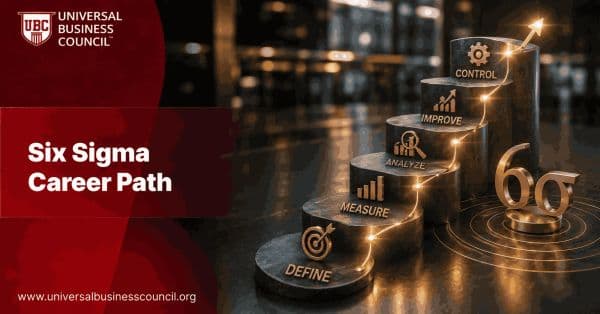
Six Sigma Career Path: Certifications, Roles, Salaries, and Skills
A practical guide to the Six Sigma career path, including belt levels, roles, salary ranges, required skills, and next steps for professionals.
Trending Articles
The Role of Blockchain in Ethical AI Development
How blockchain technology is being used to promote transparency and accountability in artificial intelligence systems.
AWS Career Roadmap
A step-by-step guide to building a successful career in Amazon Web Services cloud computing.
Top 5 DeFi Platforms
Explore the leading decentralized finance platforms and what makes each one unique in the evolving DeFi landscape.