

Six Sigma Roles and Responsibilities: Champions, Belts, and Teams
Six Sigma roles and responsibilities work best when everyone knows the decision rights before the project starts. Champions choose and protect the work. Belts run the method. Process owners keep the gains alive after the final control chart is filed. Miss one of those handoffs and even a well-analyzed DMAIC project can fade within a quarter. For professionals building structured process improvement expertise, Certified Six Sigma Expert training can provide a useful foundation for understanding how these roles work together.
Why Six Sigma Role Clarity Still Matters
Six Sigma has kept a stable role structure because it solves a real operating problem: improvement work cuts across reporting lines. ASQ and major Lean Six Sigma training bodies still describe a hierarchy that includes executive sponsors, champions, master black belts, black belts, green belts, yellow belts, process owners, and team members. Broader Management Certifications can also complement Six Sigma development by strengthening skills in leadership, decision-making, and organizational management.

The structure is not bureaucracy for its own sake. It prevents three familiar failures:
Projects selected because a manager likes them, not because they affect customer value or financial performance.
Belts asked to fix issues without data access, subject matter experts, or authority.
Improvements launched with no process owner ready to monitor the new standard work.
To be blunt, the champion role is often where Six Sigma deployments either gain traction or stall.
The Six Sigma Role Hierarchy
A mature Six Sigma program separates strategic control, project execution, and operational ownership. The names vary by company, but the accountabilities are fairly consistent.
Executive Leaders and Executive Sponsors
Executives set the direction. They approve the improvement portfolio, tie projects to strategic goals, and decide where Six Sigma should focus: cost, quality, cycle time, customer experience, or risk.
Their time commitment is usually light but important. Most role guidance places executive champions at a few hours per month, mainly in portfolio reviews and major decisions. That is enough if the reviews are serious. It is not enough if sponsors only attend the project launch and the closure presentation.
Deployment Champions
Deployment champions translate strategy into a working Six Sigma plan. They decide which business units need training, which value streams deserve attention, and which managers should sponsor individual projects.
The best deployment champions ask uncomfortable questions early:
What problem are we solving, in measurable terms?
Who owns the process after the project closes?
What data source will we trust?
What will we stop doing if this work needs 20 percent of a green belt's week?
That last question matters. Many first-time deployments overload green belts, then wonder why tollgate reviews keep slipping.
Project Champions or Sponsors
The project champion owns the business case for a specific project. This role approves the charter, secures people and data, removes barriers, attends tollgate reviews, and keeps scope from expanding into a wish list.
In practice, a project sponsor may spend about two hours per week on active project support. That sounds small. It is not. On a claims-processing project I reviewed, the black belt lost nearly three weeks because two departments disagreed over whose defect definition would count. A 30-minute champion decision at Define would have saved the team a full Analyze phase rework.
Belt Levels and Responsibilities
Master Black Belt
The master black belt is the senior technical and coaching authority. This person trains belts, reviews project quality, certifies black belts in many organizations, and protects the discipline of DMAIC and DFSS.
A strong master black belt is not just a statistics expert. They can teach a team why measurement system analysis matters without turning the room cold. They also coach champions on project selection, because the cleanest regression model cannot rescue a project that never mattered to the business.
Black Belt
Black belts lead high-impact projects full time in many organizations. They apply DMAIC, root cause analysis, hypothesis testing, control planning, capability analysis, and change management. They also mentor green belts and guide cross-functional teams through the uncomfortable parts of problem solving.
The common mistake? Treating the black belt as a lone analyst. Wrong choice. A black belt can run the method, but process experts know where the workaround lives, which report is unreliable, and why the night shift does the job differently. For professionals working at the intersection of process improvement and emerging technology, Deep Tech Certification can provide complementary technical exposure.
Green Belt
Green belts are functional professionals who lead smaller projects or support black belt projects while keeping their core job. Many programs plan for green belts to spend about 20 to 50 percent of their time on Six Sigma work.
Good green belt projects are close to the work: reducing rework in purchase orders, cutting onboarding delays, improving first-pass yield, or cleaning up handoff errors between sales and operations. If you are preparing for a Universal Business Council Six Sigma course or certification pathway, expect green belt study to test both tool knowledge and practical project judgment.
Yellow Belt and Team Members
Yellow belts and project team members support data collection, process mapping, waste identification, and local implementation. Their role is practical. They validate whether a proposed fix will survive a busy Monday morning.
Yellow belts may only spend about 10 percent of their time on improvement work, yet their input can prevent bad solutions. A process map drawn without frontline staff is often just a management diagram.
Process Owners: The Role That Protects the Gain
The process owner takes responsibility after the project closes. They monitor control metrics, update standard work, train new staff, and respond when performance drifts.
This handover should be formal. Use a control plan, dashboard, response plan, and clear ownership for each metric. If the project improved order accuracy from 94 percent to 98 percent, the process owner needs to know exactly which leading indicator warns that accuracy is slipping. Waiting for monthly financials is too late.
How Six Sigma Teams Work Together
Six Sigma teams are usually cross-functional because defects rarely respect department boundaries. A billing delay might involve sales data, contract terms, finance rules, and system permissions. That means the champion must clear the path while the belt manages the method.
A simple governance rhythm works well:
Define: Champion approves the charter, scope, business case, and process owner.
Measure: Belt validates data sources and baseline performance.
Analyze: Team tests root causes instead of debating opinions.
Improve: Process owner confirms the solution is workable.
Control: Champion signs off only when ownership and monitoring are in place.
Which Six Sigma Role Fits Your Career Goal?
If you want to run departmental improvements, start with green belt skills. If you want to lead complex, high-value projects, build toward black belt capability. If your role is senior management, champion training is the better fit than deep statistical study. You need to select the right projects, fund them, and hold teams accountable.
For internal development planning, link this topic to related Universal Business Council learning paths in Six Sigma, Lean Six Sigma, project management, and business management. Technology professionals can also broaden their technical foundation through Tech Certification while developing the leadership and process skills needed to manage cross-functional improvement programs.
The best next step is simple: identify one process with visible pain, write a one-page charter, name the champion, belt, team, and process owner, then test whether the role structure is clear before you collect a single data point.
FAQs
1. What are the main roles and responsibilities in Six Sigma?
Six Sigma uses defined roles to ensure improvement projects receive the right combination of leadership, technical expertise, process knowledge, and organizational support.
Common roles include the Executive Sponsor, Champion, Master Black Belt, Black Belt, Green Belt, Yellow Belt, Process Owner, Project Team Members, and Finance Representative.
The exact structure varies between organizations. The important principle is clear accountability. If everyone is “responsible for quality,” organizations occasionally discover that nobody was responsible for this particular quality problem.
2. What is the role of a Six Sigma Champion?
A Six Sigma Champion is a senior manager or business leader who sponsors improvement projects and connects them with organizational priorities.
The Champion typically helps select projects, approves project charters, secures resources, removes organizational barriers, reviews progress, and supports implementation.
Champions usually do not perform the project's detailed statistical analysis. Their responsibility is to create the organizational conditions needed for the project team to succeed.
3. What are the responsibilities of a Six Sigma Champion?
A Champion helps ensure that a Six Sigma project addresses an important business problem and receives sufficient management support.
Typical responsibilities include validating the business case, approving scope, selecting or supporting project leaders, resolving cross-functional conflicts, participating in tollgate reviews, and holding the team accountable for results.
The Champion also helps prevent projects from becoming isolated technical exercises with little connection to business priorities.
4. What is an Executive Sponsor in Six Sigma?
An Executive Sponsor provides senior-level support for Six Sigma deployment or major improvement initiatives.
While a Champion may sponsor particular projects or business-area improvements, an Executive Sponsor often operates at a broader strategic level.
The Sponsor may establish improvement priorities, provide funding, communicate executive expectations, and ensure that Six Sigma aligns with organizational strategy.
In smaller organizations, the Champion and Executive Sponsor roles may be performed by the same person.
5. What is the role of a Master Black Belt?
A Master Black Belt (MBB) is an advanced Six Sigma practitioner who supports the organization's broader improvement capability.
Master Black Belts commonly coach Black Belts and Green Belts, provide advanced statistical guidance, conduct training, review project methodology, support project selection, and help standardize Six Sigma practices.
Their focus often extends beyond individual projects to portfolio management, practitioner development, governance, and deployment strategy.
6. What are the responsibilities of a Six Sigma Black Belt?
A Black Belt typically leads complex DMAIC projects and is responsible for guiding the team through:
Define → Measure → Analyze → Improve → Control
Responsibilities may include developing the charter, facilitating meetings, creating data collection plans, validating measurement systems, performing statistical analysis, verifying root causes, evaluating solutions, managing pilots, and developing controls.
Black Belts also coordinate stakeholders and communicate project results to Champions and Process Owners.
The statistics are only part of the job. Convincing three departments that a shared process is, in fact, shared can require considerably more creativity.
7. What is the role of a Six Sigma Green Belt?
A Green Belt is a practitioner who applies Six Sigma tools to process improvement while often continuing normal functional responsibilities.
Green Belts may lead smaller or moderately complex projects and support larger projects led by Black Belts.
Their responsibilities can include process mapping, data collection, baseline analysis, root cause investigation, basic statistical analysis, solution testing, and Control Plan development.
Green Belts are particularly valuable because they often combine Six Sigma skills with detailed knowledge of the process being improved.
8. What is the role of a Six Sigma Yellow Belt?
A Yellow Belt generally participates as a knowledgeable member of a Six Sigma project team.
Yellow Belts understand basic DMAIC concepts and may contribute to process mapping, data collection, brainstorming, Fishbone analysis, 5 Whys, waste identification, and improvement implementation.
They usually do not lead statistically complex projects.
Their frontline knowledge can be essential because they often understand the actual workflow, including the unofficial workarounds that somehow never appear in the official process map.
9. What is the role of a Six Sigma White Belt?
A White Belt has introductory knowledge of Six Sigma principles and terminology.
White Belts may understand the basic purpose of DMAIC, process improvement, customer requirements, defects, and variation. They can participate in local improvement activities or support project teams when needed.
The White Belt role is primarily about awareness rather than project leadership or advanced analysis.
It helps create a common improvement vocabulary across the organization.
10. What is the role of the Process Owner in Six Sigma?
The Process Owner is accountable for the ongoing performance of the process being improved.
During a DMAIC project, the Process Owner provides operational knowledge, supports access to resources and employees, evaluates proposed changes, and helps resolve implementation issues.
After the project closes, the Process Owner becomes especially important because responsibility for sustaining improvements typically transfers from the project team to normal operations.
DMAIC projects end. Processes, inconveniently, keep happening.
11. What are the responsibilities of Six Sigma project team members?
Project team members contribute functional expertise, operational knowledge, data, ideas, and implementation support.
They may participate in process mapping, VOC analysis, data collection, root cause analysis, solution generation, FMEA, pilot testing, and Control Plan development.
A strong team should include people who understand different parts of the process rather than representatives selected merely because their calendars happened to contain available space.
Cross-functional representation is particularly important when process problems involve handoffs between departments.
12. What role do subject-matter experts play in Six Sigma?
A Subject-Matter Expert (SME) provides specialized knowledge relevant to the process or problem.
An SME might be an engineer, technician, software specialist, clinician, accountant, maintenance expert, supplier specialist, or experienced operator.
SMEs help teams understand technical constraints, interpret process behavior, develop hypotheses, evaluate solutions, and assess implementation risks.
Their knowledge is valuable, but expert opinion should still be tested against evidence when the project requires causal conclusions.
Expertise generates strong hypotheses. Data helps determine whether they survive.
13. What role does Finance play in Six Sigma projects?
Finance can help validate the economic impact of Six Sigma projects.
A Finance representative may review baseline costs, savings assumptions, implementation expenses, cost avoidance, productivity improvements, revenue effects, and financial benefit calculations.
For example, if a project claims $500,000 in annual savings, Finance can determine whether the benefit represents actual budget reduction, increased capacity, cost avoidance, or another financial category.
This prevents every eliminated spreadsheet cell from eventually becoming a million-dollar “saving” in the final presentation.
14. What role does senior leadership play in Six Sigma?
Senior leadership establishes the environment in which Six Sigma operates.
Leaders should connect improvement work with strategic priorities, allocate resources, select meaningful improvement areas, reinforce accountability, and remove barriers that project teams cannot resolve independently.
Leadership involvement is particularly important when projects cross departmental boundaries or require changes to policies, systems, incentives, or organizational structures.
Six Sigma cannot compensate indefinitely for leadership that publicly supports improvement while privately protecting every existing practice.
15. Who selects Six Sigma projects?
Project selection may involve Champions, Process Owners, Master Black Belts, operational leaders, finance, and senior management, depending on the organization.
Good candidates usually have a measurable performance gap, meaningful customer or business impact, manageable scope, available data, and reasonable potential for improvement.
Projects should also align with organizational priorities.
Selecting projects merely because data happens to be easy to obtain can produce technically successful improvements with very little business value.
16. Who is responsible for data collection in a Six Sigma project?
Data collection responsibility is usually shared.
The Black Belt or Green Belt may develop the data collection plan and operational definitions, while operators, analysts, systems, inspectors, or team members collect or extract the actual data.
The project leader should ensure that the measurement method is reliable and that sampling is representative.
Clear ownership matters because “the team will collect the data” can become an elegant way of ensuring that everyone assumes someone else is doing it.
17. Who is responsible for root cause analysis in Six Sigma?
The project team collectively participates in root cause analysis, while the Black Belt or Green Belt typically facilitates the methodology and analytical work.
Team members and SMEs help generate potential causes through process knowledge, Fishbone diagrams, 5 Whys, process maps, and observation.
The project leader then helps translate suspected causes into testable hypotheses and uses appropriate data analysis to validate them.
Root cause analysis works best when operational expertise and analytical discipline are combined.
18. Who is responsible for sustaining Six Sigma improvements?
Long-term responsibility usually belongs primarily to the Process Owner and operational team, not the Black Belt or Green Belt who led the project.
During Control, the project team should establish standard work, monitoring methods, Control Plans, reaction procedures, training, documentation, and clear ownership.
The handoff can be represented as:
Project Team Improves → Process Owner Accepts → Operations Controls → Performance Is Monitored
If the process immediately deteriorates once the Belt leaves, the project created dependence rather than control.
19. How do Six Sigma roles work together during DMAIC?
Responsibilities change throughout the DMAIC lifecycle.
During Define, the Champion and project leader establish the business case, scope, goals, and team.
During Measure, Belts and team members define metrics, validate measurement systems, and establish baseline performance.
During Analyze, the team and SMEs generate possible causes while practitioners apply data analysis to validate them.
During Improve, the team develops and tests solutions while the Champion helps remove implementation barriers.
During Control, the Process Owner accepts ongoing responsibility and operations maintains the improved process.
Each role therefore contributes differently rather than duplicating the same work.
20. What is the complete Six Sigma roles and responsibilities structure?
A practical Six Sigma responsibility structure can be summarized as:
Role | Primary Responsibility | Typical Focus |
|---|---|---|
Executive Sponsor | Strategic support | Organizational priorities |
Champion | Project sponsorship | Resources and barriers |
Master Black Belt | Coaching and governance | Methodology and deployment |
Black Belt | Complex project leadership | DMAIC and advanced analysis |
Green Belt | Improvement execution | Moderate projects and analysis |
Yellow Belt | Project participation | Process knowledge and support |
White Belt | Basic participation | Six Sigma awareness |
Process Owner | Long-term process performance | Sustainability |
SME | Specialized expertise | Technical/process knowledge |
Team Member | Project contribution | Analysis and implementation |
Finance | Benefit validation | Financial impact |
The working relationship can be viewed as:
EXECUTIVE LEADERSHIP
Sets strategic priorities and supports improvement.
↓
CHAMPION
Selects and sponsors important projects and removes barriers.
↓
MASTER BLACK BELT
Builds methodology capability and coaches practitioners.
↓
BLACK BELT
Leads complex improvement projects.
↓
GREEN BELT
Leads or supports process-level improvement projects.
↓
YELLOW AND WHITE BELTS
Contribute process knowledge and support improvement activities.
↓
PROJECT TEAM AND SMEs
Provide operational expertise, data, analysis, and implementation support.
↓
PROCESS OWNER
Takes responsibility for sustaining improved performance.
The structure works when responsibilities are explicit and decision rights are understood.
A Black Belt should not be expected to overcome every organizational barrier without a Champion. A Champion should not dictate statistical conclusions. A Process Owner should not discover during the final Control meeting that they now own a redesigned process they barely saw during the project.
The most effective Six Sigma teams combine leadership authority, analytical expertise, process knowledge, financial discipline, and operational ownership.
The belts provide technical capability. Champions provide organizational support. Team members provide process knowledge. Process Owners sustain the result.
Remove any one of those elements and the project can still generate an impressive presentation.
Whether it generates lasting improvement is another matter.
Related Articles
View All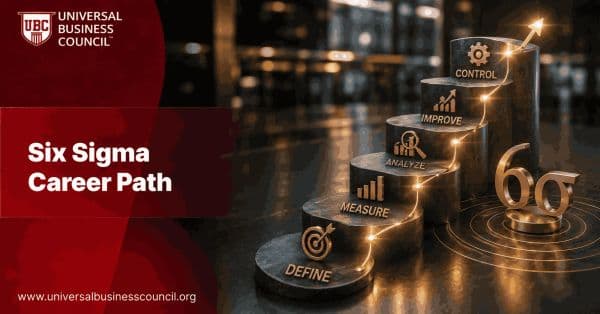
Six Sigma
Six Sigma Career Path: Certifications, Roles, Salaries, and Skills
A practical guide to the Six Sigma career path, including belt levels, roles, salary ranges, required skills, and next steps for professionals.
Six Sigma
Six Sigma Software and Tools: What Teams Need to Succeed
Learn how Six Sigma software and tools support DMAIC, data collection, statistical analysis, process modeling, project governance, and lasting improvement.
Six Sigma
Six Sigma Variance Explained: What It Means for Quality Teams
Six Sigma variance shows how consistently a process performs. Learn how quality teams measure, interpret, and reduce variance across manufacturing, service, and IT.
Trending Articles
The Role of Blockchain in Ethical AI Development
How blockchain technology is being used to promote transparency and accountability in artificial intelligence systems.
AWS Career Roadmap
A step-by-step guide to building a successful career in Amazon Web Services cloud computing.
Top 5 DeFi Platforms
Explore the leading decentralized finance platforms and what makes each one unique in the evolving DeFi landscape.