

Responsible AI for Multilingual and Low-Resource Languages
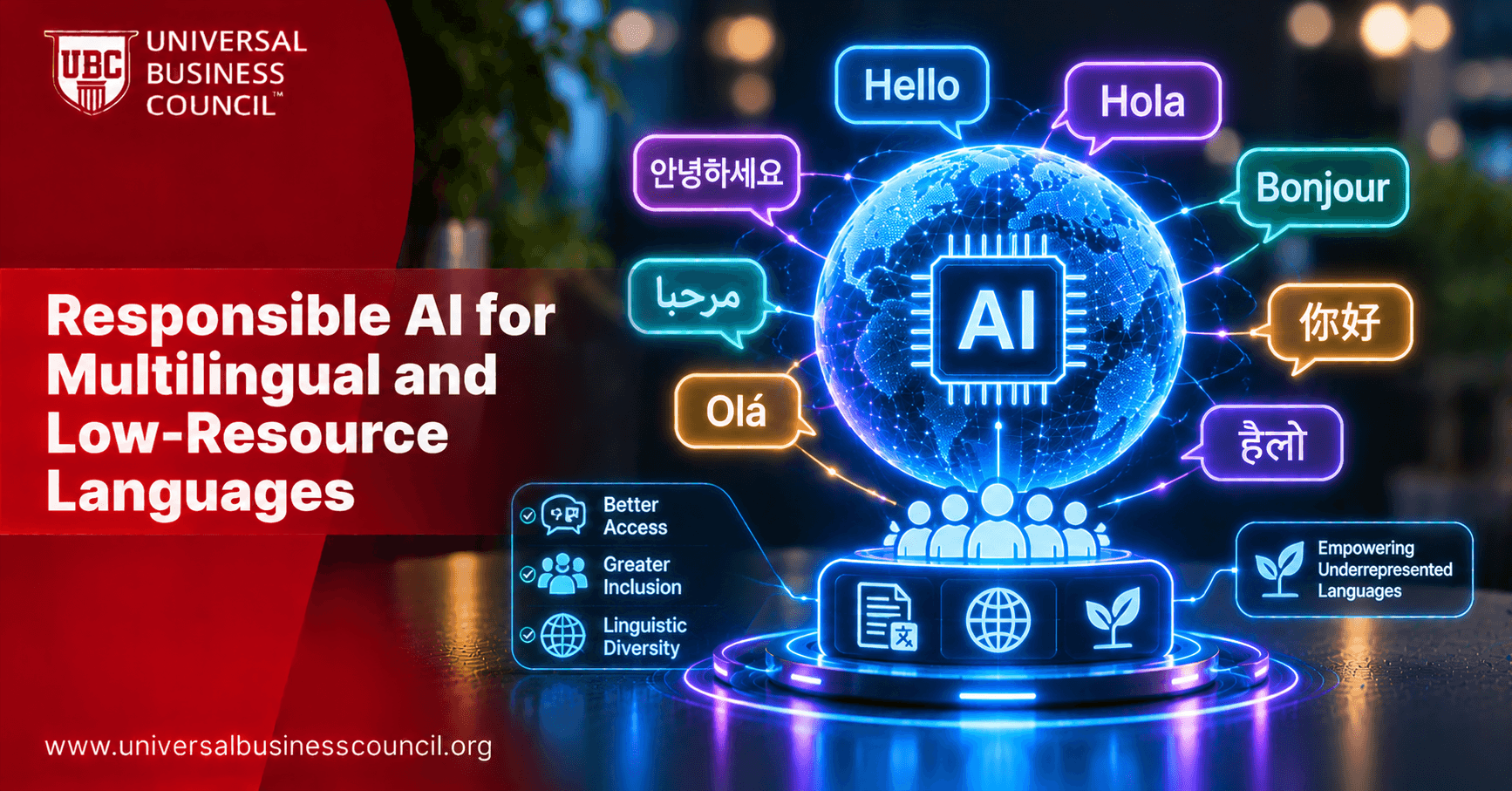
Thousands of languages are spoken around the world, yet most AI systems are built around a handful of them. India alone recognizes 22 scheduled languages, with many more dialects, and the same pattern of uneven coverage appears in every region. When a chatbot, voice assistant or translation tool works well in English and badly in a speaker's own language, the gap is more than an inconvenience. It decides who gets access to information, services and opportunity. This guide covers responsible AI for multilingual and low-resource languages: why the gaps exist, what harm they cause and how to build and evaluate systems that serve more people fairly. For readers who want a formal credential in this field, the Certified Responsible AI Expert program is a good place to start.
What is responsible AI for multilingual and low-resource languages?
A low-resource language is one with little digital text, speech or labeled data available for training AI. That can mean a language with few speakers, or a language with many speakers whose written and recorded material is scarce or hard to use online. Multilingual AI aims to work across many languages, and responsible AI for multilingual and low-resource languages means doing that in ways that are accurate, safe, respectful and fair to each language community.

It is not only about adding more languages to a list. It is about making sure each supported language gets real quality, real safety testing and real input from the people who speak it.
Why the gaps exist
Training data is dominated by a few languages, especially English
Many languages have little written material online, or use scripts and spellings that vary widely
Speakers often mix languages in one sentence, which models handle poorly
Text in some languages takes far more tokens to process, which can raise cost and reduce quality
Benchmarks are often translated from English and miss local context
Commercial incentives favor large, wealthy markets
The harms of uneven language support
Lower accuracy and usefulness
Systems may misunderstand questions, give weaker answers or invent more facts in lower-resource languages. Speech tools can fail on accents and dialects.
Weaker safety
Safety filters and refusal behavior are often trained mostly in English. Harmful requests written in other languages may slip through, while harmless content may be wrongly blocked. Content moderation can also miss abuse and misinformation in languages the platform does not staff.
Exclusion from essential services
When health, legal, financial or government information is available only through AI that works poorly in a person's language, they are shut out of services they have a right to use.
Higher costs and unequal access
Speakers of some languages pay more for the same service because of how text is processed, or must switch to another language to be understood.
Cultural flattening and loss
Translation and generation tools can erase local expressions, honorifics and meaning, nudging languages toward the patterns of dominant ones.
Harm in high-stakes translation
An inaccurate machine translation in a medical, legal or emergency setting can cause real damage, especially if the user cannot check it.
Responsible practices
Work with language communities
Speakers should help decide what data is collected, how it is used and what success looks like. Respect community ownership of language data, obtain informed consent and consider fair compensation and shared benefit. Communities often care about sovereignty over their cultural material, so consult before using it.
Build better data
Collect text and speech ethically, with clear licenses and consent
Represent dialects, scripts, spelling variation and mixed-language speech
Prioritize quality and diversity of sources over raw volume
Pay and credit annotators fairly, and train them well
Document datasets, including who contributed and known gaps
Evaluate in each language
Do not assume results in English carry over. Build or adopt tests written by native speakers rather than translated from English, and have fluent reviewers rate quality, tone and cultural fit. Report performance per language, and test safety behavior separately in each one.
What a per-language report should show
Accuracy on realistic tasks
Rates of invented or unsupported answers
Safety and refusal behavior
Performance across dialects and accents
Known weaknesses and unsupported uses
Design for honest deployment
Tell users which languages are supported and at what level of quality. Avoid presenting a weak language as fully supported. Offer a route to human help, particularly in health, legal and financial settings. Avoid relying on machine translation alone for high-stakes content, and support the scripts and input methods people actually use.
Extend safety and moderation
Train and test guardrails in every supported language, include local reviewers in moderation and track complaints by language.
Governance and budgeting
Treat language coverage as a core requirement, not an afterthought. Name an owner for language quality, include multilingual performance in impact assessments and set minimum quality thresholds before launching in a new language. Budget for data, evaluation and community engagement from the start, since adding languages cheaply often means adding them poorly.
Localization and brand communication
Brands that serve multilingual audiences need more than word-for-word translation. Tone, idiom and cultural reference all matter, and a mistranslated message can harm trust quickly. Have fluent speakers review AI-generated copy before publication. Marketing teams who want a stronger base in reaching diverse audiences can look at the Certified Digital Marketing Expert program.
Skills, records and trusted people
Building speech and language systems takes strong technical depth, which the programming and technology certifications from Global Tech Council can help build. Dataset records and consent logs are more valuable when they cannot be quietly altered, and teams exploring tamper-evident approaches can look at the deep tech certifications from Blockchain Council. When you hire engineers, linguists and evaluators, skills tests show who can really do the job. HireValid offers AI-proof pre-employment tests with an Integrity Score that supports human review.
Conclusion: serving every speaker with responsible AI for multilingual and low-resource languages
Responsible AI for multilingual and low-resource languages begins with an uncomfortable fact: most AI is built for a few languages, and everyone else gets a weaker version or none at all. The gaps come from skewed data, scarce digital text, mixed-language speech, costly processing of some scripts, translated benchmarks and market incentives. The harms are real, from lower accuracy and weaker safety filters to exclusion from essential services, higher costs, cultural flattening and dangerous mistranslation in high-stakes settings.
The remedies are practical. Work with language communities and respect their ownership of data, build datasets ethically and with attention to dialects and code-mixing, evaluate each language on its own with native-speaker tests and per-language reporting, deploy honestly with clear statements of supported languages and human fallbacks and extend safety and moderation to every language you serve. Back it with governance: an owner, minimum thresholds before launch and a real budget. Start with the language your users rely on most after English, run your key tasks and safety tests in it with fluent reviewers and publish what you find. The Certified Responsible AI Expert program mentioned at the start can help your team build the skills behind responsible AI for multilingual and low-resource languages.
FAQs
1. What is a low-resource language?
A language with little digital text, speech or labeled data available for training AI.
2. Why does AI work worse in some languages?
Training data is dominated by a few languages, so others get less coverage and testing.
3. Can low-resource languages be widely spoken?
Yes. A language can have many speakers yet little usable digital data.
4. What is code-mixing?
Switching between languages within a sentence or conversation, which many models handle poorly.
5. Are safety filters equally strong in all languages?
Often not. Safety training is frequently concentrated in English, so test each language separately.
6. Why can some languages cost more to process?
Text in some scripts breaks into more tokens, which increases cost and can reduce quality.
7. How should language data be collected?
Ethically, with consent, clear licenses and fair credit and pay for contributors.
8. Why involve language communities?
They know what matters, can spot errors and have a right to decide how their language is used.
9. Are translated benchmarks enough?
No. They miss local context, so use tests created by native speakers.
10. How do we evaluate quality in each language?
Combine native-speaker tests, fluent human review and per-language reporting.
11. Should we tell users which languages are fully supported?
Yes. Be honest about quality, and avoid overstating weak support.
12. Is machine translation safe for health or legal content?
Not on its own. Use human review for high-stakes material.
13. How does this affect content moderation?
Platforms may miss abuse in languages they do not staff, so include local reviewers.
14. What about dialects and accents?
Include them in data and tests, since speech and text tools often fail on them.
15. Who should own language quality?
A named owner with support from product, engineering, linguistics and community partners.
16. Does adding a language cost much?
Doing it well takes budget for data, evaluation and engagement, so plan for it.
17. What records should we keep?
Dataset sources, consent, annotator details, evaluation results and known gaps.
18. Can small teams support multiple languages responsibly?
Yes, by starting with a few, partnering with communities and being clear about quality.
19. How often should multilingual performance be reviewed?
After every model change and on a regular schedule.
20. Where can I learn more?
Training such as the Certified Responsible AI Expert program and research from language technology communities.
Related Articles
View All
Artificial Intelligence
Responsible AI Audit: Principles, Controls and Best Practices
Discover what a responsible AI audit involves and how organizations evaluate AI systems against principles of fairness, transparency, accountability, safety, and privacy. Learn about the audit process, key assessment areas, and how regular reviews help identify risks and strengthen responsible AI practices.

Artificial Intelligence
Responsible AI Training Program: Curriculum for Employees and Leaders
Learn how to develop a responsible AI training program that prepares employees and leaders to use AI safely and ethically. Explore essential curriculum topics, role-based learning, AI risk awareness, governance responsibilities, and practical training approaches that support responsible AI adoption across an organization.

Artificial Intelligence
Responsible AI Metrics Dashboard: Designing a Practical Scorecard
Learn how to design a practical responsible AI metrics dashboard to track fairness, transparency, accountability, safety, and privacy. Explore key performance indicators, measurement methods, and reporting practices that help organizations monitor AI systems and improve responsible AI implementation.
Trending Articles
The Role of Blockchain in Ethical AI Development
How blockchain technology is being used to promote transparency and accountability in artificial intelligence systems.
AWS Career Roadmap
A step-by-step guide to building a successful career in Amazon Web Services cloud computing.
Top 5 DeFi Platforms
Explore the leading decentralized finance platforms and what makes each one unique in the evolving DeFi landscape.