

Introducing Claude Sonnet 5
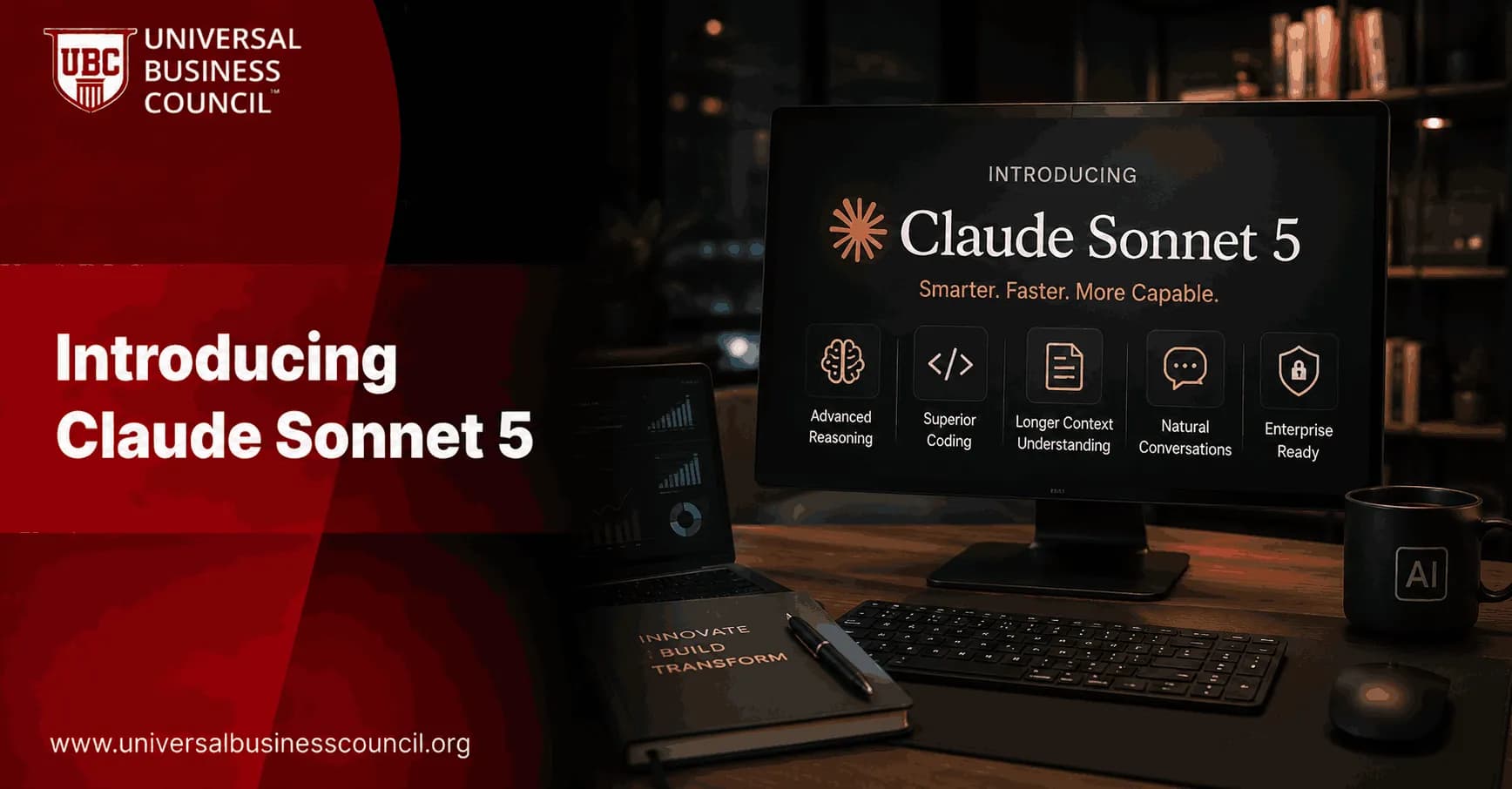
Anthropic launched Claude Sonnet 5 on June 30, 2026, and by the time most professionals sat down at their desks, it had already replaced the previous model as the default experience for every Free and Pro user on claude.ai. The release was immediate, not a phased rollout, and it landed simultaneously across all major platforms: the Claude app, the Claude API, Amazon Bedrock, Google Cloud, Microsoft Foundry, and Cursor.
The announcement from Anthropic was direct: Claude Sonnet 5 is the most autonomous and capable mid-tier model the company has ever released. It plans ahead, uses external tools like browsers and terminals independently, completes multi-step workflows that earlier versions would abandon partway through, and checks its own output without being asked. For businesses using Claude for automation, content, analysis, or customer operations, this matters immediately.

This is also a moment that rewards preparation. The organizations and professionals who understand what Claude Sonnet 5 actually does, how it is priced, what it costs to run, and how to apply it strategically will extract measurably more value from it than those who simply accept the new default and move on. Building that strategic foundation alongside a recognized Marketing Certification gives professionals the positioning and communication skills to lead AI adoption decisions within their organizations, not just participate in them.
This guide explains Claude Sonnet 5 in plain, practical terms for business professionals, marketers, and organizational leaders making decisions about how AI fits into their operations.
What Is Claude Sonnet 5?
Claude Sonnet 5 is Anthropic's newest mid-tier AI model. It sits in the middle of Anthropic's lineup, more capable and autonomous than Haiku-class models, and more affordable than the Opus-class models at the top. It replaces Sonnet 4.6, which launched in February 2026, as the standard model across Anthropic's consumer and business platforms.
If you have used Claude before, you have been using a Sonnet-class model for most everyday interactions. What changes with Sonnet 5 is not just raw intelligence but behavior: how it handles multi-step tasks, how it responds when something goes wrong mid-workflow, and whether it pushes through to completion or stops and waits for you.
In practical terms, Sonnet 5 is the first mid-tier Claude model that can independently run a multi-step business workflow from start to finish. That distinction matters enormously for teams evaluating where AI can genuinely reduce workload rather than just augment it.
What "Agentic" Actually Means for Your Business
Anthropic describes Claude Sonnet 5 as its "most agentic Sonnet yet." For business professionals, that phrase needs translation.
An agentic AI model is one that can take a goal, break it into steps, execute those steps using available tools, encounter problems, adapt, and keep going until the task is done, without requiring a human to hold its hand at every stage. This is fundamentally different from a model that answers a question or generates a paragraph. It is closer to delegating a multi-step task to a capable team member.
What This Looks Like in Practice
Zapier's Senior Engineer Daniel Shepard provided the clearest real-world example at launch: "We handed Claude Sonnet 5 a two-part job — update Salesforce account tiers, send a launch announcement to enterprise contacts — and it finished end to end. That used to stall halfway. For day-to-day automation, it's a no-brainer."
That kind of workflow, crossing systems, combining data updates with outbound communication, completing reliably without manual intervention at the midpoint, is what agentic actually means for business operations. Previous Sonnet models would stop. Sonnet 5 finishes.
Lovable co-founder Fabian Hedin added: "Claude Sonnet 5 refuses unsafe requests cleanly and consistently." This matters for business deployment: a model that is more autonomous also needs to be more reliably safe, and Sonnet 5 scores lower on undesirable behaviors than Sonnet 4.6 across hallucination, sycophancy, and compliance with malicious requests.
Claude Sonnet 5 Pricing: What It Costs and When It Changes
Pricing is the most immediately actionable piece of the Sonnet 5 announcement for business teams.
Period | Per 1M Input Tokens | Per 1M Output Tokens |
Introductory (until August 31, 2026) | $2.00 | $10.00 |
Standard (from September 1, 2026) | $3.00 | $15.00 |
This is the first time Anthropic has used introductory pricing at model launch. The company's stated reason: an updated tokenizer in Sonnet 5 processes the same text into roughly 1.0 to 1.35 times as many tokens as Sonnet 4.6, depending on content type. The lower introductory price keeps the effective cost of migrating from Sonnet 4.6 roughly neutral.
How Sonnet 5 Compares to Competitors
At introductory pricing, Sonnet 5 is cheaper than Opus 4.8, GPT-5.5, and Gemini 3.1 Pro. It is more expensive than Gemini 3.5 Flash, which is optimized for very different, faster but lighter use cases. At standard pricing from September 1, it remains competitive within the mid-tier segment, though business teams running high volumes should model the combined effect of the pricing increase and the tokenizer change on total monthly spend before August 31.
What Claude Sonnet 5 Can Do for Business Teams
The agentic capability improvements in Sonnet 5 translate into a different set of business applications than prior Sonnet models supported reliably.
Marketing and Content Operations
Claude Sonnet 5 can take a content brief, research a topic using web search tools, draft a structured long-form piece, review it against a style guide, revise it, and flag any sections that require human review, all in a single autonomous run. For content teams currently running these steps manually or across multiple tools, Sonnet 5 reduces that to a supervised pipeline rather than a manual one.
At the knowledge work benchmark, Sonnet 5 actually slightly outperforms Opus 4.8, making it the most capable model currently available for research synthesis, competitive intelligence, and structured writing tasks at any price point.
Customer Operations and Support
Sonnet 5's autonomous tool use means it can now handle multi-step customer support workflows: retrieving account information, checking policy documentation, drafting a resolution, and logging the outcome, without requiring a human to connect each step. For organizations already using Claude in customer support channels, this is a meaningful upgrade in the complexity of tasks it can resolve autonomously.
Workflow Automation
The Zapier example is the template: any workflow that previously required a human to bridge two systems, confirm a step, or restart when something stalled is now a candidate for Sonnet 5 automation. The model's self-verification behavior, checking its own output without being prompted, reduces the rate of silent errors in automated pipelines.
Research and Analysis
With a one million token context window and performance that exceeds Opus 4.8 on knowledge work benchmarks, Sonnet 5 can ingest large document sets, synthesize findings across sources, and produce structured analytical outputs that previously required either Opus-class models or significant human editorial work.
Performance Benchmarks: What the Numbers Mean for Business
Anthropic published benchmark data at launch comparing Sonnet 5 to Sonnet 4.6 and Opus 4.8. For business professionals, the key takeaways are:
On agentic coding: Sonnet 5 scores 63.2%, versus Opus 4.8 at 69.2% and Sonnet 4.6 at 58.1%. For businesses using Claude to assist development or technical teams, this represents a meaningful capability step up at lower cost.
On knowledge work: Sonnet 5 slightly exceeds Opus 4.8. For research-intensive business functions like strategy, competitive intelligence, and content, Sonnet 5 is now the highest-performing model at any price.
On autonomous task performance: At its highest reasoning effort setting, Sonnet 5 approaches Opus 4.8 on complex agentic benchmarks. For organizations that want near-flagship performance without flagship pricing, configuring Sonnet 5 at higher reasoning effort is a practical option.
On Cursor's development benchmark: Cursor reported a same-day improvement from 49% to 57%, an 8-point gain on a real-world coding evaluation. For businesses with software teams using Claude-integrated development tools, this is a concrete productivity signal.
Where Claude Sonnet 5 Is Available
Claude Sonnet 5 is available immediately everywhere Anthropic's products are offered:
claude.ai Default model for Free and Pro plans; available on Max, Team, and Enterprise
Claude Code Available at launch with higher rate limits
Claude API Available for developers and platform integrators
Amazon Bedrock Available for AWS-based deployments
Google Cloud Available for GCP-based deployments
Microsoft Foundry Available for Microsoft ecosystem integrations
Cursor Available with confirmed benchmark improvements
GitHub Copilot Rolling out per GitHub changelog
For enterprise teams already using Claude through a cloud provider or API integration, no migration effort is required to access Sonnet 5. The default model transition happens at the platform level.
Safety: Why It Matters More as the Model Gets More Autonomous
As AI models take on more autonomous responsibilities, the question of safety becomes more operationally significant, not less. A model that answers questions makes mistakes one response at a time. A model that executes multi-step workflows autonomously can propagate an error across an entire process before a human sees the output.
Anthropic reports that Sonnet 5 is measurably safer than Sonnet 4.6 across every tracked dimension: it hallucinates less, behaves sycophantically less, refuses malicious requests more reliably, and is more resistant to prompt-injection attacks that attempt to hijack an autonomous session mid-execution.
For business teams deploying Sonnet 5 in customer-facing or operationally sensitive contexts, these improvements reduce the risk of the model autonomously completing a task incorrectly without flagging the problem.
The Broader Context: What Else Is Happening at Anthropic
Sonnet 5 arrived alongside two other significant developments that business leaders should be aware of.
Claude Science: Announced on the same day as Sonnet 5, Claude Science is a dedicated AI workbench for researchers and scientists. It integrates scientific tools and packages, produces auditable research artifacts, and runs on Sonnet 5 as its underlying model. Organizations in healthcare, pharmaceuticals, and research-intensive industries should note this as a signal of Anthropic's direction in vertical AI applications.
Regulatory context: A U.S. Commerce Department order on June 12, 2026 suspended Claude Fable 5 and Mythos 5 for general users. Both remain offline. Sonnet 5 and Opus 4.8 are currently the highest-capability models accessible to most organizations. This context gives Sonnet 5 a different strategic weight than it might otherwise carry: it is not simply an upgrade to a mid-tier model. It is the most powerful Claude model most businesses can currently run.
Anthropic IPO filing: Anthropic confidentially filed a draft S-1 registration statement with the SEC on June 1, 2026, following a $65 billion Series H round that valued the company at $965 billion. Sonnet 5 is the first major model release since that filing and signals continued product investment at significant pace ahead of a potential public offering.
How to Apply Claude Sonnet 5 Strategically in Your Organization
Step 1: Identify Your Highest-Value Automation Candidates
The best use cases for Sonnet 5 are multi-step workflows that currently require human coordination across stages: content pipelines, research-to-report processes, CRM update workflows, and customer support escalation paths. Audit where human effort is being spent bridging tool outputs rather than applying judgment, and prioritize those workflows first.
Step 2: Model Your Token Costs Before August 31
The introductory pricing ends August 31. The combination of a tokenizer change, which may increase token counts by up to 1.35x for some content types, and the standard pricing increase will affect total API costs for high-volume users. Run representative workloads through Sonnet 5 now to measure actual token counts and model the post-August cost before you are already committed at scale.
Step 3: Communicate the Change to Your Teams
Sonnet 5 is already the default model for anyone using claude.ai on a Free or Pro plan. Teams using Claude for daily work may notice behavioral differences: longer autonomous runs, more thorough self-review, and more consistent completion of complex tasks. Setting expectations proactively prevents confusion and helps teams adapt their prompting and workflow patterns quickly.
Step 4: Evaluate Whether Opus 4.8 Is Still Necessary
For most business workloads, Sonnet 5 is now the appropriate choice. Reserve Opus 4.8 for tasks where maximum accuracy is genuinely critical and even small errors carry significant downstream cost. For the vast majority of marketing, operations, research, and support workflows, Sonnet 5 is the better cost-performance decision.
Building the Expertise to Lead AI Adoption
As Claude Sonnet 5 becomes the default AI model for most users and the baseline for most business AI workflows, the professionals and organizations that understand how to apply it strategically will outperform those that treat it as a passive tool.
Understanding how models like Sonnet 5 work architecturally, how agentic systems are designed, and how to evaluate AI infrastructure decisions analytically is increasingly a core business competency, not a niche technical skill. A comprehensive Tech Certification gives professionals the foundational technical literacy to engage with these questions intelligently, evaluate vendor claims with appropriate skepticism, and make deployment decisions grounded in genuine understanding rather than marketing materials.
For practitioners who need to go deeper into Claude's specific architecture, agentic behavior, and deployment patterns, a Claude AI Expert certification provides the applied expertise to move from understanding Sonnet 5 conceptually to designing and governing Claude-powered workflows with real precision and reliability.
Conclusion
Claude Sonnet 5 is live today, it is already the default model for most Claude users, and it represents a meaningful operational upgrade for every organization using Claude for automation, content, analysis, or customer operations. Its agentic capabilities bring multi-step autonomous task completion to a price tier that most businesses can realistically deploy at scale. The introductory pricing window through August 31 is a genuine opportunity to migrate and test at the lowest possible cost before standard rates take effect.
The organizations that will benefit most are those that act now: identify the workflows where autonomous completion has real business value, model the cost impact before August, and build the internal expertise to apply Sonnet 5 deliberately rather than reactively. A Marketing Certification that develops strategic communication and business positioning skills, combined with a Tech Certification that builds technical literacy and a Claude AI Expert credential that develops applied Claude expertise, creates the complete professional toolkit for leading your organization's Claude Sonnet 5 adoption with clarity and confidence.
Frequently Asked Questions
1. What is Claude Sonnet 5?
Claude Sonnet 5 is Anthropic's latest mid-tier AI model, launched June 30, 2026. It is the most autonomous Sonnet model released to date, capable of multi-step planning, tool use, and self-verification, approaching Opus 4.8 performance at significantly lower cost.
2. When was Claude Sonnet 5 released?
Claude Sonnet 5 was released on June 30, 2026, immediately becoming the default model for Free and Pro users on claude.ai and available across the Claude API, Amazon Bedrock, Google Cloud, and Microsoft Foundry.
3. Is Claude Sonnet 5 available for free?
Yes. Claude Sonnet 5 is the default model on Anthropic's Free plan. Pro, Max, Team, and Enterprise users also have immediate access.
4. What does "agentic" mean in the context of Claude Sonnet 5?
Agentic means the model can take a goal, break it into steps, execute those steps using tools like browsers and terminals, handle problems mid-task, and complete the work autonomously, without requiring human input at each stage.
5. How is Claude Sonnet 5 priced?
Introductory pricing through August 31, 2026 is $2 per million input tokens and $10 per million output tokens. Standard pricing from September 1 is $3 per million input tokens and $15 per million output tokens.
6. How does Claude Sonnet 5 compare to Opus 4.8 in performance?
Sonnet 5 scores 63.2% on agentic coding versus Opus 4.8's 69.2%. It slightly exceeds Opus 4.8 on knowledge work. At Extra High reasoning effort, it approaches Opus 4.8 on autonomous task benchmarks.
7. What business workflows benefit most from Claude Sonnet 5?
Multi-step workflows that currently require human coordination across stages benefit most: content pipelines, research-to-report processes, CRM update workflows, customer support escalation paths, and cross-system automation tasks.
8. What did Zapier say about Claude Sonnet 5?
Zapier Senior Engineer Daniel Shepard confirmed that Sonnet 5 completed a two-part workflow — updating Salesforce account tiers and sending a launch announcement — end to end, a task that previously stalled halfway with earlier Claude models.
9. Why did Anthropic introduce introductory pricing?
The introductory pricing offsets the cost impact of Sonnet 5's updated tokenizer, which may process the same input into 1.0 to 1.35 times as many tokens as Sonnet 4.6. The lower price keeps the migration roughly cost-neutral.
10. What should businesses do before August 31, 2026?
Run representative workloads through Sonnet 5 to measure actual token counts with the updated tokenizer, model the combined cost impact of the tokenizer change and standard pricing, and make routing decisions before the introductory period ends.
11. Is Claude Sonnet 5 safer than previous models?
Yes. Sonnet 5 shows lower hallucination rates, lower sycophancy rates, better refusal of malicious requests, and stronger resistance to prompt-injection attacks compared to Sonnet 4.6.
12. What is the context window for Claude Sonnet 5?
Claude Sonnet 5 supports a one million token context window, enabling it to process large document sets, long conversations, and extended agentic sessions within a single run.
13. What platforms does Claude Sonnet 5 support?
Claude Sonnet 5 is available on claude.ai, Claude Code, the Claude API, Amazon Bedrock, Google Cloud, Microsoft Foundry, Cursor, and rolling out on GitHub Copilot.
14. What is Claude Science and how does it relate to Sonnet 5?
Claude Science, announced the same day as Sonnet 5, is a dedicated AI workbench for scientists that integrates research tools, produces auditable artifacts, and runs on Sonnet 5 as its underlying model.
15. Why is Sonnet 5 more important than usual given the regulatory context?
Claude Fable 5 and Mythos 5 were suspended under a U.S. Commerce Department order on June 12, 2026. Sonnet 5 and Opus 4.8 are now the highest-capability Claude models accessible to most organizations, giving Sonnet 5 more strategic significance than a typical mid-tier release.
16. Should organizations stop using Opus 4.8 and switch to Sonnet 5?
For most business workloads, yes. Sonnet 5 is the better cost-performance choice for the majority of content, research, automation, and support use cases. Reserve Opus 4.8 for tasks where maximum accuracy is genuinely critical and errors carry significant downstream cost.
17. How does Claude Sonnet 5 compare to GPT-5.5 and Gemini 3.1 Pro on price?
At introductory pricing, Sonnet 5 is cheaper than both GPT-5.5 and Gemini 3.1 Pro while delivering comparable or better performance on knowledge work and agentic task completion benchmarks.
18. What is the maximum output length for Claude Sonnet 5?
Claude Sonnet 5 supports a maximum output of 128,000 tokens per response, suitable for generating long-form documents, detailed analyses, and extended agentic workflow outputs.
19. How does Sonnet 5 handle errors in automated workflows?
Sonnet 5's self-verification behavior means it checks its own output without being explicitly prompted. This reduces the rate of silent errors in automated pipelines compared to earlier Sonnet models, which would sometimes complete tasks with unverified outputs.
20. What is the strategic opportunity of the Claude Sonnet 5 launch for business professionals?
The introductory pricing window, the model's agentic capability improvements, and its current position as the highest-capability broadly accessible Claude model create a genuine competitive advantage for organizations that adopt and integrate Sonnet 5 strategically before their competitors do.
Related Articles
View All
Claude Ai
Claude Sonnet 5 Competitive Advantage: Time, Change, and Strategy Lessons From Sonnet 5
Learn how Claude Sonnet 5 competitive advantage comes from faster sensing, decision cycles, adaptability, and disciplined change management.
Claude Ai
Introducing Claude Fable 5 and Claude Mythos 5
Introducing Claude Fable 5 and Claude Mythos 5, new AI models aimed at advancing reasoning, creativity, and agentic workflows.
Claude Ai
What Is Claude Duet? Features and Capabilities
Claude Duet is Anthropic’s proactive AI agent app. Learn its key features, what it can do, how its approval and safety controls work, who can join the US waitlist, and how it compares with Meta Muse and OpenAI Dots.
Trending Articles
The Role of Blockchain in Ethical AI Development
How blockchain technology is being used to promote transparency and accountability in artificial intelligence systems.
AWS Career Roadmap
A step-by-step guide to building a successful career in Amazon Web Services cloud computing.
Top 5 DeFi Platforms
Explore the leading decentralized finance platforms and what makes each one unique in the evolving DeFi landscape.