

AI-Driven Audience Segmentation: Turning Customer Data Into High-Intent Micro-Clusters
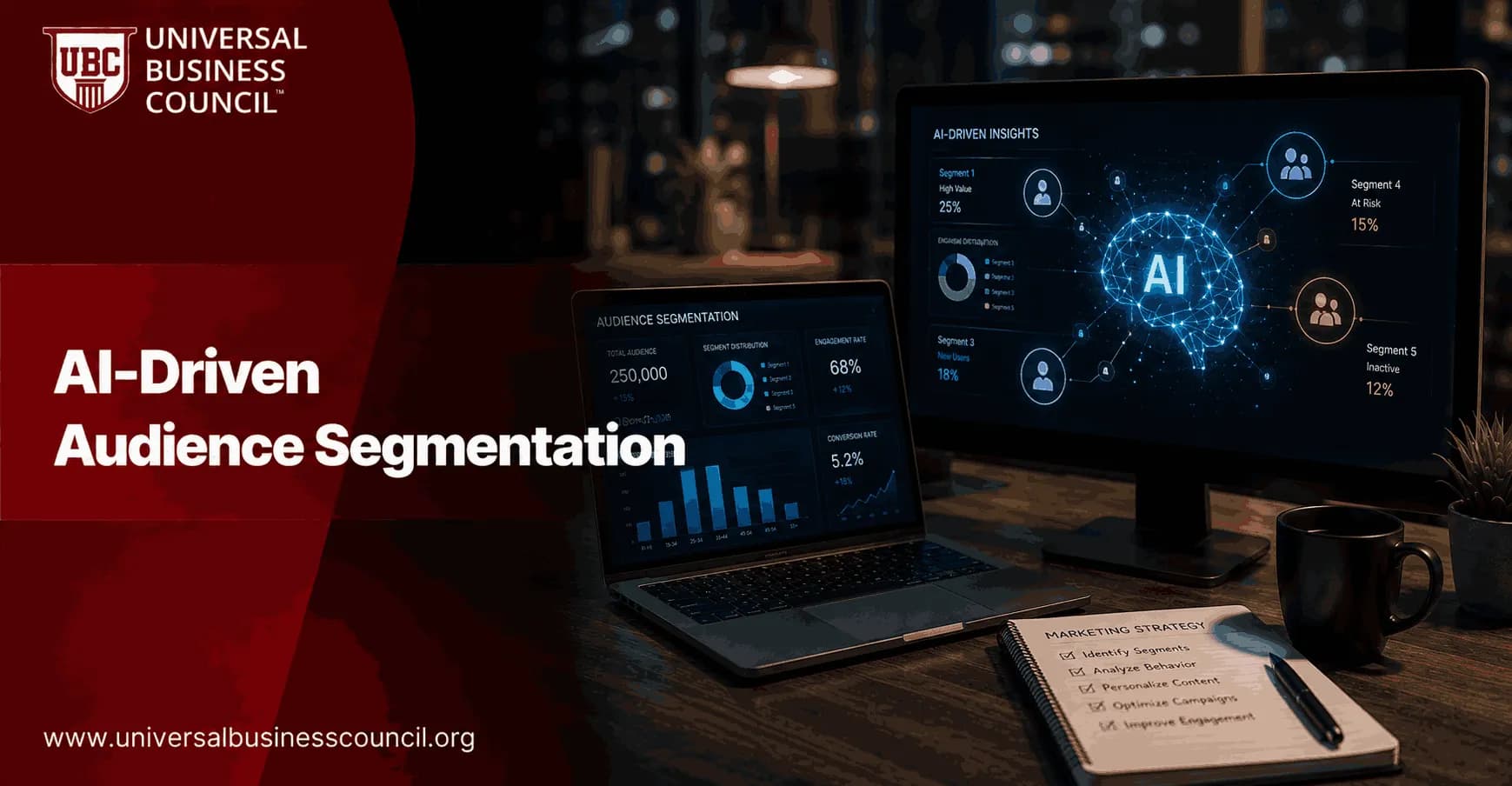
AI-driven audience segmentation is reshaping digital marketing by using machine learning to convert large volumes of customer and contextual data into small, intent-rich micro-clusters that update continuously. Instead of relying on static demographic buckets, modern segmentation prioritizes predicted next actions - such as purchase likelihood, churn risk, or upgrade intent. The result is more precise targeting, more relevant personalization, and reduced audience decay as behaviors change.
What is AI-driven audience segmentation?
AI-driven audience segmentation applies machine learning, clustering, and predictive modeling to discover and maintain audience segments with minimal manual rules. Rather than building a segment with fixed filters and static lists, AI models evaluate many signals simultaneously, identify patterns that are difficult to detect manually, and refresh membership as new data arrives.

In practice, this approach commonly includes:
Clustering to find micro-clusters based on behavioral similarity
Propensity modeling to score the likelihood of actions such as purchase or churn
Lookalike modeling to expand reach to users similar to high-value cohorts
Natural language segment creation so teams can define segments conversationally
Privacy-aware contextual modeling that infers intent from content engagement signals
Why micro-clusters outperform static segments
Traditional segmentation often groups customers into broad buckets - for example, age range, location, or generic interest categories. Those categories can be useful for reporting, but they frequently underperform for activation because they ignore the nuances of real buying intent.
Micro-clusters are smaller groups built around tightly shared patterns, often combining timing, channel behavior, and product interest signals. That matters because many marketing outcomes depend on when and why intent emerges, not just who a person is.
Key advantages of high-intent micro-clusters
Higher precision: Models can evaluate hundreds of attributes simultaneously, improving relevance and reducing wasted impressions.
Continuous refresh: Segment membership is re-evaluated as behavior changes, reducing list decay and keeping targeting current.
Predictive orientation: Segments can be defined by expected next actions - such as "likely to churn in 30 days" - instead of only past behavior.
Faster execution: Natural language interfaces and automation can reduce workflows from days of manual querying to minutes.
The data foundation: turning customer signals into usable features
AI segmentation is only as strong as the data it can access. Effective programs typically unify first-party signals across channels and make them available in near real time.
Common data inputs
Behavioral: page views, search queries, clickstream, dwell time, video completion, in-app events
Transactional: purchases, returns, subscription renewals, basket composition, discount usage
Engagement: email opens and clicks, push notification interactions, SMS responses, ad engagement
Customer context: device, channel, time of day, location at coarse granularity where appropriate
Unstructured and semantic signals: content topics consumed, sentiment, and trend signals that may indicate emerging needs
For many enterprises, the practical enabling layer is a customer data platform (CDP) or a modern CRM and analytics stack that supports identity resolution, event streaming, and activation. This is also where governance and consent management must be enforced.
Core techniques used to build intent-rich micro-clusters
AI-driven audience segmentation typically combines multiple modeling approaches, each supporting a different kind of micro-cluster.
1) Clustering algorithms for discovery segmentation
Clustering methods such as k-means and DBSCAN group customers by similarity across many features. This is particularly useful when the segments that exist are not yet known. The model surfaces clusters that can then be interpreted, named, and activated.
Example micro-cluster patterns might include customers who:
visit via mobile app repeatedly, browse one category in depth, and purchase only during specific time windows
consume certain content types and then exhibit short, high-intent sessions on product pages
shift engagement patterns after customer support interactions
2) Propensity and churn models for predictive segmentation
Propensity modeling assigns a score for the likelihood of a defined action, such as purchase, upgrade, or churn. Those scores can be used to define micro-clusters like:
Top 5% purchase propensity for a specific product category
High churn likelihood within 30 days based on declining usage and billing signals
Upsell-ready accounts based on feature adoption and team growth patterns
Because models can re-score customers as new events arrive, these segments are designed to stay current rather than becoming stale lists.
3) Lookalike modeling for scalable acquisition
Lookalike modeling expands a high-performing seed audience by identifying new prospects that resemble the seed across a multi-dimensional feature space. This supports growth while preserving intent alignment, especially when combined with first-party data onboarding and privacy-aware targeting methods.
4) Real-time intent from context and content engagement
In privacy-constrained environments, intent can be inferred from real-time content consumption rather than personal identifiers. AI can analyze semantic relationships between topics and measure engagement depth to infer what someone is actively researching or considering. This supports ephemeral micro-clusters that form and dissolve as intent shifts.
These context-driven approaches are increasingly important as targeting must rely more on first-party data and contextual signals following the deprecation of third-party cookies.
5) Natural language segment generation for speed and accessibility
Natural language interfaces let marketers describe audiences conversationally - for example: "loyalty members who browsed winter coats but did not purchase in the last 30 days". The system translates that request into queries, features, and segment definitions, reducing dependency on technical teams and accelerating experimentation.
Activation: using micro-clusters across channels
Micro-clusters become valuable when they can be activated consistently across touchpoints. AI-based segmentation systems typically push audiences into:
paid media platforms for targeting and suppression
email and marketing automation journeys
mobile push and in-app messaging
on-site personalization and recommendations
sales and customer success workflows for retention and expansion
High-intent segmentation also supports frequency management and creative relevance, helping reduce ad fatigue by aligning message intensity to predicted readiness to act.
Use cases: where AI-driven audience segmentation is delivering value
Streaming and connected TV
Ad-supported streaming environments generate rich engagement signals that can be used for granular segmentation. Industry analysis has identified behaviors indicating cross-device commerce intent - including connected TV viewers who save products to a wishlist on their televisions to purchase later on another device, and users who add products through smart home voice commands. These signals can feed micro-clusters for shoppable TV, second-screen retargeting, and interactive ad experiences.
E-commerce and retail
Retailers can form micro-clusters from clickstream, cart events, and engagement signals to distinguish customers who need a reminder from those who need reassurance, a value message, or a time-bound incentive. For example, a cluster could be defined by repeated category browsing, cart abandonment, and a recent drop in email engagement - indicating high interest but rising hesitation.
Subscription services and SaaS
Subscription businesses commonly use AI segmentation to identify users at risk of churn based on declining usage, support events, or billing friction. Similarly, upgrade micro-clusters can be built around feature adoption trajectories and team-level growth signals. This allows proactive retention plays and targeted expansion offers tied to real product usage patterns.
Privacy-first contextual advertising
When identifiers are limited, context-based intent modeling allows brands to reach in-market audiences by focusing on what content is being consumed at that moment, not who the individual is. This supports privacy-aware targeting while still aligning ads to real-time intent signals.
Governance and responsible segmentation at micro-cluster granularity
As segments become more granular and automated, governance becomes a core competency. Enterprises should set clear standards for:
Consent and data minimization: collect and activate only what is necessary for defined outcomes
Sensitive attributes: avoid using protected characteristics in ways that could lead to unfair outcomes
Bias monitoring: evaluate whether models systematically disadvantage groups or amplify inequities
Explainability: ensure teams can articulate why a segment exists and how it is used
Access controls: limit who can create, export, and activate high-risk segments
Responsible practices are also practical: they reduce compliance risk, improve stakeholder trust, and make performance more stable over time.
Implementation roadmap for professionals, developers, and enterprises
Unify data and identity: connect key sources (web, app, CRM, commerce, support) and standardize events.
Start with intent-centric objectives: pick measurable outcomes like conversion, churn reduction, or upsell acceptance.
Combine discovery and prediction: use clustering to find new patterns and propensity models to operationalize next-best actions.
Operationalize real-time refresh: define refresh cadences and triggers so segments do not decay.
Activate with testing discipline: run holdouts, incrementality tests, and creative experiments per micro-cluster.
Build governance in parallel: define policies, approvals, monitoring, and documentation.
For teams formalizing these capabilities, structured training and certification pathways can help build the required skills across strategy, analytics, and governance. Universal Business Council's Digital Marketing Certification, Data Analytics Certification, and AI for Business Certification map directly to the competencies needed for effective AI-driven segmentation programmes.
Conclusion: micro-clusters make intent actionable
AI-driven audience segmentation is shifting the industry from static categories to living micro-clusters built around intent. By combining unified data, clustering, propensity scoring, and privacy-aware context signals, organizations can target with greater precision, personalize at scale, and keep segments current as customer behavior evolves.
For digital marketing leaders and practitioners, the competitive advantage is not only better models - it is the operating system around them: data readiness, activation speed, governance, and the ability to translate micro-clusters into measurable business outcomes.
FAQs
What is AI-driven audience segmentation?
AI-driven audience segmentation is the process of using artificial intelligence to divide customers into groups based on shared characteristics, behaviors, preferences, and purchasing patterns.
Why is audience segmentation important in marketing?
Audience segmentation helps marketers deliver more relevant messages, improve customer engagement, increase conversions, and maximize marketing efficiency.
How does AI improve audience segmentation?
AI analyzes large volumes of customer data, identifies hidden patterns, and automatically creates highly targeted audience segments that would be difficult to discover manually.
What types of data are used for AI-driven segmentation?
AI can analyze demographic, geographic, behavioral, transactional, psychographic, website activity, social media, and customer engagement data.
How is AI segmentation different from traditional segmentation?
Traditional segmentation relies on predefined rules and assumptions, while AI dynamically identifies patterns and creates data-driven audience groups.
What are behavioral segments in AI marketing?
Behavioral segments are groups of customers categorized based on actions such as browsing behavior, purchase history, content engagement, and product usage.
How does AI identify high-value customers?
AI analyzes purchasing frequency, spending patterns, engagement levels, and customer lifetime value to identify the most profitable customers.
What is predictive audience segmentation?
Predictive audience segmentation uses AI and historical data to forecast future customer behaviors, preferences, and buying intentions.
How can AI improve personalization through segmentation?
AI enables marketers to deliver personalized content, product recommendations, promotions, and communications tailored to each audience segment.
What role does machine learning play in audience segmentation?
Machine learning continuously learns from customer data, improving segment accuracy and adapting to changing customer behaviors over time.
How can AI-driven segmentation enhance email marketing?
AI helps create targeted email lists, personalize messaging, predict engagement, and improve open rates, click-through rates, and conversions.
Can AI segmentation improve advertising performance?
Yes. AI helps marketers target the right audiences with relevant ads, reducing wasted ad spend and increasing campaign effectiveness.
How does AI support customer journey mapping?
AI analyzes customer interactions across channels to identify behavior patterns and segment users based on their stage in the buying journey.
What is real-time audience segmentation?
Real-time segmentation uses live customer data to instantly update audience groups and deliver timely, relevant marketing experiences.
How does AI identify customers at risk of churn?
AI evaluates engagement patterns, purchasing behavior, and customer interactions to predict which customers may stop using a product or service.
What industries benefit most from AI-driven audience segmentation?
Industries such as retail, e-commerce, healthcare, finance, travel, education, media, and SaaS businesses benefit significantly from AI-powered segmentation.
What are the challenges of AI-driven segmentation?
Challenges include data privacy concerns, poor data quality, integration complexity, algorithm bias, and the need for ongoing model monitoring.
What tools are commonly used for AI audience segmentation?
Businesses use customer data platforms (CDPs), CRM systems, marketing automation platforms, analytics tools, and AI-powered marketing solutions.
How can small businesses use AI-driven audience segmentation?
Small businesses can use affordable AI tools to segment customers, personalize campaigns, improve targeting, and increase marketing efficiency without large teams.
What are the best practices for implementing AI-driven audience segmentation?
Define clear objectives, collect high-quality customer data, ensure privacy compliance, regularly update segments, test marketing strategies, and combine AI insights with human expertise for optimal results.
Related Articles
View All
Digital Marketing
AI-Powered Customer Segmentation: A Practical Guide for Digital Marketers
A practical guide to AI-powered customer segmentation for digital marketers, covering data inputs, models, use cases, implementation, and governance.

Digital Marketing
WhatsApp Rank on Google: What Search and App Data Really Shows
Learn what WhatsApp rank on Google means across web search, Google Play, and local SEO, plus how businesses should use WhatsApp for conversions.
Digital Marketing
The Role of Data in Programmatic Advertising and Digital Marketing Strategy
Learn how data connects digital marketing strategy with programmatic advertising through targeting, bidding, creative, measurement, and privacy-safe execution.
Trending Articles
The Role of Blockchain in Ethical AI Development
How blockchain technology is being used to promote transparency and accountability in artificial intelligence systems.
AWS Career Roadmap
A step-by-step guide to building a successful career in Amazon Web Services cloud computing.
Top 5 DeFi Platforms
Explore the leading decentralized finance platforms and what makes each one unique in the evolving DeFi landscape.