

AI-Powered Customer Segmentation: A Practical Guide for Digital Marketers
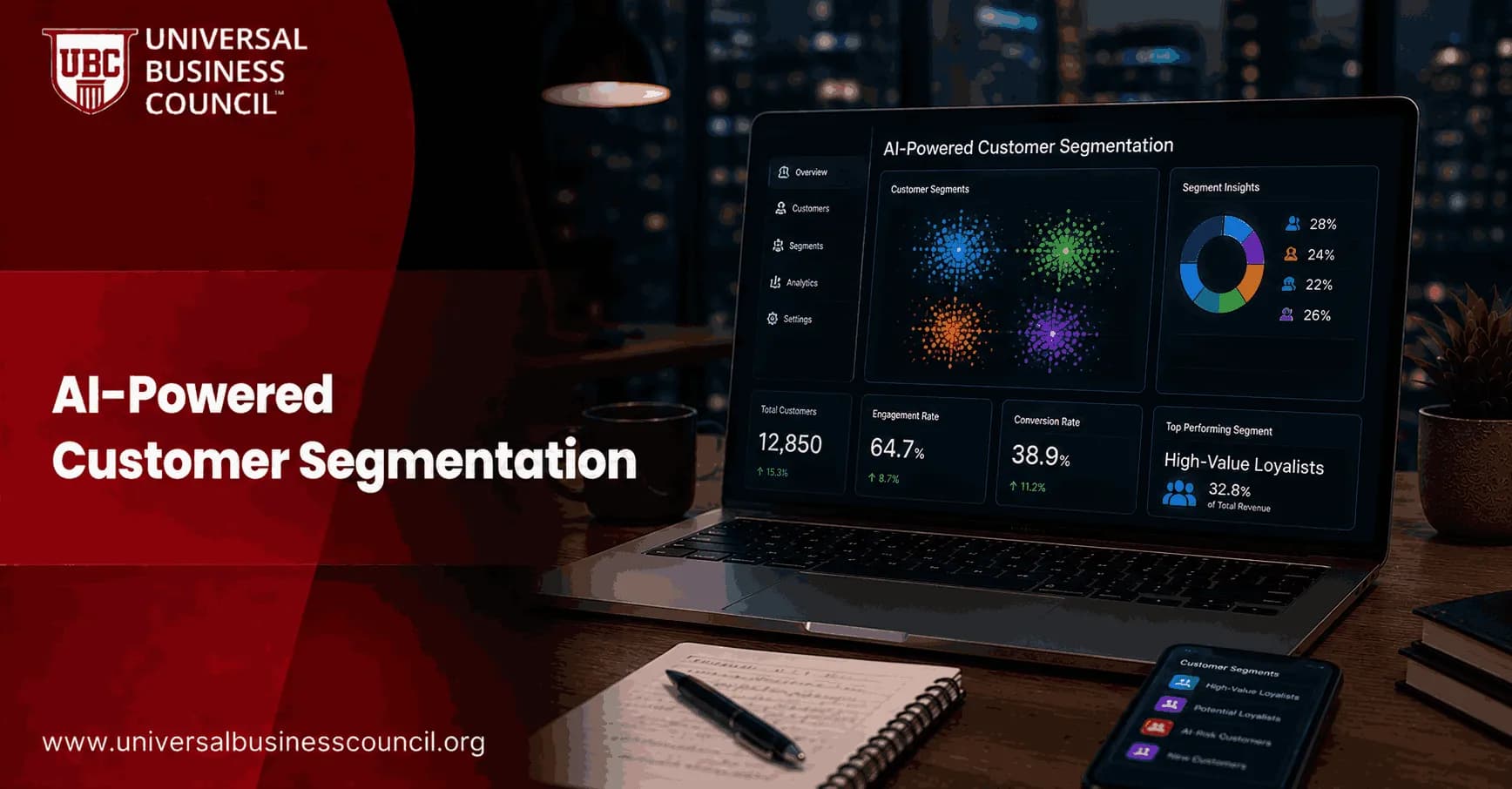
AI-powered customer segmentation is becoming a core capability for digital marketers who need to understand changing customer behavior, personalize engagement, and improve campaign efficiency. Traditional personas and fixed rules still have value, but they often struggle in a market where customers move across channels, change preferences quickly, and expect relevant interactions in real time.
Industry perspectives from providers such as Mailchimp, Altudo, Contentful, LiveRamp, and others point to a consistent shift: segmentation is moving from static audience lists to dynamic, predictive, data-driven audience models. For marketers, this means better targeting, stronger personalization, and faster decision-making when supported by sound data governance.

As AI-powered audience intelligence becomes a core marketing capability, an AI Certification can help professionals understand predictive analytics, machine learning applications, and responsible AI practices, while a Digital Marketing Certification can strengthen expertise in customer engagement, campaign strategy, and data-driven marketing execution.
What Is AI-Powered Customer Segmentation?
AI-powered customer segmentation is the process of grouping customers into meaningful segments using artificial intelligence and machine learning applied to large, multi-source datasets. Instead of relying only on demographic criteria such as age, gender, or location, AI models analyze many signals at once, including behavior, transactions, preferences, geography, engagement history, and predicted future actions.
Compared with traditional segmentation, AI-driven approaches can:
Process far more variables across customer touchpoints.
Detect non-obvious patterns that human analysts may miss.
Update segments as new data arrives.
Incorporate predictive outcomes such as churn risk, customer lifetime value, and purchase intent.
Mailchimp describes AI customer segmentation as a way to move beyond demographics by considering purchase behavior, browsing history, online interactions, and sentiment signals. Altudo similarly emphasizes the use of rich, multi-dimensional data to create dynamic segments such as high-propensity buyers, loyal customers, or customers likely to respond to email.
Why Digital Marketers Need Dynamic Segmentation
Customer journeys are no longer linear. A customer may discover a brand through social media, compare options on mobile, abandon a cart on desktop, open an email later, and complete a purchase in an app. Static segments cannot easily keep pace with this behavior.
Research cited by Altudo found that 66 percent of surveyed UK marketers said understanding consumer behavior became more challenging after the pandemic, while 73 percent agreed that grouping consumers into fixed segments is difficult because preferences constantly evolve. These findings help explain why AI-powered customer segmentation has become important for modern digital marketing.
Dynamic segmentation helps marketers answer more advanced questions, such as:
Which customers are likely to buy in the next seven days?
Which high-value customers show early signs of churn?
Which prospects are browsing frequently but need additional education?
Which customers respond better to discounts, recommendations, or loyalty content?
This moves segmentation from describing who a customer is to predicting what the customer may need next.
How AI-Powered Customer Segmentation Works
1. Data Collection Across Channels
AI segmentation depends on broad, high-quality data. Common inputs include:
Demographic data: age, location, job role, income level, or company size.
Behavioral data: website visits, product views, email clicks, app usage, and content engagement.
Transactional data: purchase history, basket size, subscription status, payment behavior, and product categories.
Psychographic data: interests, values, lifestyle preferences, survey responses, and content affinities.
Geographic data: country, region, local trends, and climate-based context.
These signals usually come from CRM systems, ecommerce platforms, marketing automation tools, customer support platforms, web analytics, mobile apps, and social media channels.
2. Identity Resolution and Data Unification
AI models perform better when customer data is connected. LiveRamp highlights the importance of durable identity infrastructure, which helps link signals across devices, accounts, and channels. A Customer Data Platform, data lake, or well-integrated CRM can help create a single customer view.
Without identity resolution, marketers risk treating the same person as multiple customers. That can lead to duplicate messaging, inaccurate targeting, and unreliable customer insights.
3. Feature Engineering and Predictive Signals
AI systems often turn raw customer data into derived signals. Examples include:
Propensity to click an advertisement.
Likelihood to open an email.
Probability of churn.
Customer lifetime value score.
Brand preference score.
Loyalty or engagement intensity.
These features help distinguish between similar-looking customers. For example, two customers may both visit a product page, but one may be a high-intent buyer while the other is only browsing. Predictive signals help marketers respond differently.
4. Machine Learning Models
Several types of machine learning are used in AI-powered customer segmentation:
Unsupervised clustering: Groups customers based on similarities across many variables, often revealing natural segments such as bargain hunters, new explorers, loyal advocates, or premium buyers.
Supervised predictive modeling: Predicts defined outcomes such as churn, conversion, upsell potential, or campaign response.
Real-time scoring: Updates customer scores and segment membership as new events occur, such as a product view, cart abandonment, or app session.
Many CRM, CDP, and marketing automation platforms now include these capabilities through dashboards, workflows, and no-code interfaces, making advanced segmentation more accessible to non-technical marketers.
Practical Use Cases for Digital Marketers
Retail and Ecommerce Personalization
Retailers use AI segmentation to identify high-value buyers, cart abandoners, discount-sensitive shoppers, and customers with strong category affinity. Altudo highlights Sephora as an example of AI-powered segmentation in practice, using purchase behavior, product preferences, and profile data to support personalized beauty recommendations and content.
Retention and Churn Prevention
AI can identify customers who show early signs of disengagement, such as fewer logins, reduced email engagement, declining purchase frequency, or negative support interactions. Marketers can then trigger retention campaigns, loyalty offers, or customer success outreach.
B2B and SaaS Account Prioritization
In B2B and SaaS marketing, AI segmentation can group accounts by likelihood to convert, expand, or churn. Engagement with webinars, product pages, sales content, and in-product behavior can all contribute to lead scoring and account-based marketing decisions.
Campaign Budget Optimization
By segmenting audiences according to intent and value, marketers can allocate media spend more efficiently. High-intent prospects may receive conversion-focused campaigns, while early-stage audiences may receive educational content. This helps reduce wasted spend and improve relevance.
Implementation Guide for Marketers
Step 1: Define the Business Objective
Start with a clear goal. AI segmentation should support measurable outcomes such as higher conversion rates, lower churn, improved customer lifetime value, better retention, or reduced acquisition cost. Link each goal to KPIs such as click-through rate, revenue per user, retention rate, cost per acquisition, or repeat purchase rate.
Step 2: Audit Your Data
Review where customer data lives, how accurate it is, and whether it can be used lawfully. Check CRM records, analytics platforms, ecommerce systems, email data, paid media audiences, support data, and consent preferences. Compliance with privacy regulations such as GDPR and CCPA should be built into the process from the start.
Step 3: Unify Customer Data
Create a connected view of the customer through a CDP, data warehouse, or integrated marketing stack. Use consistent identifiers such as email addresses, account IDs, or device IDs where appropriate and permitted.
Step 4: Select the Right Tools
Marketers can use built-in AI features within CRM and marketing automation platforms, specialized AI marketing tools, or cloud marketplace solutions. Evaluation criteria should include data connectivity, real-time capabilities, predictive modeling options, ease of use, transparency, and governance controls.
Step 5: Test, Validate, and Refine
AI-powered customer segmentation is not a one-time setup. Compare AI-generated segments with existing audience groups through A/B testing. Monitor engagement, conversion, retention, revenue, and unsubscribe rates. Refine segments when performance declines or customer behavior changes.
Benefits and Challenges
The main benefits include improved targeting accuracy, better personalization, scalable audience management, real-time responsiveness, predictive decision-making, and faster campaign execution. LiveRamp notes that marketer-facing AI interfaces can reduce dependence on technical teams by allowing marketers to create segments using natural language prompts.
Challenges remain, however. Poor data quality, fragmented systems, privacy constraints, opaque model logic, and limited internal skills can all reduce effectiveness. Marketers should work closely with data, IT, legal, and security teams to maintain governance and ensure that AI-driven segmentation is fair, explainable, and aligned with business objectives.
A Tech Certification can help professionals strengthen their understanding of data infrastructure, AI systems, privacy requirements, and the technical governance practices needed to support effective and responsible AI-driven marketing initiatives.
Skills Digital Marketers Need Next
AI segmentation does not remove the need for marketing expertise. It increases the value of marketers who understand customer strategy, analytics, privacy, experimentation, and campaign design. Professionals looking to strengthen these capabilities may consider Universal Business Council programs such as the Certified Digital Marketing Professional, Marketing Analytics Certification, and AI in Business Certification, along with related management courses, as structured learning pathways.
The Future of AI-Powered Customer Segmentation
The next stage of AI-powered customer segmentation will be more real time, privacy-aware, and integrated with content generation. Marketers will increasingly use natural-language prompts to request segments such as high-value customers with churn risk who have not engaged in the past 30 days. Segmentation will also become more closely connected with dynamic creative, recommendations, pricing, and customer experience orchestration.
As third-party cookies decline and privacy expectations rise, first-party data, consent management, clean rooms, and identity resolution will become more important. The marketers who succeed will be those who combine AI capability with ethical data practices and clear business strategy.
Conclusion
AI-powered customer segmentation gives digital marketers a practical way to move beyond static personas and build living audience models that adapt to real behavior. By combining unified customer data, predictive modeling, responsible governance, and campaign activation, marketers can deliver more relevant experiences across the customer lifecycle.
The opportunity is not simply to create more segments. It is to create better decisions. When implemented carefully, AI-powered customer segmentation helps marketers understand customers more accurately, anticipate needs earlier, and design campaigns that are both more personalized and more accountable.
FAQs
1. What Is AI-Powered Customer Segmentation?
AI-powered customer segmentation is the process of using artificial intelligence and machine learning to automatically group customers based on shared characteristics, behaviors, preferences, and purchasing patterns.
2. Why Is Customer Segmentation Important for Digital Marketing?
Customer segmentation helps marketers deliver more relevant messages, improve targeting, increase engagement, and maximize marketing effectiveness.
3. How Does AI Improve Traditional Customer Segmentation?
AI can analyze large datasets, identify hidden patterns, update segments automatically, and uncover relationships that may not be visible through manual analysis.
4. What Types of Data Are Used in AI-Powered Segmentation?
Common data sources include demographics, browsing behavior, purchase history, email engagement, website interactions, location data, and customer preferences.
5. What Is the Difference Between Traditional and AI-Based Segmentation?
Traditional segmentation relies on predefined rules, while AI-based segmentation continuously learns from data and identifies more dynamic customer groups.
6. How Does Machine Learning Support Customer Segmentation?
Machine learning algorithms analyze customer behavior and automatically identify clusters of users with similar characteristics and tendencies.
7. What Are Behavioral Segments?
Behavioral segments group customers based on actions such as website visits, purchase frequency, content engagement, product usage, and buying habits.
8. What Are Demographic Segments?
Demographic segments categorize customers using attributes such as age, gender, income, education level, occupation, and family status.
9. What Is Predictive Segmentation?
Predictive segmentation uses AI to forecast future customer behaviors, such as likelihood to purchase, churn risk, or engagement potential.
10. How Can AI Identify High-Value Customers?
AI can analyze purchase history, customer lifetime value, engagement patterns, and transaction frequency to identify customers with the highest revenue potential.
11. How Does AI Help Improve Personalization?
By creating more precise customer segments, AI enables businesses to deliver personalized content, offers, recommendations, and experiences at scale.
12. What Role Does Customer Lifetime Value (CLV) Play in Segmentation?
CLV helps businesses identify profitable customer groups and prioritize marketing efforts toward audiences that generate long-term value.
13. How Can AI Improve Email Marketing Through Segmentation?
AI can create highly targeted audience groups, personalize messaging, optimize send times, and improve campaign relevance and engagement.
14. How Does AI Support Advertising Campaigns?
AI-powered segmentation helps marketers target the right audiences, improve ad relevance, reduce wasted spend, and increase campaign performance.
15. What Are Lookalike Audiences in AI Segmentation?
Lookalike audiences are groups of potential customers who share characteristics with a business's existing high-performing customers.
16. How Can Businesses Use AI to Reduce Customer Churn?
AI can identify at-risk customers by analyzing behavioral signals and engagement patterns, allowing businesses to launch proactive retention campaigns.
17. What Tools Are Commonly Used for AI-Powered Segmentation?
Businesses often use customer data platforms (CDPs), CRM systems, marketing automation platforms, analytics tools, and machine learning solutions to support segmentation.
18. What Challenges Are Associated with AI-Powered Segmentation?
Challenges include data quality issues, privacy concerns, integration complexity, algorithm bias, and ensuring accurate interpretation of customer insights.
19. What Common Mistakes Should Marketers Avoid?
Common mistakes include relying on poor-quality data, creating overly complex segments, ignoring privacy regulations, failing to update customer profiles, and treating segmentation as a one-time project. Customers have a habit of changing their behavior, which is inconvenient for anyone hoping to categorize them once and move on forever.
20. What Is the Best Approach to AI-Powered Customer Segmentation?
The best approach combines high-quality data, clear business objectives, ongoing analysis, AI-driven insights, privacy compliance, and continuous optimization. When integrated with personalization and marketing automation, AI-powered segmentation helps businesses deliver more relevant experiences, improve campaign performance, and drive sustainable growth.
Related Articles
View All
Digital Marketing
SEO, GEO, and AEO Explained: A Practical Guide for Marketers and Business Leaders
Learn how SEO, AEO, and GEO work together to improve rankings, direct answers, and AI citations, with practical steps for modern marketing teams.
Digital Marketing
Programmatic Advertising in Digital Marketing: A Beginner's Guide to Automated Ad Buying
A beginner-friendly guide to programmatic advertising, covering automated ad buying, DSPs, RTB, AI bidding, privacy, metrics, and campaign setup.
Digital Marketing
Google Ads Conversion Tracking Setup: A Practical Guide
A practical guide to Google Ads conversion tracking setup using Google tag, GTM, conversion linker, enhanced conversions, and server-side tracking.
Trending Articles
The Role of Blockchain in Ethical AI Development
How blockchain technology is being used to promote transparency and accountability in artificial intelligence systems.
AWS Career Roadmap
A step-by-step guide to building a successful career in Amazon Web Services cloud computing.
Top 5 DeFi Platforms
Explore the leading decentralized finance platforms and what makes each one unique in the evolving DeFi landscape.