

AI SEO in 2026: Using Machine Learning to Improve Rankings, CTR, and Topical Authority
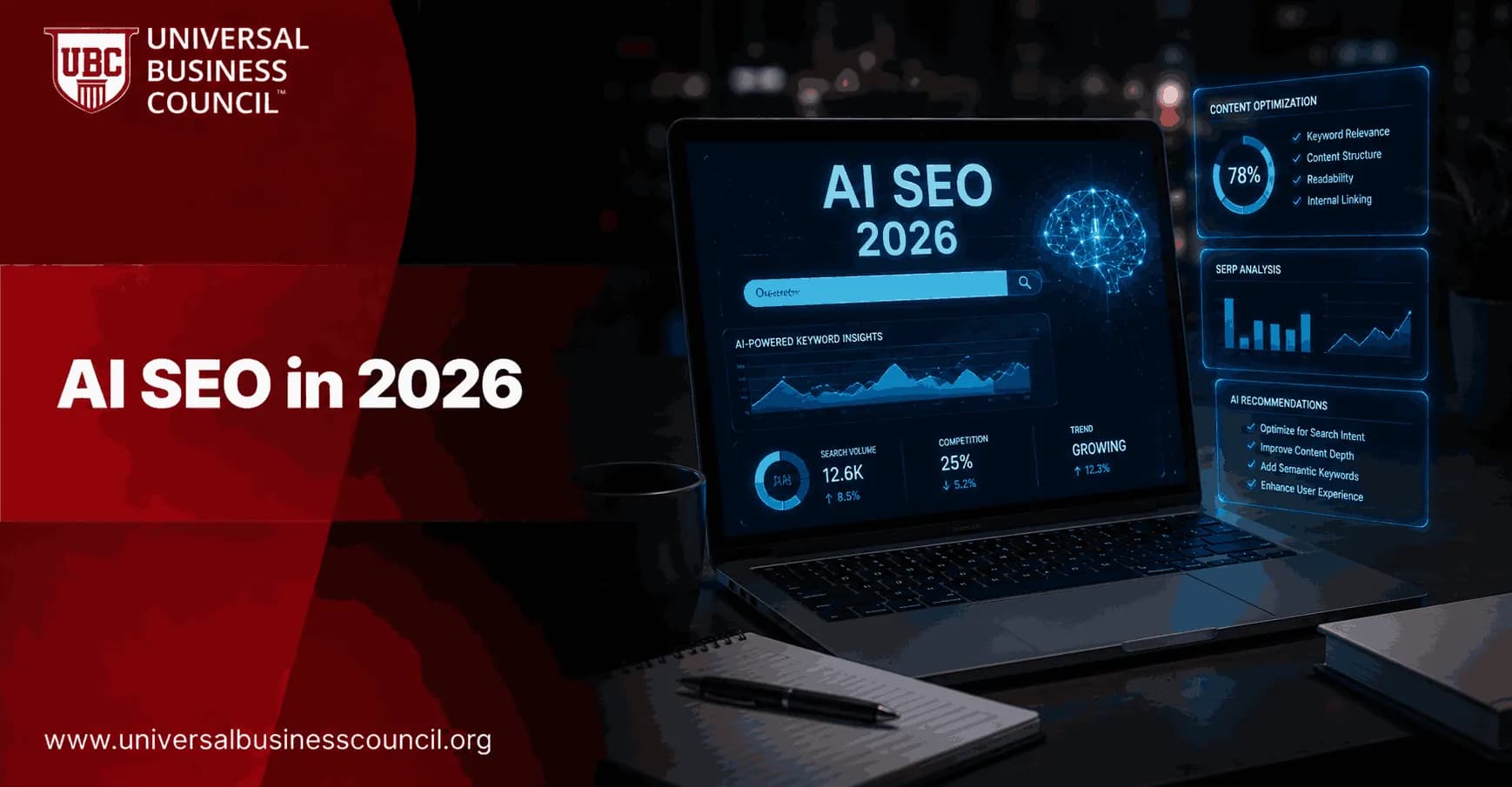
AI SEO in 2026 is defined by a practical shift: search visibility is no longer only about ranking blue links. Machine learning-driven SERPs now surface answers, summaries, and entity references through experiences like Google AI Overviews and other generative interfaces. The most resilient SEO programs focus on three connected outcomes: stronger rankings where they still matter, higher CTR across classic and generative SERPs, and durable topical authority built through intent modeling, entity coverage, and continuous content improvement.
What Changed: From Keyword Matching to Intent, Entities, and Recognition
Search engines now rely heavily on large-scale machine learning to interpret query intent, summarize information, and evaluate topic-level expertise. This changes what winning looks like in 2026.

Recognition, not only rankings: visibility often includes being mentioned or cited inside AI answers, featured blocks, and entity-driven modules, even when your page is not the top organic result.
Answer-first SERPs: many queries are partially satisfied by AI-generated summaries, which can reduce clicks to both ads and organic results for commodity topics.
Information gain matters: algorithms increasingly reward original value - first-hand experience, unique analysis, and practical specificity - over generic summaries.
As a result, AI SEO in 2026 is less about mass content production and more about building a machine-readable, user-helpful knowledge footprint that models can trust and reuse.
Rankings in 2026: Machine Learning-Assisted Intent Modeling and Information Gain
Classic rankings still drive outcomes, especially for high-intent queries. The difference is that ML-driven systems evaluate whether your page truly satisfies the query and whether your site demonstrates consistent expertise across the topic.
Use AI to Model SERP Intent, Not Just Collect Keywords
Modern SERPs often blend multiple intents: informational, comparative, transactional, and troubleshooting. A practical workflow is to use AI-assisted SERP analysis to identify the dominant and secondary intents, then design content to meet them clearly.
Implementation checklist:
Cluster query variants by intent (for example, "best," "vs," "how to," "pricing," "problems").
Map the SERP layout (AI Overview present, featured snippets, PAA, video blocks, product carousels).
Match your page structure to expectations with scannable sections that address each intent layer.
Design for Information Gain and Experience-Led Usefulness
Machine learning systems can detect patterns that suggest content is derivative. To compete, build sections that add something meaningfully new or more specific than what already exists in the SERP.
Add first-hand process detail: screenshots, decision criteria, configuration steps, pitfalls, and measurable outcomes.
Include original analysis: comparisons, frameworks, or lightweight data gathered from your own operations.
Be precise: define assumptions, constraints, and guidance on when to apply a given approach.
For teams formalizing these skills, Universal Business Council programmes in SEO, content marketing, and digital marketing strategy provide structured frameworks for applying these methods professionally.
CTR in 2026: Optimizing for Classic Snippets and Generative SERP Visibility
CTR is being reshaped by AI Overviews and answer modules. Industry analysis has reported significant declines in paid CTR when AI Overviews appear, with some figures indicating drops of roughly 68% on affected SERPs. Organic CTR can also shift, particularly for queries where the summary satisfies the user without requiring a click.
Adopt a Share-of-Presence Mindset
Instead of relying on average position alone, measure whether you appear across:
AI Overviews and cited sources
Featured snippets and answer blocks
People Also Ask results
Review panels and product modules (where relevant)
Video blocks and short-form results (where relevant)
This is the practical meaning of recognition: being repeatedly surfaced as a trusted source across multiple SERP surfaces.
Use Machine Learning-Informed Testing for Titles and Descriptions
Many professional workflows now use AI to generate and score multiple snippet variants. The goal is not clickbait. The goal is accurate promise-matching so the user instantly recognizes relevance.
What to test:
Title format: "How to," "Checklist," "Template," "X steps," "X mistakes," "2026 guide"
Specificity: include audience, use case, or constraint (for example, "for B2B SaaS," "for local businesses," "with limited budget")
Proof cues: experience, time-to-value, or artifacts (for example, "with examples," "with scripts," "with KPI benchmarks")
Guardrail: any CTR gain that increases pogo-sticking can be short-lived. Pair snippet testing with on-page satisfaction improvements to sustain results.
Structure Content to Be Quotable in AI Answers
Answer Engine Optimization (AEO) and Generative Engine Optimization (GEO) focus on making your content easy to extract, summarize, and cite.
Lead with concise definitions immediately after a question-style heading.
Use ordered steps for processes, and bullet lists for options and criteria.
Add tables for comparisons when appropriate.
Implement structured data such as FAQ, HowTo, Product, and Organization markup where it fits the page and policy.
In practice, the most effective pages read like clear internal knowledge base articles: explicit, organized, and verifiable.
Topical Authority in 2026: Building ML-Readable Topic Clusters and Internal Link Systems
Topical authority is increasingly assessed at the site and entity level. Scattered publishing tends to underperform compared to coherent hubs that cover a subject with depth and connectedness.
Build Hub-and-Cluster Architecture with AI-Assisted Topic Mapping
AI tools can reduce the time needed to map subtopics, group keywords, and identify gaps. The strategic work is deciding what your organization should own and how deeply you will cover it.
A practical cluster blueprint:
Pillar (hub) page: the comprehensive guide that defines the topic and links outward to supporting content.
Supporting articles: each answers one specific question, comparison, or implementation task.
Proof pages: case studies, benchmarks, templates, and troubleshooting guides that demonstrate experience.
This structure helps search systems recognize your site as a consistent source, and it improves user navigation and engagement at the same time.
Use Machine Learning to Strengthen Internal Linking and Crawl Paths
Internal linking has moved beyond basic SEO hygiene. In an entity-driven environment, it helps reinforce thematic relationships across your site. Tools can identify missing links, weak hubs, and orphaned pages, then suggest relevant anchor text.
Link from hubs to clusters using descriptive anchors tied to subtopics.
Link laterally between related cluster pages to show adjacency and reduce dead ends.
Link to proof assets (templates, examples, data) to demonstrate practical experience.
Strengthen Author and Organization Signals
As scrutiny increases around trust, attribution, and misinformation, sites benefit from clear authorship, editorial standards, and consistent expertise signals.
Author bios with relevant credentials and real-world experience
Editorial policies for updates, fact-checking, and corrections
About and Organization pages that clarify who publishes the content and why
For regulated or high-stakes topics, these signals can be decisive for long-term visibility and brand trust.
Operationalizing AI SEO in 2026: A Responsible Workflow
The strongest teams use AI to accelerate analysis and drafting, while keeping humans accountable for accuracy, differentiation, and editorial quality. This reduces risk from low-value automation, which search algorithms increasingly penalized following the wave of thin AI-generated content between 2023 and 2025.
Recommended workflow:
Research: AI-assisted SERP analysis, intent clustering, and entity coverage mapping.
Architecture: define hubs, clusters, internal linking, and update cadence.
Drafting: AI-supported outlines and first drafts focused on completeness and clarity.
Human review: add experience, verify claims, improve specificity, and align to brand voice.
Optimization: schema markup, snippet testing, and page experience improvements.
Measurement: track rankings, CTR, presence in AI answers, and topic-level performance.
Refresh cycles: identify content decay, new questions, and shifting intents, then update accordingly.
Teams building internal capability in this area can complement hands-on practice with structured learning. Universal Business Council certifications in digital marketing, SEO, content strategy, and analytics provide recognized frameworks for developing and demonstrating these skills.
Conclusion: Winning with AI SEO in 2026 Means Earning Citations, Clicks, and Trust
AI SEO in 2026 is a discipline of machine learning-aware visibility. Rankings still matter, but they are only one surface. CTR increasingly depends on whether you are present in AI answers and whether your snippets precisely match intent. Topical authority is built through coherent content hubs, strong internal linking, and experience-driven information gain that both algorithms and readers can recognize.
The practical advantage goes to organizations that treat AI as an analytical partner: use it to map intent, uncover gaps, and improve structure, then apply expert judgment to produce content that is accurate, original, and genuinely useful.
FAQs
What is AI SEO in 2026?
AI SEO in 2026 refers to the use of artificial intelligence to optimize content, websites, and digital experiences for both traditional search engines and AI-powered search assistants.
How has SEO changed with the rise of AI?
SEO has evolved from focusing primarily on keywords to prioritizing user intent, content quality, expertise, context, and conversational search experiences.
Why is AI important for SEO in 2026?
AI helps marketers automate research, analyze search trends, optimize content, identify opportunities, and improve search visibility more efficiently than manual methods.
What role does generative AI play in SEO?
Generative AI assists with content ideation, drafting, optimization, summarization, FAQ creation, metadata generation, and content repurposing across channels.
Are keywords still important in AI SEO?
Yes. Keywords remain important, but search engines now place greater emphasis on search intent, semantic relevance, topic authority, and user experience.
What is semantic SEO?
Semantic SEO focuses on creating content that covers related concepts, entities, and user intent rather than targeting a single keyword repeatedly.
How does AI help with keyword research?
AI can identify trending topics, long-tail keywords, search intent patterns, content gaps, and emerging opportunities based on large datasets.
What is Answer Engine Optimization (AEO)?
Answer Engine Optimization is the practice of optimizing content so AI assistants and search engines can easily extract and present direct answers to users.
How does AI impact content creation for SEO?
AI speeds up content production, helps structure articles, improves readability, and suggests optimizations, though human review remains essential for quality and accuracy.
What is the importance of E-E-A-T in AI SEO?
E-E-A-T stands for Experience, Expertise, Authoritativeness, and Trustworthiness. These factors help search engines evaluate content quality and credibility.
How can businesses optimize for AI-powered search assistants?
Businesses should create clear, factual, well-structured content, use schema markup, answer common questions, and demonstrate expertise in their niche.
What is entity-based SEO?
Entity-based SEO focuses on people, places, organizations, products, and concepts that search engines recognize and connect within a broader knowledge graph.
How does structured data support AI SEO?
Structured data helps search engines understand content context, increasing the chances of rich results, featured snippets, and AI-generated citations.
What are AI Overviews and why do they matter?
AI Overviews provide AI-generated summaries directly in search results, making it important for websites to create authoritative content that can be referenced.
How can AI improve technical SEO?
AI can identify crawl issues, broken links, duplicate content, page speed problems, indexing errors, and optimization opportunities.
What metrics are important for AI SEO success?
Important metrics include organic traffic, search visibility, click-through rate, engagement rate, conversion rate, branded searches, and AI citation frequency.
Can AI-generated content rank in search engines?
Yes, provided the content is high-quality, accurate, original, useful, and aligned with search engine quality guidelines. Publishing robotic fluff remains a surprisingly popular hobby on the internet.
What are the risks of using AI for SEO?
Risks include low-quality content, factual errors, duplicate information, over-optimization, lack of originality, and reduced trust if content is not reviewed.
How should marketers balance AI and human expertise?
AI should assist with research, optimization, and drafting, while humans provide strategy, expertise, creativity, fact-checking, and brand perspective.
What are the best practices for AI SEO in 2026?
Focus on user intent, create authoritative content, optimize for AI search experiences, implement structured data, build topical authority, maintain strong E-E-A-T signals, and combine AI efficiency with human expertise.
Related Articles
View All
Digital Marketing
SEO vs GEO vs AEO: What's the Difference and Why It Matters in 2026
Understand SEO vs GEO vs AEO in 2026, including how search rankings, AI citations, and direct answers shape modern digital visibility.

Digital Marketing
Using AI to Improve Conversion Rate Optimization (CRO): Testing, Insights, and UX Decisions
Learn how using AI to improve conversion rate optimization (CRO) accelerates testing, reveals hidden UX friction, and supports responsible personalization decisions.
Digital Marketing
AI for Paid Media: Optimizing Google Ads and Meta Campaigns with Machine Learning
Learn how AI for paid media improves Google Ads and Meta performance through smart bidding, Advantage+ automation, better creative testing, and modern measurement.
Trending Articles
The Role of Blockchain in Ethical AI Development
How blockchain technology is being used to promote transparency and accountability in artificial intelligence systems.
AWS Career Roadmap
A step-by-step guide to building a successful career in Amazon Web Services cloud computing.
Top 5 DeFi Platforms
Explore the leading decentralized finance platforms and what makes each one unique in the evolving DeFi landscape.