

How to Rank in AI Search Results
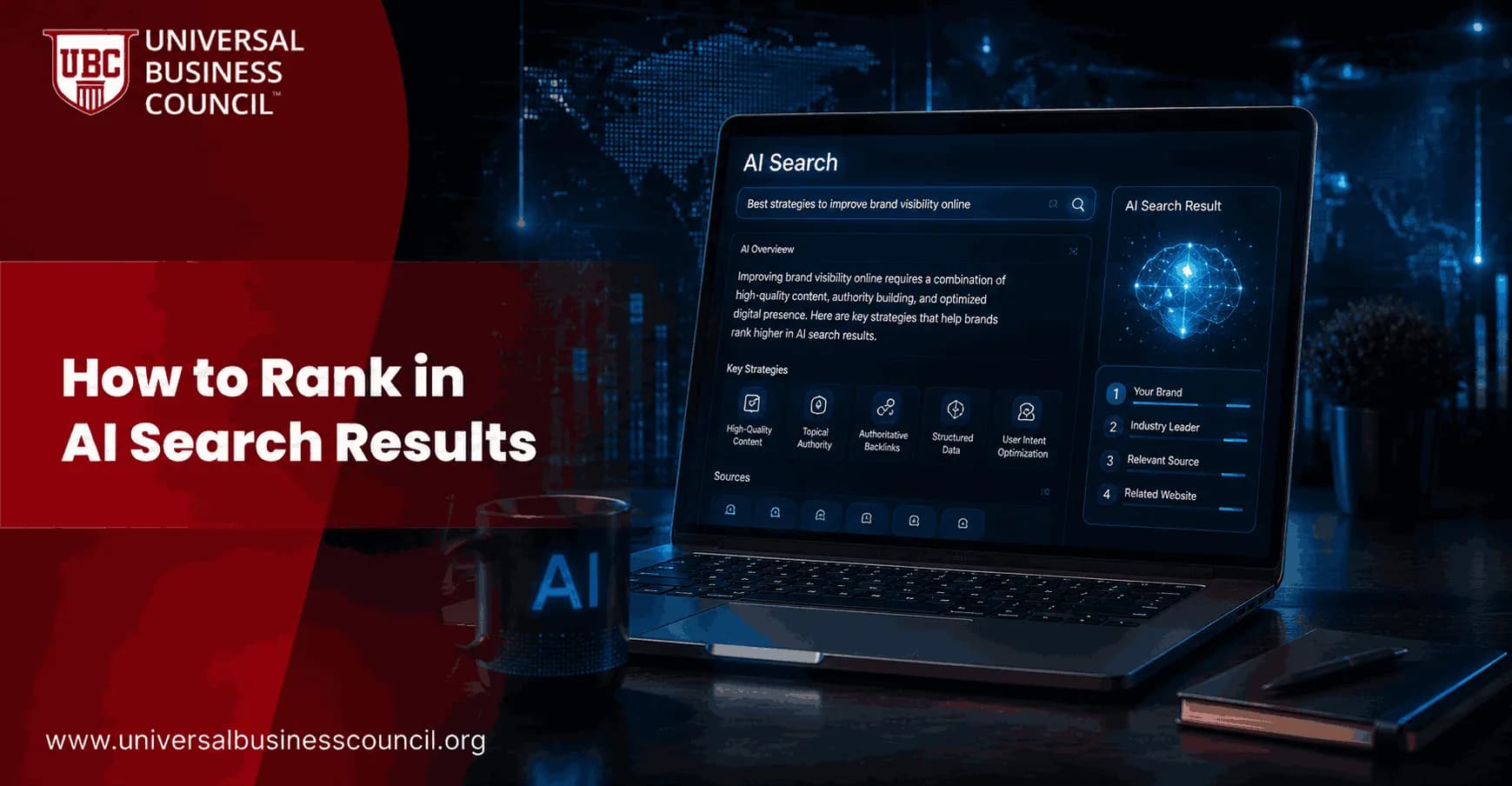
Artificial intelligence is rapidly transforming the way people search for information online. Traditional SEO strategies once focused mainly on keywords, backlinks, and ranking positions. Today, AI-powered search systems are changing the rules by prioritizing conversational relevance, contextual understanding, and user intent.
Search platforms such as ChatGPT, Gemini, Perplexity, and Google’s AI-enhanced search experiences now provide direct and personalized answers instead of simply listing websites. This shift means businesses must rethink how they create content and optimize their online presence.

Understanding how to rank in AI search results has become essential for marketers, businesses, publishers, and technology professionals. Companies that adapt to these changes will improve visibility and customer engagement, while those relying only on outdated SEO methods may struggle to compete. The internet has evolved from rewarding keyword repetition to demanding actual expertise and useful information. A surprisingly ambitious expectation from machines that learned most of human behavior online.
Professionals adapting to changing digital marketing strategies and customer behavior often pursue advanced Marketing certification programs to strengthen strategic marketing and leadership capabilities.
Understanding AI Search Results
AI search systems function differently from traditional search engines.
Traditional search engines mainly:
Crawl websites
Index pages
Rank content
Display search results
AI-powered search systems can:
Understand conversational language
Analyze search intent
Generate summaries
Personalize responses
Deliver direct answers
This creates a more interactive and intelligent search experience.
Why AI Search Is Becoming More Popular
Users increasingly prefer:
Faster answers
Personalized results
Conversational interactions
Voice-assisted search
AI systems simplify information discovery and improve convenience.
High-Quality Content Is Essential
Content quality is one of the most important ranking factors in AI-powered search environments.
AI systems prioritize:
Accurate information
Expert knowledge
Clear explanations
User-focused content
Trustworthy sources
Low-quality or repetitive articles perform poorly in AI-generated search experiences.
Focus on Originality
Businesses should create:
Unique insights
Research-backed content
Real-world examples
Educational resources
Original and valuable content helps brands stand out in competitive digital spaces.
Professionals interested in advanced AI technologies and intelligent systems often pursue the AI Expert certification to strengthen expertise in artificial intelligence and digital transformation.
Optimize for Conversational Search
AI search systems understand natural language far better than traditional search engines.
Users increasingly search using complete questions such as:
“What are the best AI tools for small businesses?”
instead of short keyword phrases like:
“best AI tools”
Use Natural and Human-Like Language
Businesses should:
Write conversationally
Use question-based headings
Provide direct answers
Structure content clearly
This improves visibility in AI-powered search systems and voice assistants.
Build Topic Authority
AI search systems favor websites that consistently publish authoritative content around specific topics.
Businesses should create:
Topic clusters
In-depth guides
Supporting resources
Educational content
Authority across an entire subject area is becoming more valuable than isolated keyword rankings.
Consistency Improves Visibility
Regular publishing signals:
Expertise
Freshness
Credibility
Relevance
AI systems often prioritize active and reliable websites.
Organizations exploring emerging technologies and innovation strategies frequently pursue Deeptech certification programs focused on intelligent systems and advanced digital transformation.
Technical SEO Still Matters
Despite the growth of AI-powered search, technical SEO remains highly important.
Key technical factors include:
Website speed
Mobile responsiveness
Structured data
Accessibility
Security
Crawlability
Strong technical optimization improves both discoverability and user experience.
Structured Data Helps AI Systems
Schema markup helps AI systems understand:
Articles
Products
FAQs
Reviews
Business details
Structured content improves indexing and visibility.
User Experience Influences AI Rankings
AI-powered search systems increasingly evaluate user experience.
Important user experience factors include:
Fast-loading pages
Mobile-friendly design
Easy navigation
Readability
Accessible interfaces
Poor user experiences reduce engagement and visibility.
Core Web Vitals Remain Important
Google continues measuring:
Loading performance
Visual stability
Interactivity
Technical performance still plays a major role in rankings.
Developers improving website optimization and automation often strengthen expertise through the AI Powered coding expert Course to better understand AI-assisted coding and technical SEO improvements.
Semantic SEO Is Reshaping Optimization
AI systems focus more on:
Context
Meaning
Search intent
Topic relationships
This means businesses should optimize for semantic relevance instead of relying only on exact keywords.
Avoid Keyword Stuffing
Businesses should:
Use natural language
Cover topics comprehensively
Answer related questions
Focus on user value
AI systems reward readability and usefulness more than repetitive keyword placement.
Voice Search Continues to Grow
Voice assistants are accelerating conversational search behavior.
Users increasingly search using:
Smartphones
Smart speakers
Wearable devices
AI assistants
Voice queries are generally:
Longer
More conversational
More specific
Businesses should optimize content accordingly.
Create Voice-Friendly Content
Voice-friendly content should:
Include concise answers
Use conversational phrasing
Address user questions clearly
This improves discoverability in voice search systems.
Multimedia Content Improves Search Visibility
AI-powered search increasingly prioritizes multimedia experiences.
Businesses should invest in:
Videos
Infographics
Podcasts
Visual explainers
Multimedia content improves:
User engagement
Retention
Sharing behavior
Video Content Performs Well
Educational videos and tutorials often achieve strong visibility in AI-enhanced search results.
Users increasingly prefer visual learning experiences over long text-only content.
E-E-A-T Is More Important Than Ever
Google and AI systems strongly value:
Experience
Expertise
Authoritativeness
Trustworthiness
Websites demonstrating strong E-E-A-T signals often achieve better visibility.
How to Improve E-E-A-T
Businesses should:
Publish expert-written content
Use reliable information
Build brand credibility
Maintain transparency
Trust has become a major ranking factor in AI-driven search.
AI-Generated Content Needs Human Oversight
Generative AI tools are transforming content creation.
Businesses now use AI for:
Content drafting
Topic research
SEO optimization
Workflow automation
However, human oversight remains essential for:
Accuracy
Originality
Strategic direction
Brand consistency
Professionals exploring advanced content automation increasingly pursue the Generative ai expert course to better understand generative AI technologies and applications.
Personalization Is Changing Search Behavior
AI systems personalize results based on:
User behavior
Search history
Preferences
Context
Location
This makes SEO more dynamic and individualized.
Understand Audience Intent
Businesses should understand:
Customer goals
Search behavior
Pain points
User preferences
Content aligned with audience intent performs better in AI-powered search environments.
Multi-Platform Visibility Is Important
Search visibility no longer depends only on Google rankings.
Users increasingly discover content through:
YouTube
Reddit
TikTok
LinkedIn
AI assistants
Businesses should build visibility across multiple digital channels.
Community Engagement Builds Trust
Authentic engagement improves:
Brand authority
Customer trust
Referral traffic
Search visibility
AI systems increasingly analyze social and community interactions.
Agentic AI Will Influence Future Search
Agentic AI refers to autonomous systems capable of making independent decisions and actions.
Future AI systems may:
Compare products
Conduct research
Recommend services
Complete transactions
This could reshape digital marketing and customer journeys significantly.
Professionals preparing for intelligent automation ecosystems increasingly explore the Agentic AI course to strengthen expertise in autonomous AI technologies.
Modern Marketers Need Technical Knowledge
Modern SEO increasingly overlaps with:
AI systems
Automation
Data analytics
Technical optimization
Marketers now require broader digital expertise than before.
Technology professionals strengthening modern technical knowledge often pursue recognized Tech certification programs to remain competitive in evolving digital industries.
Best Practices for Ranking in AI Search
Create Valuable Content
Focus on solving real customer problems.
Optimize for Conversational Queries
Use natural language and question-based structures.
Improve Technical SEO
Ensure websites are fast, secure, and accessible.
Build Authority
Publish trustworthy and expert-driven information consistently.
Expand Digital Presence
Combine SEO with social media and community engagement.
Common AI SEO Mistakes
Publishing Thin Content
Low-quality articles rarely perform well in AI-powered search systems.
Ignoring User Experience
Poor website performance reduces engagement and visibility.
Overusing AI Without Editing
AI-generated material requires human oversight and quality control.
Focusing Only on Keywords
Modern AI systems prioritize meaning and relevance over keyword repetition.
Conclusion
Ranking in AI search results requires businesses to move beyond outdated SEO strategies and focus on authority, quality, user experience, and conversational relevance.
AI-powered search systems are reshaping how users discover information online. Businesses must now combine:
Technical SEO
Semantic optimization
High-quality content
Conversational relevance
Multimedia engagement
Brand authority
The future of search belongs to organizations that successfully combine intelligent technology with genuine expertise and customer value. Businesses relying entirely on keyword-heavy tactics and low-quality content may eventually discover that AI systems are becoming increasingly selective about what information deserves visibility. Search engines have developed standards now. Terrifying development, honestly.
FAQs
1. What are AI search results?
AI search results are responses generated or enhanced by artificial intelligence systems. These systems provide direct and conversational answers instead of only listing websites. AI search focuses strongly on context and user intent.
2. How does AI search differ from traditional SEO?
Traditional SEO focuses on rankings through keywords and backlinks, while AI search prioritizes conversational understanding and direct responses. AI systems analyze meaning more deeply. Both approaches still require quality content and optimization.
3. Why is content quality important in AI search?
AI systems prioritize trustworthy and expert-driven information. Low-quality or repetitive content struggles to perform well. Valuable and original content improves authority and visibility.
4. What is conversational search optimization?
Conversational optimization means creating content that matches natural language questions. Users increasingly search using complete sentences through AI assistants and voice tools. Businesses should structure content around user-focused queries.
5. Why does user intent matter for AI rankings?
User intent helps AI systems understand what people actually want to find. Content that clearly answers questions and solves problems performs better. Intent-focused optimization improves relevance significantly.
6. What is structured data in SEO?
Structured data helps AI systems and search engines understand website content more effectively. It improves visibility for products, FAQs, reviews, and articles. Schema markup also improves indexing.
7. How does voice search influence AI SEO?
Voice searches are longer and more conversational than typed queries. Businesses should optimize content for natural language patterns and direct answers. Voice-friendly content improves discoverability.
8. What is semantic SEO?
Semantic SEO focuses on meaning, context, and topic relationships instead of exact keyword repetition. AI systems analyze how topics connect with user intent. This improves search relevance.
9. Why is technical SEO still necessary?
Technical SEO supports website performance, accessibility, and crawlability. AI-powered systems still depend on optimized websites for indexing and analysis. Strong technical foundations improve visibility.
10. How can businesses improve E-E-A-T?
Businesses can improve E-E-A-T by publishing expert-driven and trustworthy content consistently. Transparency and authority also strengthen credibility. Positive engagement improves long-term visibility.
11. What is AI-generated content?
AI-generated content is material created using artificial intelligence tools. Businesses use AI for drafting, automation, and research assistance. Human editing remains important for originality and quality.
12. Why is originality important in AI search?
The internet contains large amounts of repetitive AI-generated material. Original insights help businesses stand out and build trust. AI systems increasingly reward authentic expertise.
13. How does personalization affect AI search?
AI systems personalize search results based on user preferences, behavior, and context. Different users may receive different responses for similar queries. Personalization improves engagement and relevance.
14. Which platforms influence AI search visibility?
Platforms like YouTube, Reddit, TikTok, and LinkedIn increasingly influence online discovery. AI systems analyze community discussions and creator content. Multi-platform visibility strengthens digital presence.
15. What is agentic AI?
Agentic AI refers to autonomous systems capable of making independent decisions and actions. These systems may influence future search and shopping experiences. Businesses are preparing for intelligent automation trends.
16. How can businesses optimize for AI assistants?
Businesses should create conversational and structured content optimized for natural language queries. Fast-loading websites and strong authority signals also improve visibility. Technical optimization remains important.
17. Why is multimedia content valuable?
Videos, podcasts, and visual explainers improve engagement and retention. AI systems increasingly prioritize multimedia experiences. Visual learning formats are becoming more popular among users.
18. What skills are important for future SEO professionals?
Future SEO professionals need expertise in AI systems, analytics, automation, and content strategy. Understanding semantic search and user behavior is also important. Continuous learning is becoming essential.
19. What mistakes should businesses avoid in AI SEO?
Businesses should avoid thin content, keyword stuffing, poor user experiences, and over-reliance on AI-generated material. Quality and trustworthiness are critical for visibility. User value matters greatly.
20. What is the future of AI search optimization?
The future of AI search optimization will focus on semantic understanding, personalization, conversational relevance, and technical performance. Businesses must combine human expertise with intelligent technologies. Continuous adaptation will remain important.
Related Articles
View All
Seo
How Do Search Engines Rank Websites?
Search engines rank websites based on how well a page answers a user’s query. They look at factors like content quality, user experience, backlinks, site structure, and overall authority. The better your content matches the search intent and technical expectations, the higher your site appears in…

Seo
SXO (Search Experience Optimization) Explained
Search Experience Optimization (SXO) combines SEO, user experience (UX), and conversion optimization to improve both search visibility and on-site engagement. Learn how SXO helps businesses attract, satisfy, and convert visitors in the AI-driven search era.

Seo
New Google Search Console Features: Everything You Need to Know
Google Search Console has introduced new features to help website owners monitor performance, improve indexing, and gain deeper SEO insights. Discover what's new, how these updates work, and how they can improve your search visibility.
Trending Articles
The Role of Blockchain in Ethical AI Development
How blockchain technology is being used to promote transparency and accountability in artificial intelligence systems.
AWS Career Roadmap
A step-by-step guide to building a successful career in Amazon Web Services cloud computing.
Top 5 DeFi Platforms
Explore the leading decentralized finance platforms and what makes each one unique in the evolving DeFi landscape.