

Six Sigma vs Lean Six Sigma: Which Approach Fits Your Goals?
Six Sigma vs Lean Six Sigma comes down to the problem you are trying to solve. If defects, variation, and process stability are the issue, Six Sigma is the sharper tool. If you also need shorter lead times, fewer handoffs, less waiting, and better flow, Lean Six Sigma usually fits better. Professionals who want to make this call with real statistical grounding, rather than just guess which label fits, often start with the Certified Six Sigma Expert credential, which covers the DMAIC discipline behind both approaches.
That distinction matters. I have watched teams run a full statistical Six Sigma project when the real problem was obvious in the first value stream map: three approvals, two duplicate data entries, and a weekly batching habit that added five days before anyone measured quality. Wrong method. Wasted month.

What Six Sigma is built to do
Six Sigma is a data-driven quality improvement method that reduces defects and process variation. Its best-known benchmark is 3.4 defects per million opportunities, cited by quality bodies such as ASQ as the target linked to six sigma performance.
The core improvement cycle is DMAIC:
Define the problem, customer requirement, and business impact.
Measure current performance with reliable data.
Analyze root causes using statistical tools.
Improve the process through tested changes.
Control the process so gains do not fade.
Six Sigma is strongest when you can measure the problem clearly. Think defect rate, rework percentage, process capability, error frequency, or failed transactions. Control charts, Pareto analysis, hypothesis testing, and capability indices are the usual tools.
Choose it when the process is stable enough to measure, but not capable enough to trust. Because choosing and sustaining the right approach usually needs sponsorship from quality, operations, and frontline leadership together, project sponsors often pair this decision with broader Management Certifications, since driving either method to a real result across a team is as much a leadership skill as a statistical one.
What Lean Six Sigma adds
Lean Six Sigma combines Six Sigma's defect reduction with Lean's focus on waste removal and flow. Lean comes from the Toyota Production System and hunts for work that does not add customer value.
The common Lean waste categories include:
Waiting
Overproduction
Rework or defects
Excess motion
Overprocessing
Inventory
Unused employee knowledge
Unnecessary transport
Lean Six Sigma uses value stream mapping, 5S, Kaizen, Kanban, standard work, and DMAIC. That mix is why many training programs now teach Six Sigma and Lean together. The curricula have moved closer because organizations rarely suffer from only one problem. A slow process often creates errors. A high-defect process often creates queues.
Six Sigma vs Lean Six Sigma: the practical differences
Area | Six Sigma | Lean Six Sigma |
|---|---|---|
Primary goal | Reduce defects and variation | Reduce defects, waste, and cycle time |
Best metric fit | DPMO, error rate, capability, rework | Lead time, throughput, defects, handoffs, wait time |
Typical scope | Focused project or process problem | End-to-end value stream improvement |
Tool emphasis | Statistics, DMAIC, control charts | Value stream mapping, 5S, Kaizen, DMAIC, statistics |
Culture impact | Often specialist-led | Broader employee participation |
When Six Sigma is the better choice
Pick Six Sigma when variation is your enemy. That means your process sometimes works and sometimes fails, even when the workflow looks unchanged.
Good Six Sigma use cases
A manufacturing line has unacceptable defect variation across shifts.
A bank's loan processing team has inconsistent error rates in document checks.
A healthcare lab needs tighter control of turnaround accuracy.
A software operations team has repeat incidents tied to release defects.
Six Sigma also fits regulated or high-risk environments where leaders expect statistical proof. If you cannot defend the baseline, sample size, and control plan, the project will not survive scrutiny.
One warning: do not use Six Sigma to dress up a simple workflow problem. If everyone already knows the bottleneck is an approval queue, run a Lean event first. Save the statistics for problems where the root cause is not obvious.
When Lean Six Sigma is the better choice
Lean Six Sigma is the stronger option when the goal is broader operational improvement. You are not just asking, Why are we making errors? You are also asking, Why does this take so long, require so many touches, and frustrate the customer?
Good Lean Six Sigma use cases
Service teams with long lead times and frequent rework.
Administrative processes with duplicate entry across systems such as Salesforce, HubSpot, or ERP platforms.
Supply chains with excess inventory and inconsistent quality.
IT teams trying to reduce ticket aging, handoffs, and recurring defects.
For first-time Green Belt candidates, a common exam trap is mixing up DPMO with defects per unit. DPMO standardizes defects across different opportunity counts. That distinction matters when you compare a simple two-step process with a 25-step process. As more of this ticket, workflow, and defect data comes from connected systems and automated dashboards rather than manual logs, some improvement teams also pair either method with a Deep Tech Certification to build a stronger footing in the emerging technology now generating this data.
How to decide in 5 minutes
Use this quick test before you commit to a project approach:
If the pain is errors, variation, and poor consistency, start with Six Sigma.
If the pain is waiting, duplicated work, and slow flow, start with Lean.
If both are visible, use Lean Six Sigma.
If data quality is weak, fix measurement first. Bad timestamps, missing defect codes, and vague closure reasons will sink either method.
If leadership wants culture change, Lean Six Sigma is the better fit because it brings more people into daily improvement.
Where certification fits
Certification helps when you need a common language for projects, charters, metrics, and control plans. Universal Business Council readers can connect this topic with related learning paths in the Six Sigma category, quality management, project management, operations management, and leadership development.
If your role is analytical and project-focused, Six Sigma training gives you strong grounding in DMAIC and statistical thinking. If you manage cross-functional workflows, Lean Six Sigma is the more useful credential because it connects quality with speed, customer value, and employee participation.
Your next step
Choose Six Sigma if your next project has a measurable defect problem and enough data to analyze variation. Choose Lean Six Sigma if your organization needs faster flow and better quality across a full value stream. Before enrolling, write down one real process problem from your workplace, its baseline metric, and the customer impact. That will make the certification work practical from day one. If your own role also touches the systems generating that baseline data, a general Tech Certification can help round out that technical side of the work.
FAQs
1. What is the difference between Six Sigma and Lean Six Sigma?
Six Sigma primarily focuses on reducing defects and process variation through data analysis and statistical methods. Lean Six Sigma combines those Six Sigma methods with Lean principles for eliminating waste, improving flow, and shortening lead times.
In simple terms:
Six Sigma = quality + consistency
Lean Six Sigma = quality + consistency + speed + waste reduction
2. What is Six Sigma?
Six Sigma is a structured, data-driven methodology for improving process performance. It identifies the causes of defects and variation and uses techniques such as DMAIC, Statistical Process Control, capability analysis, hypothesis testing, and Design of Experiments to improve results.
It is particularly useful when the problem involves inconsistent or unpredictable performance.
3. What is Lean Six Sigma?
Lean Six Sigma integrates Six Sigma's variation-reduction methods with Lean's focus on customer value, waste elimination, and process flow.
It addresses questions such as:
Why are defects occurring?
Why does performance vary?
Where is work waiting?
Which steps add no value?
What is restricting throughput?
This makes Lean Six Sigma suitable for processes suffering from both quality and efficiency problems.
4. Do Six Sigma and Lean Six Sigma use DMAIC?
Yes. Both commonly use the DMAIC framework:
Define
Measure
Analyze
Improve
Control
The difference is that Lean Six Sigma integrates Lean tools and concepts throughout DMAIC, such as Value Stream Mapping, 5S, Kanban, continuous flow, Kaizen, and waste analysis.
5. When should you use Six Sigma?
Six Sigma is particularly appropriate when:
Defect rates are too high.
Process output is inconsistent.
Root causes are unclear.
Variation needs statistical analysis.
Process capability needs improvement.
Quality requirements are demanding.
Reliable data is available.
For example, a manufacturer experiencing inconsistent component dimensions could use Six Sigma to identify which process variables drive the variation.
6. When should you use Lean Six Sigma?
Lean Six Sigma is useful when problems involve a combination of:
Long lead times
Excessive waiting
High WIP
Bottlenecks
Unnecessary process steps
Defects and rework
High operating costs
Inconsistent performance
If the process is both slow and unreliable, Lean Six Sigma provides a broader toolkit.
7. What problems does Six Sigma solve best?
Six Sigma is especially strong for analytically complex problems involving measurable output variation.
Examples include:
Manufacturing defect reduction
Yield improvement
Transaction accuracy
Process capability improvement
Equipment parameter optimization
Quality variation between suppliers
Reducing recurring process failures
Advanced statistical techniques can help distinguish actual causes from attractive theories.
8. What problems does Lean Six Sigma solve best?
Lean Six Sigma is well suited to end-to-end operational problems involving both waste and quality.
Examples include:
Reducing order-to-delivery time
Improving patient flow
Shortening loan processing
Reducing factory WIP
Improving customer onboarding
Eliminating rework
Increasing throughput
Simplifying administrative workflows
These problems often cannot be solved by variation reduction alone.
9. What tools are commonly associated with Six Sigma?
Common Six Sigma tools include:
SIPOC
Pareto analysis
Fishbone diagrams
5 Whys
Measurement System Analysis
Control charts
Process capability analysis
Hypothesis testing
Regression analysis
FMEA
Design of Experiments
These tools emphasize measurement, causality, risk, and process stability.
10. What additional tools does Lean Six Sigma use?
Lean Six Sigma adds tools and concepts such as:
Value Stream Mapping
5S
Kaizen
Kanban
Just-in-Time
Continuous flow
Standardized work
Poka-Yoke
SMED
Takt time
Eight-waste analysis
So yes, there are more acronyms. Humanity apparently decided process improvement needed its own dialect.
11. How do the approaches differ on waste?
Traditional Six Sigma focuses primarily on defects and variation, although projects can certainly improve efficiency.
Lean Six Sigma explicitly targets the eight Lean wastes, commonly remembered as DOWNTIME:
Defects, Overproduction, Waiting, Non-utilized talent, Transportation, Inventory, Motion, and Extra-processing.
This makes waste elimination a central part of process analysis.
12. How do they differ on process speed?
Six Sigma may improve speed when variation, defects, or rework cause delays, but speed is not its exclusive focus.
Lean Six Sigma directly analyzes flow, waiting, queues, WIP, batch sizes, bottlenecks, and handoffs. It therefore provides more explicit methods for shortening lead time and improving throughput.
13. Which approach is better for improving quality?
If the primary problem is defects, variation, or process capability, Six Sigma may provide everything required.
If quality problems are combined with waste, delays, excessive inventory, or poor flow, Lean Six Sigma is usually more comprehensive.
Neither methodology wins merely by having more tools. The appropriate method depends on the problem.
14. Which approach is better for reducing costs?
Both can reduce costs.
Six Sigma often reduces costs associated with scrap, rework, returns, warranty claims, and other forms of Cost of Poor Quality.
Lean Six Sigma additionally targets costs caused by inventory, waiting, transportation, overproduction, unnecessary motion, and extra-processing.
For broad operational cost reduction, Lean Six Sigma often provides a wider perspective.
15. Which approach is better for service industries?
Both can work in services, but Lean Six Sigma is particularly useful for workflows involving waiting, handoffs, queues, repeated approvals, and rework.
Banks, hospitals, insurers, logistics companies, government agencies, and customer-service organizations can use it to improve transaction flow and service quality.
Factories never had a monopoly on inefficient processes.
16. Is Lean Six Sigma replacing traditional Six Sigma?
Not exactly. Lean Six Sigma has become widely used because many organizational problems involve both efficiency and quality. However, traditional Six Sigma statistical methods remain valuable, especially for technically complex variation and capability problems.
In practice, many organizations simply combine tools according to the problem rather than maintaining rigid methodological borders.
17. Are Six Sigma and Lean Six Sigma certifications different?
They can be. Both commonly use belt levels such as:
White Belt → Yellow Belt → Green Belt → Black Belt → Master Black Belt
Lean Six Sigma programs generally include Lean concepts and tools in addition to Six Sigma methods. Certification content, examination rigor, project requirements, and recognition vary considerably between providers, so the word “certified” alone reveals less than marketing departments might prefer.
18. Should beginners learn Six Sigma or Lean Six Sigma?
For many beginners, Lean Six Sigma provides a broader practical foundation because it introduces both process efficiency and quality improvement.
However, professionals working in statistics-heavy quality, engineering, manufacturing, or process-control roles may benefit from deeper traditional Six Sigma training.
The best learning path depends on the type of problems the learner expects to solve.
19. How do you choose between Six Sigma and Lean Six Sigma?
A simple decision guide is:
Your primary goal | Better fit |
|---|---|
Reduce defects | Six Sigma |
Reduce process variation | Six Sigma |
Improve process capability | Six Sigma |
Reduce waiting and lead time | Lean Six Sigma |
Eliminate waste | Lean Six Sigma |
Improve workflow | Lean Six Sigma |
Reduce WIP and inventory | Lean Six Sigma |
Improve both speed and quality | Lean Six Sigma |
Solve complex statistical quality problems | Six Sigma |
End-to-end operational excellence | Lean Six Sigma |
The distinction is useful, but organizations should not force a problem into one methodological box when tools from both would help.
20. Which is better: Six Sigma or Lean Six Sigma?
Neither is universally better.
Choose Six Sigma when the dominant challenge is defects, variation, capability, or statistically complex quality performance.
Choose Lean Six Sigma when the challenge combines quality problems with waste, delays, bottlenecks, excessive WIP, or poor process flow.
A useful shorthand is:
Variation problem → Six Sigma
Waste or flow problem → Lean
Variation + waste + flow problem → Lean Six Sigma
The sensible objective is not methodological purity. It is to use the least complicated set of tools capable of solving the actual business problem and sustaining measurable results.
Related Articles
View All
Six Sigma
Six Sigma vs TQM: Which Quality Approach Fits Your Goal?
Compare Six Sigma vs TQM across focus, tools, metrics, roles, and use cases. Learn when to use each approach and why many firms combine both.
Six Sigma
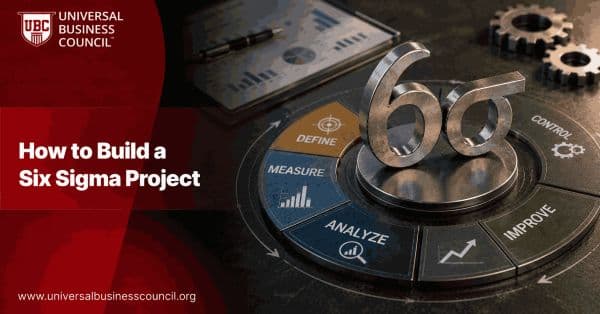
How to Build a Six Sigma Project Charter Aligned with Business Goals
Learn how to build a Six Sigma project charter that connects scope, metrics, financial impact, and DMAIC goals to real business priorities.
Six Sigma
Six Sigma vs Quality Management: Where Six Sigma Fits
Six Sigma vs Quality Management explained: learn how Six Sigma fits within quality systems as a data-driven method for reducing defects and variation.
Trending Articles
The Role of Blockchain in Ethical AI Development
How blockchain technology is being used to promote transparency and accountability in artificial intelligence systems.
AWS Career Roadmap
A step-by-step guide to building a successful career in Amazon Web Services cloud computing.
Top 5 DeFi Platforms
Explore the leading decentralized finance platforms and what makes each one unique in the evolving DeFi landscape.