

What Makes Google Gemini Different from ChatGPT and Apple AI?

Gemini: Google’s Multimodal AI
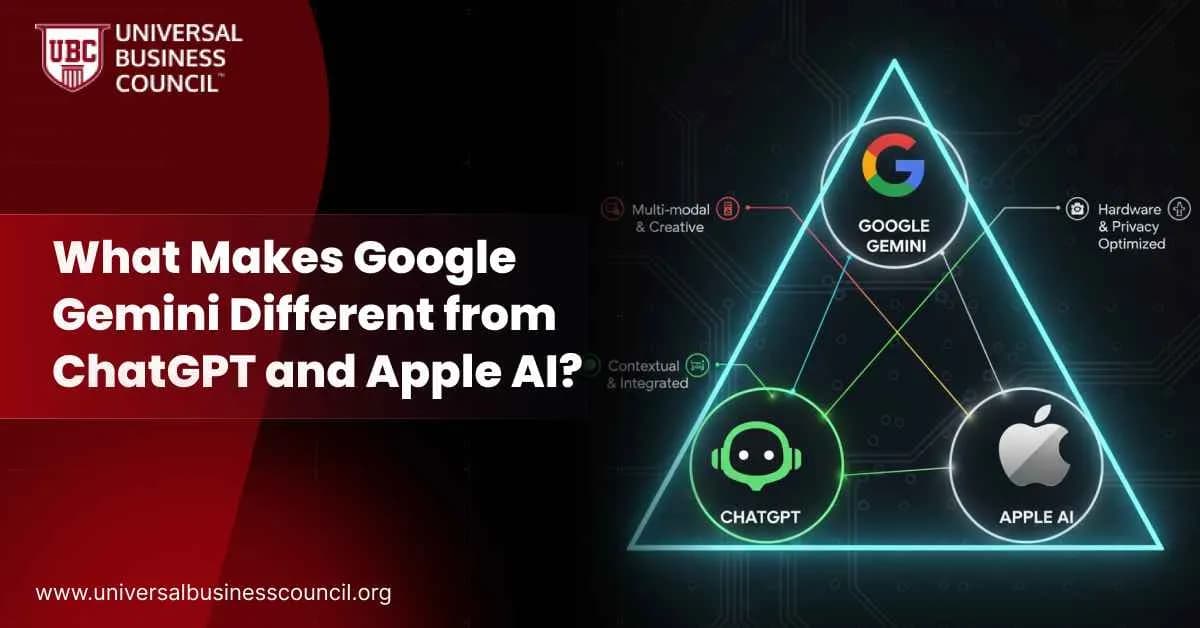
Gemini is designed as a reasoning engine that accepts text, images, audio, and diagrams together. That means you can upload a chart, ask questions about it, and combine it with a written prompt in one flow. This multimodal focus is a major difference from ChatGPT, which, although powerful in text and code, handles visual content more selectively. Apple Intelligence supports visual recognition too, but mostly for on-device assistance rather than creative or deep generative use.Ecosystem and Integration
Google built Gemini to be part of its services. It integrates with Search, Maps, Gmail, Docs, and Android, so users get answers with live data pulled directly from tools they already use. ChatGPT is more platform-agnostic, available through APIs and web access, but it lacks native hooks into these services. Apple, on the other hand, optimized Apple Intelligence for iPhones, iPads, and Macs, making it ideal for translation, rewriting, or contextual system actions but not for broad web-based knowledge.Reasoning and Context
Gemini 2.5 introduces longer context windows and “Deep Think” modes. These features allow it to pause, analyze, and respond in a structured way to complex problems. ChatGPT still leads in many benchmarked reasoning and math tasks, but Gemini is catching up with rapid updates. Apple Intelligence focuses less on abstract reasoning and more on making everyday tasks—like summarizing emails or adjusting tone in writing—easier.Privacy and Processing
Apple Intelligence emphasizes privacy above all else, keeping most tasks on-device and sending only necessary requests to Private Cloud Compute. Gemini, by contrast, leans on Google’s servers for scale and freshness, which raises trust concerns. ChatGPT also relies on cloud access but can be used in closed enterprise deployments. This difference in privacy design is one of the clearest ways these systems diverge.Gemini vs ChatGPT vs Apple AI
| Feature | Google Gemini | OpenAI ChatGPT | Apple Intelligence |
| Input Types | Multimodal (text, image, audio, diagrams) | Strong in text/code, limited image support | Text + visual intelligence on device |
| Ecosystem Integration | Search, Gmail, Docs, Maps, Android | APIs, plugins, platform-agnostic | iOS, macOS, native apps |
| Reasoning | Deep Think, long context windows | Mature reasoning, strong coding | Everyday task optimization |
| Privacy Model | Cloud-first, server-heavy | Cloud-based, enterprise options | On-device first, encrypted fallback |
| Freshness of Knowledge | Direct Google Search integration | Training cutoff + plugins | Limited web reliance |
| Content Filtering | Balanced but looser in some areas | Moderate, depends on version | Strict, conservative |
Strengths Unique to Gemini
Gemini shines when users need real-time knowledge combined with creative generation. Its search backbone means it delivers fresher results than ChatGPT, while its multimodal nature allows broader use cases than Apple Intelligence. Cross-app tasks, like checking an event in Gmail and adding it to Calendar in one step, are where Gemini feels more like an active assistant than a passive chatbot.Trade-offs and Limitations
Gemini’s biggest weaknesses are privacy trade-offs and dependence on internet connectivity. Some studies also show it provides less reliable source links compared to Copilot or even ChatGPT. Apple’s stricter moderation ensures fewer surprises, and ChatGPT’s structured reasoning still sets benchmarks in certain areas. Users choosing Gemini are betting on speed, freshness, and integration, even if that means trusting the cloud.Why This Matters
The competition is not about who can generate the longest essay but about how AI fits into daily life. Apple bets on privacy and device-native trust. ChatGPT bets on generality and reasoning power. Gemini bets on integration, scale, and timeliness. For professionals, understanding these differences is key. A deep tech certification can explain how these models actually work. If your focus is analytics, the Data Science Certification will show you how to turn AI outputs into decisions. Following technology updates reveals where ecosystems are moving, while studying AI itself prepares you to adapt no matter which system leads.Conclusion
What makes Gemini different from ChatGPT and Apple AI comes down to its design choices. Gemini is fast, multimodal, and deeply tied to Google’s ecosystem, offering freshness and flexibility at the cost of more cloud reliance. ChatGPT remains a reasoning powerhouse that is broadly accessible, while Apple Intelligence positions itself as the private, reliable companion for iPhone and Mac users. Each reflects the philosophy of its parent company—and the one you choose depends on whether you prioritize privacy, reasoning, or real-time integration.Related Articles
View All
Artificial Intelligence
Can Google Gemini Improve Itself Through Recursive Self-Improvement?
Explore whether Google Gemini can improve itself through recursive self-improvement, how Gemini-powered systems already support iterative learning and optimization, and what still separates them from true autonomous RSI.
Artificial Intelligence
Gemini 4 Argon: Features, Pricing, and Availability
Gemini 4 Argon is Google’s new flagship AI model for coding, science, finance, law and security. See its main features, API and subscription pricing, and where you can access it today.

Artificial Intelligence
What Is Google Playground? Features and How It Works
What is Google Playground? Learn how Google's new AI platform turns text prompts into playable browser games, which models power it, its features, pricing and access, Unity Spark plans, rival tools, and limits.
Trending Articles
The Role of Blockchain in Ethical AI Development
How blockchain technology is being used to promote transparency and accountability in artificial intelligence systems.
AWS Career Roadmap
A step-by-step guide to building a successful career in Amazon Web Services cloud computing.
Top 5 DeFi Platforms
Explore the leading decentralized finance platforms and what makes each one unique in the evolving DeFi landscape.