

Responsible AI Policies: How to Create an Enterprise AI Policy
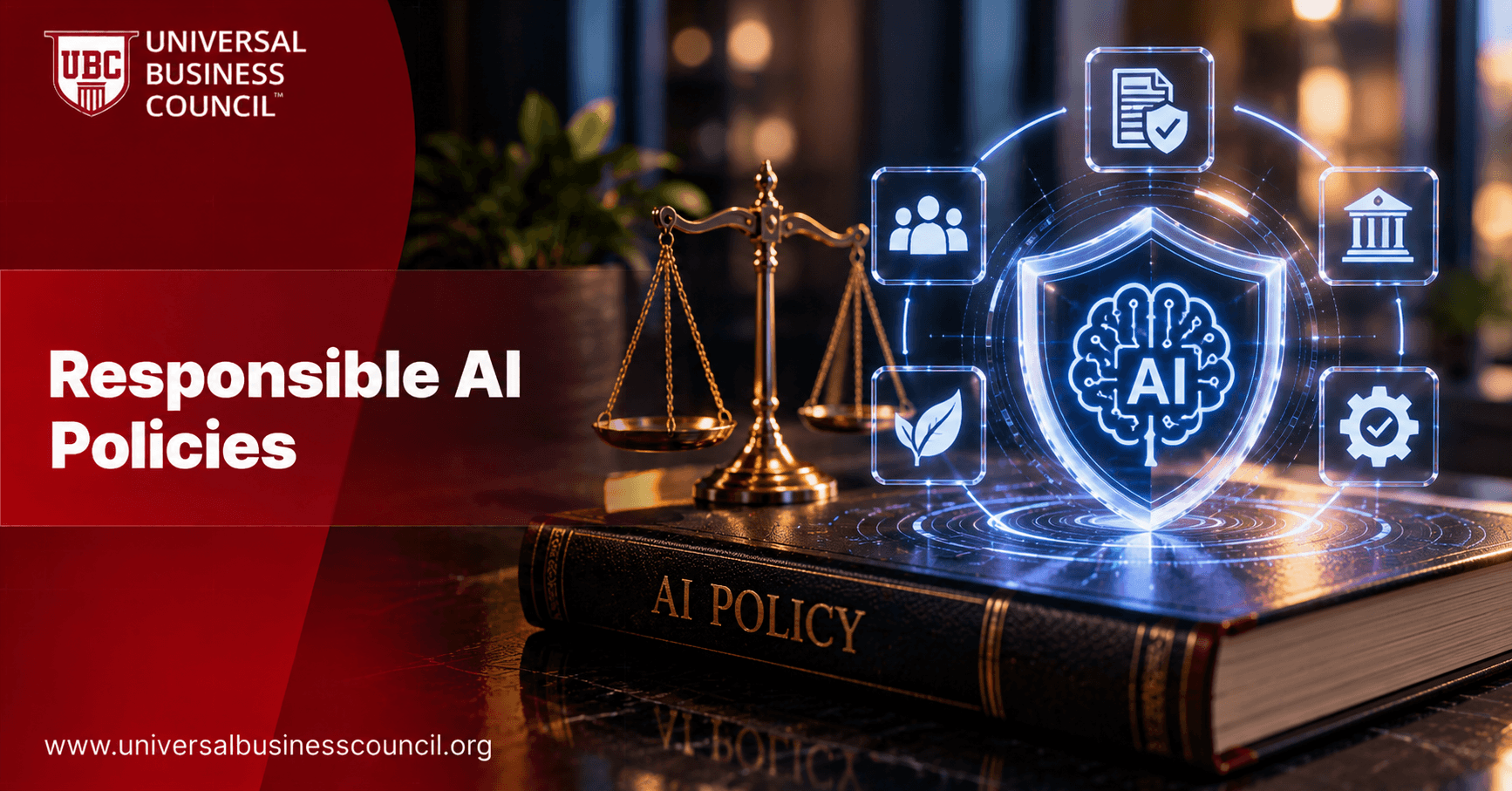
Policy is where responsible AI turns from a value into a rule. Principles such as fairness and transparency sound agreeable, but employees need to know what they may do, what they may not do and who to ask when the answer is unclear. A well-built enterprise AI policy supplies that clarity.
This guide covers what responsible AI policies are, what an enterprise AI policy should contain, how to write and roll one out and how to keep it current. For readers who want formal training on the subject, the Certified Responsible AI Expert certification from Universal Business Council is a useful reference point.

What Is an Enterprise AI Policy?
An enterprise AI policy is a formal document that sets the rules for how an organization develops, buys, uses and monitors artificial intelligence. It translates responsible AI principles into binding requirements on data use, model quality, human oversight, transparency, security and accountability.
It differs from a general code of conduct because it speaks directly to AI-specific risks such as bias, hallucinations, data leakage through generative AI tools and automated decisions about people. In most companies it is not a single document but a small family: a top-level responsible AI policy plus supporting standards and procedures.
Why Every Organization Needs One
AI use spreads faster than oversight. Employees paste data into public chatbots, teams buy AI-enabled software without review and business units pilot models that nobody inventories. A clear policy reduces this shadow AI, supports compliance with laws such as the EU AI Act and data protection rules and gives leaders a defensible position when customers, auditors or regulators ask how AI is controlled.
It also speeds up work. When teams know the approved tools, allowed data and review steps, they spend less time waiting for case-by-case answers.
What a Strong Responsible AI Policy Covers
A good policy is short enough to read and specific enough to enforce. These are the core elements.
Purpose, Scope and Definitions
State why the policy exists, which systems it covers (in-house models, vendor tools, embedded AI features and generative AI) and who must follow it, including contractors. Define key terms such as AI system, high-risk use and personal data in plain language.
Principles and Prohibited Uses
List a handful of principles: fairness, transparency, privacy, safety, security, accountability and human oversight. Then name uses the organization will not pursue, such as covert emotion tracking of employees or fully automated decisions on employment or credit without review.
Core Requirements
Risk classification: every AI use case is registered and tiered by potential harm
Data rules: lawful, minimal and approved data only, with limits on sensitive and confidential inputs
Testing: checks for accuracy, bias, robustness and security before launch
Human oversight: defined review and override rights for high-impact decisions
Transparency: disclosure when people interact with AI or are affected by AI-assisted decisions
Third parties: due diligence, documentation and audit rights for vendors
Incident reporting: a clear route and timeline for reporting AI problems
Step-by-Step: How to Create the Policy
Start by inventorying current AI use, including tools employees adopt on their own. Review applicable laws and reference frameworks such as the NIST AI Risk Management Framework, ISO/IEC 42001 and the OECD AI Principles so the policy rests on recognized practice rather than invention.
Next, form a small drafting group with legal, compliance, privacy, security, data science, HR and business representation. Assign one owner who holds the pen. Draft in plain language, add examples and keep detailed technical requirements in separate standards so the main policy stays short.
Circulate the draft to the teams that will live with it. Their feedback exposes unworkable rules early. Then secure approval from executive leadership, and for high-risk businesses, the board, so the policy carries real authority.
Policies that cover people processes need trustworthy staffing too. Organizations often verify credentials and work history for roles that handle sensitive AI work, and HireValid can support that kind of background and qualification checking.
Writing an Acceptable Use Policy for Generative AI
Generative AI deserves its own section or companion policy because everyday use is so widespread. Keep it practical:
List approved tools and how to request new ones
Prohibit entering confidential, personal or regulated data into unapproved tools
Require human review of outputs before they are used externally or for decisions
Set rules for disclosing AI-generated content where appropriate
Address intellectual property, including checking outputs for copied material
Marketing and communications teams are heavy users of these tools, so a Digital Marketing Course can help them apply the rules while still producing clear, accurate content.
Rolling Out and Enforcing the Policy
A policy nobody knows about protects nobody. Provide role-based training: short awareness sessions for all staff, deeper guidance for builders and buyers and detailed content for reviewers and leaders. Add the rules to onboarding, procurement checklists and project templates so compliance happens inside normal workflows.
Enforcement should be proportionate. Make a simple exception process available so teams do not quietly bypass the rules, and define consequences for serious violations. Technical controls, such as blocking unapproved tools or logging usage, back up the written rules. Staff who maintain these controls benefit from basic technical skills, and short tech certifications are one route to build them.
Keeping the Policy Current
Assign an owner and review the policy at least once a year, and sooner when regulations, technology or incidents demand it. Track indicators such as the number of registered AI systems, training completion, exceptions granted and incidents reported. Keeping an eye on wider developments in AI and related technologies, for example through Deep Tech Certifications, helps policy owners spot changes early.
Common Mistakes to Avoid
Copying a template without adapting it to the business
Writing a long legal document that no one reads
Leaving out vendor tools and employee-adopted generative AI
Naming no owner, no review date and no enforcement path
Conclusion
An enterprise AI policy works when it is short, specific, owned and built into daily work. Inventory your AI use, anchor the policy in recognized frameworks, cover data, testing, oversight, vendors and incidents, train people and review it regularly. The FAQs below answer common questions.
Frequently Asked Questions
What is a responsible AI policy?
A formal document setting rules for how an organization builds, buys and uses AI responsibly.
Why does a company need an AI policy?
It manages risk, supports compliance and gives employees clear rules.
Who should write the policy?
A cross-functional group from legal, compliance, privacy, security, data science, HR and the business, led by one owner.
What should an AI policy include?
Scope, principles, prohibited uses, risk classification, data rules, testing, oversight, vendor rules and incident reporting.
How long should it be?
Short enough to read in minutes, with detailed rules placed in separate standards.
What is an AI acceptable use policy?
A set of rules for how employees may use AI tools, especially generative AI.
Should the policy ban ChatGPT-style tools?
Not necessarily. Most organizations approve certain tools and restrict the data that may be entered.
Which frameworks should guide it?
The NIST AI RMF, ISO/IEC 42001, the OECD AI Principles and the EU AI Act categories.
What is shadow AI?
AI tools used without approval or oversight.
How do you classify AI risk?
By potential impact on people, the level of automation, data sensitivity and scale of use.
What are prohibited AI uses?
Uses the company will not pursue because of legal limits or ethical values.
Does the policy cover vendors?
Yes. It should require due diligence, documentation and contract terms for third-party AI.
How do you enforce the policy?
Through training, workflow checks, technical controls and defined consequences.
Who approves the policy?
Executive leadership, and the board where AI risk is significant.
How often should it be updated?
At least yearly and whenever laws, technology or business use change.
Do small businesses need one?
Yes, a lighter version suited to their AI use.
How do you train employees on it?
With role-based sessions, onboarding content and practical examples.
What is an exception process?
A route for teams to request approval for needs the policy does not cover.
How do you measure policy success?
Track registered systems, training completion, exceptions and incidents.
What are common policy mistakes?
Copying templates, excessive length, ignoring vendor AI and having no owner.
Related Articles
View All
Artificial Intelligence
AI Governance for Enterprise Leaders: A Step-by-Step Implementation Guide
Learn how enterprise leaders can implement effective AI governance through a step-by-step approach. Explore key strategies for establishing governance policies, defining responsibilities, managing AI risks, ensuring regulatory compliance, and promoting transparency and accountability across enterprise AI initiatives.
Artificial Intelligence
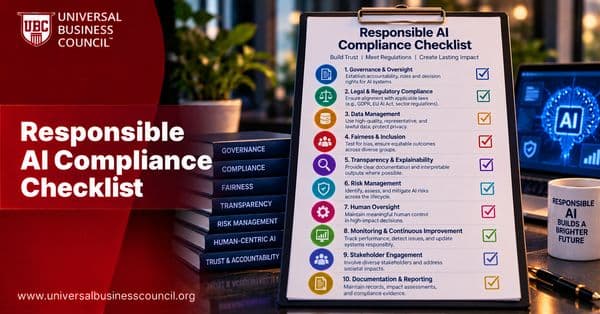
Responsible AI Compliance Checklist for Businesses
Explore a practical responsible AI compliance checklist for businesses to support ethical AI development and deployment. Learn how to assess AI risks, ensure data privacy, address algorithmic bias, maintain transparency, establish accountability, and align AI systems with relevant regulatory requirements.
Artificial Intelligence
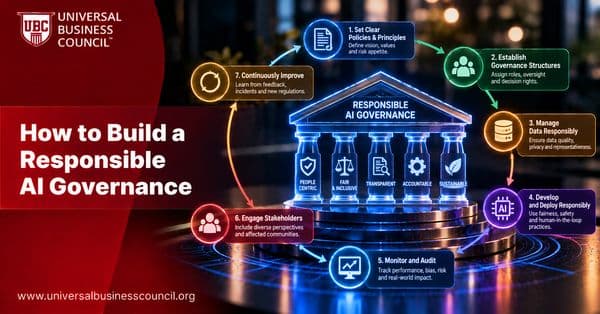
How to Build a Responsible AI Governance Framework
Learn how to build a responsible AI governance framework that supports ethical AI development and deployment. Explore key steps, including defining governance policies, assigning responsibilities, assessing risks, ensuring regulatory compliance, and establishing continuous monitoring and accountability.
Trending Articles
The Role of Blockchain in Ethical AI Development
How blockchain technology is being used to promote transparency and accountability in artificial intelligence systems.
AWS Career Roadmap
A step-by-step guide to building a successful career in Amazon Web Services cloud computing.
Top 5 DeFi Platforms
Explore the leading decentralized finance platforms and what makes each one unique in the evolving DeFi landscape.