Mid-Year Savings Are Live | Flat 30% OFF | Code: MIDYEAR
Universal Business Council

Chief Ai Officer

Browse the latest chief ai officer articles, tutorials, and research from Universal Business Council.(62 articles)

How to Manage AI Privacy and Data Risks
Suyash Raizada

How to Manage AI Privacy and Data Risks

Managing AI privacy and data risks requires organizations to control what information AI systems collect, access, process, retain, and share. Learn how to protect sensitive data, minimize unnecessary collection, manage consent, govern AI vendors, prevent data leakage, and maintain compliance throughout the AI lifecycle.


How to Build an AI Security Strategy
Suyash Raizada

How to Build an AI Security Strategy

An AI security strategy helps organizations protect AI models, agents, data, infrastructure, and applications throughout their lifecycle. Learn how to assess AI-specific threats, establish access controls, secure data and models, manage third-party risks, test defenses, and continuously monitor AI systems.

How Should Companies Govern AI Agents?
Suyash Raizada

How Should Companies Govern AI Agents?

Companies should govern AI agents with controls that reflect their ability to plan, make decisions, access data, use tools, and take actions with varying levels of autonomy. Learn how enterprises can establish permissions, human oversight, identity and access controls, testing, audit trails, monitoring, and escalation procedures for agentic AI systems.

How Should Companies Govern Generative AI?
Suyash Raizada

How Should Companies Govern Generative AI?

Companies should govern generative AI with clear policies, defined accountability, risk-based controls, secure data practices, human oversight, and continuous monitoring. Learn how organizations can manage generative AI across employees, applications, vendors, and models while addressing privacy, security, compliance, intellectual property, and reliability risks.

How to Build a Responsible AI Strategy
Suyash Raizada

How to Build a Responsible AI Strategy

A responsible AI strategy helps organizations develop and deploy artificial intelligence while managing risks related to fairness, privacy, security, transparency, accountability, and human oversight. Learn how to establish responsible AI principles, governance, controls, metrics, and monitoring across the AI lifecycle.

How Should Companies Manage AI Risk?
Suyash Raizada

How Should Companies Manage AI Risk?

Companies should manage AI risk through a structured framework covering governance, security, privacy, compliance, model performance, human oversight, and continuous monitoring. Learn how organizations can identify, assess, mitigate, and track AI risks throughout the entire AI lifecycle.

What Should an Enterprise AI Policy Include?
Suyash Raizada

What Should an Enterprise AI Policy Include?

An enterprise AI policy should define how employees and teams can safely, responsibly, and legally develop, procure, and use artificial intelligence. It should address approved AI tools, data handling, security, privacy, human oversight, intellectual property, risk classification, compliance, and accountability.

How to Build an AI Governance Framework
Suyash Raizada

How to Build an AI Governance Framework

An AI governance framework establishes the policies, roles, controls, and processes organizations need to develop and use artificial intelligence responsibly. Learn how to define AI accountability, manage risks, set approval processes, monitor AI systems, and align governance with business and regulatory requirements.

What Is an Enterprise AI Maturity Model?
Suyash Raizada

What Is an Enterprise AI Maturity Model?

An enterprise AI maturity model is a framework for evaluating how effectively an organization develops, governs, deploys, and scales artificial intelligence. It assesses capabilities across areas such as strategy, data, technology, talent, governance, operations, and business adoption to identify gaps and guide AI transformation.

How to Measure AI Maturity
Suyash Raizada

How to Measure AI Maturity

Measuring AI maturity helps organizations understand how effectively they use artificial intelligence across strategy, data, technology, talent, governance, and operations. Learn how to assess AI capabilities, define maturity levels, identify gaps, benchmark progress, and prioritize improvements.

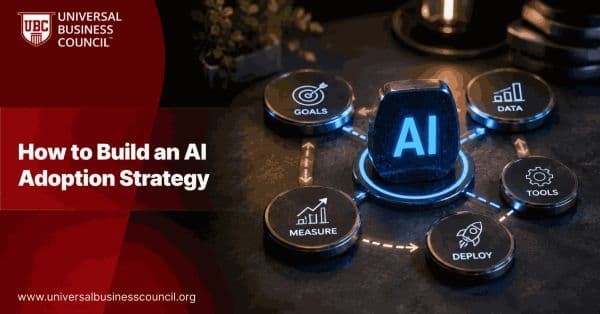
How to Build an AI Adoption Strategy
Suyash Raizada

How to Build an AI Adoption Strategy

An AI adoption strategy helps organizations move from isolated experiments to practical, scalable use of artificial intelligence. Learn how to assess AI readiness, prioritize high-value use cases, prepare data and technology, establish governance, develop workforce skills, and measure adoption and business impact.

How Much Should Companies Invest in AI?
Suyash Raizada

How Much Should Companies Invest in AI?

How much a company should invest in AI depends on its business goals, AI maturity, available data, technology infrastructure, talent, and expected returns. Learn how organizations can set realistic AI budgets, allocate spending across capabilities, and scale investment based on measurable business value.