

How Email Marketing Can Boost Your SEO Results
 Smita
Smita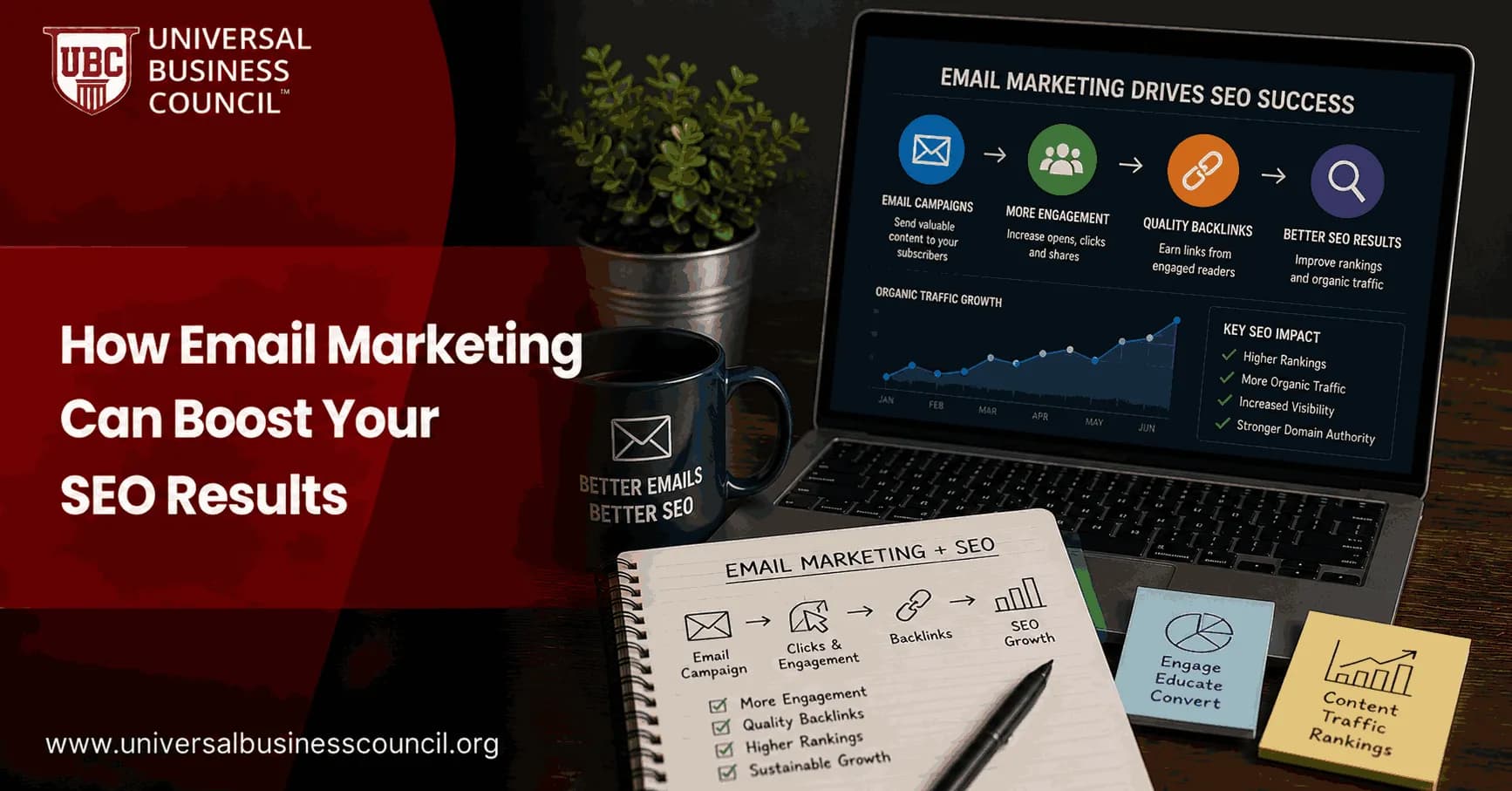
Email marketing and SEO are usually treated as separate disciplines run by different teams with different KPIs, but that separation misses a real opportunity. Email does not directly influence search rankings the way backlinks or page speed do, but it drives the exact behaviors, traffic, engagement, content distribution, and brand signals, that indirectly shape how well your site performs in search over time. Marketers who understand this connection tend to build more resilient organic growth strategies than those who treat email and SEO as unrelated channels. Anyone looking to formalize this cross-channel thinking often starts with a Certified SEO Expert credential, which builds the technical and strategic foundation needed to see how channels like email actually support organic search performance.
The connection is not always obvious from a dashboard, since Google does not use email open rates as a direct ranking factor. But the downstream effects of a well-run email program touch nearly every input search engines actually do evaluate.

Why Email and SEO Are More Connected Than Most Marketers Assume
Search engines rank content based on a combination of relevance, authority, user engagement signals, and technical quality. Email marketing influences several of these indirectly but meaningfully. When you send an email that drives a reader to a blog post, that reader's behavior on the page, time spent, scroll depth, whether they click through to related content, feeds into the same engagement signals search engines use to evaluate content quality. A steady stream of engaged, returning visitors driven by email tends to correlate with stronger organic performance over time, even though the email itself never appears in a search results page.
Email also plays a quieter role in content discovery and promotion. New content that gets immediate traffic and engagement from an email list tends to get indexed and evaluated by search engines faster than content that sits untouched waiting for organic discovery. This does not guarantee better rankings, but it removes one of the common delays in the ranking process, especially for newer sites or newly published pages competing in crowded search categories. Marketers building this kind of integrated strategy increasingly pair SEO fundamentals with broader Certified Digital Marketing Expert training, since understanding how email, content, and search work together as a system tends to produce stronger results than optimizing any single channel in isolation.
Driving Qualified Traffic That Improves Engagement Metrics
One of the clearest ways email supports SEO is through the quality of traffic it sends. Search engines pay close attention to how visitors behave once they land on a page, including bounce rate, time on page, and whether they navigate to other pages on the same site. Email subscribers who already know and trust your brand tend to engage more deeply with content than cold traffic arriving from an unfamiliar search result, since they have already opted in and expressed interest in what you publish.
This matters because engagement signals, while not officially confirmed as direct ranking factors by every search engine, correlate strongly with the kind of content that ranks well over time. A page that consistently earns low bounce rates and longer time on page from email-driven traffic sends a positive signal about content quality that can compound alongside more traditional SEO efforts like backlink building and on-page optimization.
Using Email to Build Backlinks and Amplify Content Reach
Backlinks remain one of the strongest ranking factors in most search algorithms, and email marketing can play a direct role in earning them. When you notify journalists, industry contacts, or partner sites about new research, data, or a genuinely useful resource through a targeted email outreach campaign, you increase the odds that some of those recipients will link to your content from their own sites. This is a more efficient version of traditional link-building outreach, since a well-segmented email list already includes people who have some existing relationship with or interest in your brand.
Newsletter distribution also extends content reach in ways that indirectly support link building. A piece of content that reaches thousands of engaged subscribers has a much higher chance of being shared, referenced, or linked to by someone in that audience than a piece of content published without any promotional push behind it. Search engines cannot see your email list, but they can see the backlinks and social shares that often result from a well-executed email campaign.
Where Future-Ready Thinking Begins Long Before a Marketing Career
The kind of systems thinking that connects email behavior to search performance, understanding how one input affects a seemingly unrelated output, reflects analytical habits that ideally start forming well before anyone enters a marketing role.
Future-Ready Skills
As technology becomes increasingly important across industries, students need opportunities to develop future-ready skills early in their education. A Tech Olympiad can introduce students to areas such as artificial intelligence, coding, cybersecurity, robotics, and computational thinking while encouraging curiosity and continuous learning.
Strengthening Brand Signals That Search Engines Recognize
Search engines increasingly evaluate brand strength as part of how they assess authority and trustworthiness, particularly for competitive queries where multiple sites offer similar information. A consistent, well-run email program builds brand recognition over time, and that recognition shows up in ways search engines can measure indirectly, including branded search queries, where people search for your company name directly, and direct traffic, where visitors type your URL rather than arriving through an organic search result.
Both of these signals suggest to search engines that a brand has established genuine authority and trust in its space, which can support rankings for broader, non-branded queries as well. Email marketing, by keeping your brand consistently in front of an engaged audience, contributes to this brand-strength signal in a way that pure SEO tactics like keyword optimization cannot replicate on their own. As more of this brand and engagement tracking moves through AI-driven personalization tools and data platforms, marketers working at that intersection sometimes explore a Deep Tech Certification to better understand the underlying technology behind how these signals get captured, verified, and used across increasingly automated marketing systems.
Reducing Content Decay Through Consistent Re-Engagement
Content that performs well when first published often loses traffic and relevance over time, a pattern commonly called content decay. Email marketing offers a practical way to fight this. Resurfacing older, still-relevant content through a newsletter or automated email sequence drives renewed traffic and engagement to pages that might otherwise fade in search rankings due to declining click-through rates and engagement metrics.
This renewed activity signals to search engines that a page remains relevant and valuable, which can help maintain or even improve rankings for content that would otherwise slowly decline. Building a regular cadence of resurfacing evergreen content through email, rather than only promoting new posts, is a low-effort way to extend the SEO value of content you have already invested in creating.
Building the Technical Foundation Behind Integrated Campaigns
Running an email program that genuinely supports SEO goals requires more than good copywriting. It requires understanding how email platforms integrate with analytics tools, how tracking parameters affect attribution data, and how automation workflows can be built to resurface content strategically rather than randomly. Marketers who round out their skills with a general Tech Certification tend to build these integrated systems more effectively, since connecting email platforms, analytics dashboards, and content management systems into a coherent strategy depends as much on technical fluency as on marketing creativity.
Bringing Email and SEO Together as One Strategy
Email marketing will never directly determine your search rankings the way technical SEO factors or backlink profiles do, but treating it as an unrelated channel leaves real value on the table. The traffic, engagement, backlinks, and brand signals that a well-run email program generates all feed into the broader ecosystem of factors search engines use to evaluate content quality and authority. Marketers who build email and SEO strategies together, rather than in separate silos, tend to see stronger and more durable organic growth than those chasing each channel independently.
FAQs
1. Can email marketing improve SEO results?
Yes, email marketing can indirectly support SEO by driving relevant visitors to website content and encouraging engagement. While email activity itself is not a direct Google ranking factor, the traffic, content discovery, sharing, and link opportunities it generates can support broader SEO performance.
2. How does email marketing support SEO?
Email marketing supports SEO by helping marketers distribute valuable content to an existing audience. When subscribers visit, share, reference, or link to that content, it can increase visibility and create opportunities that contribute to organic search growth.
3. Is email marketing a direct Google ranking factor?
No. Sending emails or having a large email subscriber list is not considered a direct Google ranking factor. However, email can support SEO indirectly by promoting content, increasing awareness, generating referral traffic, and helping valuable pages reach a wider audience.
4. How can email newsletters increase website traffic?
Email newsletters can drive targeted visitors to blog posts, guides, landing pages, research, and other website resources. Including clear, relevant links and compelling descriptions can encourage subscribers to visit pages that marketers want to promote.
5. Can email marketing help generate backlinks?
Yes, email marketing can create opportunities for earning backlinks. Sharing original research, useful guides, statistics, and other valuable resources with relevant audiences may encourage publishers, bloggers, and industry professionals to reference and link to that content.
6. How does email marketing help promote blog content?
Marketers can use newsletters to distribute new blog posts directly to interested readers. This gives content an initial audience and can generate visits, social sharing, discussions, and potential links that help increase the content's overall reach.
7. Can email engagement improve search engine rankings?
Email engagement does not directly improve search rankings. However, successful email campaigns can encourage people to discover and interact with website content, potentially creating secondary SEO benefits such as content sharing, mentions, referrals, and backlinks.
8. How can email marketing help increase content visibility?
Email provides a direct distribution channel for reaching people who have already shown interest in a brand or topic. Promoting high-quality content through email can help it reach readers who may share it, cite it, discuss it, or recommend it to others.
9. Can email marketing help reduce dependence on organic search traffic?
Yes, email marketing can provide a valuable traffic source outside search engines. Building an engaged subscriber base allows businesses to repeatedly reach interested users without relying entirely on search rankings for every website visit.
10. How can marketers use email to promote evergreen SEO content?
Marketers can periodically feature evergreen articles, guides, tutorials, and resources in newsletters. Updating the content before promotion and using different email angles can help extend its visibility and bring new visitors to pages that remain useful over time.
11. Can email marketing improve user engagement with website content?
Email can encourage more qualified users to visit relevant website pages. When the email audience is properly segmented, subscribers are more likely to find the content useful, which can lead to deeper website exploration and stronger engagement.
12. How does email segmentation support SEO content promotion?
Segmentation allows marketers to send specific content to audiences based on their interests, behavior, industry, or previous interactions. More relevant recommendations can increase the likelihood of website visits, content sharing, and further discovery.
13. How can email marketing help distribute new content faster?
A newsletter can immediately notify an existing audience when new content is published. This gives the content an early distribution channel instead of waiting for users to discover it through search or other organic channels.
14. Can email marketing help identify valuable SEO topics?
Yes. Email performance can provide useful insights into audience interests. High open rates, clicks, replies, and engagement around particular subjects can help marketers identify topics that may deserve additional website content or SEO-focused resources.
15. How can email marketing support an SEO content strategy?
Email can become part of the content distribution process alongside search, social media, and other channels. Marketers can publish SEO-focused content, promote it through email, analyze subscriber responses, and use those insights to improve future content planning.
16. Should SEO keywords be used in email marketing campaigns?
Relevant keywords can help marketers maintain topic consistency between emails and website content, but email copy should primarily be written for subscribers rather than search engines. Natural, useful language is more important than keyword repetition.
17. Can email marketing increase social sharing of content?
Yes. Including easy-to-use social sharing options and highlighting useful or interesting content can encourage subscribers to share it with their networks. Increased exposure can create additional opportunities for website visits, mentions, and links.
18. How can email marketing support local SEO?
Email can help businesses promote locally relevant content, events, offers, reviews, and community information to an interested audience. These campaigns may increase local engagement and encourage customers to interact with or mention the business online.
19. What email marketing mistakes can limit SEO benefits?
Common mistakes include sending irrelevant content, using misleading subject lines, promoting low-quality pages, sending excessive emails, and failing to segment audiences. Poor targeting can reduce engagement and make subscribers less likely to interact with future content.
20. What are the best ways to use email marketing to boost SEO results?
Focus on creating valuable, search-optimized content and use email to distribute it to a relevant audience. Promote evergreen resources, encourage sharing, identify content interests through campaign data, build relationships that can lead to mentions or backlinks, and continuously improve both content and email strategy.
Related Articles
View All
Digital Marketing
AI Email Marketing: Smarter Subject Lines, Send-Time Optimization, and Lifecycle Segmentation
Learn how AI email marketing improves subject lines, send-time optimization, and lifecycle segmentation with practical workflows, testing, and governance guidance.

Digital Marketing
Marketing Automation with AI: Building Smarter Customer Journeys Across Email, SMS, and Web
Learn how marketing automation with AI enables real-time orchestration across email, SMS, and web, using next-best-action decisioning and predictive personalization.
Digital Marketing
KPIs for Digital Marketing Campaigns in Programmatic Advertising
Learn how to choose KPIs for digital marketing campaigns using programmatic advertising, from reach and CTR to CPA, ROAS, CAC, and revenue impact.
Trending Articles
The Role of Blockchain in Ethical AI Development
How blockchain technology is being used to promote transparency and accountability in artificial intelligence systems.
AWS Career Roadmap
A step-by-step guide to building a successful career in Amazon Web Services cloud computing.
Top 5 DeFi Platforms
Explore the leading decentralized finance platforms and what makes each one unique in the evolving DeFi landscape.