

Time To Hire A Social Media Specialist
 Smita
Smita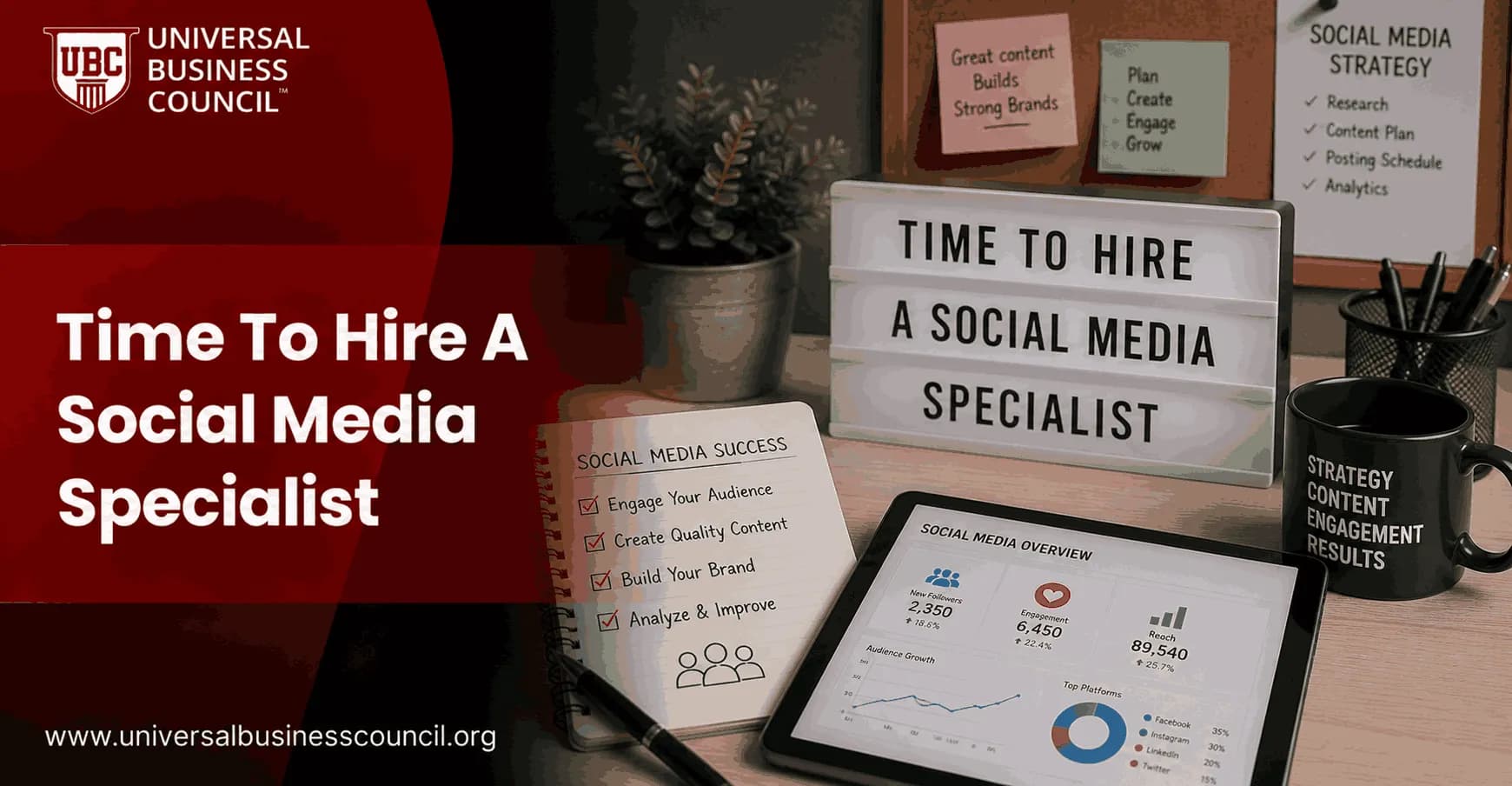
Deciding it is time to hire a social media specialist is usually not a single dramatic moment. It is a slow buildup of missed posts, inconsistent branding, and a feed that looks like an afterthought compared to competitors who clearly have someone dedicated to the job. If you are weighing whether to bring in a specialist or keep spreading the work across your existing team, this guide walks through the signs, the skills to screen for, and how to structure the hire. Many candidates worth shortlisting have already invested in formal training, such as the Certified Digital Marketing Expert designation, which gives you a useful baseline to compare applicants against during interviews.
Signs Your Business Needs a Social Media Specialist
A few patterns tend to show up consistently in businesses that have outgrown their ad hoc approach to social media.

Posting has become inconsistent because whoever manages it also has a full time job doing something else
Engagement has stalled or declined even though your product or service is growing
Competitors are visibly more active, more polished, and more responsive to comments and messages
You have no clear content calendar, so posts go out reactively rather than strategically
Leadership wants to launch paid social campaigns but nobody on the team has run one before
Customer service questions are piling up in social media inboxes with slow or inconsistent responses
If two or more of these sound familiar, that is usually a strong enough signal to start the hiring process rather than waiting for the problem to resolve itself.
What a Social Media Specialist Actually Does
The job title covers more ground than many hiring managers expect, which is part of why the wrong hire can leave a business disappointed. A specialist typically owns content planning, platform-specific posting, community management, basic analytics reporting, and coordination with design or video resources. Some also run paid campaigns, though that skill set overlaps more with performance marketing and should be confirmed separately during interviews. As platforms increasingly fold AI tools directly into their ad managers and content suggestions, familiarity with training such as the AI Powered Digital Marketing Expert program has become a genuine differentiator, since candidates who understand how to use AI for content ideation, scheduling, and audience targeting can move faster than those relying purely on manual workflows.
A strong specialist should be able to explain, in plain terms, how they would grow an account from its current state, not just recite platform best practices they read somewhere else.
Skills to Look for When Hiring
Beyond the obvious writing and design sensibility, a few less obvious skills separate a strong candidate from an average one.
Comfort reading platform analytics and adjusting strategy based on what the data actually shows, not just vanity metrics like follower count
Familiarity with scheduling and social listening tools, along with basic image or video editing
Understanding of how paid and organic social work together rather than treating them as separate silos
Awareness of where social media is heading technically, including short-form video formats, live shopping features, and increasingly, decentralized and token-based communities that some brands are experimenting with
That last point matters more each year. Brands are testing NFT-based loyalty programs, token-gated Discord communities, and Web3-native campaigns, and a specialist who has some grounding through something like a Deep Tech Certification will be better equipped to evaluate whether these experiments are worth your budget or simply noise dressed up as innovation.
You do not need every candidate to be a blockchain expert. You do need someone curious enough to understand new formats before recommending you spend money on them.
Future-Ready Skills
As technology becomes increasingly important across industries, students need opportunities to develop future-ready skills early in their education. A Tech Olympiad can introduce students to areas such as artificial intelligence, coding, cybersecurity, robotics, and computational thinking while encouraging curiosity and continuous learning. The social media specialists you hire today were, in many cases, exactly this kind of curious student a decade or two ago, and that same appetite for learning new tools quickly is what separates a specialist who keeps your brand current from one who falls behind as platforms evolve.
How to Structure the Hiring Process
Once you have decided to hire, the structure of the process matters as much as the job posting itself.
Start with a clear scope. Decide whether you need someone focused purely on content and community, or someone who will also run paid campaigns and reporting, since combining both into one role without adjusting salary expectations is a common reason new hires burn out quickly.
Ask for a short strategy exercise rather than relying only on a portfolio review. Give the candidate your actual account and ask how they would approach the next thirty days. This tells you more about their thinking than a polished portfolio from a previous employer.
Decide between in-house, freelance, and agency options early. In-house hires offer more day-to-day control and brand familiarity. Freelancers and agencies can bring broader experience and are often more cost effective for smaller teams that do not need a full time role yet.
Set clear reporting expectations from day one, including which metrics matter to your business specifically, so the specialist is not guessing what success looks like three months into the job.
Whoever you hire will eventually need to explain results to leadership who may not follow social media closely, so communication skills matter as much as platform knowledge. Some specialists strengthen this side of their profile with a general Tech Certification to round out their technical literacy across the broader marketing technology stack, from CRM integrations to analytics platforms, rather than staying siloed inside social apps alone.
Hiring a social media specialist at the right time, with a clear scope and realistic expectations, tends to pay for itself quickly once you compare the cost of the hire against the time your current team was quietly losing trying to cover the gap.
FAQs
1. What does a social media specialist do?
A social media specialist plans, creates, publishes, and manages content across social media platforms. They may also monitor audience engagement, respond to comments, analyze performance, research trends, and help develop strategies that support broader marketing goals.
2. When should a business hire a social media specialist?
A business should consider hiring a social media specialist when managing social channels becomes difficult to handle consistently or when social media is an important part of its marketing strategy. Hiring can also make sense when the business wants to improve content quality, engagement, brand visibility, or campaign performance.
3. How do I know if my business needs a social media specialist?
Signs include inconsistent posting, declining engagement, limited time to manage social accounts, difficulty creating quality content, and a lack of measurable social media strategy. If social media opportunities are being missed because nobody has dedicated responsibility for them, a specialist may add significant value.
4. What skills should a social media specialist have?
A strong social media specialist should understand content creation, platform strategy, audience research, social media analytics, copywriting, basic design, community management, and campaign planning. Adaptability and awareness of changing platform trends are also important.
5. What is the difference between a social media specialist and a social media manager?
The responsibilities can overlap, but a specialist may focus more heavily on specific social media activities such as content, engagement, or platform optimization. A social media manager generally has broader responsibility for strategy, planning, campaigns, team coordination, reporting, and overall social presence.
6. Can a social media specialist help increase brand awareness?
Yes. A social media specialist can develop consistent content and campaigns designed to reach relevant audiences and strengthen brand recognition. They can also use platform-specific formats, trends, collaborations, and audience insights to improve visibility.
7. Can hiring a social media specialist improve engagement?
A specialist can improve engagement by creating content that is relevant to the target audience and encouraging meaningful interactions. They can also monitor comments and messages, identify high-performing content, and adjust the strategy based on audience behavior.
8. Should a small business hire a social media specialist?
A small business may benefit from hiring a specialist if social media is an important customer acquisition or brand-building channel. However, the business should first define its goals and budget to determine whether a full-time employee, part-time specialist, freelancer, or agency is the most appropriate option.
9. What should I look for when hiring a social media specialist?
Look for experience relevant to your industry and target audience, strong communication skills, content planning ability, analytical thinking, and evidence of previous results. A candidate should also understand different social platforms and be able to explain why specific content and strategies were successful.
10. Should a social media specialist understand analytics?
Yes. Analytics skills help specialists measure whether their work is achieving meaningful results. Important metrics can include reach, impressions, engagement rate, follower growth, clicks, leads, conversions, and other KPIs aligned with business objectives.
11. How can a social media specialist support content marketing?
A social media specialist can distribute blog posts, videos, guides, infographics, and other content to relevant audiences. They can adapt the same core content into platform-specific formats, increasing opportunities for discovery, engagement, and traffic.
12. Can a social media specialist manage paid social campaigns?
Some social media specialists have experience with paid social advertising, while others focus primarily on organic social media. If paid campaigns are an important requirement, businesses should specifically evaluate a candidate's experience with campaign setup, audience targeting, creative testing, budgets, and performance analysis.
13. How much content should a social media specialist create?
There is no universal posting frequency that works for every business. The ideal schedule depends on the platform, audience, resources, content quality, and marketing objectives. Consistency and relevance are generally more important than publishing a large amount of low-quality content.
14. What platforms should a social media specialist manage?
The right platforms depend on where the target audience spends time and what type of content the business produces. A specialist may work with platforms such as Instagram, Facebook, LinkedIn, TikTok, YouTube, Pinterest, or X, but businesses do not necessarily need to maintain an active presence on every platform.
15. How does a social media specialist save a business time?
Managing social media involves research, content planning, creation, publishing, monitoring, engagement, and reporting. Having a dedicated specialist allows business owners and other employees to focus on their primary responsibilities while social media receives consistent attention.
16. What KPIs should a social media specialist track?
KPIs should reflect the business objective. Awareness campaigns may focus on reach and impressions, engagement campaigns can track interactions and engagement rate, while lead-generation or sales campaigns may prioritize clicks, leads, conversions, customer acquisition cost, and revenue.
17. Should a business hire a freelancer or a full-time social media specialist?
The choice depends on workload, budget, and long-term requirements. A freelancer may be suitable for smaller or project-based needs, while a full-time specialist can provide greater consistency and deeper involvement when social media is a major part of the company's marketing strategy.
18. How can I measure whether hiring a social media specialist was worth it?
Set measurable goals before hiring and compare performance over time. Improvements in qualified traffic, leads, conversions, engagement, content output, audience growth, and other relevant KPIs can help determine whether the specialist is delivering meaningful business value.
19. What mistakes should businesses avoid when hiring a social media specialist?
Businesses should avoid hiring solely based on follower counts or personal popularity. Instead, evaluate strategic thinking, relevant experience, content quality, analytical ability, communication, understanding of the target audience, and the candidate's ability to connect social media activity with measurable business objectives.
20. Is it time to hire a social media specialist?
It may be time when social media has become too demanding to manage effectively, growth opportunities are being missed, or the business wants a more strategic and consistent presence. Before hiring, define the goals, responsibilities, budget, platforms, and KPIs so the specialist has a clear path to deliver results.
Related Articles
View All
Digital Marketing
AI Social Media Marketing: Tools and Tactics for Faster Creation and Better Engagement
Learn how AI social media marketing tools speed up creation, improve engagement, and support data-driven workflows for planning, listening, testing, and optimization.
Digital Marketing
What is Social Media Engagement Metrics
Social media has become one of the most influential communication channels for businesses, creators, and organizations. Platforms such as Instagram, LinkedIn, TikTok, and Facebook enable brands to reach massive audiences, but publishing content alone does not guarantee results. To improve…
Digital Marketing
Authenticity Metrics on Social Media
In an era where brands and individuals compete for attention online, authenticity has become a defining factor in audience trust. Followers are increasingly aware of fake engagement, automated comments, and overly polished brand narratives. As a result, organizations now rely on authenticity…
Trending Articles
The Role of Blockchain in Ethical AI Development
How blockchain technology is being used to promote transparency and accountability in artificial intelligence systems.
AWS Career Roadmap
A step-by-step guide to building a successful career in Amazon Web Services cloud computing.
Top 5 DeFi Platforms
Explore the leading decentralized finance platforms and what makes each one unique in the evolving DeFi landscape.