

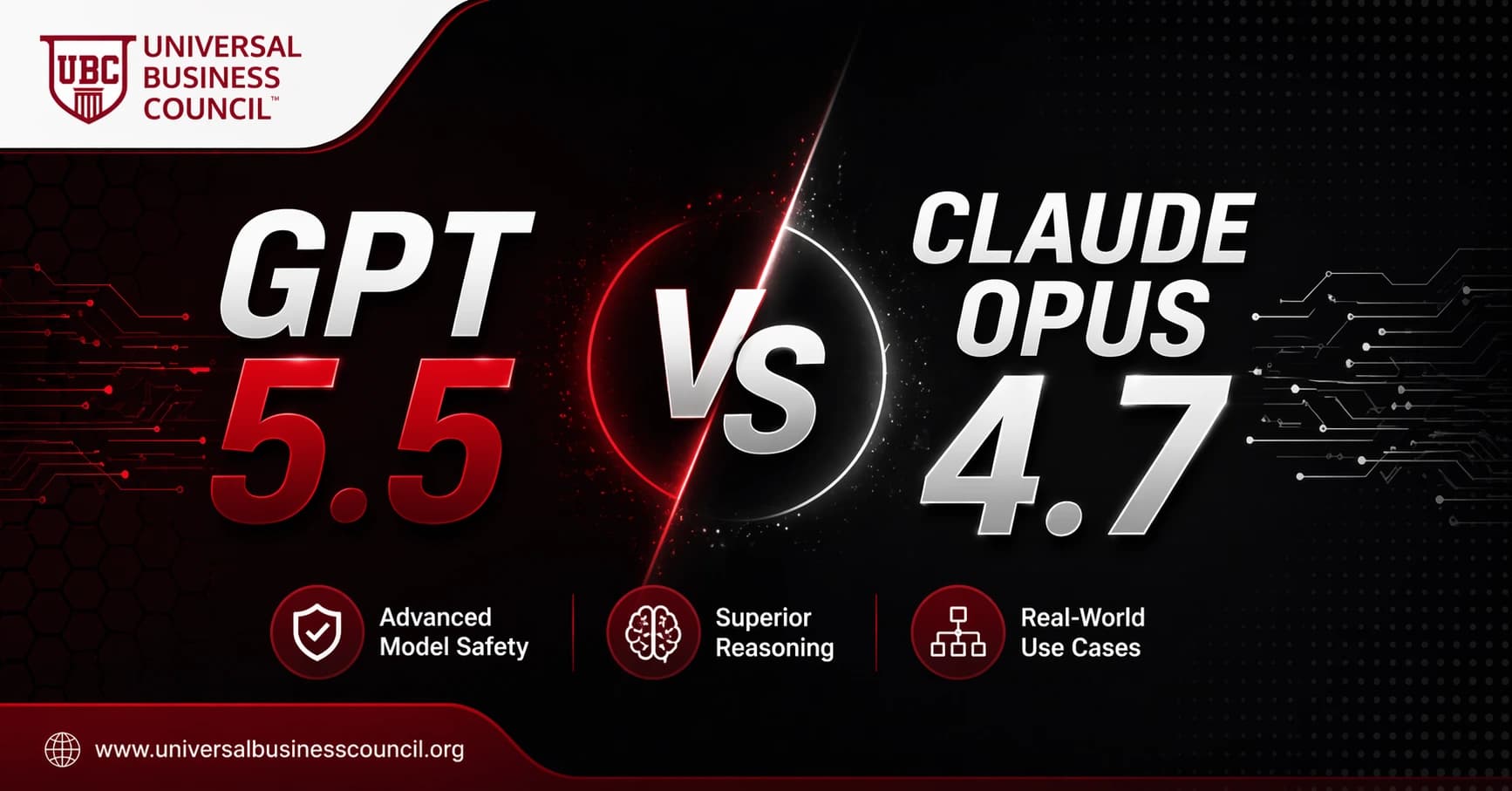
GPT 5.5 vs Claude Opus 4.7

Understanding GPT 5.5
GPT 5.5 is designed as a highly versatile and performance-driven AI model. It focuses on structured reasoning, speed, and real-world usability. The model is particularly effective in handling multi-step tasks, making it suitable for industries that require efficiency and precision. One of GPT 5.5’s defining features is its ability to break down complex problems into clear, actionable steps. This makes it highly valuable in technical domains such as software development, data analysis, and system design. Additionally, GPT 5.5 supports multimodal inputs, allowing it to process text, images, and structured data, which enhances its adaptability across different use cases.Understanding Claude Opus 4.7
Claude Opus 4.7 is built with a strong emphasis on safety, alignment, and thoughtful reasoning. It is particularly effective in handling long-form content and complex discussions that require careful interpretation. Unlike GPT 5.5, which prioritizes speed and efficiency, Claude Opus 4.7 takes a more reflective approach. It often provides detailed explanations and considers multiple perspectives before delivering an answer. This makes it well-suited for research, policy analysis, and tasks that require depth and caution.Core Differences Between GPT 5.5 and Claude Opus 4.7
Reasoning and Problem-Solving
GPT 5.5 excels in structured reasoning and is designed to provide direct, actionable solutions. It is particularly effective in technical and operational environments where clarity and efficiency are essential. Claude Opus 4.7 focuses on nuanced reasoning. It provides detailed explanations and explores different viewpoints, making it ideal for analytical and interpretive tasks.Context Handling
Claude Opus 4.7 is known for its ability to process long-context inputs, making it highly effective for analyzing large documents and extended conversations. GPT 5.5 also handles context effectively but prioritizes clarity and concise responses.Multimodal Capabilities
GPT 5.5 offers strong multimodal functionality, allowing it to process text, images, and structured data. This makes it versatile across industries. Claude Opus 4.7 supports multimodal input but is generally stronger in text-based reasoning and analysis.Safety and Alignment
Claude Opus 4.7 is designed with a safety-first approach, prioritizing ethical considerations and minimizing harmful outputs. GPT 5.5 balances safety with usability, providing direct and practical responses.Speed and Usability
GPT 5.5 is optimized for speed and efficiency, making it ideal for real-time applications. Claude Opus 4.7 may be slower due to its detailed reasoning approach but offers more thoughtful responses.Real-World Applications
Software Development
GPT 5.5 is widely used in software development for generating code, debugging, and optimizing systems. Its structured approach helps developers work efficiently. Claude Opus 4.7 is more commonly used for reviewing code and explaining logic in detail.Business and Marketing
GPT 5.5 is effective in generating content, analyzing data, and executing campaigns quickly. Claude Opus 4.7 provides deeper insights for strategic planning.Research and Analysis
Claude Opus 4.7 excels in research environments where detailed analysis is required. GPT 5.5 focuses on delivering concise and actionable outputs.Customer Support
GPT 5.5 is preferred for customer support due to speed and clarity. Claude Opus 4.7 is better for handling complex or sensitive interactions.Strengths and Limitations
GPT 5.5 offers strong reasoning, speed, and integration capabilities. It is highly practical but may sometimes prioritize efficiency over depth. Claude Opus 4.7 provides deep reasoning, excellent context handling, and a strong focus on safety. However, it may be slower and more cautious.The Role of Certifications in AI Mastery
As AI technologies continue to evolve, certifications play a crucial role in building expertise. They provide structured knowledge and practical skills needed to work with advanced AI systems. Programs such as the ChatGPT Expert Certification focus on real-world applications of conversational AI, while the AI Expert Certification provides a broader understanding of AI technologies.Future Trends in AI Models
The competition between GPT 5.5 and Claude Opus 4.7 reflects broader trends in AI development. Future systems are expected to combine strong reasoning, deep context understanding, and advanced safety mechanisms. Agentic AI will enable systems to perform complex tasks independently, while integration with enterprise systems will enhance productivity.Which Model Should You Choose
The choice between GPT 5.5 and Claude Opus 4.7 depends on your needs. GPT 5.5 is ideal for speed, structured reasoning, and workflow integration. Claude Opus 4.7 is better suited for deep analysis and safety-focused tasks.Conclusion
GPT 5.5 and Claude Opus 4.7 represent two distinct approaches to modern AI systems. GPT 5.5 focuses on efficiency and practicality, while Claude Opus 4.7 emphasizes depth and safety. Both models are powerful, and their effectiveness depends on how they are used. Professionals who understand these differences will be better prepared for the future of AI.Frequently Asked Questions
1. What is the main difference between GPT 5.5 and Claude Opus 4.7?
The main difference lies in their design priorities and approach to AI tasks. GPT 5.5 focuses on speed, structured reasoning, and workflow integration, making it highly practical for real-time use. Claude Opus 4.7 emphasizes depth, safety, and long-context understanding. It provides more thoughtful and cautious responses. The choice depends on whether efficiency or detailed analysis is more important.2. Which model is better for coding and development?
GPT 5.5 is generally better for coding and development tasks. It can generate, debug, and optimize code quickly with structured outputs. Claude Opus 4.7 is also capable but is more often used for reviewing code and explaining logic. Developers typically prefer GPT 5.5 for active development work. Claude is useful for deeper understanding and validation.3. Which AI model is safer to use?
Claude Opus 4.7 is considered safer due to its strong focus on alignment and ethical output. It tends to avoid risky or ambiguous responses and provides more cautious answers. GPT 5.5 also includes safety mechanisms but balances them with usability. This makes GPT more flexible but slightly less conservative. Safety depends on both the model and how it is used.4. Can both models handle long conversations?
Yes, both models can handle long conversations effectively. Claude Opus 4.7 is particularly strong in processing long-context inputs and large documents. It maintains coherence even in extended discussions. GPT 5.5 also manages context well but focuses more on clarity and concise outputs. Each model approaches context handling differently.5. Which model is better for business applications?
GPT 5.5 is better for business applications that require speed and efficiency. It can automate tasks, generate content, and analyze data quickly. Claude Opus 4.7 is useful for strategic planning and in-depth analysis. Businesses often use GPT for operations and Claude for insights. Combining both can deliver better results.6. How do GPT 5.5 and Claude Opus 4.7 perform in marketing?
GPT 5.5 performs well in marketing tasks that require fast content generation and campaign execution. It can create ads, emails, and social media content efficiently. Claude Opus 4.7 provides deeper insights and supports long-term strategy development. It helps analyze customer behavior more thoughtfully. Both models are useful depending on the marketing goal.7. Which model is better for research and analysis?
Claude Opus 4.7 is better for research and analysis due to its ability to process large amounts of information. It provides detailed insights and considers multiple perspectives. GPT 5.5 is also effective but focuses on summarizing and delivering actionable outputs. Researchers may prefer Claude for depth. GPT is useful for quick insights.8. Are these AI models suitable for beginners?
Yes, both models are designed to be user-friendly and accessible. Beginners can use simple prompts to interact with them. GPT 5.5 may feel easier due to its direct responses. Claude Opus 4.7 offers more detailed explanations, which can aid learning. Both are suitable depending on user preference.9. Can these models replace human workers?
These models are designed to assist rather than replace human workers. They can automate repetitive tasks and improve efficiency. However, human judgment, creativity, and decision-making remain essential. AI tools work best when combined with human expertise. The goal is collaboration, not replacement.10. Which model is faster in generating responses?
GPT 5.5 is generally faster in generating responses. It is optimized for speed and efficiency, making it suitable for real-time applications. Claude Opus 4.7 may take longer due to its detailed reasoning process. The difference becomes noticeable in time-sensitive tasks. Speed and depth are the main trade-offs.11. What are the limitations of GPT 5.5?
GPT 5.5 may sometimes prioritize speed over depth in its responses. It may not always provide detailed explanations for complex topics. Its accuracy depends on the quality of user input. Users should verify critical information before relying on it. Like all AI, it does not have true understanding.12. What are the limitations of Claude Opus 4.7?
Claude Opus 4.7 can be slower due to its cautious and detailed reasoning approach. It may also provide longer responses than necessary. While it is highly accurate, it may not be ideal for fast-paced environments. Its cautious nature can limit flexibility in some cases. However, this is often a trade-off for safety.13. Can these models be integrated into workflows?
Yes, both models can be integrated into workflows. GPT 5.5 is particularly strong in integration with tools, APIs, and automation systems. Claude Opus 4.7 can also be integrated but is often used for analysis rather than automation. Integration depends on the use case. Many organizations use both models together.14. Which model is better for content creation?
GPT 5.5 is better for fast and scalable content creation. It can generate blogs, emails, and marketing content quickly. Claude Opus 4.7 is better for detailed and thoughtful writing. It provides more nuanced and in-depth content. The choice depends on whether speed or quality is prioritized.15. How do certifications help in learning AI tools?
Certifications provide structured learning and practical knowledge. They help individuals understand how to use AI tools effectively in real-world scenarios. Programs cover both theoretical concepts and hands-on applications. This improves confidence and skills. It also enhances career opportunities.16. Can GPT 5.5 and Claude Opus 4.7 support multiple languages?
Yes, both models support multiple languages. They can understand and generate content in various languages. This makes them useful for global communication and business. However, accuracy may vary depending on the language. Continuous improvements are being made in this area.17. What is multimodal capability in AI?
Multimodal capability refers to the ability to process different types of input, such as text, images, and structured data. GPT 5.5 has strong multimodal support, making it highly versatile. Claude Opus 4.7 also supports multimodal input but focuses more on text analysis. This feature expands the range of AI applications. It is becoming standard in modern AI systems.18. Which model is better for customer support?
GPT 5.5 is generally better for customer support due to its speed and clarity. It can handle queries efficiently and provide direct answers. Claude Opus 4.7 is useful for complex or sensitive interactions. It provides more thoughtful and careful responses. Many organizations use both models for different scenarios.19. What is the future of GPT and Claude models?
The future of these models involves improved reasoning, better context understanding, and stronger safety features. Agentic AI will enable systems to perform tasks independently. Integration with business systems will increase. Both GPT and Claude will continue to evolve rapidly. Competition will drive further innovation.20. Which model should I choose for my needs?
The choice depends on your specific requirements. GPT 5.5 is ideal for speed, structured tasks, and workflow integration. Claude Opus 4.7 is better for deep analysis and safety-focused tasks. Many users benefit from using both models. The best option is the one that fits your use case.Related Articles
View All
Artificial Intelligence
Claude Opus 4.8
Claude Opus 4.8 represents Anthropic’s latest advancement in large language models, offering improved reasoning, coding performance, long-context processing, and enterprise-ready AI capabilities. Discover its features, use cases, and how it compares to other leading AI models.
Artificial Intelligence
Claude Opus 4.7
Artificial intelligence has evolved from a supporting technology into a central driver of innovation across industries. With each new generation of models, AI systems are becoming more capable, reliable, and integrated into real-world workflows. One of the most advanced developments in this space…
Artificial Intelligence
Introducing Claude Opus 4.7
Artificial intelligence continues to evolve at an astonishing pace, reshaping industries, redefining workflows, and transforming how humans interact with technology. Among the latest advancements is Claude Opus 4.7, a powerful iteration in the Claude AI family developed by Anthropic. This model…
Trending Articles
The Role of Blockchain in Ethical AI Development
How blockchain technology is being used to promote transparency and accountability in artificial intelligence systems.
AWS Career Roadmap
A step-by-step guide to building a successful career in Amazon Web Services cloud computing.
Top 5 DeFi Platforms
Explore the leading decentralized finance platforms and what makes each one unique in the evolving DeFi landscape.