

Meta Ads vs Google Ads
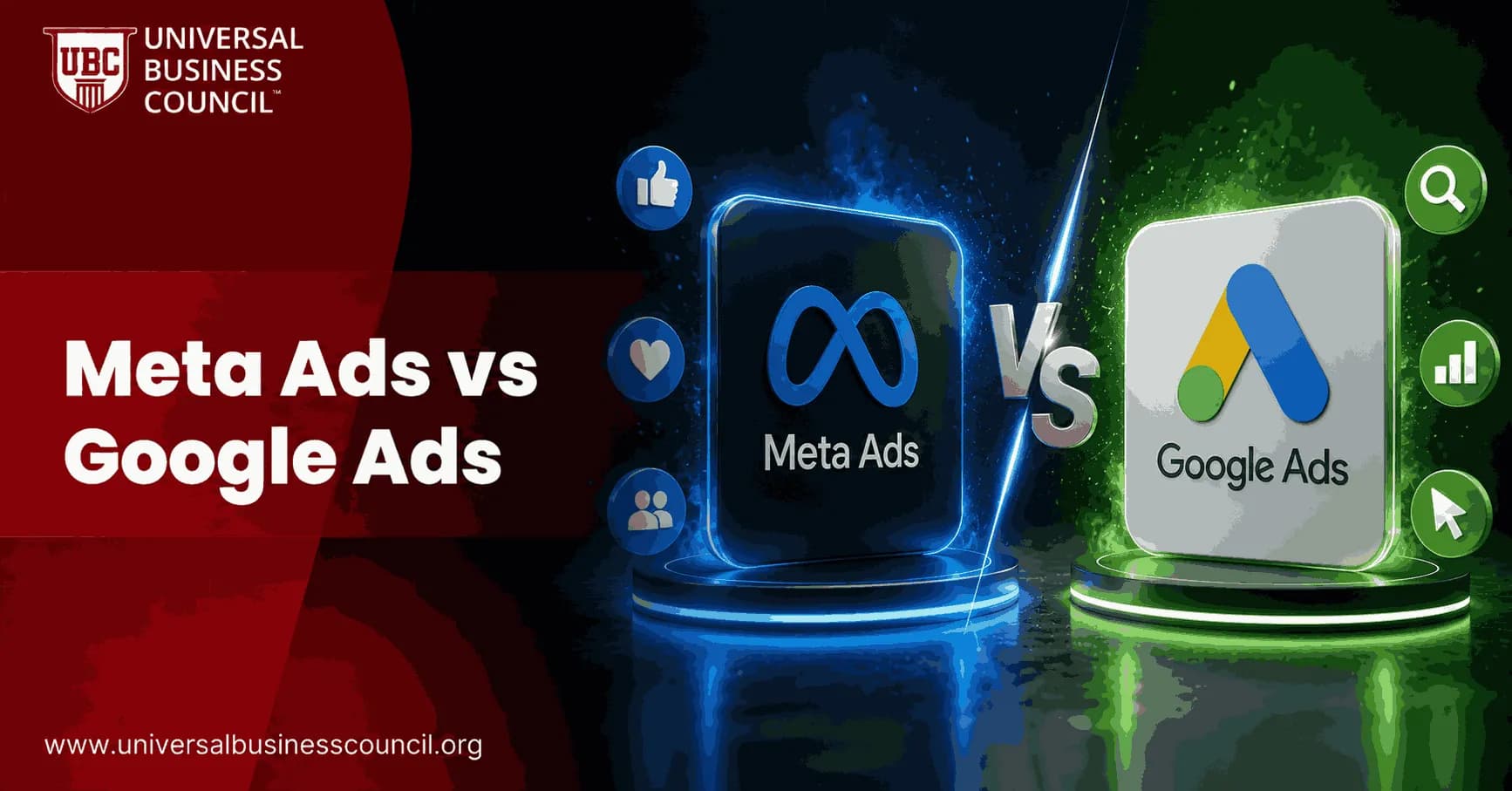
Every business that runs paid advertising eventually faces the same decision: Meta Ads vs Google Ads which platform deserves the budget? Furthermore, both platforms have changed dramatically in 2026, making the old conventional wisdom increasingly unreliable. Specifically, Meta has now overtaken Google in projected global ad revenue for 2026, with Meta forecasted at $243.46 billion against Google's $239.54 billion. Consequently, the competitive dynamics between these two ecosystems have never been more relevant or more nuanced for advertisers of every size.
Moreover, the Meta Ads vs Google Ads debate is no longer simply a question of which platform is bigger. Rather, it is a question of how each platform works, what kind of audience intent each one captures, what the actual cost and quality differences look like in practice, and how businesses at every stage from solo founders running their first campaign to enterprise performance teams managing millions in monthly spend should think about allocating their budget.

Specifically, professionals who want to develop verified, structured expertise in Meta's advertising ecosystem benefit from pursuing a recognized Certified Meta Ads Expert credential, which builds systematic knowledge of campaign architecture, audience strategy, creative optimization, and performance measurement across Facebook and Instagram. Consequently, certified practitioners design Meta campaigns that perform at a fundamentally different level than those built through trial and error alone.
Therefore, this guide breaks down the Meta Ads vs Google Ads comparison from first principles explaining how each platform works, what the 2026 data shows about cost and performance, where each platform wins, where it loses, and how to build a strategy that uses both effectively. Furthermore, this guide is written so that a complete beginner and an experienced media buyer can both extract immediate, actionable value from the same source.
What Meta Ads and Google Ads Actually Are
Before comparing Meta Ads vs Google Ads, it is essential to understand what each platform fundamentally does because they operate on completely different underlying principles. Specifically, understanding the philosophical difference between the two is the most important conceptual foundation any advertiser can build.
Google Ads: Capturing Demand That Already Exists
Google Ads is a pay-per-click advertising platform built on the principle of search intent. Specifically, when someone types a query into Google 'best project management software,' 'emergency plumber near me,' or 'corporate lawyer London' they are actively looking for a solution. Furthermore, your ad appears in response to that active search, positioning your offer directly in front of a person at the exact moment they are seeking what you provide.
Moreover, Google Ads extends beyond search results. Specifically, advertisers can appear across YouTube (the world's second-largest search engine), Gmail, Google Maps, the Display Network, and Performance Max campaigns that span the entire Google ecosystem automatically. Consequently, Google Ads is fundamentally a demand-capture platform it meets people at the moment of intent rather than creating that intent from scratch.
Additionally, Google's AI Overviews feature, which directly answers search queries within the results page, has reduced organic search click volume by eight to twelve percent in 2026. Therefore, this is actually pushing more high-intent traffic through paid channels and contributing to cost-per-click inflation across most verticals. As a result, the competitive pressure on Google Ads has intensified in 2026 even as the platform's intent-capture advantage remains its defining strength.
Meta Ads: Creating Demand Through Discovery
Meta Ads operates on an entirely different principle. Specifically, people on Facebook, Instagram, Threads, and the Meta Audience Network are not searching for products they are scrolling through content curated around their interests, relationships, and behaviors. Furthermore, Meta's advertising system uses this behavioral and demographic data to show ads to people who match the profile of a likely buyer, even if those people have never searched for the product.
Consequently, Meta Ads is fundamentally a demand-creation platform. It introduces your product or service to people who may not yet know they need it, but who are statistically likely to respond based on their behavior patterns. Moreover, Meta's formats feed ads, Reels ads, Stories, Lead Ads with in-app forms, Messenger and WhatsApp ads, and Advantage+ campaigns are designed to capture attention within a content consumption environment rather than a search environment.
Furthermore, Meta removed detailed targeting exclusions in March 2025, which fundamentally changed how audience management works on the platform. Specifically, advertisers can no longer exclude specific audiences from seeing their ads, forcing reliance on broad targeting and creative-led optimization rather than surgical audience sculpting. Therefore, strong creative assets have become even more critical to Meta campaign performance in 2026 than they were in previous years.
The Intent Difference: Why This Is the Most Important Concept in Paid Advertising
The single most important concept in the Meta Ads vs Google Ads comparison is the distinction between demand capture and demand creation. Specifically, this distinction determines which platform is the right starting point for any given business, what creative approach each platform requires, and how long it typically takes to see results from each.
High Intent vs. Passive Discovery: Two Completely Different Buying States
A person typing 'best accounting software for small business' into Google is in an active buying state. Specifically, they have already recognized a problem, decided to research solutions, and are comparing options. Furthermore, their search query tells you exactly where they are in the decision journey and your ad, if well-structured, can close that gap between research and purchase in a single click.
In contrast, a person scrolling through Instagram has not indicated any active buying intent. Specifically, they are consuming entertainment or social content, and your ad interrupts that experience which means it must earn attention before it can communicate value. Consequently, the creative and messaging requirements for Meta campaigns are fundamentally different from Google campaigns: Meta ads must create a felt need before they can address it, while Google ads can address a need that the prospect has already articulated.
Therefore, these different buyer states explain why Meta Ads vs Google Ads lead quality differs so significantly. Specifically, Google leads tend to be further down the buying journey and closer to a purchase decision. Meta leads are typically earlier in their awareness of a solution and require more nurturing before they convert to paying customers. As a result, the appropriate follow-up strategy and the appropriate expectation for conversion speed differs considerably between the two platforms.
2026 Cost and Performance: What the Data Actually Shows
The Meta Ads vs Google Ads cost comparison is one of the most frequently cited but also most frequently misunderstood dimensions of the debate. Specifically, raw cost-per-click or cost-per-lead figures without context can lead advertisers to dramatically misallocate their budgets. Therefore, understanding what the 2026 benchmarks actually mean rather than simply which number is lower is essential for making sound decisions.
2026 Performance Benchmarks: Side-by-Side Comparison
The following benchmarks reflect verified 2026 data from multiple independent sources including Coby Agency, 6S Marketers, WebConverts, and Nordsteg research, all published in 2026:
Metric | Meta Ads (2026) | Google Ads (2026) |
|---|---|---|
Average CPM (US Broad) | $8–$14 | N/A (CPC-based) |
Average CPC (Traffic) | $0.70 | $1–$6 (varies by niche) |
Average CPL (Lead Generation) | $27.66 | $53.89–$66.69 |
Average CTR (Lead Generation) | 2.59% | 3%–6% (Search) |
Search Conversion Rate | N/A | 7.04% |
Google Shopping Conversion Rate | N/A | 15.3% (up 40% YoY) |
Year-over-Year CPL Change | +20.94% | Rising (AI Overviews impact) |
Consequently, at face value Meta appears to offer significantly lower cost per lead. However, this interpretation misses a critical distinction: cost per lead and cost per acquisition are not the same metric. Specifically, Google leads—while costing more to generate convert to sales at substantially higher rates, particularly for B2B offerings and high-ticket services. Furthermore, B2B leads from Google consistently achieve higher marketing-qualified-lead to sales-qualified-lead conversion rates than equivalent Meta leads in most industries.
Moreover, professionals who want to master Google's full campaign ecosystem including Performance Max, Smart Bidding, keyword strategy, and quality score optimization benefit from pursuing a recognized Certified Google Ads Expert credential. Specifically, this certification develops the structured knowledge of campaign architecture, bid strategy, and conversion optimization that separates practitioners who consistently hit target CPA from those who rely on platform defaults. Consequently, certified practitioners manage spend significantly more efficiently across Google's increasingly AI-driven campaign ecosystem.
Lead Quality: The Metric That Changes the Entire Cost Conversation
Lead quality is the dimension of the Meta Ads vs Google Ads comparison that most commonly gets overlooked when advertisers focus exclusively on cost-per-lead figures. Specifically, a Google lead that costs $65 but converts to a sale at twenty percent produces better economics than a Meta lead that costs $28 but converts at four percent assuming equivalent average order values.
Furthermore, the funnel position of each platform's leads differs by design. Specifically, Google captures leads who are already problem-aware and solution-seeking, meaning they require fewer nurturing touchpoints before making a purchase decision. Meta captures leads earlier in their awareness journey, requiring longer nurturing sequences, more content exposure, and more follow-up communication before they are ready to buy.
Consequently, the correct way to evaluate Meta Ads vs Google Ads for any specific business is to calculate cost per acquired customer rather than cost per lead. Specifically, this requires tracking leads through the full sales cycle from initial form completion to closed deal and attributing revenue back to the originating ad source. Therefore, businesses that lack this tracking infrastructure often make budget decisions based on misleading cost-per-lead comparisons.
Where Each Platform Wins: An Honest Assessment
The Meta Ads vs Google Ads debate does not have a universal winner. Specifically, each platform outperforms the other in clearly defined scenarios and understanding those scenarios is what allows advertisers to allocate budget with precision rather than preference.
When Google Ads Is the Clear Choice
Google Ads is the right primary platform when one or more of the following conditions apply:
Your product solves a searchable problem: If people are actively typing queries that describe what you offer an accountant, a personal injury lawyer, a B2B software tool, a dental clinic Google captures them at the exact moment of maximum intent. Consequently, the conversion path from ad to appointment or inquiry is short and direct.
You are in a high-consideration or high-ticket category: Enterprise software, professional services, healthcare, legal, and financial products all generate higher-quality leads through search because the buyer has already committed significant cognitive energy to finding a solution before clicking.
Your audience actively searches for your category: If your product has clear, high-volume search demand, Google gives you access to that demand consistently. Furthermore, Google Shopping's conversion rate rose forty percent year-over-year to 15.3% in 2026 making it an exceptionally strong channel for products with established search demand.
Speed to purchase decision matters: Emergency services, same-day appointments, time-sensitive offers, and any scenario where the prospect needs a solution now are strongly suited to Google's intent-capture model.
When Meta Ads Is the Clear Choice
Meta Ads is the right primary platform when one or more of the following conditions are true:
Your product solves a problem people don't know they have: If your category has low search volume because most potential buyers haven't yet articulated the need, Meta lets you introduce the problem and the solution simultaneously to a precisely profiled audience.
Visual creative is your strongest asset: Products with strong visual appeal fashion, home decor, food, lifestyle goods, fitness perform disproportionately well on Meta's image and video-first formats. Furthermore, Reels ad CPMs have been significantly below traditional feed placements in 2025 and 2026, making them unusually cost-efficient for visual categories.
You are building brand awareness before search demand exists: For new product categories, new brands, or new markets, Meta builds the awareness that later shows up as Google search volume. Consequently, early-stage businesses often need Meta to create the audience that Google can then capture.
Your audience demographics align with Meta's data: Meta's targeting interest-based, behavioral, demographic, Lookalike audiences built from customer lists is unmatched for consumer-facing products where psychographic and lifestyle matching matters more than keyword alignment.
Industry-by-Industry Breakdown: Which Platform Fits Your Business
Different industries show consistently different performance patterns in the Meta Ads vs Google Ads comparison. Specifically:
B2B SaaS and enterprise services: Google Search wins on lead quality; Meta supports awareness and remarketing effectively at lower cost.
E-commerce and retail: Both platforms work well; Google Shopping excels for established products with search demand; Meta Advantage+ excels for discovery and impulse purchases.
Local services (dental, legal, medical, trades): Google Search wins decisively; intent is high, geographic targeting is precise, and conversion paths are short.
Consumer lifestyle, fashion, and fitness: Meta wins on visual format alignment and lower CPM; Google supports retargeting and conversion capture.
Real estate: Both platforms generate leads; Google tends toward higher purchase-readiness; Meta generates higher volume at lower CPL.
Education and online courses: Meta wins for awareness and enrollment campaigns; Google captures people actively researching programs and certifications.
Targeting Mechanics: How Each Platform Finds Your Audience
One of the most technically important dimensions of the Meta Ads vs Google Ads comparison is how each platform identifies which users see your ads. Specifically, the targeting architecture of each platform reflects the fundamental difference in how people use them and understanding this architecture helps advertisers make better structural decisions.
How Google Ads Targeting Works
Google Ads is built around keyword-based targeting. Specifically, advertisers select keywords the search terms they want their ads to appear for and bid in a real-time auction for placement when those terms are searched. Furthermore, match types determine how precisely a search query must match your keyword to trigger an ad: broad match shows ads for related topics, phrase match requires the keyword's words in order, and exact match requires the precise query.
Additionally, Google enriches keyword targeting with audience layering. Specifically, advertisers can layer demographic, in-market, life event, and affinity signals on top of keyword targeting to prioritize bids for users matching a defined profile within a given search. Moreover, Google's Smart Bidding systems Target CPA, Target ROAS, and Maximize Conversions use machine learning to automatically adjust bids based on real-time signals, including device, location, time of day, browsing history, and conversion probability. Consequently, the modern Google Ads campaign is as much about data strategy and conversion tracking quality as it is about keyword selection.
How Meta Ads Targeting Works
Meta Ads targeting is built around audience profiling. Specifically, Meta has access to behavioral and social data from across Facebook, Instagram, WhatsApp, and third-party websites and apps that use the Meta Pixel or Conversions API. Furthermore, this data allows Meta to build detailed audience profiles that include interests, behaviors, demographics, life stage, purchase history, and engagement patterns.
Moreover, Meta's most powerful targeting mechanisms are Lookalike Audiences and Advantage+ campaigns. Specifically, Lookalike Audiences allow advertisers to upload a list of existing customers and instruct Meta to find users who statistically resemble that customer base. Consequently, this allows targeting of entirely cold audiences using the behavioral fingerprint of people who have already converted one of the most efficient prospecting tools in digital advertising.
Furthermore, following the removal of detailed targeting exclusions in March 2025, Meta's platform has shifted toward encouraging broad audience targeting letting the algorithm identify the right users within a large pool rather than restricting the potential audience through exclusions. As a result, creative quality and ad relevance have become the primary drivers of targeting precision in 2026, replacing manual audience sculpting.
Campaign Types Available on Each Platform
Understanding the campaign types available on each platform in the Meta Ads vs Google Ads comparison helps advertisers match the right format to the right objective.
Google Ads Campaign Types
Search campaigns: Text ads that appear in Google Search results when specific keywords are queried. These are the highest-intent format available across any digital advertising platform.
Shopping campaigns: Product listing ads that appear in Google Search and the Shopping tab with images, prices, and product names. Shopping conversion rates rose forty percent to 15.3% in 2026.
Display campaigns: Image and banner ads served across Google's Display Network of over two million websites and apps. Best suited for remarketing and awareness.
Video campaigns: Ads served on YouTube and across Google's video partners. Ideal for awareness, product demonstrations, and retargeting.
Performance Max campaigns: AI-driven campaigns that run across all Google inventory simultaneously, automatically optimizing toward a defined conversion goal.
Demand Gen campaigns: Meta-style visual discovery campaigns served on YouTube, Gmail, and Discover Google's attempt to compete with Meta on top-of-funnel visual advertising.
Meta Ads Campaign Types
Feed ads: Image or video ads appearing in Facebook and Instagram feeds. They resemble organic posts which is precisely what makes them effective at capturing attention without immediately signaling 'advertisement.'
Reels ads: Short portrait-format video ads served between organic Reels. Reels reach grew significantly in 2025–2026, and CPMs are frequently below feed placements.
Stories ads: Full-screen vertical ads in Facebook and Instagram Stories. Typically lower CPMs than feed, with strong engagement for time-sensitive offers.
Lead ads: In-app forms that collect user information without requiring a landing page visit. Ideal for B2B lead generation, event registrations, and appointment bookings because friction is minimized.
Advantage+ campaigns: Meta's AI-driven answer to Google's Performance Max. Automatically identifies the best audiences, placements, and creatives for e-commerce and lead generation objectives.
Messenger and WhatsApp ads: Ads that initiate a direct chat conversation with a business particularly effective in markets with high WhatsApp penetration.
The Full-Funnel Strategy: Why the Best Advertisers Use Both
The most important insight in the Meta Ads vs Google Ads debate in 2026 is that the most effective advertisers are not choosing between the platforms they are using both in a coordinated, full-funnel architecture where each platform handles the stage it performs best. Specifically, Meta builds the awareness and intent that Google later captures, creating a compounding effect that neither platform achieves as efficiently in isolation.
How the Combined Full-Funnel Model Works in Practice
The coordinated model works as follows. Specifically, Meta Ads handle the top and middle of the funnel introducing your brand to cold audiences through Reels and feed ads, building recognition through retargeting users who have engaged with your content, and warming up prospects through storytelling and social proof. Consequently, these users develop awareness and positive brand associations before they ever search for your product.
Subsequently, when those same users are ready to make a decision, they turn to Google and type a search query. Specifically, at that point, your Google Search or Shopping ad appears capturing intent that was originally created by Meta exposure. Furthermore, remarketing campaigns on both platforms keep your brand visible throughout the consideration period, reducing the risk that a competitor captures a prospect you warmed up.
Moreover, professionals who want to build the technical infrastructure that supports multi-platform campaign coordination including conversion tracking, attribution modeling, and data pipeline management benefit from developing foundational technology expertise through a recognized Tech Certification. Consequently, understanding how tracking pixels, Conversions APIs, and attribution windows interact across Meta and Google is essential for building campaign measurement that accurately reflects full-funnel performance rather than last-click snapshots.
Budget Allocation Framework for Different Business Stages
A practical budget allocation framework for the Meta Ads vs Google Ads decision depends primarily on three variables: where your buyers are in their awareness journey, how much search demand already exists for your category, and how much budget you have available for proper testing.
Start with one platform first: Multiple practitioners recommend proving out one platform before splitting budget. Specifically, a minimum of $1,000–$1,500 per platform per month generates enough data for Smart Bidding on Google or for Advantage+ on Meta to optimize effectively.
High search demand, limited budget: Start with Google Search. Specifically, you capture existing demand immediately rather than spending to create it.
Low search demand, strong visual product: Start with Meta. Specifically, you must create the awareness that will later show up as search volume.
Scale stage with existing customer data: Run both platforms. Specifically, use your customer list to build Meta Lookalike Audiences and Google Customer Match audiences simultaneously compounding the efficiency of your prospecting on both sides.
Measurement and Attribution: How to Track What Is Actually Working
One of the most practically important and most frequently mismanaged aspects of the Meta Ads vs Google Ads comparison is measurement. Specifically, both platforms use native attribution models that favor their own results, making it dangerously easy to believe both platforms are performing well simultaneously when the actual picture is more complex.
Why Both Platforms Will Claim Credit for the Same Conversion
When a user sees a Meta ad on Monday, searches Google and clicks an ad on Wednesday, and converts on Thursday, both platforms can legitimately claim that conversion in their respective dashboards. Specifically, Meta's attribution window (default: 7-day click, 1-day view) and Google's attribution window (default: 30-day click) may overlap on the same user journey. Consequently, the sum of conversions reported across both platforms almost always exceeds actual total conversions a phenomenon called attribution overlap.
Therefore, the only way to accurately evaluate Meta Ads vs Google Ads performance is through independent measurement. Specifically, this means installing a Conversions API on the server side (not just the pixel), using UTM parameters on every ad link, and tracking revenue through your CRM or analytics platform rather than relying solely on either platform's self-reported numbers. Furthermore, incrementality testing running geographic holdout tests that compare conversion rates in regions where you advertise versus regions where you do not provides the most accurate measure of each platform's true contribution.
The Right Metrics to Track on Each Platform
Tracking the correct metrics ensures that budget decisions are based on evidence rather than platform-reported vanity numbers. Specifically:
Google Ads metrics to prioritize: Click-through rate (target 3%–6% on Search), conversion rate (benchmark 7.04% on Search in 2026), cost per acquisition (average $48.96 on Search), and impression share for your highest-intent keywords.
Meta Ads metrics to prioritize: Cost per lead ($27.66 benchmark for lead generation in 2026), lead-to-opportunity conversion rate from your CRM, ROAS (target minimum 3:1), frequency (watch for ad fatigue when frequency exceeds 4–5 per user).
Cross-platform metrics to maintain: Total cost per acquired customer (not cost per lead), marketing-attributed revenue by channel, and new customer acquisition cost tracked independently of either platform's attribution.
Building Professional Expertise: Certifications for Meta and Google Ads
The Meta Ads vs Google Ads landscape in 2026 rewards practitioners who combine platform-specific technical expertise with broader marketing and technology strategy knowledge. Specifically, four credential pathways address the different dimensions of paid advertising mastery each occupying a distinct and complementary position in a practitioner's professional development.
Certified Meta Ads Expert: Mastering Facebook and Instagram Advertising
Professionals who want comprehensive, structured training in Meta's advertising ecosystem including campaign architecture, audience strategy, creative testing frameworks, Advantage+ optimization, and performance measurement benefit most directly from a recognized Certified Meta Ads Expert credential.
Specifically, this certification builds the systematic knowledge that allows practitioners to design Meta campaigns that consistently outperform platform defaults understanding how to use Lookalike Audiences effectively, how to structure creative testing at scale, how to interpret attribution data accurately, and how to manage budget efficiently across campaign objectives. Consequently, certified Meta Ads practitioners deliver measurably better campaign performance and are better positioned to advise clients and employers on Meta's rapidly evolving platform capabilities.
Certified Google Ads Expert: Commanding Search, Shopping, and Performance Max
For professionals who want structured mastery of Google's full campaign ecosystem Search, Shopping, Display, YouTube, and Performance Max a recognized Certified Google Ads Expert certification provides the most targeted and comprehensive training available.
Specifically, this credential covers keyword strategy and match type management, Smart Bidding configuration and optimization, Quality Score improvement, conversion tracking setup, and the architectural principles that distinguish high-performing Google Ads accounts from those that consistently underperform. Moreover, as Google's platform becomes increasingly AI-driven, practitioners who understand the levers that human campaign managers control within that AI system namely bidding signals, audience layering, and creative structure hold a significant advantage. Consequently, certified practitioners manage Google spend at a level of efficiency that self-taught advertisers rarely achieve.
Tech Certification: Building the Infrastructure Behind Campaign Performance
Running Meta Ads vs Google Ads campaigns effectively at scale requires more than platform knowledge it requires a solid technical infrastructure for tracking, attribution, data pipelines, and automation. Specifically, professionals who want to build this infrastructure competently benefit from a recognized Tech Certification that develops foundational knowledge in systems architecture, API integration, and data management.
Consequently, technology-certified practitioners are better equipped to implement server-side conversion tracking, integrate CRM data with ad platforms through APIs, build automated reporting systems, and audit the technical accuracy of campaign attribution. Therefore, this credential is particularly valuable for performance marketers who manage large budgets where infrastructure errors translate directly into wasted spend.
Deep Tech Certification: Advanced Data and Measurement Expertise
For practitioners who want to develop advanced expertise in the data infrastructure, cryptographic measurement frameworks, and privacy-preserving attribution systems that are reshaping digital advertising including server-side tracking, privacy sandbox implementations, and decentralized data verification a recognized Deep Tech Certification provides the rigorous technical foundation for this emerging layer of advertising infrastructure.
Specifically, as privacy regulations tighten globally and browser-based tracking becomes less reliable, the practitioners who understand the technical alternatives Conversions API implementation, data clean rooms, privacy-preserving measurement protocols—will hold a meaningful advantage in campaign measurement accuracy. Consequently, this credential positions practitioners at the forefront of the next evolution in advertising data management.
Conclusion
The Meta Ads vs Google Ads comparison in 2026 does not produce a single winner it produces a clear framework for making the right decision at the right time for any specific business. Specifically, Google Ads wins on intent capture, lead quality for high-consideration categories, and B2B conversion efficiency. Meta Ads wins on demand creation, visual format engagement, cost-efficient awareness, and audience-based prospecting. Consequently, both platforms have a legitimate and complementary role in a well-structured advertising strategy.
Furthermore, the 2026 data makes one thing clear: the most effective advertisers are no longer debating Meta Ads vs Google Ads they are designing coordinated campaigns that use Meta to create demand and Google to capture it, measuring performance through independent attribution rather than platform self-reporting, and building the technical and strategic expertise to manage both systems with genuine proficiency.
Therefore, whether you are a solo founder running your first campaign, a marketing manager allocating a mid-market budget, or a senior performance practitioner managing enterprise-scale spend, the foundational decisions are the same: understand which platform captures your buyer's intent state better, invest in verified expertise through recognized credentials, and measure on cost per acquired customer rather than cost per click. Moreover, building recognized credentials starting with a Certified Meta Ads Expert certification equips you with the systematic knowledge to make those decisions confidently and to lead campaigns that consistently outperform the industry benchmarks.
Frequently Asked Questions (FAQs)
1. What is the main difference between Meta Ads and Google Ads?
Google Ads captures demand that already exists—showing ads to people actively searching for a product or service. Meta Ads creates demand by showing ads to people who match a buyer profile but haven't yet expressed active intent. Consequently, Google wins on intent quality and Meta wins on reach and cost-efficiency for discovery.
2. Which platform is cheaper Meta Ads or Google Ads?
Meta Ads has a lower average cost per lead ($27.66) compared to Google Ads ($53.89–$66.69) in 2026. However, cost per lead is not the same as cost per acquired customer. Specifically, Google leads convert to sales at higher rates in most B2B and high-consideration categories, making the total acquisition cost comparable or even lower despite higher CPL.
3. Which platform is better for B2B lead generation?
Google Ads typically wins for B2B lead generation because buyers in professional and enterprise categories are actively searching for solutions. Specifically, B2B leads from Google achieve higher MQL-to-SQL conversion rates than equivalent Meta leads. Furthermore, Meta is effective for B2B awareness, remarketing, and LinkedIn-adjacent interest targeting.
4. Which platform is better for e-commerce?
Both platforms work well for e-commerce. Specifically, Google Shopping campaigns convert at 15.3% in 2026 and excel for products with established search demand. Meta Advantage+ campaigns excel for discovery purchases and visual product categories. Furthermore, running both in a coordinated funnel consistently outperforms using either platform alone.
5. What happened to Meta's detailed targeting in 2025?
Meta removed detailed targeting exclusions in March 2025, meaning advertisers can no longer exclude specific audiences from seeing their ads. Consequently, the platform shifted toward broad targeting and creative-led optimization, making strong ad creative more important than ever for Meta campaign performance.
6. How does Google's AI Overviews feature affect paid advertising?
Google's AI Overviews directly answer search queries within the results page, reducing organic click volume by 8–12% in 2026. Consequently, this is pushing more high-intent traffic through paid channels and contributing to CPC inflation across most advertising categories.
7. What is the average CTR for Meta Ads lead generation campaigns in 2026?
Lead generation campaigns on Meta achieved the highest click-through rate of any campaign objective in 2026, averaging 2.59%. Furthermore, the overall average CTR across all Meta campaign objectives rose to 2% in 2026, up from 0.9% in 2024.
8. What is the average conversion rate for Google Search Ads in 2026?
The average conversion rate for Google Search Ads in 2026 is 7.04%. Furthermore, Google Shopping Ads achieved a conversion rate of 15.3% in 2026, representing a forty percent year-over-year improvement.
9. What is a Lookalike Audience on Meta Ads?
A Lookalike Audience is a targeting tool that instructs Meta to find users who statistically resemble an uploaded list of existing customers. Specifically, Meta analyzes the behavioral and demographic fingerprint of the uploaded audience and identifies new users with similar characteristics, enabling efficient prospecting of cold audiences.
10. What are Meta Lead Ads?
Meta Lead Ads are in-app forms that collect user contact information without requiring a click-through to an external landing page. Specifically, they reduce friction in the lead submission process and are particularly effective for B2B lead generation, event registrations, appointment bookings, and service inquiries.
11. How does Performance Max on Google Ads work?
Performance Max is a Google Ads campaign type that runs across all Google inventory simultaneously Search, Display, YouTube, Gmail, Maps, and Shopping automatically optimizing toward a defined conversion goal using machine learning. Specifically, it requires high-quality creative assets and robust conversion tracking to perform effectively.
12. Why do both platforms report more conversions than actually occurred?
Both platforms use overlapping attribution windows that can claim the same conversion. Specifically, when a user sees a Meta ad, then clicks a Google ad, and converts, both platforms may count that conversion within their reporting. Consequently, the sum of conversions across platforms exceeds actual total conversions requiring independent attribution through a CRM or analytics platform.
13. What is the minimum budget needed to test Google Ads or Meta Ads?
Multiple practitioners recommend a minimum of $1,000–$1,500 per platform per month to generate sufficient data for meaningful optimization. Specifically, this threshold provides enough conversion volume for Smart Bidding on Google and Advantage+ on Meta to learn and optimize effectively.
14. What is a Conversions API and why does it matter?
A Conversions API is a server-side tracking integration that sends conversion data directly from a business's server to an advertising platform, bypassing browser-based pixel tracking. Specifically, it provides more accurate conversion measurement as browser privacy restrictions reduce pixel reliability and is strongly recommended for both Meta and Google campaigns.
15. Should I start with Meta Ads or Google Ads if I have a limited budget?
Start with Google Ads if your product or service has clear, searchable demand meaning people actively type queries describing what you offer. Start with Meta Ads if your product has low search demand and strong visual appeal, or if your category requires discovery-led awareness before purchase intent develops.
16. What is the Google Demand Gen campaign type?
Demand Gen is Google's answer to Meta's top-of-funnel visual advertising format. Specifically, it serves visually rich discovery ads on YouTube, Gmail, and Google Discover, targeting audiences based on interest and behavioral signals rather than keyword queries. Consequently, it bridges the demand-creation model of Meta with Google's advertising infrastructure.
17. How does Meta Advantage+ differ from standard Meta campaigns?
Meta Advantage+ is an AI-driven campaign format that automatically identifies the best audiences, placements, and creative combinations for a defined conversion objective. Specifically, it reduces manual audience management in favor of algorithmic optimization similar to Google's Performance Max model and has shown strong performance for e-commerce and lead generation objectives.
18. What metrics should I use to compare Meta Ads vs Google Ads performance?
The most important comparison metric is cost per acquired customer, tracked independently through a CRM rather than using platform-reported conversions. Specifically, also monitor lead-to-opportunity conversion rate, MQL-to-SQL rate, and marketing-attributed revenue to understand the quality and downstream value of leads from each platform.
19. Why did Meta overtake Google in projected ad revenue for 2026?
Meta is projected to generate $243.46 billion in global ad revenue in 2026 versus Google's $239.54 billion representing Meta's first forecasted lead. Specifically, this reflects Meta's successful adaptation to privacy changes, the strong performance of Reels advertising, and proportionally higher advertiser budget allocation toward Meta's ecosystem relative to overall market growth.
20. What is the smartest paid advertising strategy for 2026?
The smartest strategy uses Meta Ads to build awareness, warm audiences, and generate cost-efficient top-of-funnel leads then uses Google Ads to capture those audiences when they express active search intent. Specifically, combining both platforms in a coordinated full-funnel architecture with independent attribution measurement consistently outperforms single-platform strategies for businesses with sufficient budget to operate effectively on each channel.
Related Articles
View AllMeta Ads
Meta Ads vs Google Ads: Key Differences, Use Cases, and ROI Comparison
Compare Meta Ads vs Google Ads by intent, targeting, cost, ROI, use cases, and budget strategy for better paid media decisions.
Meta Ads
Meta Ads Major Updates: What Brand Owners Must Know
Meta has launched Ads Super Burst, started testing First Impression Ads, and expanded Reels Trending Ads. Learn what each update does, what is still a test, and how brand owners can plan smarter campaigns.
Meta Ads
How to Set Up Meta Ads Manager
Meta Ads Manager is the primary platform for creating, managing, and optimizing advertising campaigns across Facebook, Instagram, Messenger, and the Meta Audience Network. This guide explains how to set up Ads Manager and prepare your account for effective campaign management.
Trending Articles
The Role of Blockchain in Ethical AI Development
How blockchain technology is being used to promote transparency and accountability in artificial intelligence systems.
AWS Career Roadmap
A step-by-step guide to building a successful career in Amazon Web Services cloud computing.
Top 5 DeFi Platforms
Explore the leading decentralized finance platforms and what makes each one unique in the evolving DeFi landscape.