

What Are Meta Ads?
If your business needs to reach customers online, one platform offers something no other advertising system in the world can match: Meta Ads. With a single campaign, you can reach people on Facebook, Instagram, Messenger, WhatsApp, Threads, and thousands of third-party apps simultaneously. The platform serves over 3.98 billion monthly active users globally. Meta generated $196 billion in advertising revenue during 2025, a 22.1% year-over-year increase, confirming it as the world's most dominant paid social advertising ecosystem.
Whether you are a small business owner running your first ad or a marketing professional managing seven-figure budgets, the principles that drive results on Meta Ads are the same. This guide explains everything: what Meta Ads are, how the platform works, the six campaign objectives, the three audience types, ad formats, bidding, and the strategies that produce measurable returns.

For professionals who want to move from understanding Meta Ads to genuinely mastering the platform at an expert level, a Certified Meta Ads Expert certification provides the structured, applied expertise needed to run high-performing campaigns, manage budgets efficiently, and prove ROI to clients and leadership teams with confidence.
What Are Meta Ads?
Meta Ads are paid advertisements that businesses and creators run across Meta's family of platforms, including Facebook, Instagram, Messenger, WhatsApp, Threads, and the Meta Audience Network, a collection of thousands of third-party mobile apps and websites. They are managed through a single dashboard called Meta Ads Manager.
The simplest definition: Meta Ads let you pay to put your message in front of exactly the people most likely to care about it, at the moment they are most likely to respond.
Unlike traditional advertising, where you pay for broad reach and hope the right people see it, Meta Ads use machine learning to evaluate millions of data signals per user demographics, interests, behaviors, past interactions with your brand, and real-time context and serve your ad to the specific subset of people within your target audience who are most likely to take the action you want.
That targeting precision is why Meta Ads consistently deliver results at lower cost than most alternatives. The average cost per lead on Meta is $27.66, compared to $70.11 on Google Ads. Advertisers who follow platform best practices consistently report four times return on ad spend.
The Meta Advertising Ecosystem: Where Your Ads Appear
Understanding where Meta Ads run helps you choose the right placements for your specific audience and objective.
Facebook remains the world's largest social network with over three billion monthly active users. In the United States alone, it has approximately 240 million monthly active users. It is the strongest platform for broad awareness campaigns, community-based businesses, local services, and audiences aged 35 and above. Ads appear in the News Feed, Stories, Reels, Marketplace, and Groups.
Instagram has grown to approximately three billion monthly active users globally, with around 170 million in the U.S. It is primarily a visual platform that skews toward younger demographics, with 70% of users aged 35 and under. It performs best for lifestyle brands, fashion, beauty, food, travel, and any product or service that benefits from high-quality visual storytelling. Ads run in the Feed, Stories, Reels, and the Explore tab.
Messenger
Messenger supports inbox ads, sponsored messages, and click-to-message campaigns. It is particularly effective for direct response campaigns where the goal is to start a conversation with a prospect, making it well-suited for service businesses, high-consideration purchases, and B2B lead generation.
WhatsApp ads, which entered the full Meta Ads Library in December 2025, are click-to-WhatsApp campaigns that open a WhatsApp conversation when a user taps the ad. They are especially effective in markets where WhatsApp is the dominant communication platform, including India, Brazil, and large parts of Europe and Southeast Asia.
Threads
Threads emerged as a significant advertising surface in 2026, particularly effective for reaching younger demographics aged 18 to 34. It is Meta's fastest-growing placement and carries an early-adopter advantage for brands that begin advertising there before competition increases.
Meta Audience Network
The Audience Network extends your ads beyond Meta's own platforms to thousands of third-party mobile apps and websites, increasing reach to users who may not be active on Meta's owned properties at that moment.
The Three-Level Campaign Structure: How Meta Ads Are Organized
Every Meta advertising campaign is organized into three levels. Understanding this structure is the foundation of effective campaign management.
Level 1: Campaign
The campaign level is where you set your objective, the single most important decision in any Meta campaign. The objective tells Meta's algorithm what action to optimize for and, by extension, which users to prioritize showing your ad to. Choose the wrong objective and you pay for the wrong behavior, regardless of how good your targeting and creative are.
Level 2: Ad Set
The ad set level is where you define your audience, placements, budget, schedule, and bidding strategy. Each campaign can contain multiple ad sets, allowing you to test different audiences, different placements, or different budget allocations within the same campaign objective.
Level 3: Ad
The ad level is where you create the actual content users see: the image, video, headline, body text, and call-to-action button. Each ad set can contain multiple ads, allowing you to test different creative variations with the same audience.
This three-level structure gives Meta's algorithm the data it needs to learn and optimize. The more structured and intentional your organization, the faster the algorithm reaches efficient delivery.
The Six Campaign Objectives: ODAX Framework Explained
Meta consolidated its original eleven campaign objectives into six streamlined options through its ODAX (Outcome-Driven Ad Experiences) framework, which is now fully rolled out across Facebook, Instagram, and Threads. Choosing the right objective is the single most important decision you make before spending a dollar.
1. Awareness
The Awareness objective maximizes the number of people who see your ad and remember your brand. Meta optimizes for reach and brand recall, showing your ads to users most likely to remember them later. This objective is appropriate for new businesses introducing themselves to a market, brands entering a new geographic area, or established businesses launching a new product line. Awareness campaigns are not designed to drive immediate action.
2. Traffic
The Traffic objective sends people to a destination, typically your website, landing page, app, or Messenger conversation. Meta optimizes for link clicks or landing page views. Traffic campaigns are the most cost-effective option at $0.70 average cost per click, but they optimize for clicks rather than conversions. Use Traffic when you want to drive volume to a page, not necessarily to maximize purchases.
3. Engagement
The Engagement objective maximizes interactions with your content: post likes, comments, shares, event responses, and page follows. It is most effective for warm audiences who already know your brand and need social proof or community-building touchpoints before they are ready to convert. Engagement campaigns are a strong middle-funnel strategy for service businesses and B2B brands with longer decision cycles.
4. Leads
The Leads objective collects contact information directly within Meta's platform through Instant Forms, without requiring users to leave Facebook or Instagram. This is valuable for service businesses, B2B companies, real estate, financial services, and any industry where the conversion goal is collecting a name, email address, or phone number for follow-up. Lead Generation campaigns achieve a 2.59% click-through rate, 61% higher than Traffic campaigns.
5. App Promotion
The App Promotion objective targets users within your defined audience who are most likely to install your app or complete specific in-app events. It supports optimization for installs, in-app actions, or return on ad spend. Lookalike audiences built from existing paying users deliver double the ROI compared to interest-based targeting for App Promotion campaigns.
6. Sales
The Sales objective drives direct conversions: purchases, bookings, subscriptions, or any other transaction your business tracks through the Meta Pixel or Conversions API. It is the most powerful objective for any business with sufficient conversion data. Meta recommends at least 50 conversion events per ad set per week for the algorithm to exit its learning phase and deliver stable, efficient results. Sales campaigns deliver an average 2.79 return on ad spend, with average CPM between $20 and $30.
Audience Targeting: The Three Types Every Advertiser Needs
Audience targeting is where Meta Ads campaigns succeed or fail. The same creative can produce vastly different results depending on who sees it.
Core Audiences
Core Audiences are built using Meta's native targeting options: demographics (age, gender, location, language, education, relationship status), interests (based on pages liked, topics engaged with, and content consumed), and behaviors (purchasing behavior, device usage, travel patterns, and other activities Meta tracks across its platforms).
Core Audiences are the starting point for most campaigns targeting people who have never encountered your brand before. They are best for cold audience acquisition, local targeting, and event-based campaigns.
Custom Audiences
Custom Audiences target people who have already interacted with your business in some way. They can be built from website visitors tracked via the Meta Pixel, customer lists you upload (email addresses, phone numbers), app users, video viewers, Instagram or Facebook page engagers, and lead form openers.
Custom Audiences are the foundation of retargeting, your highest-ROI campaign type, because they target people who are already familiar with your brand and further along in the decision process.
Lookalike Audiences
Lookalike Audiences take a source Custom Audience, such as your customer list or website purchasers, and find new users on Meta who share the same characteristics. You control the similarity percentage: a 1% Lookalike is the closest match to your source and typically the highest-converting cold audience. Lookalike Audiences built from paying customers consistently deliver double the ROI compared to interest-based Core Audiences.
Meta Pixel and Conversions API: The Measurement Foundation
What Is the Meta Pixel?
The Meta Pixel is a small piece of JavaScript code you place on your website. It tracks user behavior after they click your ad: page views, add-to-cart events, purchases, form completions, and more. This data feeds Meta's algorithm so it can learn who converts and optimize delivery toward people most likely to take that same action.
Without the Pixel, Meta's algorithm is operating blind. It can serve your ad to people who click, but it cannot learn who actually buys, signs up, or completes your goal.
Conversions API
The Conversions API (CAPI) is a server-side tracking method that sends conversion data directly from your server to Meta, bypassing browser-level ad blockers and iOS privacy changes that limit Pixel tracking. In 2026, using both the Pixel and CAPI together is considered the minimum tracking standard for any serious Meta advertiser. Dual tracking typically recovers 15% to 30% of conversion data that Pixel-only setups miss.
Ad Formats: What Meta Ads Actually Look Like
Meta offers a wide range of ad formats, each suited to different objectives and creative strategies.
Image Ads use a single static image with a headline, body text, and call-to-action button. They are the simplest format to produce and work well for direct response campaigns with a clear, single message.
Video Ads are the highest-performing format on both Facebook and Instagram in 2026. Vertical videos (9:16 ratio) optimized for mobile viewing with captions for silent autoplay consistently outperform horizontal formats. Short-form video under 15 seconds performs best for cold audiences; longer-form video (60 to 90 seconds) works well for warm audiences who need more persuasion.
Carousel Ads display two to ten images or videos in a swipeable format, each with its own headline, description, and link. They are ideal for showcasing multiple products, telling a multi-step story, or demonstrating a product from multiple angles.
Collection Ads feature a cover image or video alongside a grid of product images below. When tapped, they open to an Instant Experience, a full-screen, fast-loading mobile storefront. Collection Ads are particularly effective for e-commerce brands.
Reels Ads appear between organic Reels content on Facebook and Instagram. In Q4 2025, Meta launched Reels Trending Ads, which allow advertisers to amplify viral content through paid promotion by identifying trending audio, hashtags, and content themes.
Instant Experience Ads (formerly Canvas Ads) are full-screen, mobile-optimized interactive experiences that load instantly without leaving the app. They support video, images, carousels, and call-to-action buttons in a single immersive format.
Lead Form Ads open a pre-filled instant form within the Meta platform when tapped, allowing users to submit their contact details without leaving Facebook or Instagram.
Bidding Strategies: How You Control Costs
Meta offers several bidding strategies, each appropriate for different campaign goals and budget levels.
Highest Volume (Lowest Cost) is the default bidding strategy. Meta spends your entire budget to get as many results as possible at the lowest available cost. It is the right starting point for most campaigns.
Cost Per Result Goal allows you to set a target cost per conversion. Meta tries to deliver results at or near your stated cost while spending your full budget. It requires sufficient campaign history to work well.
Minimum ROAS lets you set a minimum return on ad spend target. Meta only bids on opportunities it believes will meet or exceed that threshold. This strategy works best for established e-commerce campaigns with strong conversion data.
Bid Cap sets a hard maximum on what Meta bids per auction. It gives advertisers the most cost control but can limit delivery if set too aggressively.
Meta Advantage+: AI-Powered Campaign Automation
Advantage+ is Meta's suite of AI-powered automation tools that have become increasingly central to campaign performance in 2026.
Advantage+ Shopping Campaigns automate audience targeting, creative selection, and placement for e-commerce advertisers, allowing Meta's algorithm to find the highest-converting combinations independently rather than requiring manual ad set structure.
Advantage+ Audience (formerly Advantage Detailed Targeting) automatically expands targeting beyond your defined audience when Meta's algorithm identifies additional users likely to convert. Automated Audience Expansion is now a default feature in most campaign types as of 2026.
Advantage+ Creative automatically tests multiple creative variations and serves the version performing best to each user. It evaluates combinations of images, headlines, descriptions, and calls to action dynamically.
For most advertisers, incorporating Advantage+ tools in at least one campaign alongside manually structured campaigns is a best practice, as the AI optimization frequently identifies converting audiences that manual targeting misses.
What Does Meta Advertising Cost?
Meta Ads operate on an auction-based pricing model where cost is determined by competition, audience quality, and ad relevance. There is no fixed price. You set a budget and Meta runs the auction.
Key cost benchmarks for 2026:
Average cost per click (CPC): $0.70 for Traffic campaigns; higher for Sales campaigns targeting purchase intent
Average CPM: $20 to $30 for Sales campaigns; lower for Awareness campaigns
Average cost per lead: $27.66 across industries
Average ROAS: 4x for campaigns aligned with platform best practices; 2.79x for Sales campaign objective specifically
The minimum daily budget to maintain meaningful ad delivery is approximately $5 to $10 per day. However, campaigns optimizing for conversions typically need at least $20 to $50 per day to generate enough events for the algorithm to learn efficiently.
Full-Funnel Strategy: How to Structure a Complete Meta Ads Program
A mature Meta Ads program covers all three stages of the buyer journey simultaneously.
Top of Funnel (Cold Audiences): Use Awareness and Traffic objectives for cold Core Audiences or Lookalikes to introduce your brand to people who have never heard of you. The goal at this stage is exposure and initial consideration, not immediate conversion.
Middle of Funnel (Warm Audiences): Use Engagement and Leads objectives for Custom Audiences built from website visitors, video viewers, and page engagers. The goal is building trust, providing social proof, and capturing contact information for follow-up.
Bottom of Funnel (Hot Audiences): Use Sales objectives with retargeting Custom Audiences built from high-intent behaviors, add-to-cart events, product page views, lead form openers to close conversions from people who have already demonstrated intent.
Retargeting campaigns consistently deliver the highest ROAS of any Meta campaign type because they target people who are already familiar with your brand and furthest along in the decision process.
Building Expert-Level Meta Ads Knowledge
Understanding Meta Ads conceptually is one step. Running campaigns that consistently produce profitable results, scaling them without efficiency losses, and interpreting data to make smart optimization decisions is an entirely different skill level. A Certified Digital Marketing Expert credential develops that broader digital marketing intelligence, covering the full ecosystem of channels paid social, search, email, content, and analytics that Meta Ads operates within, and equipping practitioners to build cross-channel strategies that maximize the performance of every advertising dollar.
Common Meta Ads Mistakes to Avoid
Choosing the wrong objective: The most expensive mistake in Meta advertising. If you want purchases but choose Traffic, Meta optimizes for clicks rather than buyers and you pay for the wrong behavior.
Underfunding individual ad sets: Ad sets need sufficient budget to generate at least 50 conversion events per week to exit the learning phase. Spreading the budget across too many ad sets starves each one of the data it needs to optimize.
Not using the Meta Pixel and Conversions API: Without proper tracking, Meta's algorithm cannot learn who converts, and your campaigns cannot improve. Setting up dual Pixel-plus-CAPI tracking is non-negotiable for any serious advertiser.
Using only one creative per ad set: A single ad gives you no data on what actually resonates. Always test at least three to five creative variations per ad set to let the algorithm find the best performer.
Making frequent changes during the learning phase: Every significant change to an ad set resets the learning phase. Make deliberate changes and allow at least seven days of data before evaluating results or making further adjustments.
The Technical Infrastructure Behind Meta Ads
Running Meta Ads effectively in 2026 requires understanding not just marketing strategy but the technical systems that support it: the Pixel implementation, Conversions API setup, campaign data architecture, and the AI systems powering Meta's Andromeda algorithm. For professionals who want to develop that technical depth, a Tech Certification covering digital advertising infrastructure, analytics systems, and AI-powered marketing technology provides the technical grounding that separates practitioners who understand surface-level campaign management from those who can architect, debug, and optimize the full technical stack that high-performance Meta campaigns depend on.
Advanced Topics: What Comes After the Basics
Once you have mastered campaign structure, objectives, audiences, and creative formats, the next level of Meta Ads performance comes from several advanced disciplines.
Creative strategy at scale: Developing a systematic creative testing framework that generates insights from each test and compounds performance over time.
Attribution modeling: Understanding how to use Meta's attribution windows, how to compare Meta attribution data to Google Analytics, and how to build a complete cross-channel attribution model that accurately credits Meta's contribution to the customer journey.
AI and deep tech integration: The intersection of Meta Ads and AI is accelerating. Meta's Andromeda algorithm, powered by NVIDIA infrastructure, is processing billions of ad auction decisions per second. Understanding how large-scale machine learning systems make optimization decisions and how to work with them rather than against them is becoming a meaningful differentiator for advanced advertisers. Practitioners looking to develop that understanding of AI systems at a foundational level can do so through a Deep Tech Certification covering machine learning principles, AI-driven optimization systems, and the data science foundations that underpin platforms like Meta's advertising algorithm.
Conclusion
Meta Ads are the most powerful paid advertising platform available to businesses of any size in 2026. They reach nearly four billion monthly active users across Facebook, Instagram, Messenger, WhatsApp, Threads, and the Audience Network. They offer unmatched targeting precision, a wide range of campaign objectives mapped to every stage of the buyer journey, and AI-powered optimization that improves performance over time as your campaigns generate more data.
The path from beginner to professional on Meta Ads runs through mastering the three-level campaign structure, selecting the right ODAX objective for each business goal, building Custom and Lookalike Audiences from first-party data, implementing dual Pixel-plus-CAPI tracking, and developing a systematic creative testing framework. For those who want to accelerate that path with structured expertise, a Certified Meta Ads Expert credential, a Certified Digital Marketing Expert certification for broader digital strategy depth, a Tech Certification for technical infrastructure literacy, and a Deep Tech Certification for AI and algorithmic understanding together form the complete professional foundation for operating at the highest level of Meta Ads performance.
Frequently Asked Questions
1. What are Meta Ads?
Meta Ads are paid advertisements that businesses run across Meta's platforms Facebook, Instagram, Messenger, WhatsApp, Threads, and the Audience Network using a single management dashboard called Meta Ads Manager to reach billions of users with precise targeting.
2. What is the difference between Facebook Ads and Meta Ads?
Facebook Ads is the older name for the platform. Meta Ads is the current name, reflecting that campaigns can now run across all Meta-owned properties simultaneously, not just Facebook. The advertising system is the same.
3. How much do Meta Ads cost?
Meta Ads are auction-based with no fixed price. Average cost per click is around $0.70 for Traffic campaigns. Average cost per lead is $27.66. Average CPM for Sales campaigns is $20 to $30. Minimum effective daily budget is approximately $5 to $50 depending on the objective.
4. How does Meta decide who sees my ad?
Meta's algorithm evaluates millions of signals per user — demographics, interests, behaviors, past interactions with your brand, device, time of day, and more — to identify which users within your defined audience are most likely to take the action you want. It learns and improves over time as your campaign generates more data.
5. What is the Meta Pixel?
The Meta Pixel is a JavaScript code snippet placed on your website that tracks user behavior after they click your ad page views, add-to-cart events, purchases, and more — and sends that data back to Meta so the algorithm can optimize delivery toward people most likely to convert.
6. What is Conversions API?
Conversions API (CAPI) is a server-side tracking method that sends conversion data directly from your server to Meta, bypassing browser-level ad blockers and iOS privacy restrictions that limit Pixel tracking. Using both Pixel and CAPI together recovers 15% to 30% of conversion data that Pixel-only setups miss.
7. What are the six Meta Ads campaign objectives?
The six ODAX objectives are: Awareness (brand recall), Traffic (link clicks), Engagement (interactions), Leads (contact information collection), App Promotion (installs and in-app events), and Sales (purchases and conversions).
8. What is a Custom Audience?
A Custom Audience is a targeting audience built from people who have already interacted with your business website visitors, customer email lists, app users, video viewers, or page engagers. Custom Audiences are the foundation of retargeting campaigns.
9. What is a Lookalike Audience?
A Lookalike Audience finds new users on Meta who share the same characteristics as a source Custom Audience, such as your customer list or website purchasers. At 1% similarity, it is the closest match to your source and typically the highest-converting cold audience type.
10. What is the ODAX framework?
ODAX (Outcome-Driven Ad Experiences) is Meta's framework that consolidated the original eleven campaign objectives into six streamlined categories in 2022 and is now fully rolled out across all Meta platforms. It enables smarter campaign management through real-time AI optimization.
11. What is Meta Advantage+?
Meta Advantage+ is Meta's suite of AI-powered automation tools, including Advantage+ Shopping Campaigns, Advantage+ Audience, and Advantage+ Creative, that automate targeting, creative selection, and placement decisions to improve campaign performance with less manual management.
12. What is a good ROAS for Meta Ads?
Advertisers following platform best practices consistently report 4x average ROAS. Sales campaigns specifically achieve an average 2.79x ROAS. Acceptable ROAS varies by industry, product margin, and business model — break-even ROAS should be calculated based on your own unit economics.
13. What are Reels Trending Ads?
Reels Trending Ads, launched in Q4 2025, allow advertisers to amplify viral content through paid promotion by identifying trending audio, hashtags, and content themes, enabling ads to ride existing cultural momentum for higher engagement at lower cost.
14. What is the Meta learning phase?
The learning phase is the period during which Meta's algorithm gathers data to optimize ad delivery. It is triggered when you launch a new ad set or make significant changes to an existing one. The algorithm requires at least 50 conversion events per ad set per week to exit the learning phase and deliver stable, efficient results.
15. What ad format performs best on Meta in 2026?
Vertical video (9:16 ratio) optimized for mobile viewing with captions is the highest-performing ad format across both Facebook and Instagram in 2026. Short-form video under 15 seconds works best for cold audiences; longer-form video (60 to 90 seconds) works well for warm retargeting audiences.
16. Can small businesses use Meta Ads effectively?
Yes. Meta Ads are accessible to any budget. Small businesses can start with as little as $5 to $10 per day. The same targeting precision and AI optimization available to large advertisers is available at small budgets, though larger budgets generate data faster and allow the algorithm to optimize more quickly.
17. What is the difference between Traffic and Sales objectives?
Traffic campaigns optimize for clicks and are the most cost-effective by CPC. Sales campaigns optimize for actual conversions (purchases) and are more expensive by CPM but typically deliver a lower cost per acquisition because Meta targets users with genuine purchase intent rather than click intent.
18. What is the Meta Audience Network?
The Meta Audience Network extends your ads beyond Facebook and Instagram to thousands of third-party mobile apps and websites, increasing reach to users who may not be active on Meta's owned platforms at the moment your ad is served.
19. How do I track whether Meta Ads are driving real business results?
Install the Meta Pixel and Conversions API together to track post-click behavior. Set up conversion events for the actions that matter to your business (purchases, leads, sign-ups). Use Meta's Attribution tool alongside Google Analytics to build a cross-channel view of how Meta contributes to the customer journey.
20. What is the biggest mistake new Meta advertisers make?
Choosing the wrong campaign objective is the single most expensive mistake. If you want purchases but choose Traffic or Awareness, Meta optimizes for the wrong behavior and you pay for clicks or views rather than buyers, regardless of how good your targeting and creative are.
Related Articles
View All
Meta Ads
Meta Ads Major Updates: What Brand Owners Must Know
Meta has launched Ads Super Burst, started testing First Impression Ads, and expanded Reels Trending Ads. Learn what each update does, what is still a test, and how brand owners can plan smarter campaigns.
Meta Ads
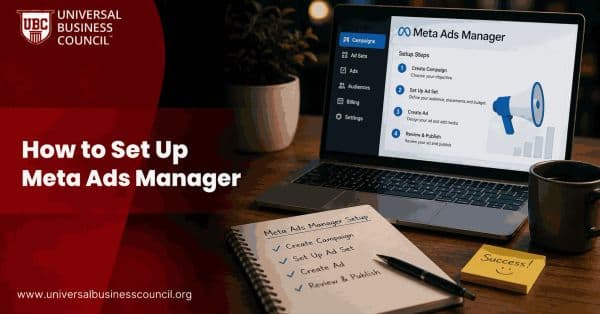
How to Set Up Meta Ads Manager
Meta Ads Manager is the primary platform for creating, managing, and optimizing advertising campaigns across Facebook, Instagram, Messenger, and the Meta Audience Network. This guide explains how to set up Ads Manager and prepare your account for effective campaign management.
Meta Ads
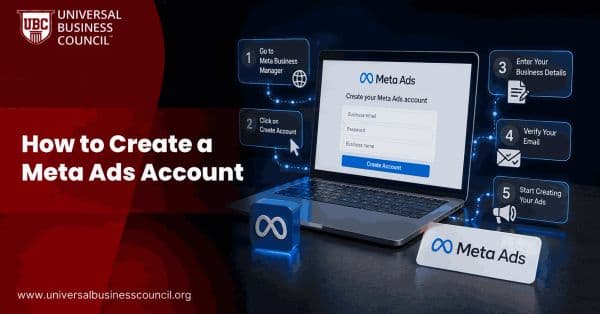
How to Create a Meta Ads Account
Creating a Meta Ads account is the first step toward advertising on Facebook, Instagram, Messenger, and the Meta Audience Network. This guide walks you through setting up your account, configuring billing, connecting business assets, and launching your first campaign.
Trending Articles
The Role of Blockchain in Ethical AI Development
How blockchain technology is being used to promote transparency and accountability in artificial intelligence systems.
AWS Career Roadmap
A step-by-step guide to building a successful career in Amazon Web Services cloud computing.
Top 5 DeFi Platforms
Explore the leading decentralized finance platforms and what makes each one unique in the evolving DeFi landscape.