

How To Create a Successful Facebook Ad Campaign?
 Smita
Smita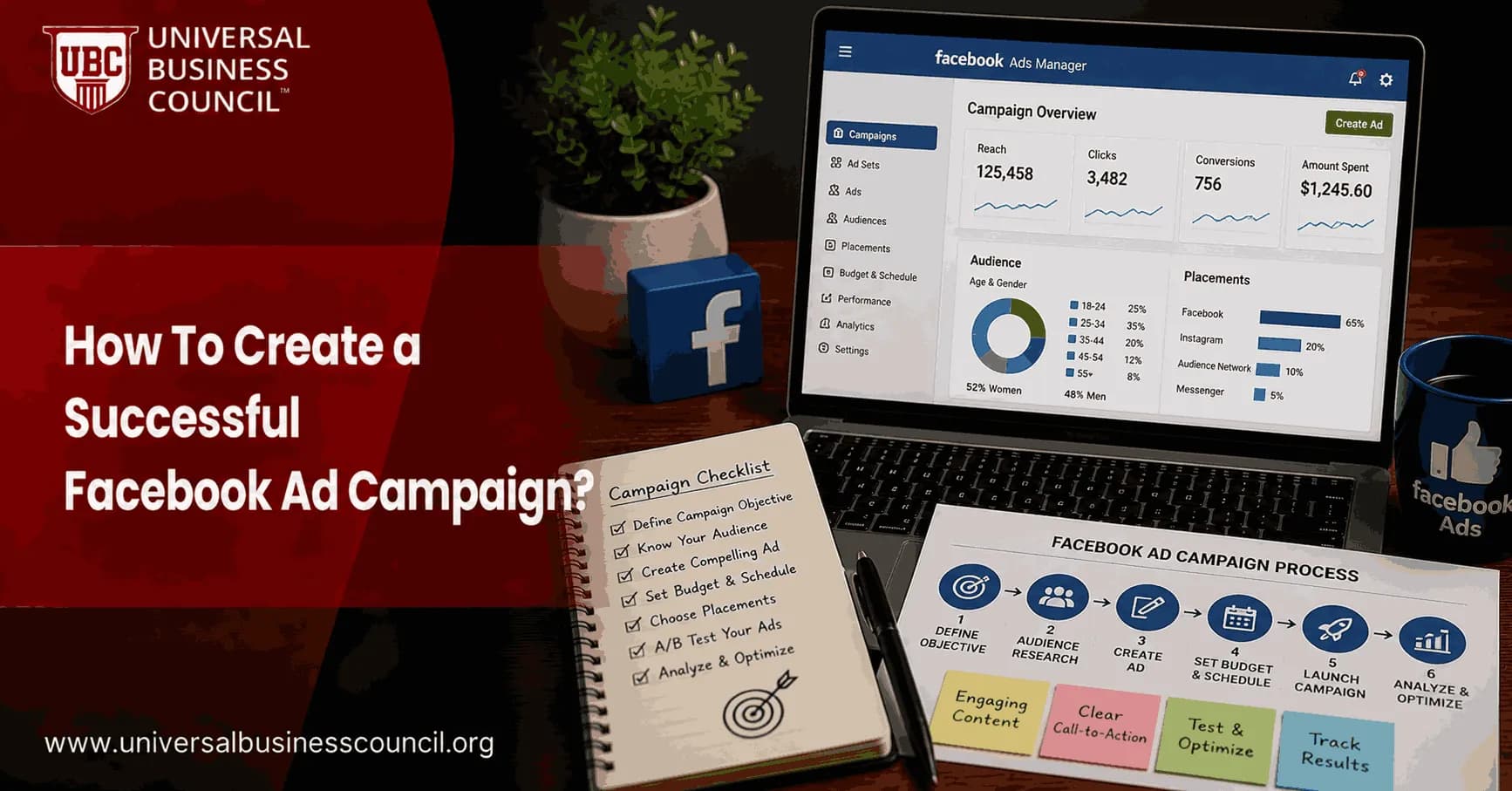
Facebook remains one of the most effective advertising platforms available to businesses today, largely because of its detailed targeting options and the sheer size of its active user base across age groups and industries. Yet many campaigns still underperform, not because the platform lacks reach, but because the person running the ads has never learned the strategic fundamentals behind what actually makes an ad convert. This is exactly the gap that structured training closes, and becoming a Certified Facebook Marketing Expert gives marketers a genuine, tested framework for building campaigns that consistently perform rather than relying on guesswork and trial and error.
Setting Clear Goals Before You Spend a Single Dollar
The most common mistake in Facebook advertising happens before the campaign even launches, when businesses jump straight into ad creation without defining what success actually looks like. A campaign built around brand awareness needs a completely different structure, budget, and creative approach than one built around driving direct sales or generating leads. Facebook's ad platform lets advertisers choose specific campaign objectives, and picking the wrong one at the start can waste significant budget on the wrong type of audience engagement entirely. Marketers who invest in broader training, such as pursuing a Certified Digital Marketing Expert credential, tend to approach this goal setting stage with far more discipline, since they understand how Facebook campaigns fit within a larger, coordinated marketing strategy rather than existing as an isolated tactic.

Building Audiences That Actually Convert
Facebook's targeting system remains remarkably powerful, but only when used with precision. Successful campaigns typically start with a core audience defined by demographics, interests, and behaviors, then expand through lookalike audiences built from existing customers or website visitors. Retargeting people who have already engaged with a business, whether through website visits, video views, or previous ad interactions, consistently produces stronger results than targeting cold audiences alone, since these users already have some familiarity with the brand. Testing multiple audience segments against each other, rather than assuming one audience will perform best, remains one of the simplest ways to improve campaign results over time.
Creative and Copy That Stop the Scroll
Even the best targeted campaign will underperform if the creative itself fails to capture attention within the first second or two of appearing in someone's feed. Strong Facebook ads typically lead with a clear visual hook, whether that means a bold image, a short video with movement in the first few frames, or text overlay that communicates value immediately. Copy should get to the point quickly, focus on a specific benefit rather than a vague brand message, and include a clear call to action that tells the viewer exactly what to do next. Running several creative variations simultaneously, then letting the data determine which version performs best, remains far more reliable than guessing which single ad will win.
Understanding the Technology Behind the Platform
Facebook's ad delivery system runs on a complex machine learning algorithm that determines who sees which ads and how budget gets allocated across audiences in real time. Marketers who understand the technical mechanics behind this system, including how the algorithm learns from early campaign data and why sudden budget changes can disrupt that learning phase, tend to manage campaigns more effectively than those treating the platform as a black box. Pursuing a broader Deep Tech Certification can genuinely help here, since it builds a stronger technical foundation for understanding how algorithmic systems like Facebook's ad delivery engine actually process and act on data, which in turn helps marketers make smarter decisions about budget pacing and campaign structure.
Future-Ready Skills
As technology becomes increasingly important across industries, students need opportunities to develop future-ready skills early in their education. A Tech Olympiad can introduce students to areas such as artificial intelligence, coding, cybersecurity, robotics, and computational thinking while encouraging curiosity and continuous learning. The same analytical thinking that helps a young student succeed in a structured technology competition often shows up later in the careful, data driven decision making that separates strong marketing campaigns from mediocre ones.
Testing, Measuring, and Improving Over Time
No Facebook ad campaign performs perfectly on the first attempt, and the marketers who see the strongest long term results treat every campaign as a starting point for improvement rather than a finished product. Tracking key metrics like cost per result, click through rate, and return on ad spend allows advertisers to identify which elements of a campaign are working and which need adjustment. Small, methodical tests, changing one variable at a time rather than overhauling an entire campaign at once, produce far more useful data than sweeping changes made without a clear hypothesis. Marketers who round out their skill set with a broader Tech Certification often bring an added advantage to this process, since understanding data systems and analytics tools more deeply helps them interpret campaign performance with greater confidence and make adjustments based on solid technical reasoning rather than guesswork. Building this kind of disciplined, data informed approach is ultimately what separates Facebook advertisers who see consistent, repeatable success from those who never quite figure out why their campaigns underperform.
FAQs
1. What is a Facebook ad campaign?
A Facebook ad campaign is a paid advertising strategy designed to reach a specific audience on Facebook and related platforms. Businesses can use campaigns to achieve goals such as brand awareness, website traffic, lead generation, engagement, app promotion, or sales.
2. How do you create a successful Facebook ad campaign?
Start by defining a clear marketing objective, identifying the target audience, setting an appropriate budget, and creating relevant ad content. Track campaign performance regularly and optimize targeting, creative, placements, and budget based on the results.
3. What should be the main goal of a Facebook ad campaign?
The goal should match the desired business outcome, such as generating leads, increasing website visits, promoting products, or driving conversions. A specific objective makes it easier to select the right campaign setup and measure success.
4. How do you choose the right audience for Facebook ads?
Define your audience based on factors such as demographics, interests, location, behaviors, and previous interactions with your business. Using customer data and website activity can also help create more relevant audiences for advertising.
5. How much budget is needed for a Facebook ad campaign?
There is no fixed budget that works for every campaign. The appropriate amount depends on the advertising objective, audience size, competition, expected conversion value, and available marketing resources.
6. What makes a Facebook ad effective?
An effective Facebook ad usually combines a clear message, strong visual content, relevant targeting, and a compelling call to action. The ad should quickly communicate the value of the offer and give users a clear reason to take the next step.
7. What type of content works best for Facebook ads?
The best format depends on the campaign objective and audience. Images, short videos, carousels, collections, and other interactive formats can work well when they present a clear message and are designed around the audience's needs.
8. How important is ad copy in a Facebook campaign?
Ad copy is important because it explains the offer and encourages users to take action. Strong copy should be concise, audience-focused, easy to understand, and aligned with the landing page or destination users see after clicking.
9. What is Facebook ad targeting?
Facebook ad targeting allows advertisers to show ads to selected groups of users based on available audience characteristics and signals. Effective targeting helps businesses spend their advertising budget on people who are more likely to be interested in their offer.
10. Should businesses use broad or specific targeting?
The right approach depends on the campaign, audience size, objective, and available data. Broad targeting can give the advertising system more room to find potential customers, while more specific targeting can be useful when a business has a clearly defined niche audience.
11. How can businesses improve Facebook ad click-through rates?
Use relevant creative, a clear value proposition, compelling copy, and a strong call to action. Testing different headlines, visuals, formats, and audience segments can help identify combinations that generate stronger engagement and clicks.
12. What is A/B testing in Facebook advertising?
A/B testing involves comparing different versions of an ad or campaign element to determine which performs better. Advertisers can test variables such as creative, messaging, audience, placement, or landing pages while keeping other important factors controlled.
13. How long should a Facebook ad campaign run?
The campaign should run long enough to collect meaningful performance data while considering the budget and objective. Very short campaigns may not provide enough information for reliable optimization, while longer campaigns should be monitored for changes in performance.
14. What metrics should be tracked in a Facebook ad campaign?
Important metrics can include impressions, reach, clicks, click-through rate, cost per click, conversions, cost per conversion, and return on ad spend. The most useful metrics depend on the campaign's primary objective.
15. How can Facebook ads generate leads?
Lead-focused campaigns can encourage users to submit their information through forms or visit a landing page where they can request more information. Offering something valuable, such as a consultation, guide, demo, or relevant offer, can improve lead generation.
16. How can Facebook ads increase sales?
Sales-focused campaigns should connect relevant audiences with compelling products, offers, and landing pages. Accurate conversion tracking and ongoing optimization can help advertisers identify which audiences and creatives generate the strongest commercial results.
17. Why is conversion tracking important for Facebook ads?
Conversion tracking helps advertisers understand what users do after interacting with an advertisement. It provides data that can be used to evaluate campaign effectiveness, measure return on investment, and make better optimization decisions.
18. What are common Facebook advertising mistakes to avoid?
Common mistakes include unclear objectives, poor audience targeting, weak creative, insufficient testing, inaccurate tracking, and sending users to irrelevant landing pages. Businesses should also avoid making decisions based on a single metric without considering the overall campaign goal.
19. How often should Facebook ad campaigns be optimized?
Campaigns should be monitored regularly, but advertisers should avoid making constant changes without enough performance data. Optimization can involve adjusting creative, audiences, placements, budgets, bids, or landing pages based on meaningful results.
20. What are the best tips for creating a successful Facebook ad campaign?
Define a measurable objective, understand the target audience, create relevant and engaging ads, use a suitable budget, ensure conversion tracking works correctly, and test multiple creative approaches. Most importantly, use campaign data to make informed optimizations rather than relying on assumptions.
Related Articles
View All
Digital Marketing
How to Create Your First Google Ads Campaign Step by Step
Learn how to create your first Google Ads campaign, from goals and tracking to keywords, responsive ads, bidding, launch checks, and optimization.

Digital Marketing
Google Ads ROI: How to Measure and Improve Campaign Profitability
Learn how to measure Google Ads ROI with conversion tracking, real cost data, ROAS, CPA, and profit-focused optimization tactics.
Digital Marketing
Google Ads Campaign Setup Checklist for New Advertisers
Use this Google Ads campaign setup checklist to plan goals, tracking, keywords, budgets, ads, landing pages, and launch checks before spending.
Trending Articles
The Role of Blockchain in Ethical AI Development
How blockchain technology is being used to promote transparency and accountability in artificial intelligence systems.
AWS Career Roadmap
A step-by-step guide to building a successful career in Amazon Web Services cloud computing.
Top 5 DeFi Platforms
Explore the leading decentralized finance platforms and what makes each one unique in the evolving DeFi landscape.